


The US Supreme Court found that President Donald Trump’s reciprocal tariffs imposed on countries almost a year ago are illegal.
Trump’s reaction to the decision was to announce the imposition of fresh 15% blanket tariffs on all nations trading with the US. These new tariffs are being imposed under different presidential powers than the ones announced on so-called “liberation day” in 2025. They can remain in place for six months, but will need a vote in Congress to be extended beyond that.
The 15% global tariff will be in place from Tuesday 24 February.
EU deal
Under the deal struck with the European Union last year, goods exports from the EU to the US would face a 15% tariff rate, or the existing most-favoured-nation rate, whichever is higher. It is unclear how the new announcement from Trump will change the maths on that, but it seems possible that in the immediate term, the new 15% rate will be imposed in addition to the long-standing most-favoured-nation rate.
For Irish dairy exporters, this will effectively mean a doubling of the tariff rate on butter shipments to the US.
European leaders have called for clarification on what Trump’s announced measures will mean for the deal. The deal has yet to be ratified by the European parliament, and it seems certain that the developments over the last few days will further delay that process.
Winner
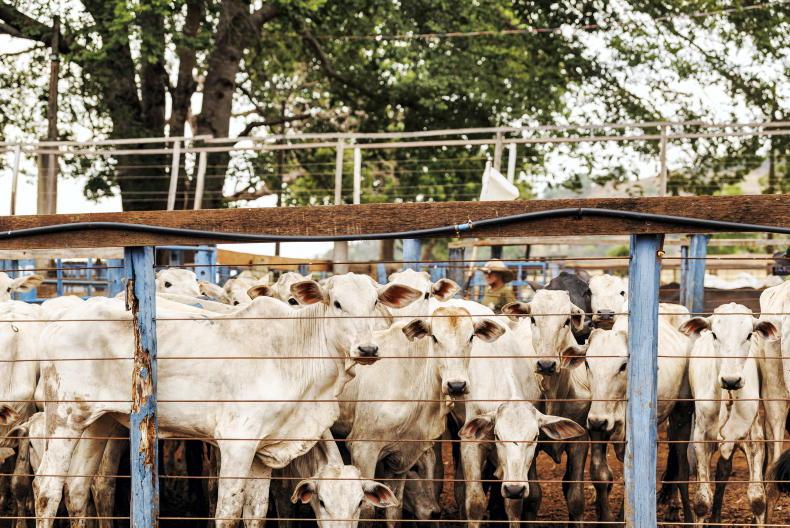
One of the biggest targets for Trump’s reciprocal tariffs over the last year was Brazil, which faced duties of up to 50% on shipments to the US. The country’s exports to the US will now be subject to the 15% global rate.
Brazil’s beef sector, however, has done even better in the announcement from the White House which says that “some goods will not be subject to the temporary import duty because of the needs of the US economy”. Beef is among those goods listed.
This means that the US market has effectively been reopened to Brazilian beef exports. While this is good news for that country, it is also probably good news for Irish beef farmers and processors who will now face less competition from Brazilian product in the European market.
Temporary measure
It is important to note that we are still in the very early days of this latest tariff move from the US administration. The measured announced at the weekend are temporary, unless they are approved by Congress – a move which is far from certain.
Instead, it seems likely that next six months will be used by Washington to launch a range of trade investigations. The administration can impose tariffs on specific countries and products which are proven to be benefit from unfair trading practices following an investigation. Trump used this tactic in his first presidency to target imports from China. The measures would be similar to how the EU imposed tariffs on Chinese electric vehicles, and how China responded with tariffs on EU pork and dairy.
Overall, the only thing that is immediately certain following the Supreme Court decision and Trump’s response, is that there will be more trade disruption and uncertainty in the months ahead.




SHARING OPTIONS