


The substantial drop in the rate of the farmers’ compensation VAT rate from 1 January – where it fell from 5.1% to 4.5% – is having consequences for people buying and selling cattle since the start of the year.
To understand what is going on, and where the perceived extra cost is coming from, we need to look at the level of the farmers’ compensation VAT rate in relation to the VAT charge on the sale of livestock.
Since 2005, the VAT charge on livestock sales has been fixed at 4.8%, with the farmers’ compensation rate calculated using a Revenue formula. Before 2005, both rates were set at the same level. Since then, the compensation rate has occasionally been set at 4.8%, but has generally been higher than the livestock rate (see Figure 1).
Since at least 1995, 2026 is the first year that the farmers’ compensation rate has fallen below the livestock rate.
What this means, in effect, is that a farmer selling cattle will be receiving a lower rate of compensatory VAT than the level they will be paying on any cattle they buy.
For example, a farmer might go to the mart with a couple of older cows to sell, while also intending to buy some replacement heifers. Looking at Table 1, we can see how that farmer would feel they have lost out due to the change in the compensation VAT rate from 5.1% in 2025 to 4.5% in 2026.
For the farmer in this example, the effect of the two separate VAT rates means what would have been a small positive tax outcome in this trade, has become a small negative tax outcome.
For farmers only engaged selling livestock, the reduction in the compensation rate will mean a smaller cheque from the mart.
This issue has been well flagged by this publication, since the large cut in the compensation VAT rate was announced in October’s budget.
For those only engaged in the purchase of livestock, nothing has changed as the livestock rate of VAT on sales has remained unchanged since 2005.
For farmers registered for VAT, there is also no change as they were already outside the scope of the Farmers compensation VAT scheme.
Marts
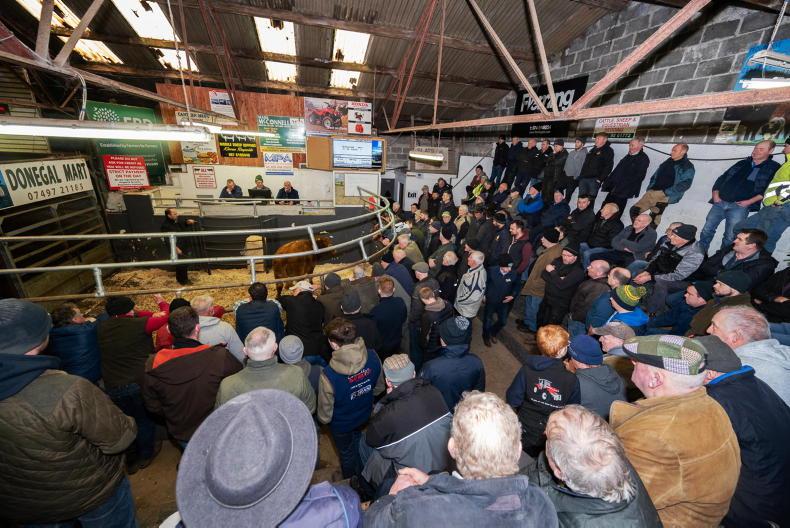
The unfortunate situation for the country’s livestock marts in all this is that they are the ones giving the slightly smaller cheques to the farmers who are selling livestock in their venues. There is nothing they can do about this, as the change came from the budget announced in October.
There’s also, perhaps surprisingly, very little the Government can do about it. The farmers’ compensatory VAT rate is set by a formula, rather than by Government policy.
The exact formula for calculating the rate is not published by Revenue, but similar schemes elsewhere use a formula that takes the total turnover of an industry and the total inputs consumed by that industry, to arrive at a calculation of how much VAT could have been reclaimed if all participants in the industry were VAT registered.
Generally, this is calculated on a rolling three-year average to avoid too much volatility in the rate from year to year.
For Irish farmers, the significant rise in turnover over the past few years, coupled with the relatively benign recent climbs in input costs since 2024, suggest further cuts to the farmers’ compensation rate are likely.
Marty Murphy, head of Tax at ifac said: “Cattle prices are up at the mart, yet the VAT compensation rate is down. That’s the irony of the flat-rate scheme – stronger prices can actually reduce compensation. The calculation happens behind the scenes using an unpublished formula, so farmers see the cheque change without ever seeing the workings.”


SHARING OPTIONS