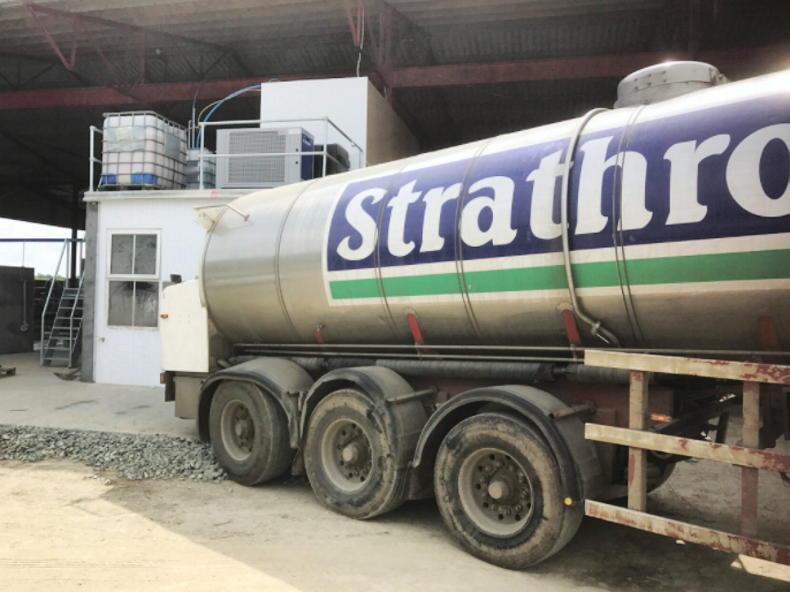
As well as its own business, North Cork Creameries had been a significant processor of milk collected by Strathroy Dairy.
Strathroy is based in Omagh, Co Tyrone but sources a significant amount of milk in the south and southeast of Ireland which it had processed by North Cork Creameries prior to it ceasing production a few weeks ago.
Strathroy’s Ruairi Cunningham told the Irish Farmers Journal this week that they are now bringing the milk, that would have been previously processed in North Cork, to to their Omagh site.
When he was asked if this was a short- or longer-term plan, he said that they were keeping their mind open on that.
“Nobody has been banging our door looking to process this milk, nor have we been banging any doors to get it processed,” was the way he put it.
He also added: “We have invested in adding a drier to the business and that gives us options and means that all the milk can be processed at the Omagh site.”
Strathroy is a long-established dairy business owned by the Cunningham family with a milk pool supplied from across the island of Ireland with a local concentration of suppliers in south Leinster and Munster in the Republic of Ireland. The addition of a drying facility in Omagh is a relatively recent investment and it is primarily a liquid milk business.
It sells under the Strathroy brand as well as being significant players in own label production, listing Super Valu, Centra, Lidl, Tesco, Asda, Aldi and Burger King among its customers.
JBS reports better-than-forecast earnings
JBS, the meat processor with beef, pork and poultry operations across North and South America reported revenue of $86.2bn (€75bn) and net income of $2.23bn (€1.94bn) for 2025.
The biggest surprise in the report, which helped drive a 9% jump in the company’s share price immediately following its publication, was that JBS managed to turn a profit on beef processing in North America in the final three months of the year.
Industry watchers had expected the company to report a significant loss on those operations.
For the year as a whole, North American beef processing, however, was loss-making for the company, reporting adjusted earnings of $319m (€277m).
JBS said it reported record beef sales in the region in both the fourth quarter of 2025, and for the year as a whole. The company said that resilient demand supported this performance, even as prices remained at historically high levels.
It added, however, that the increase in cattle prices outpaced the change in those paid by customers which reflected tighter cattle availability in the US amid what it called “the ongoing US cattle cycle”. In 2025, the number of cattle in the US dropped to the lowest level in 75 years.
Wesley Batista Filho, CEO of JBS USA, cautioned that the market remains very difficult and not to read too much into the results from the fourth quarter. Speaking about the start of 2026, he said it “has been probably the most challenging we have seen in this industry in a very long time”.
In its home market of Brazil, the company said that higher prices partially offset the sharp increases in cattle costs during the year. The company recorded its highest slaughter volume in its history in 2025 in Brazil.
It said that strong demand combined with “geographic diversification” drove performance, boosting sales across key regions and also enabling the development of new markets.
Gilberto Tomazoni, global CEO, said: “I’m optimistic about the Brazilian market for this year because there’s very strong global demand for beef.”
As well as its own business, North Cork Creameries had been a significant processor of milk collected by Strathroy Dairy.
Strathroy is based in Omagh, Co Tyrone but sources a significant amount of milk in the south and southeast of Ireland which it had processed by North Cork Creameries prior to it ceasing production a few weeks ago.
Strathroy’s Ruairi Cunningham told the Irish Farmers Journal this week that they are now bringing the milk, that would have been previously processed in North Cork, to to their Omagh site.
When he was asked if this was a short- or longer-term plan, he said that they were keeping their mind open on that.
“Nobody has been banging our door looking to process this milk, nor have we been banging any doors to get it processed,” was the way he put it.
He also added: “We have invested in adding a drier to the business and that gives us options and means that all the milk can be processed at the Omagh site.”
Strathroy is a long-established dairy business owned by the Cunningham family with a milk pool supplied from across the island of Ireland with a local concentration of suppliers in south Leinster and Munster in the Republic of Ireland. The addition of a drying facility in Omagh is a relatively recent investment and it is primarily a liquid milk business.
It sells under the Strathroy brand as well as being significant players in own label production, listing Super Valu, Centra, Lidl, Tesco, Asda, Aldi and Burger King among its customers.
JBS reports better-than-forecast earnings
JBS, the meat processor with beef, pork and poultry operations across North and South America reported revenue of $86.2bn (€75bn) and net income of $2.23bn (€1.94bn) for 2025.
The biggest surprise in the report, which helped drive a 9% jump in the company’s share price immediately following its publication, was that JBS managed to turn a profit on beef processing in North America in the final three months of the year.
Industry watchers had expected the company to report a significant loss on those operations.
For the year as a whole, North American beef processing, however, was loss-making for the company, reporting adjusted earnings of $319m (€277m).
JBS said it reported record beef sales in the region in both the fourth quarter of 2025, and for the year as a whole. The company said that resilient demand supported this performance, even as prices remained at historically high levels.
It added, however, that the increase in cattle prices outpaced the change in those paid by customers which reflected tighter cattle availability in the US amid what it called “the ongoing US cattle cycle”. In 2025, the number of cattle in the US dropped to the lowest level in 75 years.
Wesley Batista Filho, CEO of JBS USA, cautioned that the market remains very difficult and not to read too much into the results from the fourth quarter. Speaking about the start of 2026, he said it “has been probably the most challenging we have seen in this industry in a very long time”.
In its home market of Brazil, the company said that higher prices partially offset the sharp increases in cattle costs during the year. The company recorded its highest slaughter volume in its history in 2025 in Brazil.
It said that strong demand combined with “geographic diversification” drove performance, boosting sales across key regions and also enabling the development of new markets.
Gilberto Tomazoni, global CEO, said: “I’m optimistic about the Brazilian market for this year because there’s very strong global demand for beef.”






SHARING OPTIONS