The rearing phase in calves raised artificially is a critical stage in their development – if performance and weight targets are met then it sets up the animal to hit future key performance targets. However, if performance is sub-optimum it will leave calves struggling to recover lost performance and in particular reduce the chance of getting cattle killed off grass in their second grazing season.
The rearing phase is not just about reaching weight targets – if this was the case then a straightforward solution would be to feed very high levels of milk. However, such a move would be counterproductive and could actually result in delaying weaning from the typical target of 10 weeks of age to upwards of 12 weeks of age.
The aim in the rearing stage is to manage a calf so that it gains in the region of 0.7kg to 0.9kg liveweight daily and importantly sets it up to transition easily through the weaning process and limits any check in performance.
The secret is to target milk feeding levels at a sufficient rate to provide the foundation for high performance (4l to 6l daily) but not at too high a rate (eight litres plus daily) that it discourages it from eating concentrates and slows rumen development.
Concentrates should be offered to calves from five days. The amount of concentrates a calf eats in the first three weeks of life will be low and during this time it is important not to offer excessive levels of concentrates resulting in feed going stale. A better approach is to offer a small volume of fresh feed regularly that encourages higher intake.
Calves should also have access to clean straw or a limited amount of hay and water to aid rumen development. Some farmers often query if water is necessary when calves are drinking milk and the answer is overwhelmingly yes. When a calf is suckling milk is diverted away from the rumen and in to the abomasum – hence the rumen is not getting a chance to develop.
On the other hand if a calf drinks water it will enter the rumen and from here it can be utilised by microbes to grow and multiply and set the calf up to break down and digest roughage.
Calves are generally weaned by age or weight. Weighing calves pre-weaning is a valuable practice as in addition to gauging individual performance it will deliver an indication as to the success of the rearing phase.
The traditional liveweight target for calves at weaning was 90kg to 100kg liveweight. This target remains in place for beef-cross calves and is also the aim for Friesian males.
Some farmers will wean by age once calves are 10 weeks old but there is merit in possibly feeding on lighter calves with an extra week or two of priority care and additional feeding space often delivering a significant boost in performance.
A lower liveweight target may be acceptable for progeny born from cows with a lower mature weight and here the aim should be to wean calves at upwards of 80kg to 90kg liveweight.
While weight and age are two selection factors weaning should be delayed until calves are consuming at least 1kg concentrates on three consecutive days.
The following are a number of useful tips that will aid in the weaning process.
Calves should be eating at least 1kg of a high-quality concentrate prior to weaning.Reducing the volume of milk offered or cutting to once-a-day feeding in the final week prior to weaning will encourage higher intake of concentrates.Offering calves access to coarse rations over pelleted concentrates is often preferred as an additional source of roughage.Keeping troughs clean, removing any uneaten concentrates periodically and offering fresh feed regularly will boost intake.Refrain from any tasks that can increase stress at weaning such as disbudding, administration of routine vaccinations etc.Maintain calves in their settled groups until successfully weaned.Getting calves to grass
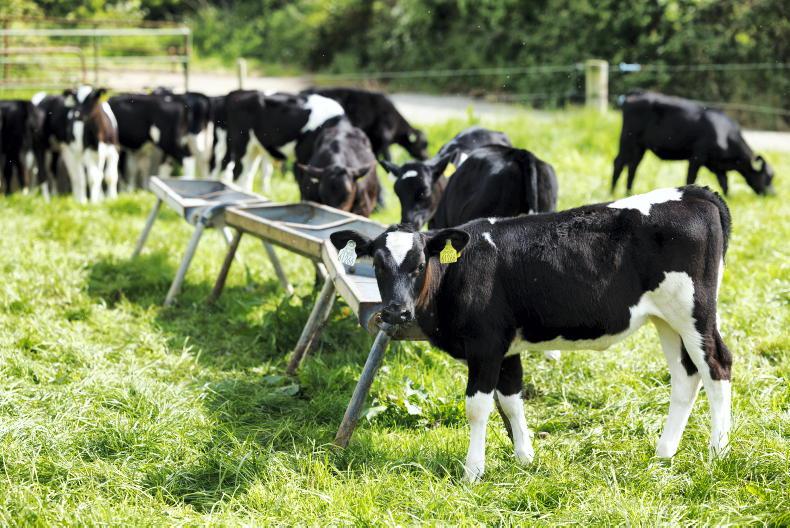
The aim once calves are weaned successfully is to get them turned outdoors to maximise performance and reduce indoor production costs. Calves should ideally be eating 2kg concentrates post-weaning and it is good practice to continue meal feeding for a period at grass.
There is a debate over the merits of feeding concentrates throughout the first season at grass.
This decision will be influenced by grass quality, calf performance and date of turnout. It is advised to feed calves for at least a few weeks to help transition from an indoor to outdoor environment. The exception to this is calves reared outdoors. Meal feeding can be reduced back to 1kg if continuing feeding.
The emergence of summer scour syndrome is changing the approach to weaning on many farms. Farms with experience of the ailment are ensuring that all calves are eating sufficient concentrates and extending the period of time in which concentrates are offered once turned out.
Other measures include avoiding grazing reseeded or lush pastures and grazing calves on older swards or those with a degree of stem to increase the level of fibre in the diet. This will be covered in more detail at a later stage.
Table 1 details some dos and don’ts for getting cattle to grass and optimising performance.
The rearing phase in calves raised artificially is a critical stage in their development – if performance and weight targets are met then it sets up the animal to hit future key performance targets. However, if performance is sub-optimum it will leave calves struggling to recover lost performance and in particular reduce the chance of getting cattle killed off grass in their second grazing season.
The rearing phase is not just about reaching weight targets – if this was the case then a straightforward solution would be to feed very high levels of milk. However, such a move would be counterproductive and could actually result in delaying weaning from the typical target of 10 weeks of age to upwards of 12 weeks of age.
The aim in the rearing stage is to manage a calf so that it gains in the region of 0.7kg to 0.9kg liveweight daily and importantly sets it up to transition easily through the weaning process and limits any check in performance.
The secret is to target milk feeding levels at a sufficient rate to provide the foundation for high performance (4l to 6l daily) but not at too high a rate (eight litres plus daily) that it discourages it from eating concentrates and slows rumen development.
Concentrates should be offered to calves from five days. The amount of concentrates a calf eats in the first three weeks of life will be low and during this time it is important not to offer excessive levels of concentrates resulting in feed going stale. A better approach is to offer a small volume of fresh feed regularly that encourages higher intake.
Calves should also have access to clean straw or a limited amount of hay and water to aid rumen development. Some farmers often query if water is necessary when calves are drinking milk and the answer is overwhelmingly yes. When a calf is suckling milk is diverted away from the rumen and in to the abomasum – hence the rumen is not getting a chance to develop.
On the other hand if a calf drinks water it will enter the rumen and from here it can be utilised by microbes to grow and multiply and set the calf up to break down and digest roughage.
Calves are generally weaned by age or weight. Weighing calves pre-weaning is a valuable practice as in addition to gauging individual performance it will deliver an indication as to the success of the rearing phase.
The traditional liveweight target for calves at weaning was 90kg to 100kg liveweight. This target remains in place for beef-cross calves and is also the aim for Friesian males.
Some farmers will wean by age once calves are 10 weeks old but there is merit in possibly feeding on lighter calves with an extra week or two of priority care and additional feeding space often delivering a significant boost in performance.
A lower liveweight target may be acceptable for progeny born from cows with a lower mature weight and here the aim should be to wean calves at upwards of 80kg to 90kg liveweight.
While weight and age are two selection factors weaning should be delayed until calves are consuming at least 1kg concentrates on three consecutive days.
The following are a number of useful tips that will aid in the weaning process.
Calves should be eating at least 1kg of a high-quality concentrate prior to weaning.Reducing the volume of milk offered or cutting to once-a-day feeding in the final week prior to weaning will encourage higher intake of concentrates.Offering calves access to coarse rations over pelleted concentrates is often preferred as an additional source of roughage.Keeping troughs clean, removing any uneaten concentrates periodically and offering fresh feed regularly will boost intake.Refrain from any tasks that can increase stress at weaning such as disbudding, administration of routine vaccinations etc.Maintain calves in their settled groups until successfully weaned.Getting calves to grass
The aim once calves are weaned successfully is to get them turned outdoors to maximise performance and reduce indoor production costs. Calves should ideally be eating 2kg concentrates post-weaning and it is good practice to continue meal feeding for a period at grass.
There is a debate over the merits of feeding concentrates throughout the first season at grass.
This decision will be influenced by grass quality, calf performance and date of turnout. It is advised to feed calves for at least a few weeks to help transition from an indoor to outdoor environment. The exception to this is calves reared outdoors. Meal feeding can be reduced back to 1kg if continuing feeding.
The emergence of summer scour syndrome is changing the approach to weaning on many farms. Farms with experience of the ailment are ensuring that all calves are eating sufficient concentrates and extending the period of time in which concentrates are offered once turned out.
Other measures include avoiding grazing reseeded or lush pastures and grazing calves on older swards or those with a degree of stem to increase the level of fibre in the diet. This will be covered in more detail at a later stage.
Table 1 details some dos and don’ts for getting cattle to grass and optimising performance.






SHARING OPTIONS