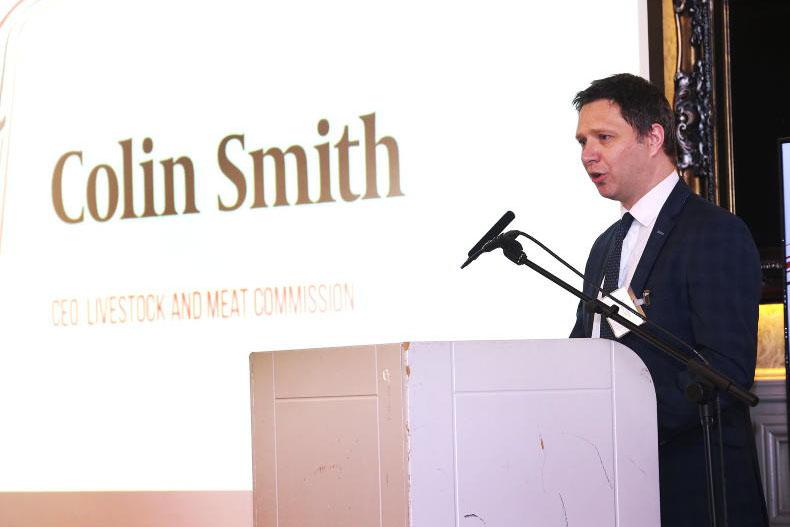
This week, the Livestock and Meat Commission (LMC) announced that the cost of the Farm Quality Assurance Scheme (FQAS) inspection in Northern Ireland would increase by £10 (€11.50) to £105 (€120) plus VAT.
The processor contribution will remain the same at £1.20 (€1.38) for cattle and £0.10 (€0.11) for sheep.
In Britain, there are multiple inspection agencies that inspect the Red Tractor-approved schemes operated by the Agriculture and Horticulture Development Board (AHDB) in England, Quality Meat Scotland (QMS) in Scotland and Hybu Cig Cymru (HCC) in Wales.
The farmer cost of these was reported in the UK Farm Assurance Review led by Dr David Llewellyn as being between £150 and £650 (€172 and €747).
In the Republic of Ireland, there isn’t an inspection charge for the Bord Bia schemes, but many farmers are reluctant participants.
The main grievance is that they are intrusive and bureaucratic that place unreasonable demands on farmers' time during the inspection process. Quality assurance has also become entwined in the Irish Farmers' Association's (IFA) dispute around the chair of Bord Bia.
Aside from the issues that the IFA has with Bord Bia and its chair, farmers have never been enthusiastic members of quality assurance schemes.
The reason largely centres around the audit process and in an attempt to address this, Bord Bia undertook to revisit its focus on the farmer experience with audits at the recent stakeholder meeting.
A review of the beef and lamb scheme has been ongoing for a prolonged period, now delayed by the IFA-Bord Bia dispute.
Need for quality assurance
At least part of farmer scepticism for quality assurance comes from doubt around whether or not it is needed at all.
Many can point to examples, particularly when cattle and sheep prices are on the rise, that it makes no difference to farmers when selling.
It is also pointed out that it only becomes an issue when there is plenty of supply in the system, when factories stick strictly to the grid.
For much of 2025 when prices were on the increase, there was little attention paid to quality assurance or even grades, with flat-rate buying widespread.
With this procurement policy in place by factories, it is easy to understand why farmers are dismissive of the benefits of the schemes, irrespective of what communication Bord Bia engages in to explain and promote them.
This is a pity, because quality assurance is a necessity in the specification to supply the highest-paying customers, particularly in the UK marketplace. That is why every region of the UK has a scheme under the common Red Tractor standard.
The Irish beef that gets the best price in the UK is sold alongside British in the major supermarkets and food service markets. Even if Irish factories don’t differentiate in price at the farm gate for quality assured and non-quality assured, they do differentiate at the other end of the supply chain.
There is of course a market in the UK and across Europe for product that isn’t produced under a farm assurance scheme. This will typically be in the catering and wholesale markets that are more price sensitive and will be more focused on price than the production system, provided of course it is compliant with EU veterinary and health standards.
Comment – entry level and luxury specification
The difference is perhaps best explained by making a comparison with the car industry. All major manufacturers produce a basic specification at what is described as an entry price and do the job that a car is required to do - transport the driver and passengers from A to B.
They will then have other models in the range with additional luxury features, designed to make the journey experience for the driver and passengers more pleasurable.
The top specification models in a range carry a hefty price premium above the price of the entry model.
For Irish beef and lamb, when it isn’t quality assured, we can think of it as the entry level model, perfectly satisfactory and will do what it is designed to do.
The quality assured version is the higher-spec version that commands a higher price in the marketplace, even if this isn’t always reflected in factory procurement policy.
Read more
FQAS membership fee to rise another £10
Minister gets commitment from Bord Bia to improve farmer experience with audits
Will there be money for doing the right thing?
This week, the Livestock and Meat Commission (LMC) announced that the cost of the Farm Quality Assurance Scheme (FQAS) inspection in Northern Ireland would increase by £10 (€11.50) to £105 (€120) plus VAT.
The processor contribution will remain the same at £1.20 (€1.38) for cattle and £0.10 (€0.11) for sheep.
In Britain, there are multiple inspection agencies that inspect the Red Tractor-approved schemes operated by the Agriculture and Horticulture Development Board (AHDB) in England, Quality Meat Scotland (QMS) in Scotland and Hybu Cig Cymru (HCC) in Wales.
The farmer cost of these was reported in the UK Farm Assurance Review led by Dr David Llewellyn as being between £150 and £650 (€172 and €747).
In the Republic of Ireland, there isn’t an inspection charge for the Bord Bia schemes, but many farmers are reluctant participants.
The main grievance is that they are intrusive and bureaucratic that place unreasonable demands on farmers' time during the inspection process. Quality assurance has also become entwined in the Irish Farmers' Association's (IFA) dispute around the chair of Bord Bia.
Aside from the issues that the IFA has with Bord Bia and its chair, farmers have never been enthusiastic members of quality assurance schemes.
The reason largely centres around the audit process and in an attempt to address this, Bord Bia undertook to revisit its focus on the farmer experience with audits at the recent stakeholder meeting.
A review of the beef and lamb scheme has been ongoing for a prolonged period, now delayed by the IFA-Bord Bia dispute.
Need for quality assurance
At least part of farmer scepticism for quality assurance comes from doubt around whether or not it is needed at all.
Many can point to examples, particularly when cattle and sheep prices are on the rise, that it makes no difference to farmers when selling.
It is also pointed out that it only becomes an issue when there is plenty of supply in the system, when factories stick strictly to the grid.
For much of 2025 when prices were on the increase, there was little attention paid to quality assurance or even grades, with flat-rate buying widespread.
With this procurement policy in place by factories, it is easy to understand why farmers are dismissive of the benefits of the schemes, irrespective of what communication Bord Bia engages in to explain and promote them.
This is a pity, because quality assurance is a necessity in the specification to supply the highest-paying customers, particularly in the UK marketplace. That is why every region of the UK has a scheme under the common Red Tractor standard.
The Irish beef that gets the best price in the UK is sold alongside British in the major supermarkets and food service markets. Even if Irish factories don’t differentiate in price at the farm gate for quality assured and non-quality assured, they do differentiate at the other end of the supply chain.
There is of course a market in the UK and across Europe for product that isn’t produced under a farm assurance scheme. This will typically be in the catering and wholesale markets that are more price sensitive and will be more focused on price than the production system, provided of course it is compliant with EU veterinary and health standards.
Comment – entry level and luxury specification
The difference is perhaps best explained by making a comparison with the car industry. All major manufacturers produce a basic specification at what is described as an entry price and do the job that a car is required to do - transport the driver and passengers from A to B.
They will then have other models in the range with additional luxury features, designed to make the journey experience for the driver and passengers more pleasurable.
The top specification models in a range carry a hefty price premium above the price of the entry model.
For Irish beef and lamb, when it isn’t quality assured, we can think of it as the entry level model, perfectly satisfactory and will do what it is designed to do.
The quality assured version is the higher-spec version that commands a higher price in the marketplace, even if this isn’t always reflected in factory procurement policy.
Read more
FQAS membership fee to rise another £10
Minister gets commitment from Bord Bia to improve farmer experience with audits
Will there be money for doing the right thing?





SHARING OPTIONS