Shareholders in Alliance, the New Zealand farmer-owned meat co-operative, are expected to get an initial briefing next week on raising new capital for the business. It is understood that a pitch has been made by Dawn Meats to buy a 70% stake and is one of the options on the table. While the shareholders will get to hear the options, voting will take place in a few months time.
Alliance has been looking for investors and told members last December that it was exploring funding options. This followed the reporting of an after-tax loss of NZ$95.8m (€49.4m) for the year ending 30 September 2024 having also posted a loss of NZ$70m (€36m) the previous year.
Problems in the business
The 2024 report reflected on the challenges being faced by the business and reflected on the luke-warm response from farmer members for an injection of capital to sustain the business. It highlighted that shareholder equity in the business had fallen from 70% in 2017 to 48% in 2023.
While securing capital from farmers and remaining as a co-operative was kept as an option, the option of selling part of the company to raise external capital or indeed sell the whole company were flagged. The possibility of Dawn or an alternative investor in the business therefore won’t come as a surprise to farmer shareholders, or indeed the wider New Zealand industry.
It is clear that Alliance could do with a roadmap to profitability as well as financial investment and working with Dawn Meats could be mutually beneficial. However, while it may be commercially a good idea, there will be more to the decision than money. Alliance is New Zealand’s only 100% farmer-owned co-operative since its formation in 1948. There will be a reluctance by some members to give this up – the number of these will only be known for certain after the vote takes place.
There are also political sensitivities around a 100% New Zealand farmer company selling a controlling stake in the business to an overseas investor. Despite these considerations, we can always expect necessity to trump sentiment.
About Alliance
If these hurdles can be overcome, what would Dawn Meats be getting for its money? From the accounts it is clear that it would be buying into a loss-making business.
However, given Dawn’s extensive knowledge and presence in British and European markets, they would be confident that they could bring this to Alliance and add considerable value to that business in the process.
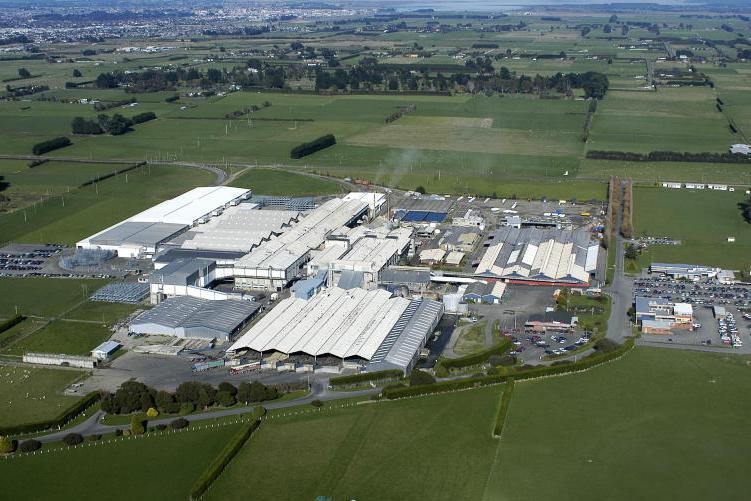
Alliance currently has six beef and sheep meat processing factories, two of which are located on the North Island and the other four are on the South Island. Between them and the overseas offices, the business employed 4,600 people in 2024.
The company had another factory on the South Island at Timaru, South Canterbury but a decision was taken to close it in October 2024. This was known as the Smithfield factory which was in operation for almost 140 years and had been part of the Alliance group since 1989, processing sheepmeat, calves and venison. Its closure was blamed on insufficient throughput and the 32-hectare site was sold earlier this year for development with the value not revealed.
The Alliance factory locations on the South Island New Zealand are at:
Lornville near Invercargill, processing sheepmeat, venison and beef. Mataura, Southland, processing beef.Pukeuri, near Oamaru, processing both sheepmeat and beef.Nelson, processing sheepmeat.On the North Island, the Alliance factories are at:
Levin, Horowhenua, processing both sheepmeat and beef.Dannevirke, Hawke’s Bay, processing sheepmeat.Despite the Smithfield site being no longer part of the company’s processing capacity, Alliance is confident that the livestock that would have been previously processed there can be handled at its other South Island locations.
Alliance is thought to process around one fifth of New Zealand’s beef and sheepmeat and 95% of its sales are to export markets in 65 different countries.
In a statement to the Irish Farmers Journal, Mark Wynne, chair of Alliance Group, said: “At the start of this capital raise process, we stated we wouldn’t be commenting on any market speculation.
“Our goal is to secure more than $200m to strengthen our balance sheet and provide a much more stable financial foundation for the business.
“Because of the commercial sensitivities involved and the confidentiality agreements now in place, we are limited in how much we can share.
“We will be providing another update to our farmers later this month ahead of a series of road show meetings followed by a formal shareholder vote in the next few months.
“We have the full support of our banking syndicate with continued financing. There is confidence in our performance, in the capital raise process, the investor offers and our farmer-shareholders.”
A request from the Irish Farmers Journal for comment was declined by a Dawn Meats spokesperson.
Tyson Foods’ Q3 results show chicken profits make up for beef losses
Tyson Food has revealed better-than-expected results for the third quarter of its financial year to the end of June.
Total sales were up 4% to $13.88bn (€13.1bn) with an adjusted operating income of $505m (€435m). This was underpinned by strong performance in the chicken category which delivered $345m (€297m) of this and the prepared foods division which contributed $246m (€212m).
Pork added a further $10m (€8.6m) to the adjusted operating income with the international section bringing $29m (€25m) to the Tyson bottom line.
These more than offset the beef category which remains in the doldrums for processors in the US. In the third quarter, sales were up 10% to $5.6bn (€4.8bn) on 3% less volume processed. However, the adjusted operating income showed a loss of $151m (€130m) for the quarter, more than double what it was for the same period in 2024.
Tyson’s presentation referred to managing the tight cattle supply and of focusing on efficiencies and the guidance for the year is that beef will record an adjusted operating loss between $475m (€409m) and $375m (€323m).
Donnie King, Tyson Foods president and CEO, commented that “our third-quarter results demonstrate the strength of our multi-protein, multi-channel portfolio and our relentless focus on operational excellence”.
Shareholders in Alliance, the New Zealand farmer-owned meat co-operative, are expected to get an initial briefing next week on raising new capital for the business. It is understood that a pitch has been made by Dawn Meats to buy a 70% stake and is one of the options on the table. While the shareholders will get to hear the options, voting will take place in a few months time.
Alliance has been looking for investors and told members last December that it was exploring funding options. This followed the reporting of an after-tax loss of NZ$95.8m (€49.4m) for the year ending 30 September 2024 having also posted a loss of NZ$70m (€36m) the previous year.
Problems in the business
The 2024 report reflected on the challenges being faced by the business and reflected on the luke-warm response from farmer members for an injection of capital to sustain the business. It highlighted that shareholder equity in the business had fallen from 70% in 2017 to 48% in 2023.
While securing capital from farmers and remaining as a co-operative was kept as an option, the option of selling part of the company to raise external capital or indeed sell the whole company were flagged. The possibility of Dawn or an alternative investor in the business therefore won’t come as a surprise to farmer shareholders, or indeed the wider New Zealand industry.
It is clear that Alliance could do with a roadmap to profitability as well as financial investment and working with Dawn Meats could be mutually beneficial. However, while it may be commercially a good idea, there will be more to the decision than money. Alliance is New Zealand’s only 100% farmer-owned co-operative since its formation in 1948. There will be a reluctance by some members to give this up – the number of these will only be known for certain after the vote takes place.
There are also political sensitivities around a 100% New Zealand farmer company selling a controlling stake in the business to an overseas investor. Despite these considerations, we can always expect necessity to trump sentiment.
About Alliance
If these hurdles can be overcome, what would Dawn Meats be getting for its money? From the accounts it is clear that it would be buying into a loss-making business.
However, given Dawn’s extensive knowledge and presence in British and European markets, they would be confident that they could bring this to Alliance and add considerable value to that business in the process.
Alliance currently has six beef and sheep meat processing factories, two of which are located on the North Island and the other four are on the South Island. Between them and the overseas offices, the business employed 4,600 people in 2024.
The company had another factory on the South Island at Timaru, South Canterbury but a decision was taken to close it in October 2024. This was known as the Smithfield factory which was in operation for almost 140 years and had been part of the Alliance group since 1989, processing sheepmeat, calves and venison. Its closure was blamed on insufficient throughput and the 32-hectare site was sold earlier this year for development with the value not revealed.
The Alliance factory locations on the South Island New Zealand are at:
Lornville near Invercargill, processing sheepmeat, venison and beef. Mataura, Southland, processing beef.Pukeuri, near Oamaru, processing both sheepmeat and beef.Nelson, processing sheepmeat.On the North Island, the Alliance factories are at:
Levin, Horowhenua, processing both sheepmeat and beef.Dannevirke, Hawke’s Bay, processing sheepmeat.Despite the Smithfield site being no longer part of the company’s processing capacity, Alliance is confident that the livestock that would have been previously processed there can be handled at its other South Island locations.
Alliance is thought to process around one fifth of New Zealand’s beef and sheepmeat and 95% of its sales are to export markets in 65 different countries.
In a statement to the Irish Farmers Journal, Mark Wynne, chair of Alliance Group, said: “At the start of this capital raise process, we stated we wouldn’t be commenting on any market speculation.
“Our goal is to secure more than $200m to strengthen our balance sheet and provide a much more stable financial foundation for the business.
“Because of the commercial sensitivities involved and the confidentiality agreements now in place, we are limited in how much we can share.
“We will be providing another update to our farmers later this month ahead of a series of road show meetings followed by a formal shareholder vote in the next few months.
“We have the full support of our banking syndicate with continued financing. There is confidence in our performance, in the capital raise process, the investor offers and our farmer-shareholders.”
A request from the Irish Farmers Journal for comment was declined by a Dawn Meats spokesperson.
Tyson Foods’ Q3 results show chicken profits make up for beef losses
Tyson Food has revealed better-than-expected results for the third quarter of its financial year to the end of June.
Total sales were up 4% to $13.88bn (€13.1bn) with an adjusted operating income of $505m (€435m). This was underpinned by strong performance in the chicken category which delivered $345m (€297m) of this and the prepared foods division which contributed $246m (€212m).
Pork added a further $10m (€8.6m) to the adjusted operating income with the international section bringing $29m (€25m) to the Tyson bottom line.
These more than offset the beef category which remains in the doldrums for processors in the US. In the third quarter, sales were up 10% to $5.6bn (€4.8bn) on 3% less volume processed. However, the adjusted operating income showed a loss of $151m (€130m) for the quarter, more than double what it was for the same period in 2024.
Tyson’s presentation referred to managing the tight cattle supply and of focusing on efficiencies and the guidance for the year is that beef will record an adjusted operating loss between $475m (€409m) and $375m (€323m).
Donnie King, Tyson Foods president and CEO, commented that “our third-quarter results demonstrate the strength of our multi-protein, multi-channel portfolio and our relentless focus on operational excellence”.






SHARING OPTIONS