Beef management: keeping on top of worm control in young stock
With calves eating more grazed grass as the season progresses, the risk of worm burdens increases. It's now vital to keep on top of animal health with dosing.
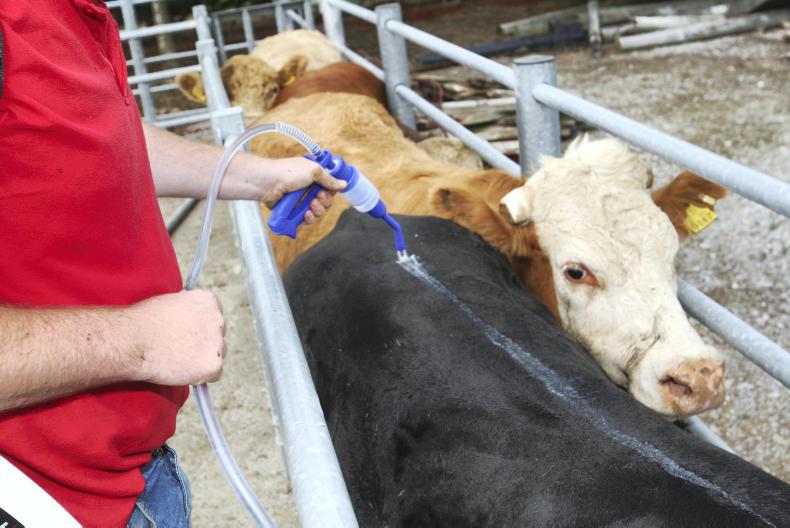
When worming cattle, grouping animals of similar size and weight can reduce the risk of underdosing when using a pour-on product.
ADVERTISEMENT
Spring-born calves are grazing more now that we're at mid-summer. As grass makes up a bigger part of the diet, young cattle will be more susceptible to worm burdens.
Temperatures are expected to rise towards the end of the week, and given the frequency of rain, warm and moist conditions are ideal for worms to multiply.
Therefore, make sure that this year’s calf crop are well covered for worms affecting the gut and lungs.
ADVERTISEMENT
Be on the lookout for signs that calves are being affected by worms, such as more frequent and harsh coughing, loose or watery faeces and a lack of thrive.
When dosing, follow the product guidelines properly in terms of administering the product. This will mean restraining animals in a secure handling unit when dosing.
Also, group animals in the handling race based on size and set the dosing rate based on the heaviest animal in each pass. This reduces the variation in liveweight and the risk of under-dosing.
While spring-born calves are most susceptible, so too are last year’s autumn weanlings and yearling stores, so keep an eye on these animals also. Mature cows should be immune to worms.
This content is available to digital subscribers and loyalty code users only. Sign in to your account, use the code or subscribe to get unlimited access.
However, if you would like to share the information in this article, you may use the headline, summary and link below:
Title: Beef management: keeping on top of worm control in young stock
With calves eating more grazed grass as the season progresses, the risk of worm burdens increases. It's now vital to keep on top of animal health with dosing.
The reader loyalty code gives you full access to the site from when you enter it until the following Wednesday at 9pm. Find your unique code on the back page of Irish Country Living every week.
CODE ACCEPTED
You have full access to the site until next Wednesday at 9pm.
CODE NOT VALID
Please try again or contact support.
Spring-born calves are grazing more now that we're at mid-summer. As grass makes up a bigger part of the diet, young cattle will be more susceptible to worm burdens.
Temperatures are expected to rise towards the end of the week, and given the frequency of rain, warm and moist conditions are ideal for worms to multiply.
Therefore, make sure that this year’s calf crop are well covered for worms affecting the gut and lungs.
Be on the lookout for signs that calves are being affected by worms, such as more frequent and harsh coughing, loose or watery faeces and a lack of thrive.
When dosing, follow the product guidelines properly in terms of administering the product. This will mean restraining animals in a secure handling unit when dosing.
Also, group animals in the handling race based on size and set the dosing rate based on the heaviest animal in each pass. This reduces the variation in liveweight and the risk of under-dosing.
While spring-born calves are most susceptible, so too are last year’s autumn weanlings and yearling stores, so keep an eye on these animals also. Mature cows should be immune to worms.
If you would like to speak to a member of our team, please call us on 01-4199525.
Link sent to your email address
We have sent an email to your address. Please click on the link in this email to reset your password. If you can't find it in your inbox, please check your spam folder. If you can't find the email, please call us on 01-4199525.
ENTER YOUR LOYALTY CODE:
The reader loyalty code gives you full access to the site from when you enter it until the following Wednesday at 9pm. Find your unique code on the back page of Irish Country Living every week.









SHARING OPTIONS