Last week we featured the farmers who are purchasing weanling or store suckler bred stock and bringing them through to finishing. This week, we are looking at six farmers who are bringing their own animals through from birth to slaughter.
These farmers are breeding cattle for themselves, not a buyer at a mart, with the important thing being that breeding and management decisions taken affects the animal performance throughout; from day one right up to the point of slaughter.
It can be incredibly rewarding, to see four years of work; from insemination/breeding to the finished product – the slaughter-fit animal.
More than this, in times of high weanling and store prices, these finishers who held off on selling store cattle last year have been justly rewarded with beef price this year, and are further insulated with their crop of animals for slaughter in 2026.
Graham Kavanagh, Kilbride, Co Carlow
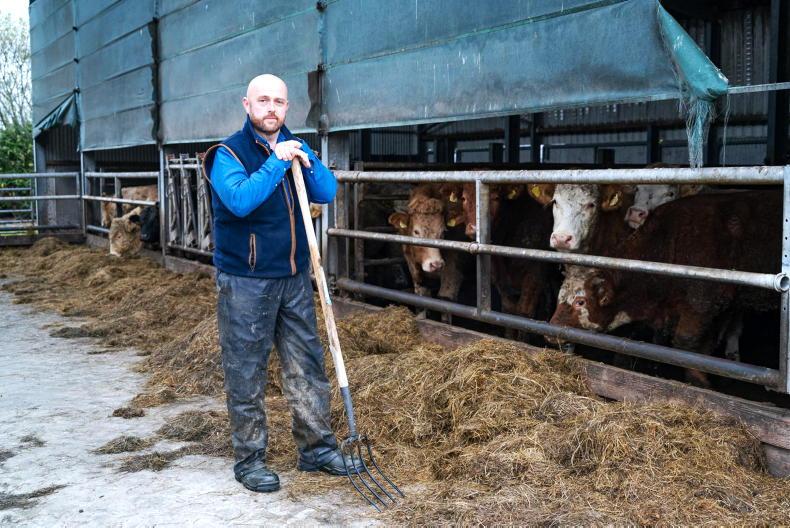
Graham Kavanagh farms in Kilbride, Co Carlow just between Bunclody in Co Wexford and Ballon in Co Carlow. He farms 180 acres and runs a 95-cow suckler herd bringing everything to finish.
Land type is mixed with some dry ground and heavy mark in areas. The suckler herd is split calving, with half of the herd calving in autumn and the other half calving in spring. This is to spread out workload and allows him to finish cattle at different times of the year. Bulls are finished at under 16 months with the majority of the heifers finished at 20 months of age.
Genetics
The herd is based on 100% Limousin genetics with Limousin cows crossed with Limousin bulls. Three Limousin stock bulls are used on the farm with Graham focusing on genetics that will deliver fast-growing, high-grading progeny coupled with ease of calving and docility.
Carcase weights for bulls have been around 44okg, while heifers are coming in at 365-400kg depending on age at slaughter. The farm is a participant in Suckler Carbon Efficiency Programme (SCEP) and the National Beef Welfare Scheme. The average CBV for the 2024 slaughtered heifers was €503 with the young bulls coming in with a CBV of €534. In the future, Graham aims to keep cow numbers where they are with no major increase or decrease in the next few years.
He is in a local discussion group with Teagasc. All animals are processed with ABP in Co Waterford.
Michael Heffernan, Stradbally,
Co Laois
Michael Heffernan farms alongside his son, Stephen, just outside Vicarstown in Stradbally, Co Laois. The farm is a mixed tillage and suckler to finishing farm. The farm also grows fodder beet and maize which is fed on farm and some sold.
The Heffernans are quite unusual in that they are only suckler farming in the last few years. Previous to that, they were finishing up to 500 cattle annually, buying them predominantly in the west. However, it was getting increasingly difficult to buy the right type of cattle at a price that could leave a margin, so they went about bulling heifers and have built up cow numbers to 170 calving this year, with a plan to calve 200 next year.
Cow type
Cow type is a Limousin-cross Belgian Blue with two Charolais bulls, two Limousin bulls and an Aberdeen Angus bull on the farm. The Aberdeen Angus bull was purchased this year to breed heifers. Bulls are finished on the farm at under 16 months at 400kg carcase weight and above it. Heifers are finished off grass at the end of the second grazing season.
The average CBV for the 2024 slaughtered heifers was €491 while the average CBV of the young bulls in 2024 was €480.
All cattle are processed through Dawn Meats in Slane, Co Meath.
Thomas Carroll, Stradbally, Co Laois
Thomas Carroll farms in Co Laois between Rathdowney and Borris-on-Ossory. He farms full time with the farm split across two different blocks.
He is farming about 200 acres in total. The farm grows approximately 45 acres of barley each year with some of that going for malting with the remainder kept for on farm feeding. The suckler herd consists of 40 suckler cows with Thomas also buying in about 50 weanlings each year for finishing. All of the progeny from the suckler herd are also finished.
Bought-in weanlings are a mix of bulls and heifers with weanlings predominantly purchased in Roscrea and Ballinakill with a number also bought privately each year.
Thomas likes to focus on continental genetics when buying weanlings with Charolais and Limousin genetics preferred at about 300-350kg. Cow type on the farm is Limousin X Parthenaise with a Piedmontese bull also used on the farm in recent years. The Piedmontese bull is generally run with heifers.
Grazing
Cows calve in February and March each year. Bulls are generally slaughtered at 20-24 months, with heifers slaughtered off grass at the end of the second grazing season. Thomas is a participant in the SCEP. The average CBV for the 2024 slaughtered heifers on Thomas’s farm was €411 while young bulls averaged €427.
Thomas’s cattle are processed through Ashbourne Meats, Roscrea.
Paul and Mark
Ronan, Mullingar, Co Westmeath
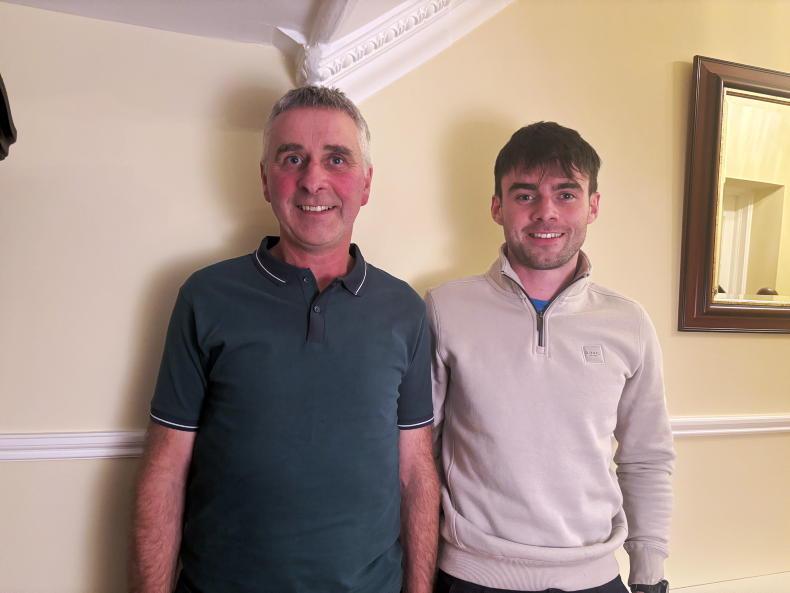
Paul and Mark Ronan, Mullingar, Co Westmeath.
Father-and-son team Paul and Mark Ronan are running a simple system that is delivering for their farm.
A herd of 70 Limousin-cross cows are crossed back to Limousin stock bulls, with Paul’s preference being to buy three- to four-year-old proven bulls with easy-calving genetics. Charolais bulls had been used in the past on mature cows, but the ease of calving and vigour associated with the Limousin breed swayed Paul and Mark to 100% Limousin, with Mark noting no negative effect on carcase weight or confirmation being recorded on farm.
Cows are calved from St Patrick’s day on and turned straight to grass to reduce labour and disease risk. The mix of very dry and some heavier land on the farm means that cattle can stay at grass late in to the year on the drier limestone ground, while the heavier ground will keep pushing out grass in dry periods of weather.
Pasture quality
A conscious effort has been made to improve silage and pasture quality in recent years, with cutting dates pulled back by three weeks and more reseeding implemented on the grazing platform. Both bullocks and heifers are slaughtered off grass in their third summer, with concentrates introduced from mid-summer onwards, resulting in minimal concentrates used overall in the system.
Paul’s keen eye for drafting stock results in a high percentage of in-spec cattle killed off farm. The Ronans process all their cattle through Kepak Kilbeggan.
Brian Jordan, Newtownforbes, Co Longford
Brian Jordan manages the suckler beef herd on the Castle Forbes Estate outside Newtownforbes, Co Longford. The herd consists of 100 spring-calving cows, with the autumn-calving herd dissolved a number of years. Charolais stock bulls are used on mature Limousin cows, though some Charolais and Blue-cross cows are also present, with Brian utilising Limousin bulls on these. AI is used on replacement heifers, with a mix of home bred and high-index heifers purchased in. Calving begins in February and goes through to April.
Under 16-month bull beef was previously trialled on farm, but due to costs Brian has switched over to a system that allows a second summer at grass for the bulls, with young bulls housed and finished indoors at this time of year at 21-22 months.
Weights
Regarding carcase weights and grades, bulls with a carcase of 440-450kg are targeted, with Brian stating the excellent year at grass in 2025 could push bulls in to higher weights.
Heifers are slaughtered under 24-months at a carcase weight of 370-380kg, with some heifers hitting 400kg and above. Heifers are grading mainly U- and R+, while bulls are predominantly U=. Cattle are finished using a ration comprising barley and maize, with bulls built up to a daily intake of up to 14kg before slaughter.
Brian has been conscious about using figures from ICBF in his breeding decisions, which has shown with the CBV results below. Brian processes his cattle through Liffey Meats.
Noel and David Blackburn, Lifford, Co Donegal
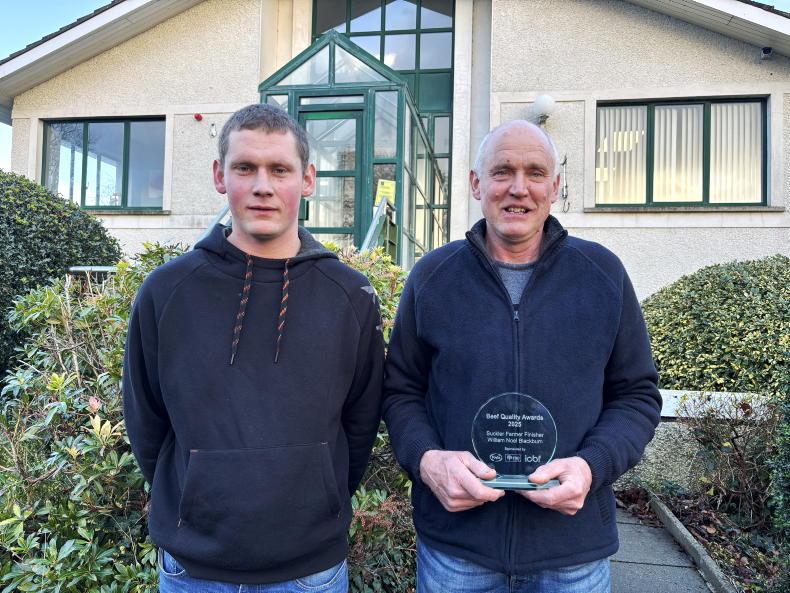
David and William Noel Blackburn CBV winners for the suckler to beef awards.
Noel and David Blackburn operate a suckler-to-beef finishing system combined with 60 purchased weanlings. The duo calve down 20 spring-calving cows in April for ease of management, with cows going straight to grass or calved at grass. Limousin is the cow type of choice, with predominantly black Limousin heifers targeted when purchasing. These cattle are crossed back to a terminal Charolais stock bull, with high-index bulls with relatively easy-calving figures purchased in Raphoe Mart when required.
Bulls are finished as under 20-month bull beef, slaughtered in January out of the shed. Keeping bulls with good swards of grass in front of them in the second grazing season keeps bulls content and allows for cheap carcase gain, with meal only introduced at grass a few weeks ahead of housing to ease the transition. When indoors, high-quality silage is fed, with concentrate levels increased gradually up to ad-lib feeding for the final few weeks.
Meal
Heifers are slaughtered out of the shed in the second winter, with good-quality silage combined with 4-5kg of meal used to get adequate carcase weight and fat cover. Bulls are slaughtered between 400-500kg, with most falling in to the middle of this range, though fat cover will often dictate when bulls are drafted as opposed to weight, while a target of U= and U- on confirmation is the norm. The Blackburns process their cattle through Foyle Foods.
Last week we featured the farmers who are purchasing weanling or store suckler bred stock and bringing them through to finishing. This week, we are looking at six farmers who are bringing their own animals through from birth to slaughter.
These farmers are breeding cattle for themselves, not a buyer at a mart, with the important thing being that breeding and management decisions taken affects the animal performance throughout; from day one right up to the point of slaughter.
It can be incredibly rewarding, to see four years of work; from insemination/breeding to the finished product – the slaughter-fit animal.
More than this, in times of high weanling and store prices, these finishers who held off on selling store cattle last year have been justly rewarded with beef price this year, and are further insulated with their crop of animals for slaughter in 2026.
Graham Kavanagh, Kilbride, Co Carlow
Graham Kavanagh farms in Kilbride, Co Carlow just between Bunclody in Co Wexford and Ballon in Co Carlow. He farms 180 acres and runs a 95-cow suckler herd bringing everything to finish.
Land type is mixed with some dry ground and heavy mark in areas. The suckler herd is split calving, with half of the herd calving in autumn and the other half calving in spring. This is to spread out workload and allows him to finish cattle at different times of the year. Bulls are finished at under 16 months with the majority of the heifers finished at 20 months of age.
Genetics
The herd is based on 100% Limousin genetics with Limousin cows crossed with Limousin bulls. Three Limousin stock bulls are used on the farm with Graham focusing on genetics that will deliver fast-growing, high-grading progeny coupled with ease of calving and docility.
Carcase weights for bulls have been around 44okg, while heifers are coming in at 365-400kg depending on age at slaughter. The farm is a participant in Suckler Carbon Efficiency Programme (SCEP) and the National Beef Welfare Scheme. The average CBV for the 2024 slaughtered heifers was €503 with the young bulls coming in with a CBV of €534. In the future, Graham aims to keep cow numbers where they are with no major increase or decrease in the next few years.
He is in a local discussion group with Teagasc. All animals are processed with ABP in Co Waterford.
Michael Heffernan, Stradbally,
Co Laois
Michael Heffernan farms alongside his son, Stephen, just outside Vicarstown in Stradbally, Co Laois. The farm is a mixed tillage and suckler to finishing farm. The farm also grows fodder beet and maize which is fed on farm and some sold.
The Heffernans are quite unusual in that they are only suckler farming in the last few years. Previous to that, they were finishing up to 500 cattle annually, buying them predominantly in the west. However, it was getting increasingly difficult to buy the right type of cattle at a price that could leave a margin, so they went about bulling heifers and have built up cow numbers to 170 calving this year, with a plan to calve 200 next year.
Cow type
Cow type is a Limousin-cross Belgian Blue with two Charolais bulls, two Limousin bulls and an Aberdeen Angus bull on the farm. The Aberdeen Angus bull was purchased this year to breed heifers. Bulls are finished on the farm at under 16 months at 400kg carcase weight and above it. Heifers are finished off grass at the end of the second grazing season.
The average CBV for the 2024 slaughtered heifers was €491 while the average CBV of the young bulls in 2024 was €480.
All cattle are processed through Dawn Meats in Slane, Co Meath.
Thomas Carroll, Stradbally, Co Laois
Thomas Carroll farms in Co Laois between Rathdowney and Borris-on-Ossory. He farms full time with the farm split across two different blocks.
He is farming about 200 acres in total. The farm grows approximately 45 acres of barley each year with some of that going for malting with the remainder kept for on farm feeding. The suckler herd consists of 40 suckler cows with Thomas also buying in about 50 weanlings each year for finishing. All of the progeny from the suckler herd are also finished.
Bought-in weanlings are a mix of bulls and heifers with weanlings predominantly purchased in Roscrea and Ballinakill with a number also bought privately each year.
Thomas likes to focus on continental genetics when buying weanlings with Charolais and Limousin genetics preferred at about 300-350kg. Cow type on the farm is Limousin X Parthenaise with a Piedmontese bull also used on the farm in recent years. The Piedmontese bull is generally run with heifers.
Grazing
Cows calve in February and March each year. Bulls are generally slaughtered at 20-24 months, with heifers slaughtered off grass at the end of the second grazing season. Thomas is a participant in the SCEP. The average CBV for the 2024 slaughtered heifers on Thomas’s farm was €411 while young bulls averaged €427.
Thomas’s cattle are processed through Ashbourne Meats, Roscrea.
Paul and Mark
Ronan, Mullingar, Co Westmeath
Paul and Mark Ronan, Mullingar, Co Westmeath.
Father-and-son team Paul and Mark Ronan are running a simple system that is delivering for their farm.
A herd of 70 Limousin-cross cows are crossed back to Limousin stock bulls, with Paul’s preference being to buy three- to four-year-old proven bulls with easy-calving genetics. Charolais bulls had been used in the past on mature cows, but the ease of calving and vigour associated with the Limousin breed swayed Paul and Mark to 100% Limousin, with Mark noting no negative effect on carcase weight or confirmation being recorded on farm.
Cows are calved from St Patrick’s day on and turned straight to grass to reduce labour and disease risk. The mix of very dry and some heavier land on the farm means that cattle can stay at grass late in to the year on the drier limestone ground, while the heavier ground will keep pushing out grass in dry periods of weather.
Pasture quality
A conscious effort has been made to improve silage and pasture quality in recent years, with cutting dates pulled back by three weeks and more reseeding implemented on the grazing platform. Both bullocks and heifers are slaughtered off grass in their third summer, with concentrates introduced from mid-summer onwards, resulting in minimal concentrates used overall in the system.
Paul’s keen eye for drafting stock results in a high percentage of in-spec cattle killed off farm. The Ronans process all their cattle through Kepak Kilbeggan.
Brian Jordan, Newtownforbes, Co Longford
Brian Jordan manages the suckler beef herd on the Castle Forbes Estate outside Newtownforbes, Co Longford. The herd consists of 100 spring-calving cows, with the autumn-calving herd dissolved a number of years. Charolais stock bulls are used on mature Limousin cows, though some Charolais and Blue-cross cows are also present, with Brian utilising Limousin bulls on these. AI is used on replacement heifers, with a mix of home bred and high-index heifers purchased in. Calving begins in February and goes through to April.
Under 16-month bull beef was previously trialled on farm, but due to costs Brian has switched over to a system that allows a second summer at grass for the bulls, with young bulls housed and finished indoors at this time of year at 21-22 months.
Weights
Regarding carcase weights and grades, bulls with a carcase of 440-450kg are targeted, with Brian stating the excellent year at grass in 2025 could push bulls in to higher weights.
Heifers are slaughtered under 24-months at a carcase weight of 370-380kg, with some heifers hitting 400kg and above. Heifers are grading mainly U- and R+, while bulls are predominantly U=. Cattle are finished using a ration comprising barley and maize, with bulls built up to a daily intake of up to 14kg before slaughter.
Brian has been conscious about using figures from ICBF in his breeding decisions, which has shown with the CBV results below. Brian processes his cattle through Liffey Meats.
Noel and David Blackburn, Lifford, Co Donegal
David and William Noel Blackburn CBV winners for the suckler to beef awards.
Noel and David Blackburn operate a suckler-to-beef finishing system combined with 60 purchased weanlings. The duo calve down 20 spring-calving cows in April for ease of management, with cows going straight to grass or calved at grass. Limousin is the cow type of choice, with predominantly black Limousin heifers targeted when purchasing. These cattle are crossed back to a terminal Charolais stock bull, with high-index bulls with relatively easy-calving figures purchased in Raphoe Mart when required.
Bulls are finished as under 20-month bull beef, slaughtered in January out of the shed. Keeping bulls with good swards of grass in front of them in the second grazing season keeps bulls content and allows for cheap carcase gain, with meal only introduced at grass a few weeks ahead of housing to ease the transition. When indoors, high-quality silage is fed, with concentrate levels increased gradually up to ad-lib feeding for the final few weeks.
Meal
Heifers are slaughtered out of the shed in the second winter, with good-quality silage combined with 4-5kg of meal used to get adequate carcase weight and fat cover. Bulls are slaughtered between 400-500kg, with most falling in to the middle of this range, though fat cover will often dictate when bulls are drafted as opposed to weight, while a target of U= and U- on confirmation is the norm. The Blackburns process their cattle through Foyle Foods.






SHARING OPTIONS