


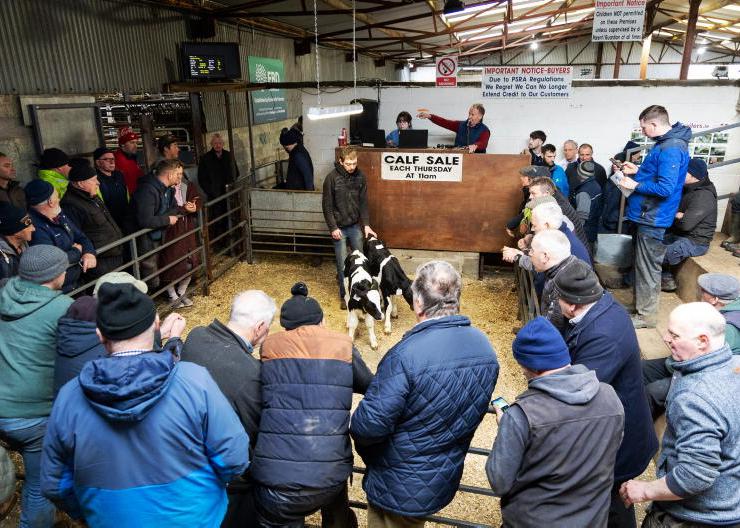
The past year will be remembered fondly by those selling calves, and a number of mart managers expect the trade to maintain a similar level in 2026.
Carlow Mart manager, Jimmy Walsh, expects calves to continue to sell well.
“I’d say we’ll start pretty good and I would expect it to stay that way. Farmers made a good few pound from calves this year and they’ll go on and buy when the numbers come out,” he said.
“There are enough farmers who will take advantage of that quiet spell before the exporters really start to come into it.
“Once the exports contracts are there, exporters will have a huge percentage of calves from March onwards.
“I know prices have gone through the roof, but the big thing we’ve seen in the past year is a good increase in the standard, breed type, and quality of calves. They were a long way ahead of previous years.
“Go back two or three years and we had a lot more poorer calves, but in the last year the quality has improved quite a lot. With the way milk price is going the value of the calf will be more important to dairy farmers than it has been for many years.”
Neilus McAuliffe, manager in both Castleisland and Dingle marts is similarly positive about the 2026 calf trade.
“I think we’ll have a fine trade in the spring. There’s a pile of farmers going to rear calves next year, they got paid well for doing it this year and they’re going to go back at it.
“A lot of them are under stocked and I think that if they’re set up for calves, that’s the option they’ll take.
“It’s a serious way to get into big numbers of stock for smaller money and when older stock got so expensive the calf became a more attractive option. I expect prices to hold well as the demand will be there.”
Plateau
Richard Kirwan, manager of New Ross Mart, thinks prices have plateaued compared to what happened last spring.
“While there’s a bit of concern around bluetongue, I don’t see a wicked change coming in price. Farmer demand stayed strong late in the year and I expect that to continue.”
Bandon Mart manager, Seán Dennehy, echoed similar sentiments: “We mightn’t see the crazy jumps in prices of this year but people will be more prepared compared to last spring when prices came as a bit of a shock.”
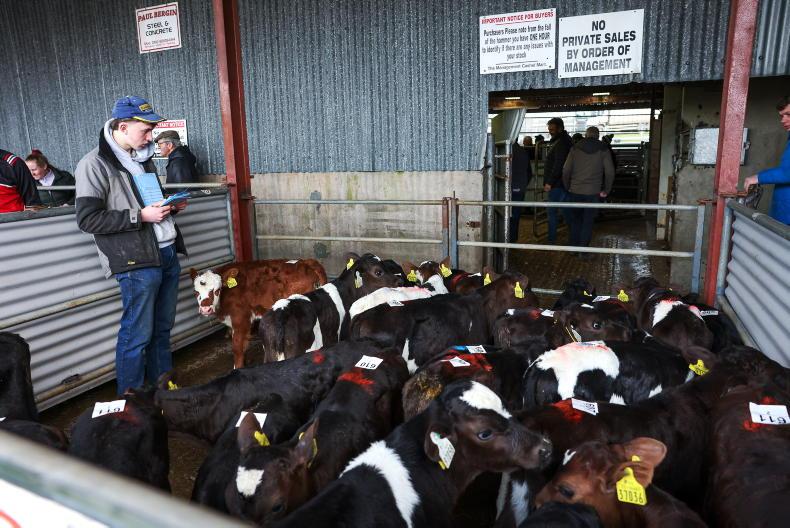
He noted that good demand from farmers and exporters balanced out during the year with one picking up the slack if the other wasn’t as active at the ringside: “The trade for export calves kept going until late July or early August and farmers fell back in then. A well-fed calf with a shiny coat will sell all day long. Farmers like the strong 70kg plus calf that’s well reared, buyer’s will go the extra mile for those calves.
“On the other side of it, calves under 50kg will be heavily discounted. We’re seeing that even in the autumn, while very few calves make less than €200 there’s still an odd light calf that is around €50. They’re scarce but still appear.”


SHARING OPTIONS