


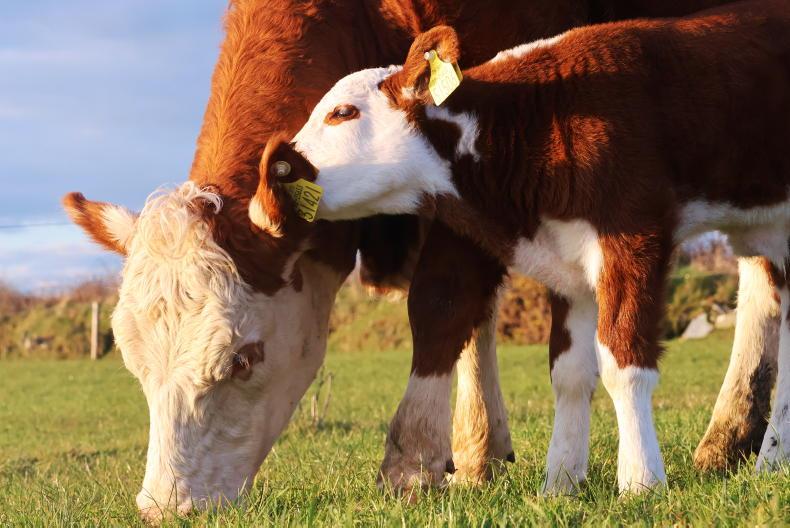
Farmers have been cautiously letting stock out to grass over the last fortnight. Travelling around the country, there are now big numbers out with farmers opting instead to turn out small numbers of lighter stock or fresh-calved cows. While we have seen much drier weather over the last week or so, some heavy rain last night (Tuesday) is a reminder that winter is not yet fully over.
While we often talk about getting silage ground grazed off, a good point was raised this week by William Treacy, who is hosting one of the spring farm grass walks on his farm in Hackballscross in Louth. For those doing pit silage for first cut, it will be hard to get silage fields uniform if we tackle in to grazing them now, with the end result being some very heavy covers that may lodge alongside some covers that are on the lighter side. In an ideal world, we would get all silage ground grazed off, removing winter growth for optimum silage quality. What William done last year, and intends to repeat this year, is skip the spring grazing and pull his silage cutting date back to mid-May. Even at this rate, there will be one or two fields that will be too heavy, but these can be baled out if needed. It’s food for thought given the challenges that are facing farmers getting ground grazed off.
William Treacy, Hackballscross, Co Louth
All we have out so fair is last year’s dairy beef heifers. These were turned out Sunday and despite some rain last night, they’ve settled to grass fine. Hopefully in the next week or so we will get some more turned out, with dairy-beef bulls, our own suckler weanling heifers and some of our spring-calving cows the priority to get to grass. I’ve introduced 1-1.5kg/head of concentrates to the spring-calvers to keep them ticking over, along with excellent quality silage. About 2/3rd of the silage ground has received slurry at this stage. I’ve moved away from grazing silage ground in spring, as it was difficult to get all grazed and back uniform then for cutting in late May. Instead, I cut in mid-May, with any really heavy paddocks at risk of lodging baled out before this. Silage quality wasn’t affected, with silage testing 72-74 DMD.
System: Suckler to beef
Soil Type: Variable
Farm cover (kg/DM/ha): 1,030
Growth (kg/DM/ha/day): 14
Demand (kg/DM/ha/day): 2
Jack Spillane, Tipperary Calf Farm, Co Tipperary
We turned out more cattle on Friday and Monday last, expecting the weather to be better than it has come. While no major damage was done anywhere, our driest fields were some of the last grazed in the back end/winter and these have relatively low covers on them, with our heavier ground that has grass on it still sticky. We will rehouse a portion of the cattle that were turned out to ease pressure. Grass growth is slow to get going, especially in grazed off fields. Sixty-two heifers are still grazing the Westerwolds sward and should get another five or six days from it. We have approximately two weeks of slurry storage left before we will have to lower tanks. We have just 27 calves on-farm at the minute, with another 40 due to arrive today. We would normally have more than 200 on-farm at this time of year.
System: Dairy calf to beef
Soil Type: Variable
Farm cover (kg/DM/ha): 670
Growth (kg/DM/ha/day): 3
Demand (kg/DM/ha/day): 14
Derek O’ Donoghue, Salesian College, Co Limerick
We have 30 yearling dairy beef cattle out to grass now and they have been grazing away fine. We would likely have more out, but we were TB testing this week. Weather dependent, we will let out an additional 30-40 bullocks, as we have a lot of heavy covers that we need numbers for to get through. The heavy covers have made it difficult to get out with slurry as well, with only about 20% of the farm having seen slurry so far, to keep tank levels right. Sixty of the highest-CBV beef calves from the dairy herd have been retained this year across a variety of breeds, including some calves from GENE Ireland bulls. No fertiliser had been spread up to now, but we are going with 34 units/acre of protected urea across most of the grazing block. We would expect lambs to start hitting the ground in the next week.
System: Dairy calf to beef/sheep
Soil Type: Variable
Farm cover (kg/DM/ha): 1,161
Growth (kg/DM/ha/day): N/A
Demand (kg/DM/ha/day): 9



SHARING OPTIONS