Last week, thousands of farmers, agri contractors and hauliers protested across the country in response to the ongoing fuel crisis.
Since the war broke out in the Middle East, fuel prices have spiralled out of control, putting heavy users of fuel under serious financial strain.
Over the course of the week, protests built momentum, some morphing into blockades following countrywide unrest at what many perceive as a lack of responsive action by the Government to support those affected by the significant rise in fuel costs.
On Sunday, the Government announced a further reduction in fuel tax in addition to the €250m package allocated in recent weeks.
According to the Minister for Agriculture Food and the Marine Martin Heydon the package – which offers €100m in relief for farmers and agri contractors – was in the making for some time prior to the protests taking place.
Supports
As with the 3c/l (VAT inclusive) excise cut on green diesel introduced a number of weeks ago, the further 2.4c/l (VAT inclusive) cut announced on Sunday – which came into effect Tuesday night – brings little solace to the agri sector at a time when prices have risen by as much as 70c/litre, up from under €1/l before the US attacked Iran.
Including the previously announced 2c/l reduction in the NORA levy, this combined 7.4c/l support, accounts for just over 10.5% of what fuel has actually rise by. These temporary supports are set to remain in place until July 2026.
The planned 2c/l increase in carbon tax, which was due to come into effect on 1 May 2026 has also been postponed until budget day in October.
Further measures
A further support to aid farmers, agri contractors, hauliers and fishers was also announced.
In place until July, it will provide €20 million per month in fuel subsidy supports at a rate equivalent to approximately 20c/l of green diesel used based on verified fuel consumption in 2025.
There will also be a back dated payment for March.
The Government has said that approximately 120,000 farmers and 1,500 full-time agri contractors will be eligible to apply for support.
“Eligibility will require applicants to demonstrate active farming or contracting status, tax compliance and verifiable fuel usage.
“A system of checks and inspections will be implemented to ensure accountability. EU state aid cover will also be necessary,” they added.
The Association of Farm & Forestry Contractors in Ireland (FCI) is still awaiting the final details of the Government’s Temporary Energy Support Scheme proposals for agricultural and forestry contractors, issued at the weekend. “We understand that the deal will include up to a 20c/l payment to Agricultural and Forestry Contractors as a lump sum based on their fuel usage levels between 1 March 2025 and 31 July 2025,” said Ann Gleeson Hanrahan, managing director at FCI.
“We also understand that contractors will have to produce fuel invoices from that period to verify their use levels and we are encouraging all of our FCI members to start preparing their fuel invoice paperwork now in advance of the opening of the proposed Temporary Energy Support Scheme for our sector,” she said.
“We understand that all contractors applying for the funding, which will be paid as a single lump sum payment, will be required to be tax compliant, to have a VAT registration number and the applicant will be required to have a minimum turnover threshold level,” she said.
FCI is currently working with the Department of Agriculture, Food and the Marine to create a definition of what is an agricultural and forestry contractor, which, it has been confirmed, will also be a requirement of the proposed scheme.
“It is also important for FCI that at last, following many years of information meeting with various Government, that the role of the agricultural and forestry contractor has been recognised by the Department of Agriculture, Food and the Marine and the entire Irish agricultural sector,” she said.
“We now look forward to the creation of a national registry of agricultural and forestry contractors as we begin the work of the first ever Farm Contractor Working Group established by the DAFM, which has been scheduled to hold its first meeting in the coming days,” she added.
Contractor comment: Cormac McBreen, Coral Plant and Agri
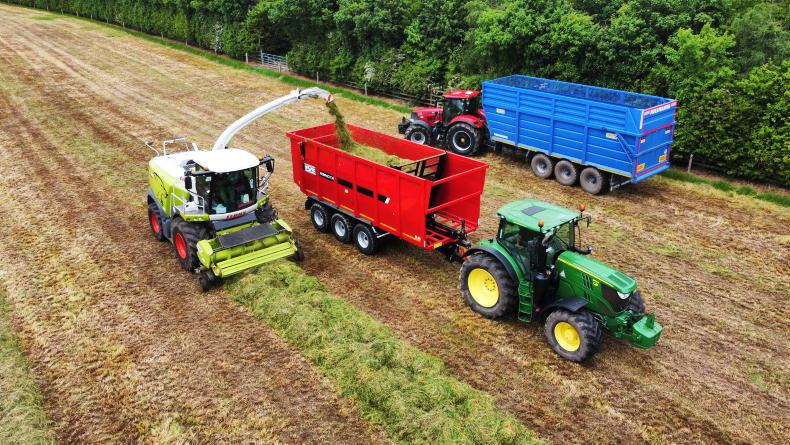
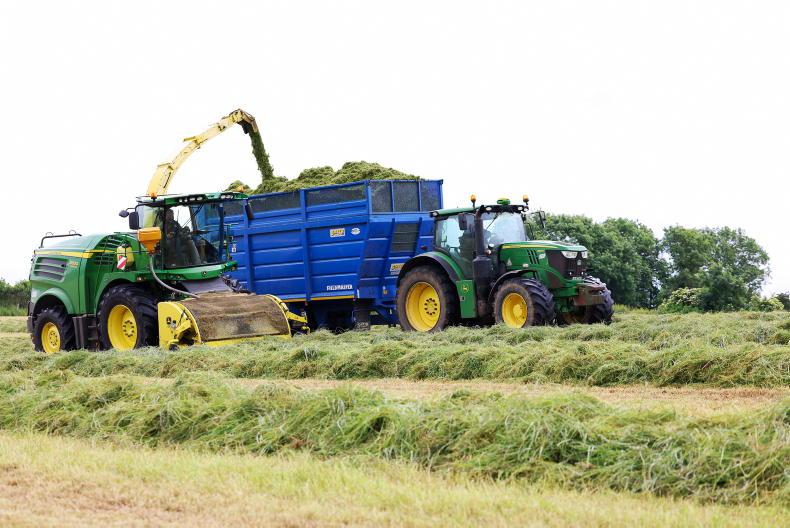
Cormac and Alden McBreen run Coral Plant and Agri, an agricultural contracting business based in Shercock, Co Cavan. Outside of this, they have a herd of pedigree Charolais cattle and are involved in quarrying and cranes. Cormac was one of many who protested last week against the cost of fuel.
Contractors are ringing me under serious pressure, worrying that they will go to the walls this year
Mesmerised with the events last week, and the uncertainty and disbelief, Cormac has decided to hold an auction to sell all of his contracting equipment, some of which is brand new and has never been used.
“The 2.4c/l cut simply isn’t enough. Contractors are ringing me under serious pressure, worrying that they will go to the walls this year. I need to see the fine details on the rebate scheme, but it doesn’t seem to be inclusive enough,” he said.
“There are plenty of smaller contractors out there who aren’t VAT registered. And in terms of rebates, they are too difficult to claim back, especially for the majority of contractors, who don’t have admin staff. It’s a cap of some sort to fuel prices on the pump we really want, a cap that everyone can avail of”.
“I left home last Tuesday morning in my tractor to protest against what I’m calling the cost-of-living crisis. I took to the streets because farmers, agricultural contractors and the Joe Soap ordinary working people of this country are struggling to make ends meet.”
He continued: “This is happening while our Government sends huge sums of money to other countries. Charity needs to start at home, and the people of Ireland need to be a priority. The Government handled last week’s events very poorly.
“They should have come down to O’Connell Street and listened to the people, and things wouldn’t have escalated if they only engaged with us.
As an agricultural contractor, my farmer clients simply cannot afford to pay the increases in rates I need to pass on
“On my way home from Dublin on Sunday, after a long think over the week, I made the decision to recession proof my quarrying and crane business by pulling the pin on my agricultural contracting business. Agricultural contracting in the current climate is the biggest sinking ship in this country.
“As an agricultural contractor, my farmer clients simply cannot afford to pay the increases in rates I need to pass on with the rising price of diesel, labour and machinery etc.
“There will be fewer and fewer contractors going forward, simply because they won’t survive. It’s turned into a false economy,” he said.
“The vast majority of contractors in Ireland have an additional source of income, or they inherited a ball of money from elsewhere to get started and buy equipment. If you run the figures on a contracting business of today, they simply don’t add up anymore.
“Labour, machinery and insurance costs have gone through the roof. Rises to the minimum wages and the introduction of mandatory pension funds – huge spikes in insurance costs. And in terms of machinery, for example – in 2019, I bought a new Massey Ferguson 7720 for €95,000 plus VAT.
“Today, the equivalent Massey Ferguson 7S.210 is €175,000 plus VAT. I run 10 tractors, which means it’s €800,000 more to update my fleet. You need good machinery to provide a good service. And this is without even taking in the serious hike in diesel prices. Our diesel bill would be up €60,000 to €70,000 in June alone, if we didn’t pull out,” Cormac said.
“The reality here is that the easy decision is to bury your head in the sand and keep going, but people need to take a serious look at their businesses, in particular agricultural contracting. Contractors work day and night, killing themselves, and for what?
“We stand in farmers’ yards trying to get the rate we need to do the work – the farmers can’t afford to pay the rates we need, so what’s the point anymore?
“Contracting puts a serious strain on people’s mental health and family relationships. Contractors work so hard and aren’t rewarded for the work they do,” he said.
IFA president Francie Gorman acknowledged that the package of measures announced by the Government is significant. However, he said the situation will need to be kept under constant review to ensure the agri-sector is protected in these highly volatile times.
He said: “The Government did not seek the agreement of IFA to this package. The crisis in the Middle East is still extremely volatile, and farmers and agri contractors are under huge financial pressure.
The structure and rollout of this scheme must happen quickly
“It is vital that this scheme must be user-friendly and flexible to ensure that those who need support get it quickly,” he added.
“The structure and rollout of this scheme must happen quickly, and the Department needs to ensure it is efficient and effective. The concern among farmers and agri contractors now is that it will be overly bureaucratic and too slow,” he said.
“The Government must do far more to address the frustration and anger in rural Ireland, particularly around the cost of doing business and over-regulation,” he said.
Last week, thousands of farmers, agri contractors and hauliers protested across the country in response to the ongoing fuel crisis.
Since the war broke out in the Middle East, fuel prices have spiralled out of control, putting heavy users of fuel under serious financial strain.
Over the course of the week, protests built momentum, some morphing into blockades following countrywide unrest at what many perceive as a lack of responsive action by the Government to support those affected by the significant rise in fuel costs.
On Sunday, the Government announced a further reduction in fuel tax in addition to the €250m package allocated in recent weeks.
According to the Minister for Agriculture Food and the Marine Martin Heydon the package – which offers €100m in relief for farmers and agri contractors – was in the making for some time prior to the protests taking place.
Supports
As with the 3c/l (VAT inclusive) excise cut on green diesel introduced a number of weeks ago, the further 2.4c/l (VAT inclusive) cut announced on Sunday – which came into effect Tuesday night – brings little solace to the agri sector at a time when prices have risen by as much as 70c/litre, up from under €1/l before the US attacked Iran.
Including the previously announced 2c/l reduction in the NORA levy, this combined 7.4c/l support, accounts for just over 10.5% of what fuel has actually rise by. These temporary supports are set to remain in place until July 2026.
The planned 2c/l increase in carbon tax, which was due to come into effect on 1 May 2026 has also been postponed until budget day in October.
Further measures
A further support to aid farmers, agri contractors, hauliers and fishers was also announced.
In place until July, it will provide €20 million per month in fuel subsidy supports at a rate equivalent to approximately 20c/l of green diesel used based on verified fuel consumption in 2025.
There will also be a back dated payment for March.
The Government has said that approximately 120,000 farmers and 1,500 full-time agri contractors will be eligible to apply for support.
“Eligibility will require applicants to demonstrate active farming or contracting status, tax compliance and verifiable fuel usage.
“A system of checks and inspections will be implemented to ensure accountability. EU state aid cover will also be necessary,” they added.
The Association of Farm & Forestry Contractors in Ireland (FCI) is still awaiting the final details of the Government’s Temporary Energy Support Scheme proposals for agricultural and forestry contractors, issued at the weekend. “We understand that the deal will include up to a 20c/l payment to Agricultural and Forestry Contractors as a lump sum based on their fuel usage levels between 1 March 2025 and 31 July 2025,” said Ann Gleeson Hanrahan, managing director at FCI.
“We also understand that contractors will have to produce fuel invoices from that period to verify their use levels and we are encouraging all of our FCI members to start preparing their fuel invoice paperwork now in advance of the opening of the proposed Temporary Energy Support Scheme for our sector,” she said.
“We understand that all contractors applying for the funding, which will be paid as a single lump sum payment, will be required to be tax compliant, to have a VAT registration number and the applicant will be required to have a minimum turnover threshold level,” she said.
FCI is currently working with the Department of Agriculture, Food and the Marine to create a definition of what is an agricultural and forestry contractor, which, it has been confirmed, will also be a requirement of the proposed scheme.
“It is also important for FCI that at last, following many years of information meeting with various Government, that the role of the agricultural and forestry contractor has been recognised by the Department of Agriculture, Food and the Marine and the entire Irish agricultural sector,” she said.
“We now look forward to the creation of a national registry of agricultural and forestry contractors as we begin the work of the first ever Farm Contractor Working Group established by the DAFM, which has been scheduled to hold its first meeting in the coming days,” she added.
Contractor comment: Cormac McBreen, Coral Plant and Agri
Cormac and Alden McBreen run Coral Plant and Agri, an agricultural contracting business based in Shercock, Co Cavan. Outside of this, they have a herd of pedigree Charolais cattle and are involved in quarrying and cranes. Cormac was one of many who protested last week against the cost of fuel.
Contractors are ringing me under serious pressure, worrying that they will go to the walls this year
Mesmerised with the events last week, and the uncertainty and disbelief, Cormac has decided to hold an auction to sell all of his contracting equipment, some of which is brand new and has never been used.
“The 2.4c/l cut simply isn’t enough. Contractors are ringing me under serious pressure, worrying that they will go to the walls this year. I need to see the fine details on the rebate scheme, but it doesn’t seem to be inclusive enough,” he said.
“There are plenty of smaller contractors out there who aren’t VAT registered. And in terms of rebates, they are too difficult to claim back, especially for the majority of contractors, who don’t have admin staff. It’s a cap of some sort to fuel prices on the pump we really want, a cap that everyone can avail of”.
“I left home last Tuesday morning in my tractor to protest against what I’m calling the cost-of-living crisis. I took to the streets because farmers, agricultural contractors and the Joe Soap ordinary working people of this country are struggling to make ends meet.”
He continued: “This is happening while our Government sends huge sums of money to other countries. Charity needs to start at home, and the people of Ireland need to be a priority. The Government handled last week’s events very poorly.
“They should have come down to O’Connell Street and listened to the people, and things wouldn’t have escalated if they only engaged with us.
As an agricultural contractor, my farmer clients simply cannot afford to pay the increases in rates I need to pass on
“On my way home from Dublin on Sunday, after a long think over the week, I made the decision to recession proof my quarrying and crane business by pulling the pin on my agricultural contracting business. Agricultural contracting in the current climate is the biggest sinking ship in this country.
“As an agricultural contractor, my farmer clients simply cannot afford to pay the increases in rates I need to pass on with the rising price of diesel, labour and machinery etc.
“There will be fewer and fewer contractors going forward, simply because they won’t survive. It’s turned into a false economy,” he said.
“The vast majority of contractors in Ireland have an additional source of income, or they inherited a ball of money from elsewhere to get started and buy equipment. If you run the figures on a contracting business of today, they simply don’t add up anymore.
“Labour, machinery and insurance costs have gone through the roof. Rises to the minimum wages and the introduction of mandatory pension funds – huge spikes in insurance costs. And in terms of machinery, for example – in 2019, I bought a new Massey Ferguson 7720 for €95,000 plus VAT.
“Today, the equivalent Massey Ferguson 7S.210 is €175,000 plus VAT. I run 10 tractors, which means it’s €800,000 more to update my fleet. You need good machinery to provide a good service. And this is without even taking in the serious hike in diesel prices. Our diesel bill would be up €60,000 to €70,000 in June alone, if we didn’t pull out,” Cormac said.
“The reality here is that the easy decision is to bury your head in the sand and keep going, but people need to take a serious look at their businesses, in particular agricultural contracting. Contractors work day and night, killing themselves, and for what?
“We stand in farmers’ yards trying to get the rate we need to do the work – the farmers can’t afford to pay the rates we need, so what’s the point anymore?
“Contracting puts a serious strain on people’s mental health and family relationships. Contractors work so hard and aren’t rewarded for the work they do,” he said.
IFA president Francie Gorman acknowledged that the package of measures announced by the Government is significant. However, he said the situation will need to be kept under constant review to ensure the agri-sector is protected in these highly volatile times.
He said: “The Government did not seek the agreement of IFA to this package. The crisis in the Middle East is still extremely volatile, and farmers and agri contractors are under huge financial pressure.
The structure and rollout of this scheme must happen quickly
“It is vital that this scheme must be user-friendly and flexible to ensure that those who need support get it quickly,” he added.
“The structure and rollout of this scheme must happen quickly, and the Department needs to ensure it is efficient and effective. The concern among farmers and agri contractors now is that it will be overly bureaucratic and too slow,” he said.
“The Government must do far more to address the frustration and anger in rural Ireland, particularly around the cost of doing business and over-regulation,” he said.







SHARING OPTIONS