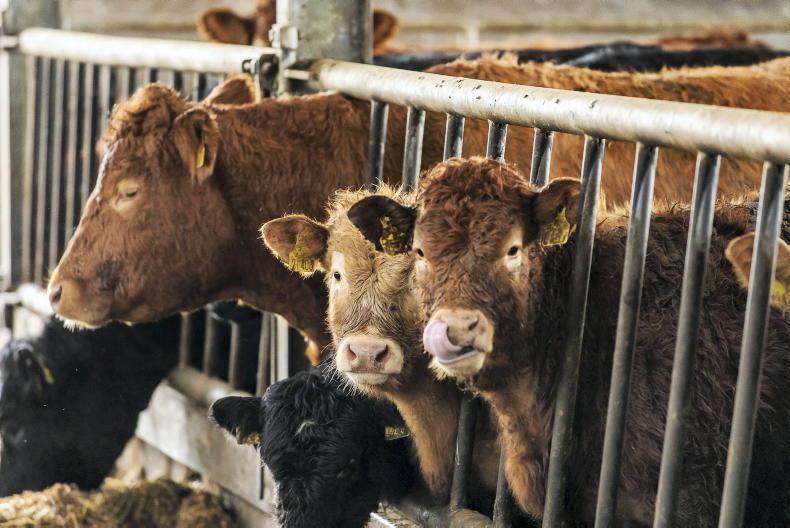
Supplementing calved cows: Challenges in getting cows turned outdoors is increasing the risk of cows losing excessive condition and knock-on consequences in reproductive performance.
The maximum weight loss from calving to turnout should be half a condition score, and this should only occur where cows are in optimum condition at calving.
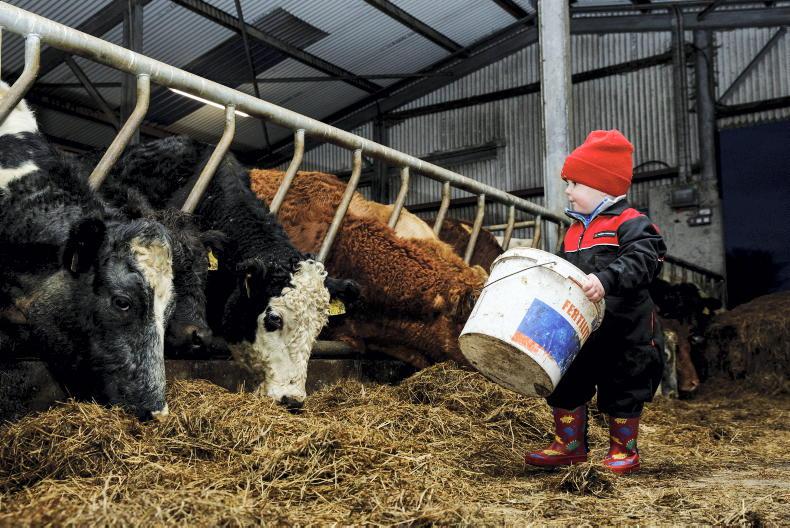
Where mature cows are offered ad-lib access to average- to good-quality silage of 68 to 70 DMD, then there will typically be no need to offer concentrate supplementation.
But if body condition is below target to start with or silage quality is lower and the period from calving to turnout is over four to six weeks, then concentrate supplementation is likely to be warranted.
At such quality silage 1kg to 1.5kg is typically sufficient, but for first-calf heifers or poorer-quality silage feeding levels will need to be stepped up.
This week’s Focus section on reseeding includes valuable information for those considering reseeding in 2026.
There is no doubting the benefits of reseeding in terms of the potential to grow more grass and scope for improved forage quality and animal performance. It is a necessity for farmers operating at a high stocking rate and is well capable of delivering a return on investment.
However, for many farmers and particularly those operating at a lower stocking rate, there are improvements that can and should be made before taking the step to reseed.
For a reseed to thrive, it needs good soil fertility to establish and allow the sward to persist. As such, the starting point for a lot of swards earmarked for reseeding is ensuring phosphorus and potassium levels and soil pH are sufficient.
Addressing these factors will also support a significant improvement in grassland productivity, which can support a higher stocking rate.
Slurry application: With turnout knocked back again this week it is probable that some silage ground with an existing cover of grass may be closed without grazing. While the preference is to apply slurry to reduce fertiliser requirements, at this stage a decision may need to be taken to delay applying slurry until after silage is harvested.
There are variable reports from farmers on the merits of applying slurry with low-emission slurry spreading (LESS) equipment on swards with a cover of grass and the consequences for silage quality.
Where in doubt it is worth looking at what options are available, with at least six weeks required between applying slurry and cutting to reduce the risk of contamination and possible preservation challenges.
Farmers should note that where they had a grassland stocking rate of over 100kg organic nitrogen/ha in 2025, they are required to spread all slurry with LESS equipment in 2026.
The exception is “where for operator health and safety reasons it would be inappropriate to comply with that requirement due to land within a grassland parcel sloping steeply, it is permitted to spread cattle slurry close to the ground using a downward-facing splashplate.”
Supplementing calved cows: Challenges in getting cows turned outdoors is increasing the risk of cows losing excessive condition and knock-on consequences in reproductive performance.
The maximum weight loss from calving to turnout should be half a condition score, and this should only occur where cows are in optimum condition at calving.
Where mature cows are offered ad-lib access to average- to good-quality silage of 68 to 70 DMD, then there will typically be no need to offer concentrate supplementation.
But if body condition is below target to start with or silage quality is lower and the period from calving to turnout is over four to six weeks, then concentrate supplementation is likely to be warranted.
At such quality silage 1kg to 1.5kg is typically sufficient, but for first-calf heifers or poorer-quality silage feeding levels will need to be stepped up.
This week’s Focus section on reseeding includes valuable information for those considering reseeding in 2026.
There is no doubting the benefits of reseeding in terms of the potential to grow more grass and scope for improved forage quality and animal performance. It is a necessity for farmers operating at a high stocking rate and is well capable of delivering a return on investment.
However, for many farmers and particularly those operating at a lower stocking rate, there are improvements that can and should be made before taking the step to reseed.
For a reseed to thrive, it needs good soil fertility to establish and allow the sward to persist. As such, the starting point for a lot of swards earmarked for reseeding is ensuring phosphorus and potassium levels and soil pH are sufficient.
Addressing these factors will also support a significant improvement in grassland productivity, which can support a higher stocking rate.
Slurry application: With turnout knocked back again this week it is probable that some silage ground with an existing cover of grass may be closed without grazing. While the preference is to apply slurry to reduce fertiliser requirements, at this stage a decision may need to be taken to delay applying slurry until after silage is harvested.
There are variable reports from farmers on the merits of applying slurry with low-emission slurry spreading (LESS) equipment on swards with a cover of grass and the consequences for silage quality.
Where in doubt it is worth looking at what options are available, with at least six weeks required between applying slurry and cutting to reduce the risk of contamination and possible preservation challenges.
Farmers should note that where they had a grassland stocking rate of over 100kg organic nitrogen/ha in 2025, they are required to spread all slurry with LESS equipment in 2026.
The exception is “where for operator health and safety reasons it would be inappropriate to comply with that requirement due to land within a grassland parcel sloping steeply, it is permitted to spread cattle slurry close to the ground using a downward-facing splashplate.”





SHARING OPTIONS