


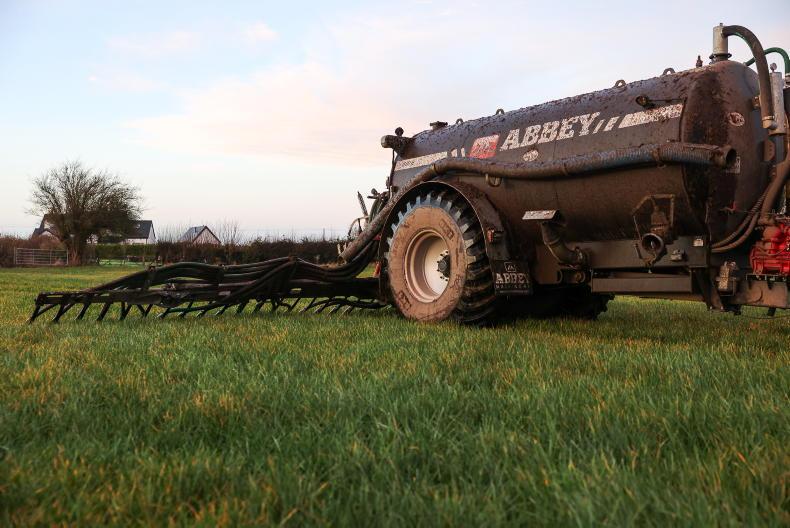
Slurry: slurry is on the minds of many farmers, particularly those in the southern and eastern parts of the country that would be accustomed to dry conditions and are now seeing the opposite in fields.
Waterlogged soils are cold soils, and where soils are cold then grass growth will be low or non-existent, heightening the potential of leaching of valuable chemicals.
Umbilical systems are a means of getting some slurry out in less-than-ideal field conditions, but remember the value of your slurry when spreading it. Silage ground and paddocks where there has been off takes of surplus bales will be most in need, with grazing-only typically recycling about 90% of the P and K back into ground through dung and urine. Rain guns and spreading slurry from roadways is prohibited and will attract a cross-compliance penalty.
Farmers should also remember that for the first two weeks of the slurry period being open, buffer zones around water courses are 10m, twice that of the normal buffer area.
SCEP: the 14 February deadline is fast approaching for farmers who are participants in SCEP and may wish to reduce their reference number or submit data. Farmers can reduce their reference number by as much as 20% in a year, eg reference number of 20 can reduce down to 16.
This is particularly relevant to farmers who have cut back on numbers and will be unable to hit the target of calving down 50% of their reference number. Other options for a farmer are to purchase in-calf animals to satisfy this requirement, but caution must be urged with this, regarding meeting the minimum percentage of calves born on your farm from four- or five-star sires.
Failing to calve down 50% of your reference number could risk removal from the scheme. You can increase your reference number back to the original amount set out in 2023 next year if you so wish.
The second area of note for farmers is regarding data collection.
Where farmers have submitted all data to date, then there is no need for action. Where less than 100% of the data required has been submitted, then farmers have until 15 February to submit this data or face penalties.
Data collection or event recording accounts for 20% of the annual payment – split evenly to 10% for record keeping and 10% for event recording. Data can be submitted through logging on to your ICBF account or via the paper copy sent in the post to you some months ago.
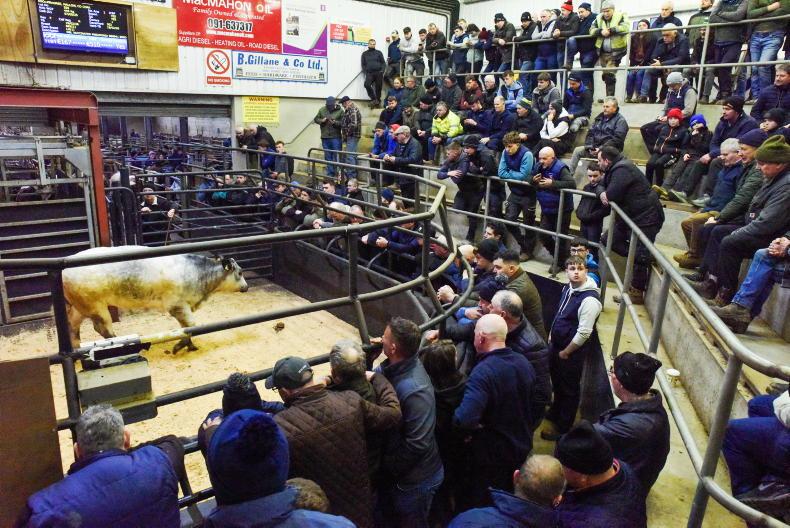
Grading cattle: it’s important for anyone slaughtering any number of cattle, be it big or small, to be able to judge covers and grades to a certain extent. It is also of use to farmers who are producing slaughter-fit cattle, but presenting these to the mart for sale live to know which is the better option.
You should be regularly walking through pens of finishing cattle and drafting as required, but take a note before slaughter of what you believe their carcase and fat score will be and compare that to the actual kill sheet to better train your eye.



SHARING OPTIONS