


Over the Christmas break, many beef and sheep farmers will be catching up on routine jobs.
However, experts warn that poor technique can lead to serious injuries.
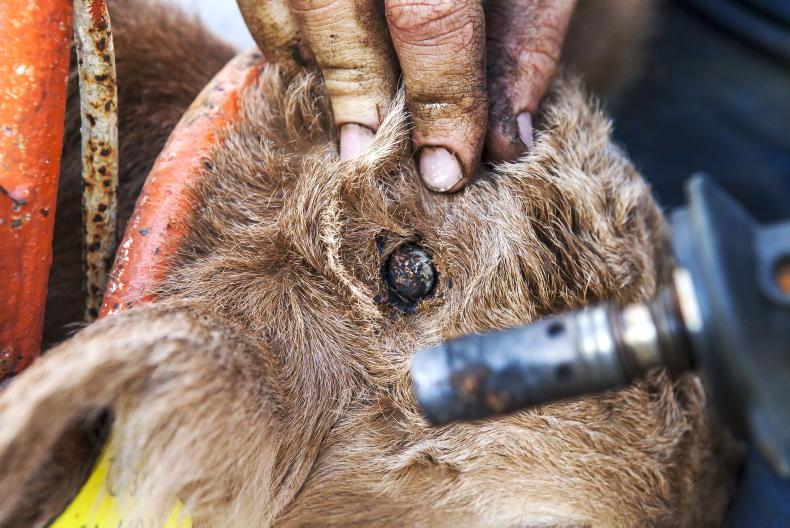
A recent disease surveillance report from the Agri-Food and Biosciences Institute (AFBI) in Northern Ireland highlighted welfare issues around taking horns off calves using a hot iron.
The AFBI report states that gross and histological findings, coupled with case histories of submitted calves, pointed to heat damage penetrating the skull during horn bud removal.
While this complication is more common in goat kids, whose cranial bones are thinner, sporadic cases have been confirmed in calves.
Standard practice uses a hot iron to destroy horn buds. But if applied too long or too deep, heat can penetrate the skull, damage bone and increase the risk of infection, meningitis or even neurological complications.
While rare, such cases highlight the importance of a good technique - limit contact to about 10 seconds, use local anaesthetic and analgesia and monitor wounds closely.
Dosing injury in sheep
The AFBI also reported several sheep submitted for postmortem with traumatic pharyngitis, all linked to dosing gun injuries.
Postmortem examinations revealed penetrating tracts in the oropharynx, severe haemorrhage and cellulitis extending into the neck.
Clinical signs include jaw swelling, painful swallowing, nasal discharge and sudden deaths.
These findings highlight the dangers of poor drenching technique, which can cause fatal throat perforations and secondary infections.
To prevent injury when dosing sheep, hold the head level, not forced back. Insert the nozzle gently over the tongue and deliver slowly. Stop if the sheep coughs or struggles. Clean and check guns regularly.





SHARING OPTIONS