The news this week that the European Commission has issued a recall notice for frozen beef imported from Brazil into the EU due to banned hormones being found in the imported product has sent shock waves through Europe and beyond.
Despite assurances from the EU Commission about its controls and monitoring, beef containing carcinogenic hormones has entered the food chain and was consumed by European citizens.
The recall notice was issued under the EU’s Rapid Alert System for Food and Feed (RASFF) and first notified on 14 November 2025. The hormone in question is oestradiol 17ß and was found in frozen beef imported from Brazil in November.
The frozen blocks of beef entered the EU via Rotterdam port in the Netherlands and then found their way to 12 countries, including Spain, Sweden, Austria, Belgium, Cyprus, Czech Republic, Germany, Greece, Italy, Netherlands, Slovakia and the United Kingdom, including Northern Ireland.
On 27 November, the investigation report was updated to include that: “The Canary Island authorities reported that the Spanish recipient was unaware of the recall of the affected beef.
“The company is proceeding to withdraw the product from its warehouses in Gran Canaria, Fuerteventura and Lanzarote, and to contact its customers to return the affected product. The recovered goods will be destroyed by a waste management company.”
More worryingly, however, in relation to the beef that was recalled in Italy, the report states that the Italian company that received the affected beef declared that he transferred, cooked and served the entire product on 14 November 2025.
That means that the affected beef has made its way into the food chain and been consumed.
The investigation and recall is ongoing, with national food safety authorities across Europe currently working with suppliers and customers to recall the product.
What is oestradiol 17ß?
The hormone oestradiol 17ß is used for breeding purposes in cattle. It is banned for use in animals in the EU.
The Scientific Committee on Veterinary Measures relating to Public Health (SCVPH) concluded that “there is a substantial body of evidence suggesting that oestradiol 17ß has to be considered as a complete carcinogen (exerts both tumour initiating and tumour promoting effects) and that the data available would not allow a quantitative estimate of the risk”.
Having examined additional scientific data, the SCVPH later confirmed its opinion in 2000 and 2002.
Hormones
Last month, the Irish Farmers Journal and Irish Farmers Association undertook an investigation into Brazilian beef production standards.
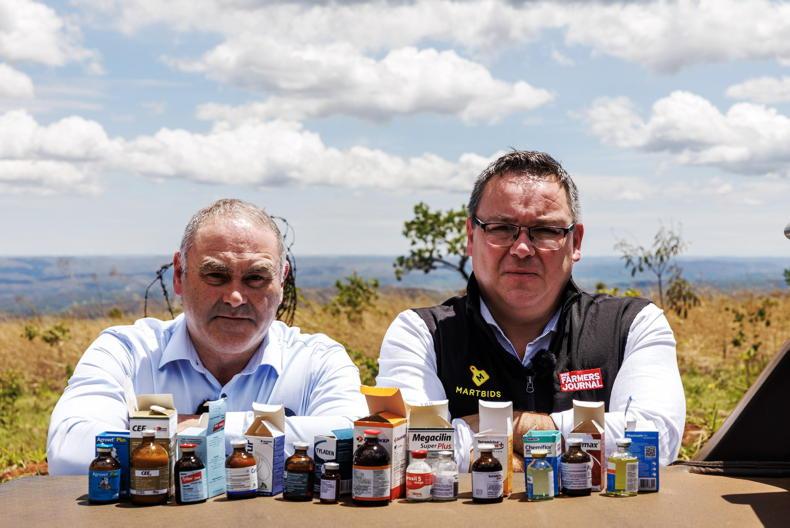
As part of this investigation, it was found that critically important antibiotics were sold without prescription across the counter in 13 agricultural supply stores.
Hormones like prostaglandin and oestradiol 17ß could also be freely purchased over the counter in agricultural supply stores all across Brazil.
As recently as June 2024, an audit conducted by the European Commission found that a guarantee could not be given that Brazilian beef imports to the EU are from hormone-free animals.
Banned growth promoters
Since 1981, the EU has prohibited the use of substances having a hormonal action for growth promotion in farm animals.
On the Commission’s website, oestradiol 17ß is included in examples of these kinds of growth promoters. The 2024 audit found Brazil could not prove its beef supplied to the EU market was not treated with oestradiol 17ß. Cattle treated with oestradiol 17ß cannot be slaughtered for the EU market.
EU audit in 2024 on Brazil’s use of hormones
The June 2024 audit by the European Commission in Brazil was commissioned by DG Sante.
It said while national legislation was broadly similar between the EU and Brazil, “the current arrangements in place to guarantee that cattle, meat from which is destined for the EU market, have never been treated with oestradiol 17ß for zootechnical or therapeutic purposes, are ineffective”.
As a result, Brazilian authorities cannot attest to the “reliability of operators’ sworn statements on non-use of oestradiol 17ß in cattle”.
The report said the Brazilian agriculture ministry was “not in a position to reliably attest to operator compliance” with this section of the EU health certificate for bovine meat exports.
Following the report, recommendations were issued.
Commission actions following 2024 audit report
1. The European Commission requested Brazil to set up an effective system to verify that bovine animals treated with 17ß-oestradiol are excluded from export to the EU. Upon receipt of the audit report, Brazil submitted an action plan and committed to suspend exports of meat from female bovine animals (males are not treated), pending implementation of a system providing the necessary guarantees. The action plan is published alongside the audit report.2. There is no evidence that meat of animals treated with 17ß-oestradiol has been placed on the EU market. The Commission considers that, once implemented, the actions planned by Brazil will address the weakness identified and will provide guarantees on the non-use of 17ß-oestradiol for therapeutic or zootechnical purposes for meat intended for the EU market.3. The Commission is closely following up on the progress made by Brazil in implementing the action plan and will consider appropriate measure(s) where needed. The Commission also assesses and approves Brazil’s annual residue control plans, including for hormones, and the results of implementation of plans in the preceding year. In addition, member states’ veterinary authorities carry out checks of food imported into the EU to assess its compliance with EU food safety rules, including the ban on importation of meat from animals treated with hormones.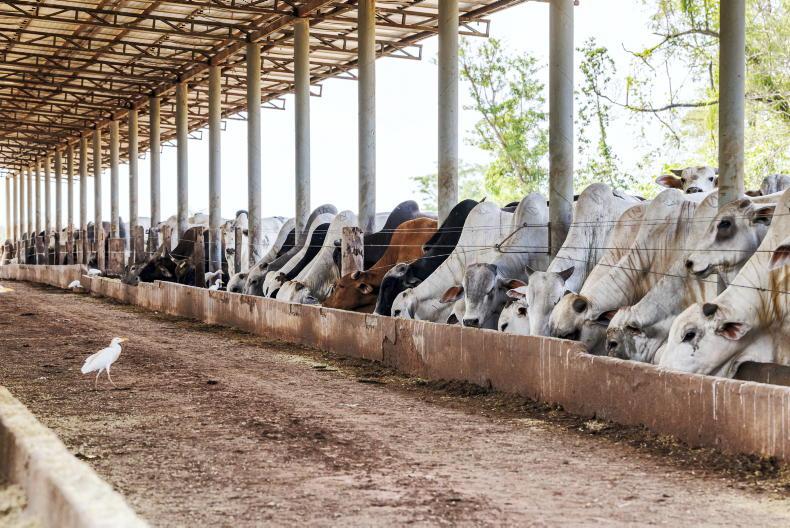
Untagged cattle onsite at Frigorifico Rondonopolis factory. \ Philip Doyle
European Commission’s response to the Brazilian beef recall
The European Commission responded to questions put to it by the Irish Farmers Journal this week.
Could you provide more detail on the audit process of how the beef with hormones was detected?
A Commission audit focusing on animal products in Brazil carried out in late October 2025 revealed that some meat consignments from bovines treated with oestradiol, a substance banned in the EU, were incorrectly certified for export to the EU.The audit was carried out in the second half of October 2025 by the Commission’s services and had the objective of evaluating controls on residues of pharmacologically active substances, pesticides and contaminants in animals and animal products. The full report on the audit will be published in early 2026.Did the audit take place in Brazil or Europe?
Brazil.How many tonnes of beef have been recalled?
Public information from the national authorities is available on our Rapid Alert System for Food and Feed (RASFF) portal. In terms of amount of meat recalled, this question would need to be asked to the national authorities.It is important to stress that the meat consignments identified and incorrectly exported to the EU represent a very small proportion of all beef imported into the EU (about 0.1% of beef from Brazil during the relevant period). Did any of the Brazilian frozen beef detected with hormones make it to the consumer market and is there a food safety risk?
These consignments do not pose immediate health risks to European consumers. The Commission informed member states’ authorities, to ensure that the frozen meat is withdrawn from the EU market.The RASFF is one of our core food safety tools and it allows national authorities to issue alerts to other member states if they perceive any risk to food safety. This has been extremely effective on countless occasions at stopping harmful food products before they can reach the consumer or withdrawing them from the shelves, if need be, including on this occasion. What was the name of the company involved?
We cannot disclose this information.Will there be sanctions issued as part of the detection of hormones?
It is up to Brazil to remedy the situation. We have been engaging constructively with the Brazilian authorities, which have committed to ensuring corrective measures and an effective action plan are in place. We insist on an efficient certification system which 100% guarantees the fulfilment of EU food safety and public health requirements. All EU border control posts have been requested to increase the frequency of physical checks on meat imported from Brazil. Strong measures to protect the health of our citizens and the food we eat are always on the table.Was the beef labelled incorrectly as eligible for the EU market in Brazil?
The ineligible consignments were incorrectly certified as eligible for export to the EU. Are there any other investigations currently ongoing in relation to Brazilian beef?
EU authorities are following up on the alerts as indicated above.The European Union and Brazil are working together to enhance their cooperation on sanitary and phytosanitary (SPS) matters. The EU and Brazil have committed to enhancing the existing Consultation Mechanism on SPS issues, which dates from 2006, and is an excellent forum to coordinate and cooperate on SPS matters at a technical level. Additionally, the two parties have committed to launching a new high-level dialogue on SPS issues to compliment the mechanism, which will be made up of senior officials from both the EU and Brazil, and will meet both regularly and should there be is an urgent matter to resolve.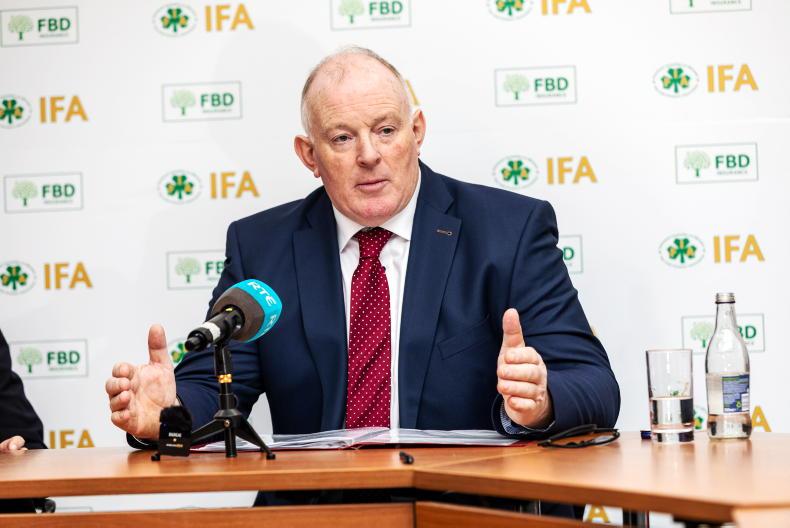
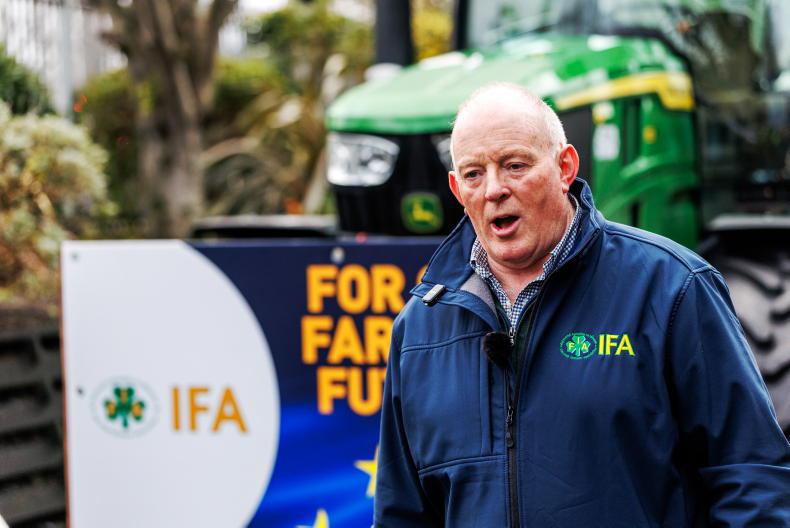
The 69th IFA AGM saw Tim Cullinans reign as President come to an end as the 17th President, Francie Gorman from Co Carlow takes over. \ Philip Doyle
Irish farm organisations react to the Brazilian beef recall
Anne O’Donohoue spoke to farm organisations about this week’s recall of Brazilian beef from the EU market
Irish farm organisations have slammed the EU’s plan for a Mercosur trade deal, following the revelation that a banned hormone was found in Brazilian beef imported into the EU.
The Irish Farmers’ Association (IFA) has called on Fine Gael leader Simon Harris to clarify where his party stands on the Mercosur trade deal, following a radio interview by Fine Gael MEP Regina Doherty on Tuesday 2 December.
IFA president Francie Gorman said farmers would be “concerned” to hear her “speak in favour of the deal”.
“The official position of the Irish Government has been that it is working to oppose the deal,” he added.
Gorman referenced the Programme for Government, which states: “Work with like-minded EU countries to stand up for Irish farmers and defend our interests in opposing the current Mercosur trade deal.”
Gorman added that the recall of Brazilian beef by EU authorities in the last month is a very serious matter for the public health of European citizens.
“Regina Doherty made a great play of the work under way on safeguards, but this latest revelation shows they are redundant.
“The so-called safeguards make no reference to public health. The findings of the investigation carried out by the IFA and the Irish Farmers Journal last month bear out the complete lack of controls that exist in the production systems in Brazil.
“The EU authorities cannot have any faith in the control systems in Brazil. Ignoring this is putting public and consumer health at risk,” he said.
The IFA president said all imports should be stopped and food imports removed from the trade deal.
ICMSA reaction
President of the Irish Creamery Milk Suppliers’ Association (ICMSA) Denis Drennan said the scandal is “a taste of what’s to come”. Drennan added that this revelation should focus intentions when it comes to upcoming votes to progress the deal.
“If this scandal serves no other purpose than to act as one last ‘red light’ that the [European] Commission wishes to blow through, then that’s fine.
“But everyone should remember what’s just happened and what it illustrates. The idea that these beef systems are just going to change overnight and suddenly discover proper regulated standards and traceability is frankly delusional. This is an entirely different beef production system to the EU,” he added.
The ICMSA president said there was a careful campaign under way to downplay the significance of beef imports from Mercosur countries.
“We need to remember that these are not going to be just your cheaper, lower-value cuts of beef; they will be higher-value steak products undermining sustainably produced beef in the EU and pushing our beef out of the premium markets that we have worked so hard to get into.
“Those who highlight the small volumes are being deliberately disingenuous. It’s not about the volumes; it’s about the fact that the presence of that beef acts as an anchor holding back the price of our own superb and sustainably produced beef,” he said.
Drennan called on Irish MEPs and the Government to “stand tall” on this matter, not to be a “doormat” for other member states.
ICSA comment
Irish Cattle and Sheep Farmers Association (ICSA) president Sean McNamara said his organisation will not stand by while the Commission turns a blind eye to imports produced under conditions that would shut an Irish farmer down overnight.
McNamara added that he was appalled but not surprised that Brazilian beef coming into the EU has tested positive for banned hormones and that a recall has been issued.
“The EU has spent years and billions [of euros] telling people to eat healthy food and ensuring consumers can trust the safety of what’s on the shelf.
“What’s the point of all that if they now allow in beef that doesn’t meet even the most basic EU rules?
“This recall shows clearly that the EU cannot police how beef is produced in Brazil or any other South American country”
The news this week that the European Commission has issued a recall notice for frozen beef imported from Brazil into the EU due to banned hormones being found in the imported product has sent shock waves through Europe and beyond.
Despite assurances from the EU Commission about its controls and monitoring, beef containing carcinogenic hormones has entered the food chain and was consumed by European citizens.
The recall notice was issued under the EU’s Rapid Alert System for Food and Feed (RASFF) and first notified on 14 November 2025. The hormone in question is oestradiol 17ß and was found in frozen beef imported from Brazil in November.
The frozen blocks of beef entered the EU via Rotterdam port in the Netherlands and then found their way to 12 countries, including Spain, Sweden, Austria, Belgium, Cyprus, Czech Republic, Germany, Greece, Italy, Netherlands, Slovakia and the United Kingdom, including Northern Ireland.
On 27 November, the investigation report was updated to include that: “The Canary Island authorities reported that the Spanish recipient was unaware of the recall of the affected beef.
“The company is proceeding to withdraw the product from its warehouses in Gran Canaria, Fuerteventura and Lanzarote, and to contact its customers to return the affected product. The recovered goods will be destroyed by a waste management company.”
More worryingly, however, in relation to the beef that was recalled in Italy, the report states that the Italian company that received the affected beef declared that he transferred, cooked and served the entire product on 14 November 2025.
That means that the affected beef has made its way into the food chain and been consumed.
The investigation and recall is ongoing, with national food safety authorities across Europe currently working with suppliers and customers to recall the product.
What is oestradiol 17ß?
The hormone oestradiol 17ß is used for breeding purposes in cattle. It is banned for use in animals in the EU.
The Scientific Committee on Veterinary Measures relating to Public Health (SCVPH) concluded that “there is a substantial body of evidence suggesting that oestradiol 17ß has to be considered as a complete carcinogen (exerts both tumour initiating and tumour promoting effects) and that the data available would not allow a quantitative estimate of the risk”.
Having examined additional scientific data, the SCVPH later confirmed its opinion in 2000 and 2002.
Hormones
Last month, the Irish Farmers Journal and Irish Farmers Association undertook an investigation into Brazilian beef production standards.
As part of this investigation, it was found that critically important antibiotics were sold without prescription across the counter in 13 agricultural supply stores.
Hormones like prostaglandin and oestradiol 17ß could also be freely purchased over the counter in agricultural supply stores all across Brazil.
As recently as June 2024, an audit conducted by the European Commission found that a guarantee could not be given that Brazilian beef imports to the EU are from hormone-free animals.
Banned growth promoters
Since 1981, the EU has prohibited the use of substances having a hormonal action for growth promotion in farm animals.
On the Commission’s website, oestradiol 17ß is included in examples of these kinds of growth promoters. The 2024 audit found Brazil could not prove its beef supplied to the EU market was not treated with oestradiol 17ß. Cattle treated with oestradiol 17ß cannot be slaughtered for the EU market.
EU audit in 2024 on Brazil’s use of hormones
The June 2024 audit by the European Commission in Brazil was commissioned by DG Sante.
It said while national legislation was broadly similar between the EU and Brazil, “the current arrangements in place to guarantee that cattle, meat from which is destined for the EU market, have never been treated with oestradiol 17ß for zootechnical or therapeutic purposes, are ineffective”.
As a result, Brazilian authorities cannot attest to the “reliability of operators’ sworn statements on non-use of oestradiol 17ß in cattle”.
The report said the Brazilian agriculture ministry was “not in a position to reliably attest to operator compliance” with this section of the EU health certificate for bovine meat exports.
Following the report, recommendations were issued.
Commission actions following 2024 audit report
1. The European Commission requested Brazil to set up an effective system to verify that bovine animals treated with 17ß-oestradiol are excluded from export to the EU. Upon receipt of the audit report, Brazil submitted an action plan and committed to suspend exports of meat from female bovine animals (males are not treated), pending implementation of a system providing the necessary guarantees. The action plan is published alongside the audit report.2. There is no evidence that meat of animals treated with 17ß-oestradiol has been placed on the EU market. The Commission considers that, once implemented, the actions planned by Brazil will address the weakness identified and will provide guarantees on the non-use of 17ß-oestradiol for therapeutic or zootechnical purposes for meat intended for the EU market.3. The Commission is closely following up on the progress made by Brazil in implementing the action plan and will consider appropriate measure(s) where needed. The Commission also assesses and approves Brazil’s annual residue control plans, including for hormones, and the results of implementation of plans in the preceding year. In addition, member states’ veterinary authorities carry out checks of food imported into the EU to assess its compliance with EU food safety rules, including the ban on importation of meat from animals treated with hormones.
Untagged cattle onsite at Frigorifico Rondonopolis factory. \ Philip Doyle
European Commission’s response to the Brazilian beef recall
The European Commission responded to questions put to it by the Irish Farmers Journal this week.
Could you provide more detail on the audit process of how the beef with hormones was detected?
A Commission audit focusing on animal products in Brazil carried out in late October 2025 revealed that some meat consignments from bovines treated with oestradiol, a substance banned in the EU, were incorrectly certified for export to the EU.The audit was carried out in the second half of October 2025 by the Commission’s services and had the objective of evaluating controls on residues of pharmacologically active substances, pesticides and contaminants in animals and animal products. The full report on the audit will be published in early 2026.Did the audit take place in Brazil or Europe?
Brazil.How many tonnes of beef have been recalled?
Public information from the national authorities is available on our Rapid Alert System for Food and Feed (RASFF) portal. In terms of amount of meat recalled, this question would need to be asked to the national authorities.It is important to stress that the meat consignments identified and incorrectly exported to the EU represent a very small proportion of all beef imported into the EU (about 0.1% of beef from Brazil during the relevant period). Did any of the Brazilian frozen beef detected with hormones make it to the consumer market and is there a food safety risk?
These consignments do not pose immediate health risks to European consumers. The Commission informed member states’ authorities, to ensure that the frozen meat is withdrawn from the EU market.The RASFF is one of our core food safety tools and it allows national authorities to issue alerts to other member states if they perceive any risk to food safety. This has been extremely effective on countless occasions at stopping harmful food products before they can reach the consumer or withdrawing them from the shelves, if need be, including on this occasion. What was the name of the company involved?
We cannot disclose this information.Will there be sanctions issued as part of the detection of hormones?
It is up to Brazil to remedy the situation. We have been engaging constructively with the Brazilian authorities, which have committed to ensuring corrective measures and an effective action plan are in place. We insist on an efficient certification system which 100% guarantees the fulfilment of EU food safety and public health requirements. All EU border control posts have been requested to increase the frequency of physical checks on meat imported from Brazil. Strong measures to protect the health of our citizens and the food we eat are always on the table.Was the beef labelled incorrectly as eligible for the EU market in Brazil?
The ineligible consignments were incorrectly certified as eligible for export to the EU. Are there any other investigations currently ongoing in relation to Brazilian beef?
EU authorities are following up on the alerts as indicated above.The European Union and Brazil are working together to enhance their cooperation on sanitary and phytosanitary (SPS) matters. The EU and Brazil have committed to enhancing the existing Consultation Mechanism on SPS issues, which dates from 2006, and is an excellent forum to coordinate and cooperate on SPS matters at a technical level. Additionally, the two parties have committed to launching a new high-level dialogue on SPS issues to compliment the mechanism, which will be made up of senior officials from both the EU and Brazil, and will meet both regularly and should there be is an urgent matter to resolve.
The 69th IFA AGM saw Tim Cullinans reign as President come to an end as the 17th President, Francie Gorman from Co Carlow takes over. \ Philip Doyle
Irish farm organisations react to the Brazilian beef recall
Anne O’Donohoue spoke to farm organisations about this week’s recall of Brazilian beef from the EU market
Irish farm organisations have slammed the EU’s plan for a Mercosur trade deal, following the revelation that a banned hormone was found in Brazilian beef imported into the EU.
The Irish Farmers’ Association (IFA) has called on Fine Gael leader Simon Harris to clarify where his party stands on the Mercosur trade deal, following a radio interview by Fine Gael MEP Regina Doherty on Tuesday 2 December.
IFA president Francie Gorman said farmers would be “concerned” to hear her “speak in favour of the deal”.
“The official position of the Irish Government has been that it is working to oppose the deal,” he added.
Gorman referenced the Programme for Government, which states: “Work with like-minded EU countries to stand up for Irish farmers and defend our interests in opposing the current Mercosur trade deal.”
Gorman added that the recall of Brazilian beef by EU authorities in the last month is a very serious matter for the public health of European citizens.
“Regina Doherty made a great play of the work under way on safeguards, but this latest revelation shows they are redundant.
“The so-called safeguards make no reference to public health. The findings of the investigation carried out by the IFA and the Irish Farmers Journal last month bear out the complete lack of controls that exist in the production systems in Brazil.
“The EU authorities cannot have any faith in the control systems in Brazil. Ignoring this is putting public and consumer health at risk,” he said.
The IFA president said all imports should be stopped and food imports removed from the trade deal.
ICMSA reaction
President of the Irish Creamery Milk Suppliers’ Association (ICMSA) Denis Drennan said the scandal is “a taste of what’s to come”. Drennan added that this revelation should focus intentions when it comes to upcoming votes to progress the deal.
“If this scandal serves no other purpose than to act as one last ‘red light’ that the [European] Commission wishes to blow through, then that’s fine.
“But everyone should remember what’s just happened and what it illustrates. The idea that these beef systems are just going to change overnight and suddenly discover proper regulated standards and traceability is frankly delusional. This is an entirely different beef production system to the EU,” he added.
The ICMSA president said there was a careful campaign under way to downplay the significance of beef imports from Mercosur countries.
“We need to remember that these are not going to be just your cheaper, lower-value cuts of beef; they will be higher-value steak products undermining sustainably produced beef in the EU and pushing our beef out of the premium markets that we have worked so hard to get into.
“Those who highlight the small volumes are being deliberately disingenuous. It’s not about the volumes; it’s about the fact that the presence of that beef acts as an anchor holding back the price of our own superb and sustainably produced beef,” he said.
Drennan called on Irish MEPs and the Government to “stand tall” on this matter, not to be a “doormat” for other member states.
ICSA comment
Irish Cattle and Sheep Farmers Association (ICSA) president Sean McNamara said his organisation will not stand by while the Commission turns a blind eye to imports produced under conditions that would shut an Irish farmer down overnight.
McNamara added that he was appalled but not surprised that Brazilian beef coming into the EU has tested positive for banned hormones and that a recall has been issued.
“The EU has spent years and billions [of euros] telling people to eat healthy food and ensuring consumers can trust the safety of what’s on the shelf.
“What’s the point of all that if they now allow in beef that doesn’t meet even the most basic EU rules?
“This recall shows clearly that the EU cannot police how beef is produced in Brazil or any other South American country”





SHARING OPTIONS