A myriad of factors influence land markets including producer sentiment, which is often driven by agricultural sector performance, policy instruments – such as the Nitrates Action Plan, land location, afforestation premiums and land quality.
Reforms to the Common Agricultural Policy (CAP) have also had an effect on demand for land in recent years, with this statement especially relevant for more marginal lands. The last two CAP reforms, which introduced convergence at a rate of 60% and 85%, respectively, have on average increased the rate of payment which can be drawn down on lands that are typically farmed more extensively. The erosion of entitlement values and the introduction of the Eco scheme and Complementary Redistributive Income Support for Sustainability (CRISS) has, along with convergence, witnessed more money move from counties in the east of the country to counties on the western seaboard. This is not forgetting internal convergence in many counties, but the movement in funds from east to west has been the overall trend.
Marginal lands
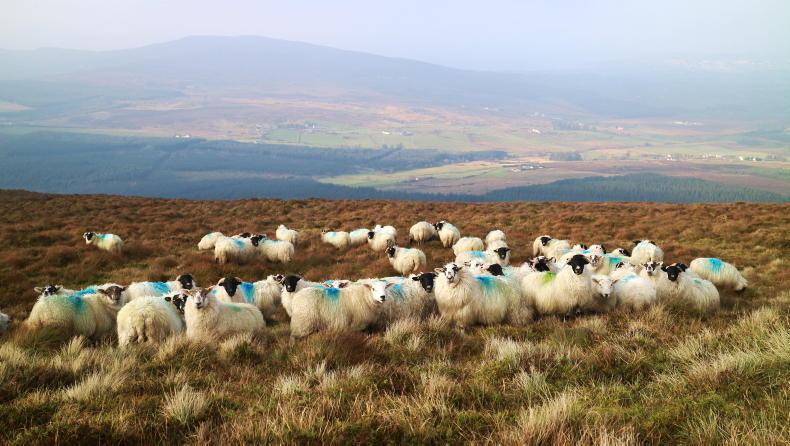
This has increased the attractiveness of more marginal land, including privately owned and commonage hill and mountain-type lands. The future of entitlements is in the firing line under proposals for the next CAP 2028-2034. The Department of Agriculture has confirmed that at present there is no specific provision for entitlements under proposals being pushed by the European Commission.
This could mean that the current system of payment entitlements could be replaced by a full flattening of payments and a per-hectare payment, which would further increase the attractiveness of more marginal lands. The Department of Agriculture has confirmed that this proposal is of particular interest to Ireland and that it is examining all details of the proposals.
Further information on the likelihood of entitlements being scrapped in the next CAP reform is being called for by farmers, auctioneers, farm organisations and opposition political parties, ahead of the opening of the window for the trading of entitlements.
An end to entitlements being used to distribute payments would see a big shift in the sale value of entitlements in 2026, with annual leasing values likely to remain unchanged, but causing issues for long-term agreements. The leasing of entitlements has developed in to big business over the last decade, with approximately 550,000 entitlements leased annually. Under the current CAP, the volume of money changing hands has reduced greatly due to lower Basic Income Support for Sustainability (BISS) entitlement values, with some auctioneers altering commission rates to a charge per entitlement traded rather than a percentage of the overall value.

\ Philip Doyle
Reduced CAP payments
There is also huge uncertainty surrounding the future value of CAP payments following a 20% cut in the proposed budget for the period 2028-2034. The CAP budget’s standing in the overall EU budget has been downgraded majorly and for the first time in its history will no longer stand as a single entity. It has now been placed under the National and Regional Partnership Plan (NRPP), which speaks volumes about its standing.
The budget has also been pillaged with the level of ringfenced funding, falling by a massive figure of over 20% or in the region of €90bn. As detailed in Figure 1, the share of the total EU budget apportioned to CAP and safeguarding food security has been on a sharp declining trajectory over the last 50 years.
The percentage of the EU budget apportioned to CAP stood at over 70% in 1980. This reduced to between 50% and 60% in the late 90s and early 2000s, but the rate of decline of agriculture’s percentage of the overall EU budget has accelerated greatly in recent years. Increased funding has been allocated to the areas of migration, security, etc, while actual funding to agriculture has remained relatively static, and taken no account of inflation. The proposals for the next EU budget covering the period from 2028 to 2034 in their current format will see the ringfenced bit for CAP of €296bn fall to just 15% of the overall €2tn EU budget.
Land value implications
It is uncertain what implications this may have on the value of land. Demand for good-quality lands in dairy strongholds will likely be influenced more by continued nitrates-related pressures than CAP payments. However, such a cut could temper demand for more marginal lands but this depends on what the cuts will be like and other policy decisions.
When broken down the cuts will mean in the region of €2.3bn less funding for Ireland over the course of the next CAP or over €300m/year.
This is similar funding that is currently allocated to the Eco scheme. The European Commission in its defence of the proposed cut has stated that member states are free to allocate increased funding to agriculture to compensate for any shortfall.
However, this is challenging to see in an Irish context with the current CAP containing the highest level of co-funding of 57%. This is underpinned by carbon tax funding which is used to fund Ireland’s flagship Agri-Climate Rural Environment Scheme. With competing interests for this funding and a demand for funding for the Nature Restoration Fund, some commentators signal that either ACRES or the eco scheme could be sacrificed in the next CAP if budget cuts are not reversed. The experience of the last year – whereby payments for schemes such as the National Beef Welfare Scheme, the National Sheep Welfare Scheme and the National Dairy Beef Weighing Scheme were cut – does not bode well for the prospect of national exchequer funding compensating for the cut from EU budgetary funds and the absence of carbon tax funds in the next CAP. Therefore, farmers considering the purchase of lands and considering current CAP payments in their repayment capacity could be wise to build in a possible decline in funding.
Young farmers
The only area where there seems to be support to maintain and possibly build on current payment levels is for young farmers. Member states are expected to ringfence at least 6% of CAP funding for generational renewal measures – almost double the current level of spending. Installation aid has been talked about at length along with access to lower-cost finance and investment aid. Therefore it is likely that a scheme similar to the current Complementary Income Support for Young Farmers (CIS-YF) will feature in the next CAP.
Eligible young farmers can currently receive upwards of €150/ha, up to a maximum of 50ha for five years. The proposal to penalise applicants who reach retirement age, determined by national law, and who receive a retirement pension by ceasing CAP income support has not gone down well. It would affect upwards of 40,000 farmers in Ireland. If the measure was to ring true, it could be the catalyst for land changing hands but there is a lot of opposition including Minister for Agriculture Martin Heydon, who has strongly opposed such a move citing the proposal as crude and draconian.
Organic farming
The sharp jump in Organic Farming Scheme payments in the current CAP along with a reduction in the minimum stocking rate from 0.5LU/ha to 0.1LU/ha has seen demand for the scheme exceed the available budget. This incidentally increased fivefold in the current CAP to over €250m.
The breakdown in scheme participants shows over 13% of young farmers participating in the scheme, with participation in the young farmers scheme and organics said to have boosted demand for commonage and hill lands, both on a rental and purchase basis. While the scheme is closed to drystock entrants, the fact that the Government is mandated to achieving 10% of utilisable agricultural lands farmed organically by 2030, will mean that the funding tap turned on will not be easily reversed if they wish to maintain and grow participation.
A myriad of factors influence land markets including producer sentiment, which is often driven by agricultural sector performance, policy instruments – such as the Nitrates Action Plan, land location, afforestation premiums and land quality.
Reforms to the Common Agricultural Policy (CAP) have also had an effect on demand for land in recent years, with this statement especially relevant for more marginal lands. The last two CAP reforms, which introduced convergence at a rate of 60% and 85%, respectively, have on average increased the rate of payment which can be drawn down on lands that are typically farmed more extensively. The erosion of entitlement values and the introduction of the Eco scheme and Complementary Redistributive Income Support for Sustainability (CRISS) has, along with convergence, witnessed more money move from counties in the east of the country to counties on the western seaboard. This is not forgetting internal convergence in many counties, but the movement in funds from east to west has been the overall trend.
Marginal lands
This has increased the attractiveness of more marginal land, including privately owned and commonage hill and mountain-type lands. The future of entitlements is in the firing line under proposals for the next CAP 2028-2034. The Department of Agriculture has confirmed that at present there is no specific provision for entitlements under proposals being pushed by the European Commission.
This could mean that the current system of payment entitlements could be replaced by a full flattening of payments and a per-hectare payment, which would further increase the attractiveness of more marginal lands. The Department of Agriculture has confirmed that this proposal is of particular interest to Ireland and that it is examining all details of the proposals.
Further information on the likelihood of entitlements being scrapped in the next CAP reform is being called for by farmers, auctioneers, farm organisations and opposition political parties, ahead of the opening of the window for the trading of entitlements.
An end to entitlements being used to distribute payments would see a big shift in the sale value of entitlements in 2026, with annual leasing values likely to remain unchanged, but causing issues for long-term agreements. The leasing of entitlements has developed in to big business over the last decade, with approximately 550,000 entitlements leased annually. Under the current CAP, the volume of money changing hands has reduced greatly due to lower Basic Income Support for Sustainability (BISS) entitlement values, with some auctioneers altering commission rates to a charge per entitlement traded rather than a percentage of the overall value.
\ Philip Doyle
Reduced CAP payments
There is also huge uncertainty surrounding the future value of CAP payments following a 20% cut in the proposed budget for the period 2028-2034. The CAP budget’s standing in the overall EU budget has been downgraded majorly and for the first time in its history will no longer stand as a single entity. It has now been placed under the National and Regional Partnership Plan (NRPP), which speaks volumes about its standing.
The budget has also been pillaged with the level of ringfenced funding, falling by a massive figure of over 20% or in the region of €90bn. As detailed in Figure 1, the share of the total EU budget apportioned to CAP and safeguarding food security has been on a sharp declining trajectory over the last 50 years.
The percentage of the EU budget apportioned to CAP stood at over 70% in 1980. This reduced to between 50% and 60% in the late 90s and early 2000s, but the rate of decline of agriculture’s percentage of the overall EU budget has accelerated greatly in recent years. Increased funding has been allocated to the areas of migration, security, etc, while actual funding to agriculture has remained relatively static, and taken no account of inflation. The proposals for the next EU budget covering the period from 2028 to 2034 in their current format will see the ringfenced bit for CAP of €296bn fall to just 15% of the overall €2tn EU budget.
Land value implications
It is uncertain what implications this may have on the value of land. Demand for good-quality lands in dairy strongholds will likely be influenced more by continued nitrates-related pressures than CAP payments. However, such a cut could temper demand for more marginal lands but this depends on what the cuts will be like and other policy decisions.
When broken down the cuts will mean in the region of €2.3bn less funding for Ireland over the course of the next CAP or over €300m/year.
This is similar funding that is currently allocated to the Eco scheme. The European Commission in its defence of the proposed cut has stated that member states are free to allocate increased funding to agriculture to compensate for any shortfall.
However, this is challenging to see in an Irish context with the current CAP containing the highest level of co-funding of 57%. This is underpinned by carbon tax funding which is used to fund Ireland’s flagship Agri-Climate Rural Environment Scheme. With competing interests for this funding and a demand for funding for the Nature Restoration Fund, some commentators signal that either ACRES or the eco scheme could be sacrificed in the next CAP if budget cuts are not reversed. The experience of the last year – whereby payments for schemes such as the National Beef Welfare Scheme, the National Sheep Welfare Scheme and the National Dairy Beef Weighing Scheme were cut – does not bode well for the prospect of national exchequer funding compensating for the cut from EU budgetary funds and the absence of carbon tax funds in the next CAP. Therefore, farmers considering the purchase of lands and considering current CAP payments in their repayment capacity could be wise to build in a possible decline in funding.
Young farmers
The only area where there seems to be support to maintain and possibly build on current payment levels is for young farmers. Member states are expected to ringfence at least 6% of CAP funding for generational renewal measures – almost double the current level of spending. Installation aid has been talked about at length along with access to lower-cost finance and investment aid. Therefore it is likely that a scheme similar to the current Complementary Income Support for Young Farmers (CIS-YF) will feature in the next CAP.
Eligible young farmers can currently receive upwards of €150/ha, up to a maximum of 50ha for five years. The proposal to penalise applicants who reach retirement age, determined by national law, and who receive a retirement pension by ceasing CAP income support has not gone down well. It would affect upwards of 40,000 farmers in Ireland. If the measure was to ring true, it could be the catalyst for land changing hands but there is a lot of opposition including Minister for Agriculture Martin Heydon, who has strongly opposed such a move citing the proposal as crude and draconian.
Organic farming
The sharp jump in Organic Farming Scheme payments in the current CAP along with a reduction in the minimum stocking rate from 0.5LU/ha to 0.1LU/ha has seen demand for the scheme exceed the available budget. This incidentally increased fivefold in the current CAP to over €250m.
The breakdown in scheme participants shows over 13% of young farmers participating in the scheme, with participation in the young farmers scheme and organics said to have boosted demand for commonage and hill lands, both on a rental and purchase basis. While the scheme is closed to drystock entrants, the fact that the Government is mandated to achieving 10% of utilisable agricultural lands farmed organically by 2030, will mean that the funding tap turned on will not be easily reversed if they wish to maintain and grow participation.






SHARING OPTIONS