2026 is shaping up to be a critical year for the future of farming, with pressures mounting on a number of fronts.
The nitrates derogation has been secured for another three years, allowing over 7,000 farmers breathe a big sigh of relief.
However, there are plenty of challenges on the horizon and farmers and the wider agricultural industry cannot rest on their laurels.
The task of carrying out almost 600 detailed appropriate assessments on catchments that the European Commission says are needed to determine whether the derogation is compatible with the habitats directive is daunting.
Minister for Agriculture Martin Heydon has suggested that a European review of the habitats directive is overdue, citing concerns that the directive is not being interpreted as it was first intended.
This is a welcome aim, but Ireland cannot wait for progress on this and needs to begin the process of establishing a protocol for the assessment process to get under way.
The learnings from the scoring process in the Agri-Climate Rural Environment Scheme (ACRESD) should shed some light on the gravity of the job in hand.
There are eight ACRES co-operation teams charged with scoring commonages and a raft of ecologists, advisers, planners, etc, involved with the process heavy on resources.
Immediate challenge
For farmers, the greatest immediate challenge is the looming requirement for many to increase slurry storage by 21% over the next three years.
With effect from 1 October 2028, the slurry storage capacity required per dairy cow will be 0.40m3/cow/week, which is up from the current 0.33m3/cow/week requirement.
Additionally, the volume of soiled water produced from a dairy cow has increased by 43%, rising from 0.21m3/cow/week to 0.30m3/cow/week.
The appetite to invest in storage facilities in 2026 will be tempered by low milk prices, while the rate of funding approval under TAMS III has slowed considerably.
As Martin Merrick reports this week, dairy farmers fare poorly in terms of the ranking and selection process.
CAP budget
The Common Agricultural Policy (CAP) budget for the period 2028-2032 has been pillaged, with the level of ringfenced funding falling by the massive figure of over 20% or in the region of €90bn.
As detailed in Figure 1, the share of the total EU budget apportioned to CAP and safeguarding food security has been on a sharp declining trajectory over the last 50 years.
Figure 1:
The percentage of the EU budget apportioned to CAP stood at over 70% in 1980.
This reduced to 50% to 60% in the late 90s and early 2000s, but the rate of decline has accelerated greatly in recent years as increased funding has been allocated to the areas of migration, security, etc, while actual funding to agriculture has remained relatively static.
The proposals for the next EU budget covering the period from 2028 to 2034 in their current format will see the ringfenced bit for CAP of €296bn fall to just 15% of the overall €2tn EU budget.
The European Commission has strongly refuted that the CAP budget has been weakened, stating that there are opportunities to secure funding from other avenues.
It has also argued that there is over €300bn in ringfenced funding for CAP. However, the fact that for the first time in its history CAP is no longer a standalone entity within the overall EU budget and is now placed under the national and regional partnership plan (NRPP) speaks volumes.
Table 1 details a breakdown of the proposed funding allocation under the next EU budget from 2028 to 2034.
It is clearly evident that CAP has a ringfenced budget of €295.6bn with another €6.3bn allocated as an EU safety net or reserve. It is disingenuous to convey a message that this is part of ringfenced CAP funding.
The avenue the Commission signals that CAP can secure increased funding is from the largest fund under the NRPP – the economic, territorial and social cohesion including fisheries and rural communities and tourism fund.
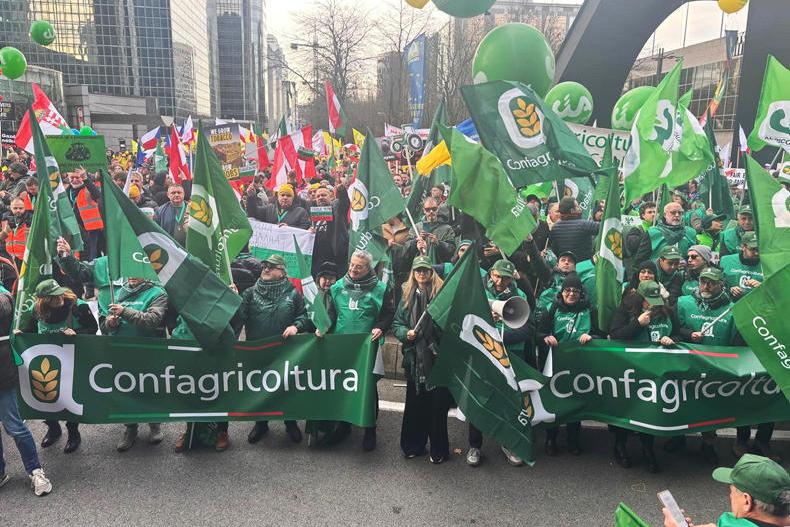
However, this is not straightforward, with competition high from the sectors listed. This is a large part of the reason for the huge farmer protests seen in Brussels just a couple of weeks ago.
Timeline
Any hope of amending and reversing the budget cuts will need to be achieved in early 2026.
The next stage in the process is the European Parliament and member states (at European Council of Ministers level) must agree their individual positions on accepting or amending the Commission’s initial proposals before negotiating a compromise.
This could yet prove to be a monumental task, with member states' opposition growing, as we saw in the recent protests.
Such amended plans must receive the backing of the majority of MEPs and all member states to progress at the end of 2026.
Minister Heydon’s initial assessment of the CAP budget cut was that 80% ringfencing of funds was a good place to start, but not to finish.
Farmers will demand a strong position from Ireland
This assessment will come under the spotlight in 2026, particularly with Ireland set to hold the rotating presidency of the council of the European Union from 1 July to 31 December 2026.
Farmers will demand a strong position from Ireland, with frustration growing around a lack of clarity on the Government’s stance on the Mercusor deal and the insinuation that Ireland could be required to tow the line on Mercusor as a result of having secured the nitrates derogation for another three years.
Such a position would be unacceptable for a large percentage of Irish farmers exposed to Mercusor and reliant on CAP support payments.
Where would the cuts hit?
The funding shortfall will have grave implications for the suite of schemes currently offered to farmers.
At a recent Irish Farmers' Association meeting, its secretary general Damian McDonald questioned if there is any future for ACRES. The scheme is funded mainly by a €1.5bn allocation from the carbon tax fund.
Incidentally, this underpinned Ireland’s highest level of co-funding in the current CAP of 57%.
The Commission, in its defence of budgetary cuts, said member states are free to increase the level of national exchequer funding it apportions to the CAP funding pot. But this is likely not a realistic proposition under the next CAP, with no certainty of future funding from carbon tax.
There is also a question mark of funding for the Nature Restoration Law and there is an insinuation that climate funding could be allocated to funding projects such as the Metrolink.
The total funding shortfall from the Commission is in the region of €2.3bn. Many industry commentators signal that the scheme that could be immediately impacted is the future of the Eco Scheme.
This currently has a funding allocation of about €300m per year and is a vital income source for upwards of 115,000 farmers.
The experience of the last year - whereby payments for schemes such as the National Beef Welfare Scheme, the National Sheep Welfare Scheme and the National Dairy Beef Weighing Scheme were cut - does not bode well for the prospect of national exchequer funding compensating for the cut from EU budgetary funds and the absence of carbon tax funds in the next CAP.
As such, it is vital that Ireland quickly outlines its position in terms of CAP reform and fights for a reversal of budget cuts.
Read more
What is appropriate assessment?
2026 is shaping up to be a critical year for the future of farming, with pressures mounting on a number of fronts.
The nitrates derogation has been secured for another three years, allowing over 7,000 farmers breathe a big sigh of relief.
However, there are plenty of challenges on the horizon and farmers and the wider agricultural industry cannot rest on their laurels.
The task of carrying out almost 600 detailed appropriate assessments on catchments that the European Commission says are needed to determine whether the derogation is compatible with the habitats directive is daunting.
Minister for Agriculture Martin Heydon has suggested that a European review of the habitats directive is overdue, citing concerns that the directive is not being interpreted as it was first intended.
This is a welcome aim, but Ireland cannot wait for progress on this and needs to begin the process of establishing a protocol for the assessment process to get under way.
The learnings from the scoring process in the Agri-Climate Rural Environment Scheme (ACRESD) should shed some light on the gravity of the job in hand.
There are eight ACRES co-operation teams charged with scoring commonages and a raft of ecologists, advisers, planners, etc, involved with the process heavy on resources.
Immediate challenge
For farmers, the greatest immediate challenge is the looming requirement for many to increase slurry storage by 21% over the next three years.
With effect from 1 October 2028, the slurry storage capacity required per dairy cow will be 0.40m3/cow/week, which is up from the current 0.33m3/cow/week requirement.
Additionally, the volume of soiled water produced from a dairy cow has increased by 43%, rising from 0.21m3/cow/week to 0.30m3/cow/week.
The appetite to invest in storage facilities in 2026 will be tempered by low milk prices, while the rate of funding approval under TAMS III has slowed considerably.
As Martin Merrick reports this week, dairy farmers fare poorly in terms of the ranking and selection process.
CAP budget
The Common Agricultural Policy (CAP) budget for the period 2028-2032 has been pillaged, with the level of ringfenced funding falling by the massive figure of over 20% or in the region of €90bn.
As detailed in Figure 1, the share of the total EU budget apportioned to CAP and safeguarding food security has been on a sharp declining trajectory over the last 50 years.
Figure 1:
The percentage of the EU budget apportioned to CAP stood at over 70% in 1980.
This reduced to 50% to 60% in the late 90s and early 2000s, but the rate of decline has accelerated greatly in recent years as increased funding has been allocated to the areas of migration, security, etc, while actual funding to agriculture has remained relatively static.
The proposals for the next EU budget covering the period from 2028 to 2034 in their current format will see the ringfenced bit for CAP of €296bn fall to just 15% of the overall €2tn EU budget.
The European Commission has strongly refuted that the CAP budget has been weakened, stating that there are opportunities to secure funding from other avenues.
It has also argued that there is over €300bn in ringfenced funding for CAP. However, the fact that for the first time in its history CAP is no longer a standalone entity within the overall EU budget and is now placed under the national and regional partnership plan (NRPP) speaks volumes.
Table 1 details a breakdown of the proposed funding allocation under the next EU budget from 2028 to 2034.
It is clearly evident that CAP has a ringfenced budget of €295.6bn with another €6.3bn allocated as an EU safety net or reserve. It is disingenuous to convey a message that this is part of ringfenced CAP funding.
The avenue the Commission signals that CAP can secure increased funding is from the largest fund under the NRPP – the economic, territorial and social cohesion including fisheries and rural communities and tourism fund.
However, this is not straightforward, with competition high from the sectors listed. This is a large part of the reason for the huge farmer protests seen in Brussels just a couple of weeks ago.
Timeline
Any hope of amending and reversing the budget cuts will need to be achieved in early 2026.
The next stage in the process is the European Parliament and member states (at European Council of Ministers level) must agree their individual positions on accepting or amending the Commission’s initial proposals before negotiating a compromise.
This could yet prove to be a monumental task, with member states' opposition growing, as we saw in the recent protests.
Such amended plans must receive the backing of the majority of MEPs and all member states to progress at the end of 2026.
Minister Heydon’s initial assessment of the CAP budget cut was that 80% ringfencing of funds was a good place to start, but not to finish.
Farmers will demand a strong position from Ireland
This assessment will come under the spotlight in 2026, particularly with Ireland set to hold the rotating presidency of the council of the European Union from 1 July to 31 December 2026.
Farmers will demand a strong position from Ireland, with frustration growing around a lack of clarity on the Government’s stance on the Mercusor deal and the insinuation that Ireland could be required to tow the line on Mercusor as a result of having secured the nitrates derogation for another three years.
Such a position would be unacceptable for a large percentage of Irish farmers exposed to Mercusor and reliant on CAP support payments.
Where would the cuts hit?
The funding shortfall will have grave implications for the suite of schemes currently offered to farmers.
At a recent Irish Farmers' Association meeting, its secretary general Damian McDonald questioned if there is any future for ACRES. The scheme is funded mainly by a €1.5bn allocation from the carbon tax fund.
Incidentally, this underpinned Ireland’s highest level of co-funding in the current CAP of 57%.
The Commission, in its defence of budgetary cuts, said member states are free to increase the level of national exchequer funding it apportions to the CAP funding pot. But this is likely not a realistic proposition under the next CAP, with no certainty of future funding from carbon tax.
There is also a question mark of funding for the Nature Restoration Law and there is an insinuation that climate funding could be allocated to funding projects such as the Metrolink.
The total funding shortfall from the Commission is in the region of €2.3bn. Many industry commentators signal that the scheme that could be immediately impacted is the future of the Eco Scheme.
This currently has a funding allocation of about €300m per year and is a vital income source for upwards of 115,000 farmers.
The experience of the last year - whereby payments for schemes such as the National Beef Welfare Scheme, the National Sheep Welfare Scheme and the National Dairy Beef Weighing Scheme were cut - does not bode well for the prospect of national exchequer funding compensating for the cut from EU budgetary funds and the absence of carbon tax funds in the next CAP.
As such, it is vital that Ireland quickly outlines its position in terms of CAP reform and fights for a reversal of budget cuts.
Read more
What is appropriate assessment?







SHARING OPTIONS