It is a busy time of the year for prospective medical students, as registrations for the Health Professions Admission Test (HPAT) close on 16 January. Late registrations can be made until 1 February, but a late fee applies. The test window is from 13-16 February, with results coming out in June.
The two-and-a-half-hour exam involves 114 multiple choice questions and is used alongside Leaving Certificate results to select students to study medicine and other health courses in Irish universities. It assesses critical skills like problem-solving, logical/non-verbal reasoning and understanding people rather than academic knowledge. HPAT–Ireland is developed to rigorous professional and technical standards.
Test questions are designed by a team of ACER test writers who are experts in their subject areas. The content, style and duration of the test is determined to ensure the testing program is relevant, fair, valid and reliable.
HPAT inequalities
Kacper Bogalecki is the co-president of the Association of Medical Students Ireland (AMSI) and a fourth year student of University College Cork’s medical degree programme. As an undergraduate, he had to sit the HPAT, which he found more difficult than the Leaving Certificate.
“It was designed as an exam that you take without any prior study; it’s meant to be an aptitude test as such. But what has happened in recent years with the privatisation of tutoring for the HPAT, with medical entry in particular, has led to a kind of monopoly on helping people achieve the HPAT,” he explains.
These supports are often expensive and not all students can afford the extra help.
“It leaves out the students who may not be able to afford the extra tutorship, the extra programmes and platforms that they use, which has created inequality,” he adds.
“It got to the point where people wanted to be better prepared for it. These companies came in with these resources, but prices have gone up, and it has become a test for those who can afford it and if you can, how much of that do you do.”
Therefore, there are question marks over whether a student’s aptitude is still bring adequately tested, or if they are using methods that are learned in these private programmes.
HPAT Ireland provides limited exam questions and sample papers so this further restricts resources for students.
There is also a big issue for graduate medicine students, who have no access to loan providers to finance their studies.
Originally from Poland, Kacper has been living in Ireland for a number of years and went to secondary school in Killarney, Co Kerry.
As a fourth-year medical student, he is the medicine and health executive representative in UCC’s students’ union. He was also involved in getting The Association of Medical Students (AMSI) up and running again after some years of it being dormant. The national committee was selected in August and this is their first academic year back.
The association is committed to developing the next generation of healthcare leaders through structured capacity-building, international research and clinical exchanges, medical education workshops, and policy-driven advocacy. It is a member organisation of the International Federation of Medical Student Associations (IFMSA), which represents over 130 countries and approximately 1.5 million medical students.
“For me, the issues that healthcare students in general are facing are unique. There are placement issues and accreditation issues when it comes to our curriculum, as this is set by the medical council. It is a very regulated field, hence why we decided to restart AMSI, which was founded in 2016, and it went dormant a few years ago,” explains Kacper.
The most pressing issue facing medicine students at the moment is access to graduate entry medicine, which is the four-year programme offered by a number of Irish universities including University of Galway, University College Dublin, Royal College of Surgeons, University of Limerick and University College Cork.
“When it comes to Irish students or EU students, obviously, the price per year is quite high. It’s around €16,000- €18,000, depending on the college,” he says.

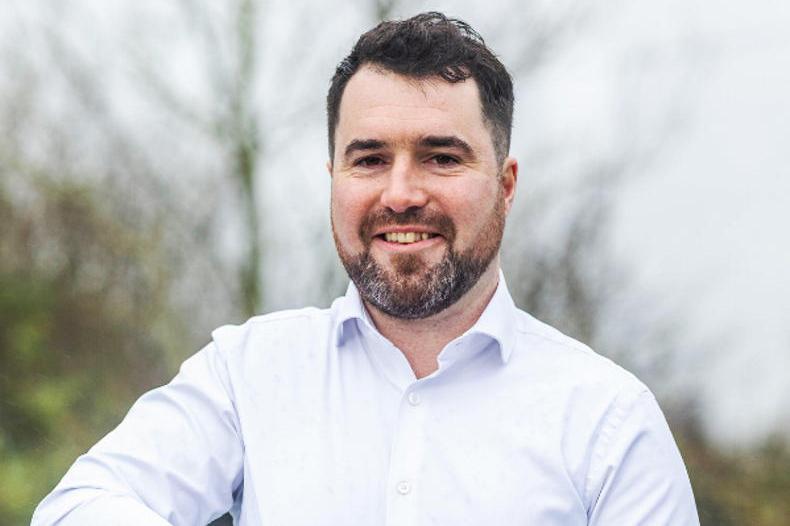
Kacper Bogalecki is the co-president of the Association of Medical Students Ireland (AMSI) and a fourth-year medicine student at University College Cork.
Challenges facing students
There used to be a loan scheme from Bank of Ireland where medical students could take out a loan and pay it back when they were working full-time, but that is no longer there.
“This provides some difficulty in accessing the course and makes it available to those who come from more well-off families, and it turns medicine into an elitist course. What we’re trying to do at the moment is see number one, will a corporate bank offer a new loan, will SUSI perhaps cover it, or will the Government extend funding? This is the three-pronged approach we’re taking in terms of our advocacy with the Department of Further and Higher Education, Research, Innovation and Science,” he says
While Kacper is on the five-year direct medical programme route, which has the normal tuition fees of €3,000 that SUSI covers, graduate students don’t have the same financial support.
“I’m very lucky with that. But for graduate entry medical students, there is nothing like that. Students are relying on savings they might have or, in the cases of most people, support from their family. If you are not in a position to receive that support, then unfortunately, you can’t consider the course. I’ve met so many potential students who really wanted to do medicine. They did a different degree before, and want to go into graduate entry medicine, but unfortunately, the financial barrier is there, and it’s preventing them from pursuing that avenue,” he says.
With regards to student doctors not getting paid for their placement blocks, Kacper said it is an interesting issue, but it depends on the amount of work they do and how it contributes to the healthcare system and the overall net contribution.
“At the moment, what we’re looking at in terms of medical students working and not getting paid for it, is to see how much work they do and whether or not that is contributing to the healthcare system. We obviously think it is, but there is a lot of debate surrounding this issue. Sometimes in medical schools, they want students to be in the background and try things with the consultants there or with the qualified doctors there. So instead of alleviating pressure from the system, some people see it as they are there to learn, and as a result don’t contribute to the system as much,” he explains.
He wants medical students to be fairly compensated for their contribution to the healthcare system.
However, Kacper also understands that if they are not contributing, then they can’t expect to get paid for that.
Advice for future doctors
For anyone getting ready to sit the HPAT exam, Kacper offers some reassurance.
“I remember that time being the most stressful period of my life, between the Leaving Cert and the HPAT, but it all turned out okay in the end. It’s stressful in the moment, but I’m sure everybody will do their best. Keep studying, and a week before the exam, take a break. What you’ve covered is enough,” he says.
Along with that, he recommends doing as many questions and papers as it’s all about practice. “Keep a positive outlook and be optimistic going into the exam. I think there is a huge part that mindset plays in the HPAT in particular, whether or not you take it on a good day or a bad day as well. There is a lot of variation there because it is such a high-pressure exam,” he concludes.
For more information on the supports available for current medical students, see amsiofficial.org.
It is a busy time of the year for prospective medical students, as registrations for the Health Professions Admission Test (HPAT) close on 16 January. Late registrations can be made until 1 February, but a late fee applies. The test window is from 13-16 February, with results coming out in June.
The two-and-a-half-hour exam involves 114 multiple choice questions and is used alongside Leaving Certificate results to select students to study medicine and other health courses in Irish universities. It assesses critical skills like problem-solving, logical/non-verbal reasoning and understanding people rather than academic knowledge. HPAT–Ireland is developed to rigorous professional and technical standards.
Test questions are designed by a team of ACER test writers who are experts in their subject areas. The content, style and duration of the test is determined to ensure the testing program is relevant, fair, valid and reliable.
HPAT inequalities
Kacper Bogalecki is the co-president of the Association of Medical Students Ireland (AMSI) and a fourth year student of University College Cork’s medical degree programme. As an undergraduate, he had to sit the HPAT, which he found more difficult than the Leaving Certificate.
“It was designed as an exam that you take without any prior study; it’s meant to be an aptitude test as such. But what has happened in recent years with the privatisation of tutoring for the HPAT, with medical entry in particular, has led to a kind of monopoly on helping people achieve the HPAT,” he explains.
These supports are often expensive and not all students can afford the extra help.
“It leaves out the students who may not be able to afford the extra tutorship, the extra programmes and platforms that they use, which has created inequality,” he adds.
“It got to the point where people wanted to be better prepared for it. These companies came in with these resources, but prices have gone up, and it has become a test for those who can afford it and if you can, how much of that do you do.”
Therefore, there are question marks over whether a student’s aptitude is still bring adequately tested, or if they are using methods that are learned in these private programmes.
HPAT Ireland provides limited exam questions and sample papers so this further restricts resources for students.
There is also a big issue for graduate medicine students, who have no access to loan providers to finance their studies.
Originally from Poland, Kacper has been living in Ireland for a number of years and went to secondary school in Killarney, Co Kerry.
As a fourth-year medical student, he is the medicine and health executive representative in UCC’s students’ union. He was also involved in getting The Association of Medical Students (AMSI) up and running again after some years of it being dormant. The national committee was selected in August and this is their first academic year back.
The association is committed to developing the next generation of healthcare leaders through structured capacity-building, international research and clinical exchanges, medical education workshops, and policy-driven advocacy. It is a member organisation of the International Federation of Medical Student Associations (IFMSA), which represents over 130 countries and approximately 1.5 million medical students.
“For me, the issues that healthcare students in general are facing are unique. There are placement issues and accreditation issues when it comes to our curriculum, as this is set by the medical council. It is a very regulated field, hence why we decided to restart AMSI, which was founded in 2016, and it went dormant a few years ago,” explains Kacper.
The most pressing issue facing medicine students at the moment is access to graduate entry medicine, which is the four-year programme offered by a number of Irish universities including University of Galway, University College Dublin, Royal College of Surgeons, University of Limerick and University College Cork.
“When it comes to Irish students or EU students, obviously, the price per year is quite high. It’s around €16,000- €18,000, depending on the college,” he says.
Kacper Bogalecki is the co-president of the Association of Medical Students Ireland (AMSI) and a fourth-year medicine student at University College Cork.
Challenges facing students
There used to be a loan scheme from Bank of Ireland where medical students could take out a loan and pay it back when they were working full-time, but that is no longer there.
“This provides some difficulty in accessing the course and makes it available to those who come from more well-off families, and it turns medicine into an elitist course. What we’re trying to do at the moment is see number one, will a corporate bank offer a new loan, will SUSI perhaps cover it, or will the Government extend funding? This is the three-pronged approach we’re taking in terms of our advocacy with the Department of Further and Higher Education, Research, Innovation and Science,” he says
While Kacper is on the five-year direct medical programme route, which has the normal tuition fees of €3,000 that SUSI covers, graduate students don’t have the same financial support.
“I’m very lucky with that. But for graduate entry medical students, there is nothing like that. Students are relying on savings they might have or, in the cases of most people, support from their family. If you are not in a position to receive that support, then unfortunately, you can’t consider the course. I’ve met so many potential students who really wanted to do medicine. They did a different degree before, and want to go into graduate entry medicine, but unfortunately, the financial barrier is there, and it’s preventing them from pursuing that avenue,” he says.
With regards to student doctors not getting paid for their placement blocks, Kacper said it is an interesting issue, but it depends on the amount of work they do and how it contributes to the healthcare system and the overall net contribution.
“At the moment, what we’re looking at in terms of medical students working and not getting paid for it, is to see how much work they do and whether or not that is contributing to the healthcare system. We obviously think it is, but there is a lot of debate surrounding this issue. Sometimes in medical schools, they want students to be in the background and try things with the consultants there or with the qualified doctors there. So instead of alleviating pressure from the system, some people see it as they are there to learn, and as a result don’t contribute to the system as much,” he explains.
He wants medical students to be fairly compensated for their contribution to the healthcare system.
However, Kacper also understands that if they are not contributing, then they can’t expect to get paid for that.
Advice for future doctors
For anyone getting ready to sit the HPAT exam, Kacper offers some reassurance.
“I remember that time being the most stressful period of my life, between the Leaving Cert and the HPAT, but it all turned out okay in the end. It’s stressful in the moment, but I’m sure everybody will do their best. Keep studying, and a week before the exam, take a break. What you’ve covered is enough,” he says.
Along with that, he recommends doing as many questions and papers as it’s all about practice. “Keep a positive outlook and be optimistic going into the exam. I think there is a huge part that mindset plays in the HPAT in particular, whether or not you take it on a good day or a bad day as well. There is a lot of variation there because it is such a high-pressure exam,” he concludes.
For more information on the supports available for current medical students, see amsiofficial.org.









SHARING OPTIONS