We don’t always think of pharmacies as the beating heart of a community. But maybe we should. In Ireland, 87% of the population live within 5km of a pharmacy, and many people see their pharmacist more often than their family doctor.
The role that pharmacies play in offering local and accessible medical intervention and treatment, particularly in rural parts of the country, was one of the reasons why the Common Conditions Service was officially launched in January of this year. The new service, that sees pharmacists assess and provide treatment for eight common health conditions, will be rolled out nationally by the end of March this year.
The following eight conditions are included in the service: allergic rhinitis (hay fever), cold sores, conjunctivitis, impetigo (skin infection), oral thrush, shingles, cystitis (uncomplicated urinary tract infection) and vaginal thrush.
Over 1,800 pharmacies (94%) have already signed up, including Kathy Maher, owner of Haven Pharmacy in Duleek, Co Meath. Kathy rolled out the scheme in late January and she tells Irish Country Living it has been “really successful”.
“We are able to assess, provide a structured consultation, and, if possible, prescribe medicine for eight common conditions. That medicine may be something that’s subjected to prescription-only requirements. Up until now, the patient would have had to go to the GP for that. Whereas now, if we think it’s appropriate and it’s in line with the protocols, we can provide that medicine for the patient.”
Kathy says that the service is about “providing timely care and treatment close to home at a time that suits the patient, instead of having to refer them back to a GP which puts pressure on the system where you’re maybe not able to get an appointment for days or weeks.
“If you think of the fact that most pharmacies are open six days a week, if not seven. Most are open longer hours. I’m open till 7pm every day except Saturday. These things can be really treated at a time that suits the patient.
“The whole ethos of Sláintecare is the right care at the right time in the right place. So when I have a patient with oral thrush, where is the most appropriate place for that to be treated? It’s in the pharmacy. The GP should be dealing with more complex cases. And the hope is that this service will free that up for GPs and for patients,” says the community pharmacist.
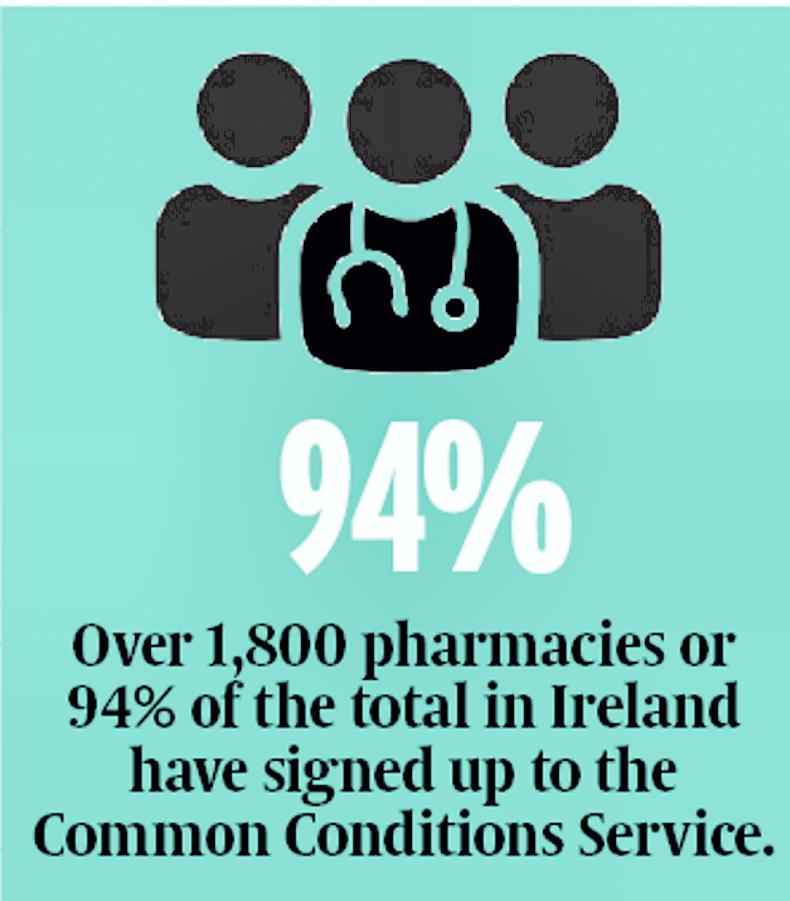
Figure 1.
Accredited training
Given that these are common conditions, pharmacists are already well up to speed. But they still underwent further accredited training for each condition in advance of the service being introduced.
“It took a bit of time for everybody to get their operational pieces in place and get staff trained up and all that,” says Kathy. “But as far as I’m aware, almost all pharmacies have rolled it out at this stage. And if not, they’re in the process.”
Before the Common Conditions Service was introduced, Kathy says she saw patients presenting in the pharmacy with these eight conditions “all the time”.
“The name of the service would even suggest they are common conditions. These are people that I would have, up until this point, had the consultation, and said, I know what you need to treat this, but unfortunately, it’s subjected to prescription-only legislation so I need to refer you to the GP.” That only adds a delay for treatment,” she says.
Of the eight, Kathy says that conjunctivitis and shingles “really jump out for me”.
“Shingles is a big one for me, because if it’s not treated really rapidly, the complications of shingles can be really detrimental and distressing for patients, and can last for months. Post-shingles pain can be horrendous, and the key is starting really prompt treatment.”
How to use the service
The Common Conditions Service is not funded by the State. This means that the pharmacist charges for the service.
“This is a different consultation to how people normally present at the pharmacy. This is going to be a structured consultation which requires record keeping, and potentially, if there’s a red flag, we might need to refer to a GP,” says Kathy.
“There is a charge for the consultation. No one has actually objected to that, because they value the promptness of the service and the efficiency and the standard of the service.”
The pharmacist will tell you about the cost before the consultation. “Because of competition law, there isn’t one set fee. Pharmacies look at their costs, their overheads, and decide. But I’m hearing anything pretty much in the reach of €35 to €40.
“My own fee is €35, and that’s reasonable. It’s reflective of the pharmacist’s time, the record keeping, and we have to write the prescription. It’s what you’d expect.”
If you are prescribed medicine, you may be able to get this under the Drugs Payment Scheme or with your medical card.
There are also exclusion criteria for the service, available to read on the HSE website. Not everyone is eligible, for example, it can depend on your age.
“With everything, we’ll always have our red flags that we have to watch out for,” says Kathy. “It’s worth reminding people, it’s not going to be a prescription for every person. The pharmacist will go through the consultation and we may still have to refer to the GP, but it could be the case that we can go ahead and write the prescription.
“By law, every pharmacy must have a consultation room, and that provides that quiet, confidential space that patients can come in and have that consultation.
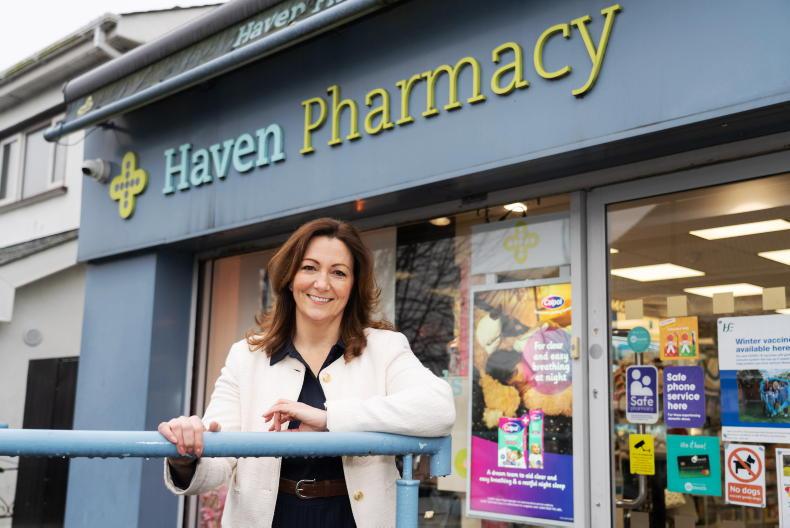
Kathy Maher of Haven Pharmacy, Duleek, Co Meath. \ Barry Cronin
“In our own pharmacy in Duleek, we’re hoping to build in a second consultation room before the summer. We just see patients value being able to come in and speak to the pharmacists, having their blood pressure checked, talking about their body mass index. Maybe it’s emergency contraception, vaccines, but the consultation room, is really an integral part of the pharmacy.”
The new service comes at a welcome time for pharmacies, following a 16 year pay freeze on fees paid to pharmacists from 2009 up until September of 2025.
“The new pharmacy agreement recognises the key value that pharmacies play and these new services will help maintain and provide a sustainable pharmacy service, which would make it more likely that we can remain independent in our communities,” says Kathy.
“New services like this provide expert care for the patient, but also provide a sustainable income for pharmacies. If there’s income from this, I can look at re-investing that back in the pharmacy. I can put in extra consultation rooms. That’s what people want.
“Most people visit their pharmacy about once a month. If you’re a patient that takes something for chronic disease or regular medicine, you tend to see the GP maybe once every three months or six months. But you’ll see the pharmacist every month to collect your medicines, and then you’re popping in for the over-the-counter treatments and advice. People tend to have a really good relationship with their pharmacist.”
See more hse.ie/services/common-conditions-service/
The Common Conditions Service enables community pharmacies to assess and treat patients presenting with eight specified conditions: allergic rhinitis, cold sores, conjunctivitis, impetigo, oral thrush, shingles, cystitis (uncomplicated urinary tract infection) and vaginal thrush.
When asked if the service will be expanded in the future to include more conditions, the Department of Health said: “Evaluation of the service will be completed in order to inform future decisions about its potential expansion.”
The evaluation will be informed by data on the delivery of the service as well as a public survey available on the HSE website. This gives patients an opportunity to provide feedback on what is working well and what areas could be improved.
We don’t always think of pharmacies as the beating heart of a community. But maybe we should. In Ireland, 87% of the population live within 5km of a pharmacy, and many people see their pharmacist more often than their family doctor.
The role that pharmacies play in offering local and accessible medical intervention and treatment, particularly in rural parts of the country, was one of the reasons why the Common Conditions Service was officially launched in January of this year. The new service, that sees pharmacists assess and provide treatment for eight common health conditions, will be rolled out nationally by the end of March this year.
The following eight conditions are included in the service: allergic rhinitis (hay fever), cold sores, conjunctivitis, impetigo (skin infection), oral thrush, shingles, cystitis (uncomplicated urinary tract infection) and vaginal thrush.
Over 1,800 pharmacies (94%) have already signed up, including Kathy Maher, owner of Haven Pharmacy in Duleek, Co Meath. Kathy rolled out the scheme in late January and she tells Irish Country Living it has been “really successful”.
“We are able to assess, provide a structured consultation, and, if possible, prescribe medicine for eight common conditions. That medicine may be something that’s subjected to prescription-only requirements. Up until now, the patient would have had to go to the GP for that. Whereas now, if we think it’s appropriate and it’s in line with the protocols, we can provide that medicine for the patient.”
Kathy says that the service is about “providing timely care and treatment close to home at a time that suits the patient, instead of having to refer them back to a GP which puts pressure on the system where you’re maybe not able to get an appointment for days or weeks.
“If you think of the fact that most pharmacies are open six days a week, if not seven. Most are open longer hours. I’m open till 7pm every day except Saturday. These things can be really treated at a time that suits the patient.
“The whole ethos of Sláintecare is the right care at the right time in the right place. So when I have a patient with oral thrush, where is the most appropriate place for that to be treated? It’s in the pharmacy. The GP should be dealing with more complex cases. And the hope is that this service will free that up for GPs and for patients,” says the community pharmacist.
Figure 1.
Accredited training
Given that these are common conditions, pharmacists are already well up to speed. But they still underwent further accredited training for each condition in advance of the service being introduced.
“It took a bit of time for everybody to get their operational pieces in place and get staff trained up and all that,” says Kathy. “But as far as I’m aware, almost all pharmacies have rolled it out at this stage. And if not, they’re in the process.”
Before the Common Conditions Service was introduced, Kathy says she saw patients presenting in the pharmacy with these eight conditions “all the time”.
“The name of the service would even suggest they are common conditions. These are people that I would have, up until this point, had the consultation, and said, I know what you need to treat this, but unfortunately, it’s subjected to prescription-only legislation so I need to refer you to the GP.” That only adds a delay for treatment,” she says.
Of the eight, Kathy says that conjunctivitis and shingles “really jump out for me”.
“Shingles is a big one for me, because if it’s not treated really rapidly, the complications of shingles can be really detrimental and distressing for patients, and can last for months. Post-shingles pain can be horrendous, and the key is starting really prompt treatment.”
How to use the service
The Common Conditions Service is not funded by the State. This means that the pharmacist charges for the service.
“This is a different consultation to how people normally present at the pharmacy. This is going to be a structured consultation which requires record keeping, and potentially, if there’s a red flag, we might need to refer to a GP,” says Kathy.
“There is a charge for the consultation. No one has actually objected to that, because they value the promptness of the service and the efficiency and the standard of the service.”
The pharmacist will tell you about the cost before the consultation. “Because of competition law, there isn’t one set fee. Pharmacies look at their costs, their overheads, and decide. But I’m hearing anything pretty much in the reach of €35 to €40.
“My own fee is €35, and that’s reasonable. It’s reflective of the pharmacist’s time, the record keeping, and we have to write the prescription. It’s what you’d expect.”
If you are prescribed medicine, you may be able to get this under the Drugs Payment Scheme or with your medical card.
There are also exclusion criteria for the service, available to read on the HSE website. Not everyone is eligible, for example, it can depend on your age.
“With everything, we’ll always have our red flags that we have to watch out for,” says Kathy. “It’s worth reminding people, it’s not going to be a prescription for every person. The pharmacist will go through the consultation and we may still have to refer to the GP, but it could be the case that we can go ahead and write the prescription.
“By law, every pharmacy must have a consultation room, and that provides that quiet, confidential space that patients can come in and have that consultation.
Kathy Maher of Haven Pharmacy, Duleek, Co Meath. \ Barry Cronin
“In our own pharmacy in Duleek, we’re hoping to build in a second consultation room before the summer. We just see patients value being able to come in and speak to the pharmacists, having their blood pressure checked, talking about their body mass index. Maybe it’s emergency contraception, vaccines, but the consultation room, is really an integral part of the pharmacy.”
The new service comes at a welcome time for pharmacies, following a 16 year pay freeze on fees paid to pharmacists from 2009 up until September of 2025.
“The new pharmacy agreement recognises the key value that pharmacies play and these new services will help maintain and provide a sustainable pharmacy service, which would make it more likely that we can remain independent in our communities,” says Kathy.
“New services like this provide expert care for the patient, but also provide a sustainable income for pharmacies. If there’s income from this, I can look at re-investing that back in the pharmacy. I can put in extra consultation rooms. That’s what people want.
“Most people visit their pharmacy about once a month. If you’re a patient that takes something for chronic disease or regular medicine, you tend to see the GP maybe once every three months or six months. But you’ll see the pharmacist every month to collect your medicines, and then you’re popping in for the over-the-counter treatments and advice. People tend to have a really good relationship with their pharmacist.”
See more hse.ie/services/common-conditions-service/
The Common Conditions Service enables community pharmacies to assess and treat patients presenting with eight specified conditions: allergic rhinitis, cold sores, conjunctivitis, impetigo, oral thrush, shingles, cystitis (uncomplicated urinary tract infection) and vaginal thrush.
When asked if the service will be expanded in the future to include more conditions, the Department of Health said: “Evaluation of the service will be completed in order to inform future decisions about its potential expansion.”
The evaluation will be informed by data on the delivery of the service as well as a public survey available on the HSE website. This gives patients an opportunity to provide feedback on what is working well and what areas could be improved.







SHARING OPTIONS