Lakeland Dairies is the second largest milk processor in Ireland serving 16 counties across both the Republic of Ireland and Northern Ireland with a huge supplier base of 3,200 farmers.
The Bailieborough plant in Cavan is one of Lakeland’s main sites, processing over 50% of the co-ops entire milk pool.
The Irish Farmers Journal recently had a tour of the plant which is located just outside the town of Bailieborough, a half-hour drive from the co-op’s headquarters in Cavan town.
With an intake of one billion litres of milk annually, the plant is the largest milk drying plant in Europe.
As well as milk powders, the plant is a major producer of butter, with an annual production of 55,000t for both the home and export markets.
The milk pool of this particular plant is evenly split, with 50% of the milk coming from the Republic of Ireland and the remaining 50% coming from Northern Ireland.
The combined milk pool is a huge advantage to the business as it allows for a constant steady intake to the plant.
Capacity
This means the capacity of the plant and staff are better utilised throughout the year, in contrast to other processors in the south of Ireland who have to deal with a peak supply for three months and a very small supply over winter months.
The products produced at the Bailieborough plant are exported to over 100 countries all across the world.
This huge consumer base allows Lakeland to add value to their raw milk product which in turn allows the co-op to give a return back to its suppliers.
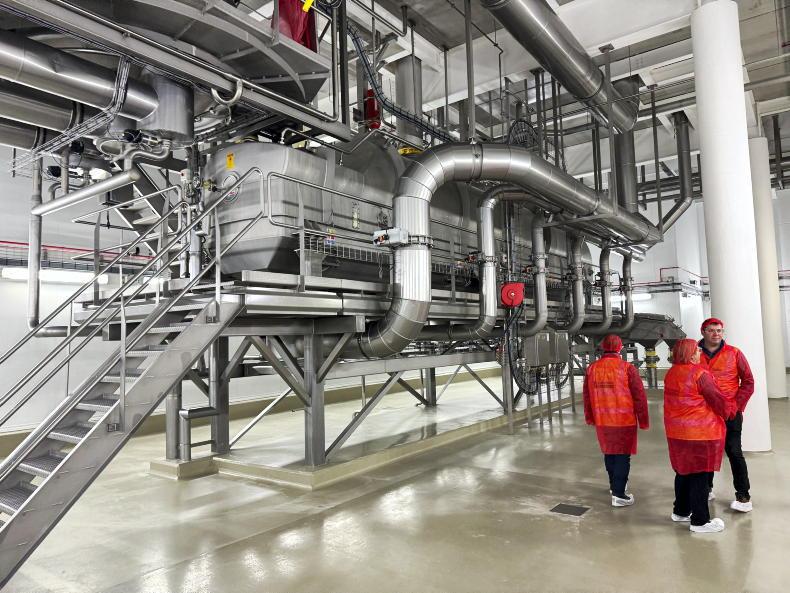
The newest spray dryer in the Bailieborough plant, built in 2016.
The site has undergone significant development over the last 10 years with north of €100m invested in that period.
The most recent addition to the plant was an expansion of the milk intake facility. The facility, costing a total of €14.4m, has boosted the daily capacity of the plant to 5.9m litres of milk.
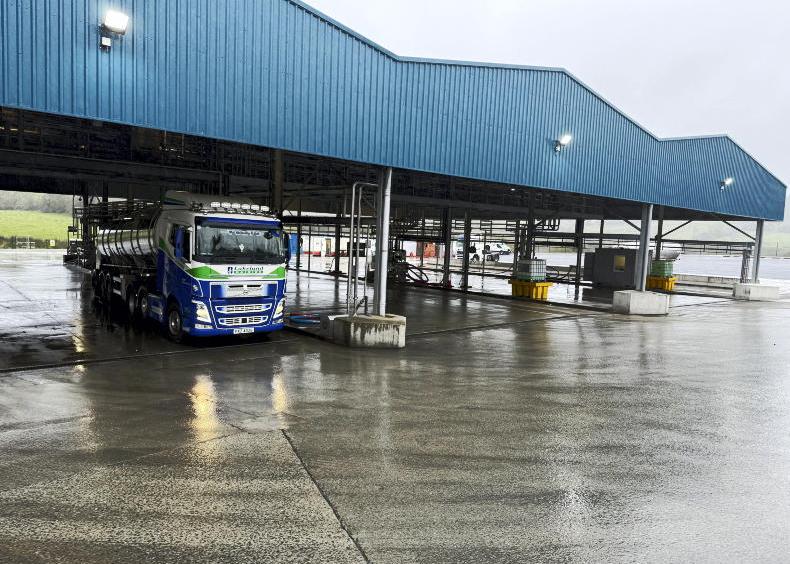
This investment included two new milk tanker bays for milk offload, a clean in place (CIP) system for washing tankers and five new milk storage silos, each with a capacity of 330,000 litres.
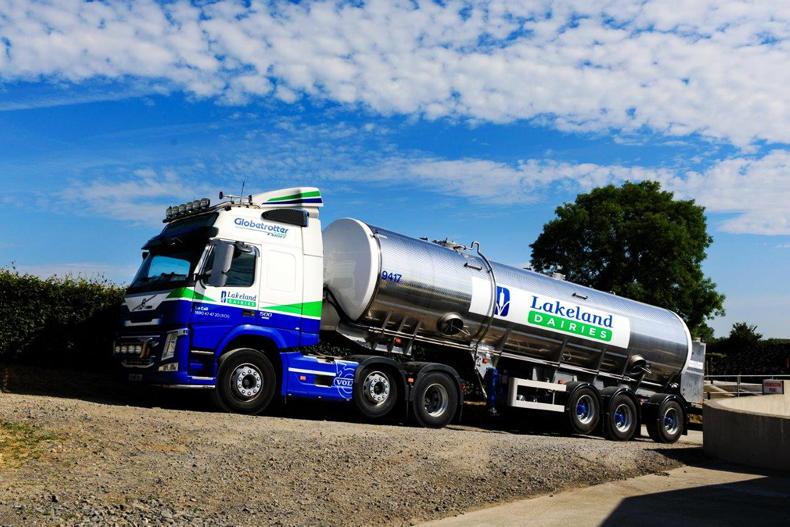
Every day, approximately 140 tankers of milk each carrying 28,600l enter the facility. The tanker enters at the intake point and is weighed on arrival.

Milk powder is packaged into 25kg bags and sold onto customers across the world.
From then on, the tanker begins unloading the milk, which moves into one of the raw storage silos ready to be processed. A full tanker of milk can now be in and out of the plant in just 16 minutes.
The milk intake facility operates 365 days of the year from 7am in the morning to 11pm at night. The plant has the capacity to store milk from Northern Ireland and milk from the south separately. This is a demand of certain customers which the co-op must accommodate.
Niamh McGovern, head of site operations at the Bailieborough plant discussed how important the new facility will be for Lakeland going forward.
“This year our peak intake at this site was 4.43 million litres of milk in one day. The peak day occurred on 21 June and was the milk from 180,000 cows, accounting for 10% of the milk processed on the island of Ireland that day. This new facility has allowed us to boost capacity so we can continue to grow our peak intake for both our north and south supplier base.”
Milk powder
Once the milk has been received into the storage silos, it is ready to begin the processing steps.
By this stage, the milk has already been tested and cleared for antibiotics or any other potential issues.
In the storage silos, the milk is kept cool to prevent bacteria formation. This milk is then transferred to separation where it is separated into a cream fraction and a skimmed milk fraction.
The skimmed milk will go forward for drying into powder form while the cream is used to produce butter. The plant has three state-of-the-art spray dryers that work to produce 135,000 tonnes of milk powder annually.
The drying process begins with evaporation. In this process, water is evaporated from the skimmed milk to produce a 52% solids product. From then, the spray dryers work at 230°C to reduce the moisture content to 3.5%.

A selection of butter products that Lakeland produces.
At that stage, the product is sampled and tested again for quality control purposes. Once the powder has been cleared, it is moved to the packaging area. The three spray dryers in Bailieborough have the capacity to produce 22 tonnes of powder per hour.
The powder is packaged into bags weighing either 25kg or one tonne. The powder product portfolio includes skim milk powder, whole milk powder and fat filled powder.
These powders have a long shelf life of around two years and will be used to make a range of products such as infant formula, confectionary food products, yoghurts and milk-based beverages.
Butter
With 55,000t of butter produced every year at the Lakeland site, the product is an extremely important component of the business. A proportion of the butter produced at this site will be exported, with the rest of the butter being sold in the home market.
If a consumer was to go their local Tesco, Dunnes or SuperValu today for example and purchase one of these supermarkets’ own brand butter labels, there’s a good chance that butter was produced in the Bailieborough site.
To get to this stage, the butter must go through a rigorous processing journey that all starts with cream as described to visitors by Geraldine McLelland, technical manager of food ingredients at Lakeland.
Once the raw milk has been separated into cream and skimmed milk, the cream then moves into the butter production plant. Here, the cream is heated quickly to pasteurise it before being cooled. The cream is then heated again, this time to 12°C and the churning process can begin.
The butter is churned through two Passilac butter churns. The churns work to rotate the cream, which in turn causes the fat globules of the cream to clump together and form butter granules.
The excess liquid which is produced by this process is called buttermilk.

Lakeland chair Niall Matthews, TD Niamh Smyth and Lakeland CEO Colin Kelly at the recent open day.
This buttermilk is drained from the churn and the butter granules continue along the process.
The granules are then washed with cold water to remove any residual milk solids. If this step was not done effectively, the butter is likely to become rancid in the future.
From here, the butter is kneaded in another machine, removing any further excess water and the product is made cohesive and solid.
Depending on the desired product, the butter can be salted at this stage before it is shaped into butter blocks.
Machines then work to cut the product into those smaller blocks of butter, which are packaged and ready for sale to customers.
Lakeland produces a range of butter products for different markets. There are salted butters, unsalted butters and lactic butters not to mention the spreadable butters which have become a lot more popular in recent times due to their ease of use.
The type of butter that is produced will depend on the manufacturing process used.
All butter has to be a minimum of 80% milk fat regardless of the desired product but it’s the different recipes applied after this that defines the type of butter that’s produced.
In brief
The Bailieborough plant handles 50% of all of Lakeland’s milk supply or one billion litres annually. The milk pool is split 50/50 between the Republic of Ireland and Northern Ireland.The peak day of 2025 was 21 June. Milk intake on this day was 4.43 million litres which accounted for 10% of all milk processed on the island of Ireland on that day.A new milk intake facility costing €14.4m completed in 2025 has boosted capacity to 5.9m litres daily.The two products produced at this plant are butter and milk powder. There are 55,000t of butter and 135,000t of milk powder produced annually.
A selection of consumer products produced as part of Lakeland's Millac range.
Lakeland Dairies is the second largest milk processor in Ireland serving 16 counties across both the Republic of Ireland and Northern Ireland with a huge supplier base of 3,200 farmers.
The Bailieborough plant in Cavan is one of Lakeland’s main sites, processing over 50% of the co-ops entire milk pool.
The Irish Farmers Journal recently had a tour of the plant which is located just outside the town of Bailieborough, a half-hour drive from the co-op’s headquarters in Cavan town.
With an intake of one billion litres of milk annually, the plant is the largest milk drying plant in Europe.
As well as milk powders, the plant is a major producer of butter, with an annual production of 55,000t for both the home and export markets.
The milk pool of this particular plant is evenly split, with 50% of the milk coming from the Republic of Ireland and the remaining 50% coming from Northern Ireland.
The combined milk pool is a huge advantage to the business as it allows for a constant steady intake to the plant.
Capacity
This means the capacity of the plant and staff are better utilised throughout the year, in contrast to other processors in the south of Ireland who have to deal with a peak supply for three months and a very small supply over winter months.
The products produced at the Bailieborough plant are exported to over 100 countries all across the world.
This huge consumer base allows Lakeland to add value to their raw milk product which in turn allows the co-op to give a return back to its suppliers.
The newest spray dryer in the Bailieborough plant, built in 2016.
The site has undergone significant development over the last 10 years with north of €100m invested in that period.
The most recent addition to the plant was an expansion of the milk intake facility. The facility, costing a total of €14.4m, has boosted the daily capacity of the plant to 5.9m litres of milk.
This investment included two new milk tanker bays for milk offload, a clean in place (CIP) system for washing tankers and five new milk storage silos, each with a capacity of 330,000 litres.
Every day, approximately 140 tankers of milk each carrying 28,600l enter the facility. The tanker enters at the intake point and is weighed on arrival.
Milk powder is packaged into 25kg bags and sold onto customers across the world.
From then on, the tanker begins unloading the milk, which moves into one of the raw storage silos ready to be processed. A full tanker of milk can now be in and out of the plant in just 16 minutes.
The milk intake facility operates 365 days of the year from 7am in the morning to 11pm at night. The plant has the capacity to store milk from Northern Ireland and milk from the south separately. This is a demand of certain customers which the co-op must accommodate.
Niamh McGovern, head of site operations at the Bailieborough plant discussed how important the new facility will be for Lakeland going forward.
“This year our peak intake at this site was 4.43 million litres of milk in one day. The peak day occurred on 21 June and was the milk from 180,000 cows, accounting for 10% of the milk processed on the island of Ireland that day. This new facility has allowed us to boost capacity so we can continue to grow our peak intake for both our north and south supplier base.”
Milk powder
Once the milk has been received into the storage silos, it is ready to begin the processing steps.
By this stage, the milk has already been tested and cleared for antibiotics or any other potential issues.
In the storage silos, the milk is kept cool to prevent bacteria formation. This milk is then transferred to separation where it is separated into a cream fraction and a skimmed milk fraction.
The skimmed milk will go forward for drying into powder form while the cream is used to produce butter. The plant has three state-of-the-art spray dryers that work to produce 135,000 tonnes of milk powder annually.
The drying process begins with evaporation. In this process, water is evaporated from the skimmed milk to produce a 52% solids product. From then, the spray dryers work at 230°C to reduce the moisture content to 3.5%.
A selection of butter products that Lakeland produces.
At that stage, the product is sampled and tested again for quality control purposes. Once the powder has been cleared, it is moved to the packaging area. The three spray dryers in Bailieborough have the capacity to produce 22 tonnes of powder per hour.
The powder is packaged into bags weighing either 25kg or one tonne. The powder product portfolio includes skim milk powder, whole milk powder and fat filled powder.
These powders have a long shelf life of around two years and will be used to make a range of products such as infant formula, confectionary food products, yoghurts and milk-based beverages.
Butter
With 55,000t of butter produced every year at the Lakeland site, the product is an extremely important component of the business. A proportion of the butter produced at this site will be exported, with the rest of the butter being sold in the home market.
If a consumer was to go their local Tesco, Dunnes or SuperValu today for example and purchase one of these supermarkets’ own brand butter labels, there’s a good chance that butter was produced in the Bailieborough site.
To get to this stage, the butter must go through a rigorous processing journey that all starts with cream as described to visitors by Geraldine McLelland, technical manager of food ingredients at Lakeland.
Once the raw milk has been separated into cream and skimmed milk, the cream then moves into the butter production plant. Here, the cream is heated quickly to pasteurise it before being cooled. The cream is then heated again, this time to 12°C and the churning process can begin.
The butter is churned through two Passilac butter churns. The churns work to rotate the cream, which in turn causes the fat globules of the cream to clump together and form butter granules.
The excess liquid which is produced by this process is called buttermilk.
Lakeland chair Niall Matthews, TD Niamh Smyth and Lakeland CEO Colin Kelly at the recent open day.
This buttermilk is drained from the churn and the butter granules continue along the process.
The granules are then washed with cold water to remove any residual milk solids. If this step was not done effectively, the butter is likely to become rancid in the future.
From here, the butter is kneaded in another machine, removing any further excess water and the product is made cohesive and solid.
Depending on the desired product, the butter can be salted at this stage before it is shaped into butter blocks.
Machines then work to cut the product into those smaller blocks of butter, which are packaged and ready for sale to customers.
Lakeland produces a range of butter products for different markets. There are salted butters, unsalted butters and lactic butters not to mention the spreadable butters which have become a lot more popular in recent times due to their ease of use.
The type of butter that is produced will depend on the manufacturing process used.
All butter has to be a minimum of 80% milk fat regardless of the desired product but it’s the different recipes applied after this that defines the type of butter that’s produced.
In brief
The Bailieborough plant handles 50% of all of Lakeland’s milk supply or one billion litres annually. The milk pool is split 50/50 between the Republic of Ireland and Northern Ireland.The peak day of 2025 was 21 June. Milk intake on this day was 4.43 million litres which accounted for 10% of all milk processed on the island of Ireland on that day.A new milk intake facility costing €14.4m completed in 2025 has boosted capacity to 5.9m litres daily.The two products produced at this plant are butter and milk powder. There are 55,000t of butter and 135,000t of milk powder produced annually.
A selection of consumer products produced as part of Lakeland's Millac range.






SHARING OPTIONS