In a reversal of normal weather patterns, the east coast and southeast are getting a battering with rainfall, while the western seaboard is getting significantly less rain than normal. For the last week, the Met Éireann weather stations at Belmullet, Claremorris and Shannon airport recorded just 19%, 37% and 53% of the normal rainfall respectively.
Meanwhile, Dublin airport has recorded over three times the normal rainfall and received almost nine times the total rainfall that Belmullet has over the last week. Johnstown Castle in Wexford received a staggering 230mm of rain in January alone, on top of the 161mm it received in December and 206mm in November.
Between 1 November and 8 February, Johnstown Castle received over 624mm of rain. To put that in context, that amounts to 59% of the long-term average for the year.
Impact
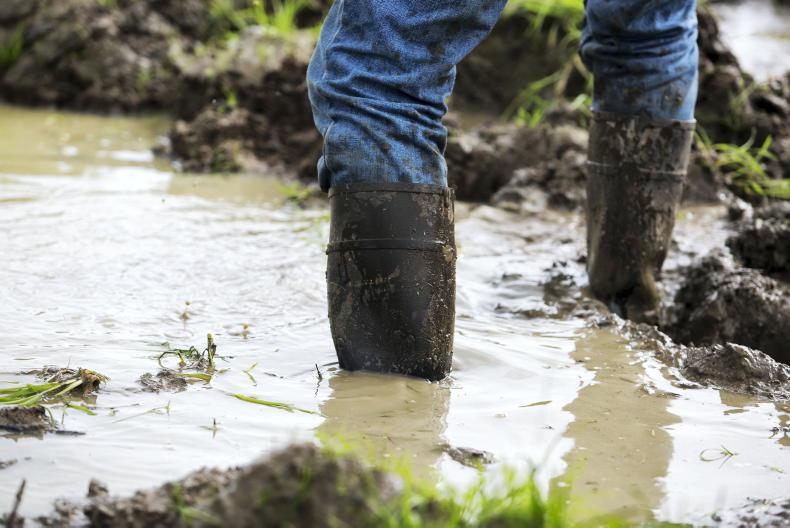
The impact at farm level is seen right across the region, with farm yards flooded, slurry tanks filling up and land beyond saturation point. This means that land cannot be travelled by tractor without doing serious damage. Farmers in the region are at breaking point when it comes to slurry storage, given that it is one month since the closed period for slurry spreading ended.
While it is still relatively early days for grazing, farmers that would normally have freshly calved cows out grazing are really struggling. Some are managing to get cows out for a few hours per day, but even then damage is being done.
For many farmers early February grazing is not on their horizon, but given that land is so wet now, there are concerns that turnout will be delayed across the region. The following is some advice for dealing with wet land in spring.
On/off grazing
Few tools to manage grazing in spring or autumn have been as effective as the use of on/off grazing. Arguably one of the most important research projects ever undertaken by Teagasc Moorepark, on/off grazing enables cows to eat grass when land is wet, while avoiding the worst of the damage caused by poaching.
There have been a number of experiments on on/off grazing at Moorepark, but the most relevant took place with freshly calved cows in February and March. As part of the experiment, cows grazed for 30 days regardless of the weather under different grazing regimes.
All cows were offered a daily grass allowance of 15kg DM/cow/day and 3kg DM/cow/day of concentrate. The treatments included full-time access to grass, two spells of four and a half-hour grazing periods, two spells of three-hour grazing periods and additional silage was fed in one treatment also.
There was no difference in milk yield between the treatments, which the researchers say shows that the cows adapted their grazing behaviour to the on/off grazing regime. Even with an additional 3kg dry matter of silage, the milk solids yield of cows on this treatment was not greater than any of the other treatments.
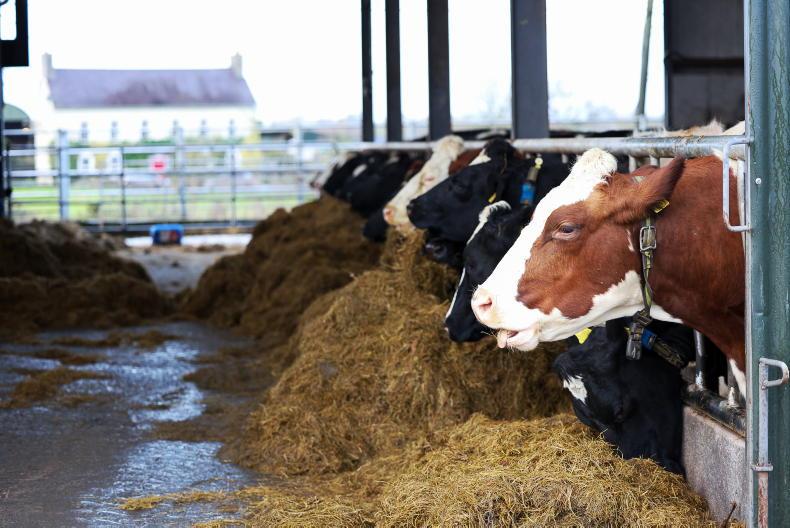
Teagasc research has shown that cows fed silage while on an on/off grazing regime don't produce any more milk. \ Odhran Ducie
Cows offered two three-hour or two four and a half-hour access to grass achieved 95% of the intake of cows given full-time access to pasture. The researchers said that given the high levels of intake that can be achieved and the fact that there is no reduction in milk production, it appears that three hours grazing after each milking is sufficient for spring-calving cows in early lactation.
Less poaching damage is done because when cows are physically grazing with their heads down munching, they are doing less walking around.
By reducing the grazing window to six hours per day, rather than say the standard 20 or 21 hours per day, excluding milking times, then the amount of walking done by cows while at grass is greatly reduced. It is the cumulative impact of footprint on footprint that causes most of the damage when ground is tender.
Are there times when on/off grazing won’t work? Yes, for sure, and there is no doubt that there are many parts of the country right now where on/off grazing cannot be practiced because land is too wet.
For me, if a cow’s hoof cuts into the sod and sinks three or four inches into the soil then whether or not that cow is at grass for three minutes or three hours, excessive damage will be done. On/off grazing comes into its own when land is in between that unable to graze stage and just about okay to graze stage.
By using on/off grazing at the right time, farmers will be able to get cows out to grass earlier than waiting for land to dry out sufficiently to let cows out for the full grazing period.
The downside of on/off grazing is that it involves bringing cows in from the field at times other than milking times. In other words, if cows go to grass at say 8am for a three-hour stint, they need to be brought in at 11am. If they go out grazing at 5pm, they need to be brought in at 8pm at night.
There isn’t really extra work involved as the cows will need to be brought in anyway, but understandably many farmers feel the 8pm or 9pm bring in time at night is inconvenient.
The counter-argument is that the benefits of getting grass into cows means that those who practice on/off grazing are well rewarded for their efforts. This is particularly the case in low milk price years like 2026 is shaping up to be.
Spur roads
On/off grazing only works well when cows are allocated the correct amount of grass for that grazing period. In early spring, when the number of cows out grazing is low and when their intakes are also low the actual area to be allocated can be quite small.
Where a paddock might get three grazings in summer, it might get 10 or 12 grazings in February. Obviously, this poses a challenge because there won’t be roadway access to all parts of the paddock and in wet weather cows cannot walk across previously grazed areas without doing a lot of poaching.
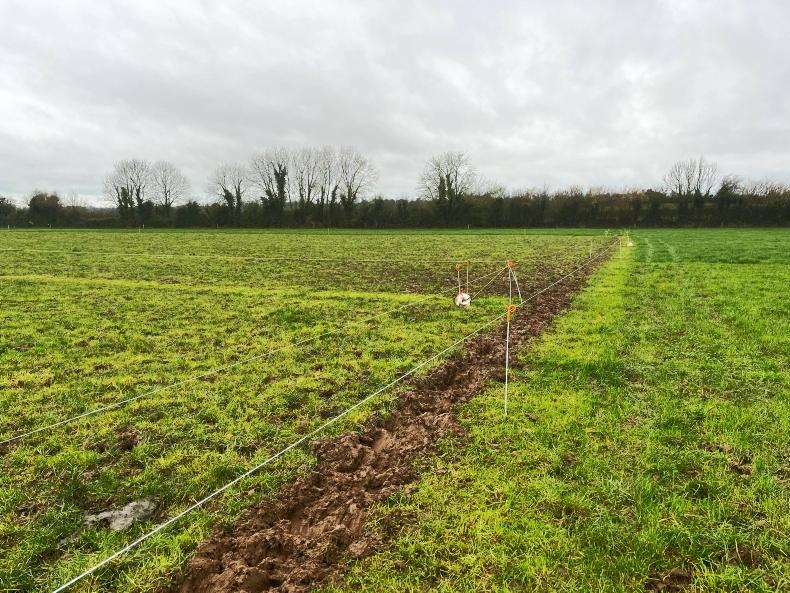
The solution to this is to use spur roads to get cows to sections of the paddock not touching an existing farm roadway. These are narrow sacrifice strips, usually just 1m wide from post to post that enable cows to walk in single file to any part of the field.
The area under the spur road will be wrecked, but as a proportion of the field it is very small. If there are say two 100m strips in a two hectare field, that will be no more than 0.5% of the field that has been damaged by the spur road. The subsequent impact on production will be minimal.
When land dries out in March or April some farmers will drive over the rough track with a tractor to level it off and sprinkle grass seeds over it. Others do nothing and the section recovers naturally.
It takes time and patience to erect a spur road, but by doing so it enables on/off grazing and allows for much better utilisation of grass.
Farmer profile: Aidan Lawless, Teagasc, Johnstown Castle, Co Wexford
We’ve just over a third of the spring-calving herd calved at this stage. Unfortunately, the rain has been constant over the last three months, so ground conditions are poor, with no animals turned out to date.
The weather station here in Johnstown Castle is showing 233mm of rain in January alone. That’s almost two and a half times the long-term average here, and November and December were no different.
With almost no sunlight or windy days in that time, land has had no opportunity to dry either, leaving soils saturated.
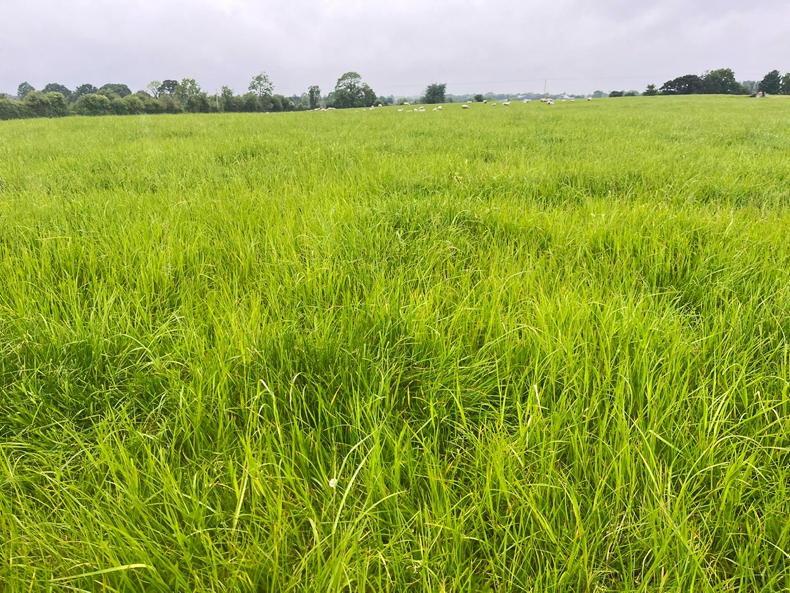
There is plenty of grass on the farm with an average farm cover of 1,100kg DM/ha on the spring block, but it’s just not accessible yet. We would typically aim to be out grazing by the start of February in a normal year, targeting 30% grazed by the end of February. When a window of opportunity opens, we will be sending cows to the driest of ground for on/off grazing. There are covers of 800-900kg DM/ha on the paddocks we’re targeting first.
In terms of nutrient management, we have nothing done yet. We would normally go with slurry on a third of the platform that would be grazed last in the first round.
It’s unlikely we’ll get this done now, so the new plan is to cover 80% of the farm with a half bag of protected urea in the next two weeks. The other 20% of the farm will get slurry after grazing.
The cow’s diet at the moment is made up of high-quality silage (76 DMD) and 5kg of meal. As soon as the cows start on/off grazing, we’ll be pulling the meal back and we’ll look to take silage out of the diet.
In a reversal of normal weather patterns, the east coast and southeast are getting a battering with rainfall, while the western seaboard is getting significantly less rain than normal. For the last week, the Met Éireann weather stations at Belmullet, Claremorris and Shannon airport recorded just 19%, 37% and 53% of the normal rainfall respectively.
Meanwhile, Dublin airport has recorded over three times the normal rainfall and received almost nine times the total rainfall that Belmullet has over the last week. Johnstown Castle in Wexford received a staggering 230mm of rain in January alone, on top of the 161mm it received in December and 206mm in November.
Between 1 November and 8 February, Johnstown Castle received over 624mm of rain. To put that in context, that amounts to 59% of the long-term average for the year.
Impact
The impact at farm level is seen right across the region, with farm yards flooded, slurry tanks filling up and land beyond saturation point. This means that land cannot be travelled by tractor without doing serious damage. Farmers in the region are at breaking point when it comes to slurry storage, given that it is one month since the closed period for slurry spreading ended.
While it is still relatively early days for grazing, farmers that would normally have freshly calved cows out grazing are really struggling. Some are managing to get cows out for a few hours per day, but even then damage is being done.
For many farmers early February grazing is not on their horizon, but given that land is so wet now, there are concerns that turnout will be delayed across the region. The following is some advice for dealing with wet land in spring.
On/off grazing
Few tools to manage grazing in spring or autumn have been as effective as the use of on/off grazing. Arguably one of the most important research projects ever undertaken by Teagasc Moorepark, on/off grazing enables cows to eat grass when land is wet, while avoiding the worst of the damage caused by poaching.
There have been a number of experiments on on/off grazing at Moorepark, but the most relevant took place with freshly calved cows in February and March. As part of the experiment, cows grazed for 30 days regardless of the weather under different grazing regimes.
All cows were offered a daily grass allowance of 15kg DM/cow/day and 3kg DM/cow/day of concentrate. The treatments included full-time access to grass, two spells of four and a half-hour grazing periods, two spells of three-hour grazing periods and additional silage was fed in one treatment also.
There was no difference in milk yield between the treatments, which the researchers say shows that the cows adapted their grazing behaviour to the on/off grazing regime. Even with an additional 3kg dry matter of silage, the milk solids yield of cows on this treatment was not greater than any of the other treatments.
Teagasc research has shown that cows fed silage while on an on/off grazing regime don't produce any more milk. \ Odhran Ducie
Cows offered two three-hour or two four and a half-hour access to grass achieved 95% of the intake of cows given full-time access to pasture. The researchers said that given the high levels of intake that can be achieved and the fact that there is no reduction in milk production, it appears that three hours grazing after each milking is sufficient for spring-calving cows in early lactation.
Less poaching damage is done because when cows are physically grazing with their heads down munching, they are doing less walking around.
By reducing the grazing window to six hours per day, rather than say the standard 20 or 21 hours per day, excluding milking times, then the amount of walking done by cows while at grass is greatly reduced. It is the cumulative impact of footprint on footprint that causes most of the damage when ground is tender.
Are there times when on/off grazing won’t work? Yes, for sure, and there is no doubt that there are many parts of the country right now where on/off grazing cannot be practiced because land is too wet.
For me, if a cow’s hoof cuts into the sod and sinks three or four inches into the soil then whether or not that cow is at grass for three minutes or three hours, excessive damage will be done. On/off grazing comes into its own when land is in between that unable to graze stage and just about okay to graze stage.
By using on/off grazing at the right time, farmers will be able to get cows out to grass earlier than waiting for land to dry out sufficiently to let cows out for the full grazing period.
The downside of on/off grazing is that it involves bringing cows in from the field at times other than milking times. In other words, if cows go to grass at say 8am for a three-hour stint, they need to be brought in at 11am. If they go out grazing at 5pm, they need to be brought in at 8pm at night.
There isn’t really extra work involved as the cows will need to be brought in anyway, but understandably many farmers feel the 8pm or 9pm bring in time at night is inconvenient.
The counter-argument is that the benefits of getting grass into cows means that those who practice on/off grazing are well rewarded for their efforts. This is particularly the case in low milk price years like 2026 is shaping up to be.
Spur roads
On/off grazing only works well when cows are allocated the correct amount of grass for that grazing period. In early spring, when the number of cows out grazing is low and when their intakes are also low the actual area to be allocated can be quite small.
Where a paddock might get three grazings in summer, it might get 10 or 12 grazings in February. Obviously, this poses a challenge because there won’t be roadway access to all parts of the paddock and in wet weather cows cannot walk across previously grazed areas without doing a lot of poaching.
The solution to this is to use spur roads to get cows to sections of the paddock not touching an existing farm roadway. These are narrow sacrifice strips, usually just 1m wide from post to post that enable cows to walk in single file to any part of the field.
The area under the spur road will be wrecked, but as a proportion of the field it is very small. If there are say two 100m strips in a two hectare field, that will be no more than 0.5% of the field that has been damaged by the spur road. The subsequent impact on production will be minimal.
When land dries out in March or April some farmers will drive over the rough track with a tractor to level it off and sprinkle grass seeds over it. Others do nothing and the section recovers naturally.
It takes time and patience to erect a spur road, but by doing so it enables on/off grazing and allows for much better utilisation of grass.
Farmer profile: Aidan Lawless, Teagasc, Johnstown Castle, Co Wexford
We’ve just over a third of the spring-calving herd calved at this stage. Unfortunately, the rain has been constant over the last three months, so ground conditions are poor, with no animals turned out to date.
The weather station here in Johnstown Castle is showing 233mm of rain in January alone. That’s almost two and a half times the long-term average here, and November and December were no different.
With almost no sunlight or windy days in that time, land has had no opportunity to dry either, leaving soils saturated.
There is plenty of grass on the farm with an average farm cover of 1,100kg DM/ha on the spring block, but it’s just not accessible yet. We would typically aim to be out grazing by the start of February in a normal year, targeting 30% grazed by the end of February. When a window of opportunity opens, we will be sending cows to the driest of ground for on/off grazing. There are covers of 800-900kg DM/ha on the paddocks we’re targeting first.
In terms of nutrient management, we have nothing done yet. We would normally go with slurry on a third of the platform that would be grazed last in the first round.
It’s unlikely we’ll get this done now, so the new plan is to cover 80% of the farm with a half bag of protected urea in the next two weeks. The other 20% of the farm will get slurry after grazing.
The cow’s diet at the moment is made up of high-quality silage (76 DMD) and 5kg of meal. As soon as the cows start on/off grazing, we’ll be pulling the meal back and we’ll look to take silage out of the diet.







SHARING OPTIONS