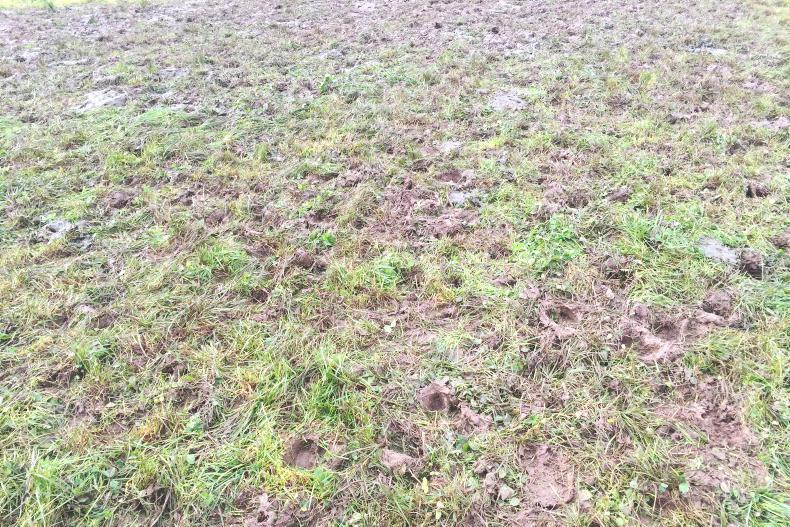
Grazing: it’s shaping up to be one of those ‘grab and go’ Februarys when it comes to spring grazing. As outlined on pages 32 and 33, many parts of the east coast have received huge amounts of rainfall over the last three months.
For those on heavy land in these parts, grazing just isn’t possible. For those on more free-draining land or in other parts of the country, grazing is a challenge but not impossible.
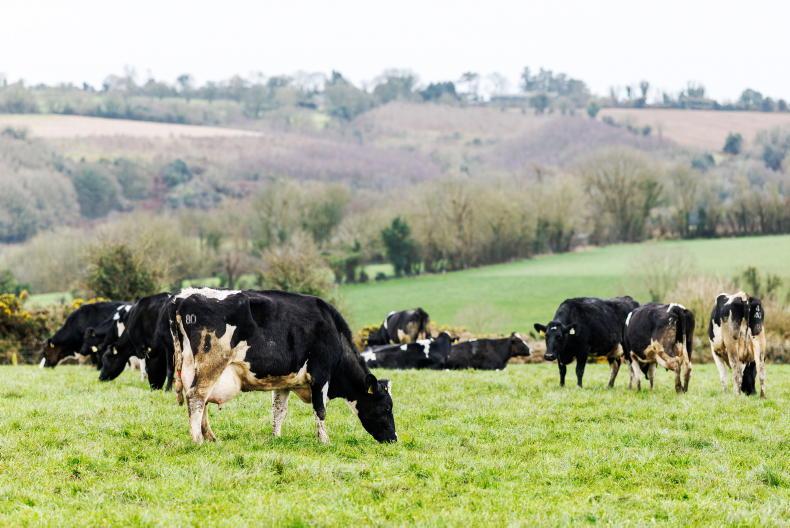
Those who are getting cows out are using all the tricks in the book. These include on/off grazing, using spur roads and setting up breaks in square blocks. A really important step is to ensure that cows go out to grass with an appetite for grazing.
This means keeping silage back from the herd for at least three or four hours prior to going out to grass. If they don’t go out grazing with an appetite, they will do more walking around and more damage will be done. If cows are on/off grazing, I wouldn’t be too concerned about giving them access to water during the grazing period, but if cows are out for a full period then I would ensure that they have access to water.
Intakes: freshly calved cows eat very little in the first few weeks after calving. This is even more true for heifers who have smaller appetites.
The mistakes some farmers make is that they allocate too much grass. I would estimate that total intake in the first week or two after calving is probably around 10kg DM/day, whereas this increases to 18kg to 20kg after seven or eight weeks. One of the key steps when it comes to spring grazing is to allocate the correct area.
If too much area is allocated then grass will be wasted; if too little is allocated then cows will be hungry and the risk of damage is greater. The thing to remember is that at this time of year all of the grass plant is highly digestible and highly nutritious.
So tight grazing, where possible, will not only ensure high quality regrowth for the next rounds, but will provide high quality feed for cows. I know it’s wishful thinking to be talking about tight grazing when many fields are saturated, but that’s the principle.
Allocations: in terms of grass allocations, there are a couple of ways to work this out.
All require a bit of guesswork and because we are dealing with biology – in terms of grass and cows, there will always be some variation. At this time of year, intake is typically 10kg or 11kg of forage plus 2kg or 3kg of meal.
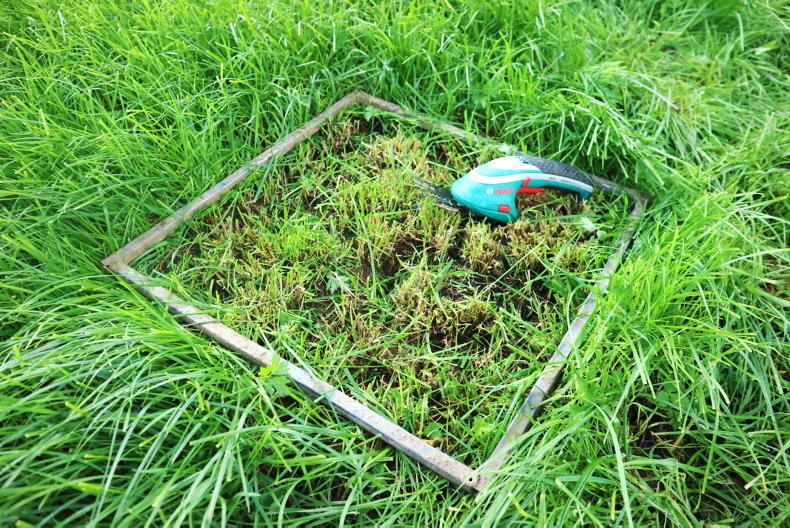
This means 5kg or 5.5kg of grass needs to be allocated per cow per grazing. The next step is to work out how much grass is in the field. If there’s a cover of 1,200kg DM/ha in the paddock, then dividing this into 10,000 will work out how many square metres are needed to allocate 1kg DM of grass. In this case, 10,000 divided by 1,200 is 8.33.
If there are 20 cows eating 5kg of grass each, that’s a total intake demand of 100kg. Multiplying this by 8.33 means that 833m2 needs to be allocated for that grazing. If the paddock is say 50m wide, then place the wire back 17m.
Grazing: it’s shaping up to be one of those ‘grab and go’ Februarys when it comes to spring grazing. As outlined on pages 32 and 33, many parts of the east coast have received huge amounts of rainfall over the last three months.
For those on heavy land in these parts, grazing just isn’t possible. For those on more free-draining land or in other parts of the country, grazing is a challenge but not impossible.
Those who are getting cows out are using all the tricks in the book. These include on/off grazing, using spur roads and setting up breaks in square blocks. A really important step is to ensure that cows go out to grass with an appetite for grazing.
This means keeping silage back from the herd for at least three or four hours prior to going out to grass. If they don’t go out grazing with an appetite, they will do more walking around and more damage will be done. If cows are on/off grazing, I wouldn’t be too concerned about giving them access to water during the grazing period, but if cows are out for a full period then I would ensure that they have access to water.
Intakes: freshly calved cows eat very little in the first few weeks after calving. This is even more true for heifers who have smaller appetites.
The mistakes some farmers make is that they allocate too much grass. I would estimate that total intake in the first week or two after calving is probably around 10kg DM/day, whereas this increases to 18kg to 20kg after seven or eight weeks. One of the key steps when it comes to spring grazing is to allocate the correct area.
If too much area is allocated then grass will be wasted; if too little is allocated then cows will be hungry and the risk of damage is greater. The thing to remember is that at this time of year all of the grass plant is highly digestible and highly nutritious.
So tight grazing, where possible, will not only ensure high quality regrowth for the next rounds, but will provide high quality feed for cows. I know it’s wishful thinking to be talking about tight grazing when many fields are saturated, but that’s the principle.
Allocations: in terms of grass allocations, there are a couple of ways to work this out.
All require a bit of guesswork and because we are dealing with biology – in terms of grass and cows, there will always be some variation. At this time of year, intake is typically 10kg or 11kg of forage plus 2kg or 3kg of meal.
This means 5kg or 5.5kg of grass needs to be allocated per cow per grazing. The next step is to work out how much grass is in the field. If there’s a cover of 1,200kg DM/ha in the paddock, then dividing this into 10,000 will work out how many square metres are needed to allocate 1kg DM of grass. In this case, 10,000 divided by 1,200 is 8.33.
If there are 20 cows eating 5kg of grass each, that’s a total intake demand of 100kg. Multiplying this by 8.33 means that 833m2 needs to be allocated for that grazing. If the paddock is say 50m wide, then place the wire back 17m.






SHARING OPTIONS