


The first thing to say about the new rules coming in for 2026 on nutrient distribution and stocking rates is that they are difficult to explain.
They are complex, because the requirements differ based on nitrates banding and the stocking rate on the milking platform.
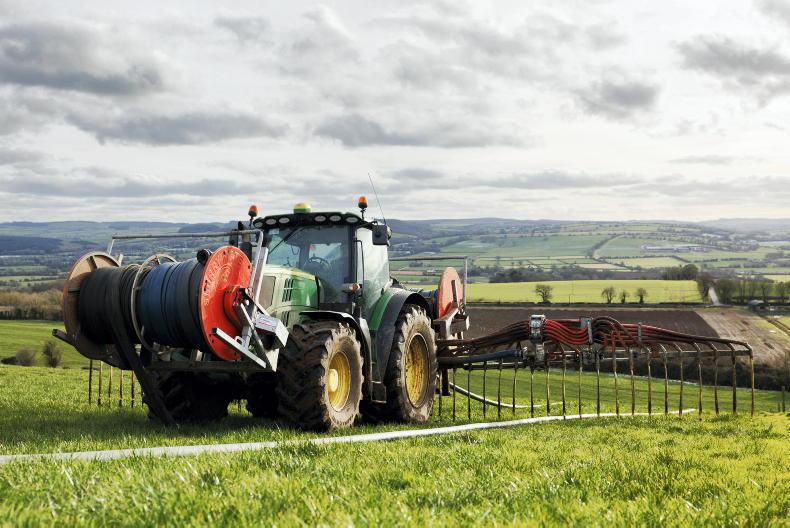
The spirit of the regulation is that farmers who have high milking platform stocking rates must demonstrate that they move slurry off the platform and on to other parts of the farm.
If they don’t demonstrate that, then their chemical nitrogen (N) allowance for the milking platform lands will be cut.
For farms stocked below a certain level, there will be no requirement to prove that slurry moves, but for higher-stocked farms, up to 75% of the slurry produced on the holding may need to be moved off the milking platform.
Example
For example, take herds in the middle band that have a chemical N allowance of 214kg N/ha. The maximum stocking rate in this band in which no slurry needs to move is 286kg organic N/ha.
At 92kg N/cow, this corresponds to a stocking rate of 3.1 cows/ha. If 241kg N/ha was being spread, then the maximum stocking rate where no slurry needs to move is 2.81 cows/ha.
The thinking is that at the time farmers are filling in their BISS application, they will outline what parcels are part of their milking platform.
For farmers who have a requirement to transport slurry, they Department has indicated that it intends on expanding the nutrient export programme to include the movement of slurry within farms.
The changes to the Good Agricultural Environmental Practice regulations has yet to be signed into law, but the text of the proposed changes as per the new nitrates action programme are available on the Department website.



SHARING OPTIONS