The Positive Farmers Conference returns for another year this January, but rather than the usual two-day conference, the 2026 event is a one-day affair.
Taking place in the Radisson Blu Hotel in Little Island, Cork, the event is billed as an opportunity for farmers to recharge the batteries and get geared up for the year ahead.
On that topic, conference organiser Michael Murphy sounds a cautious word around the duration of the current downturn in milk prices, saying many commentators are underestimating how long milk prices will remain low.
Michael says that a rebound in milk prices towards the second half of 2026 is highly unlikely, given the increased milk supplies globally, but especially
in the US.
“Traditionally, US farmers responded to high or low milk prices by producing more or less milk. When prices were good they kept more cows and fed them better to produce more milk and when prices were low they culled harder and reduced feed costs.
“What we are seeing now is totally different as there is another dynamic that’s not really connected to milk prices at all; that’s calf prices.
“There is strong evidence that US farmers are holding on to cows for longer in order to get a calf on the ground and that calf is worth something around $1,400.
“So, even if US farmers are making a loss on milk sales, they are not incentivised to reduce cow numbers because of the high price they will get for calves.
“This indicates to me that the US as a whole will continue to pump out milk for as long as beef prices are good,” he says.
While that may not sound positive, Michael says it’s better to be prepared and that the conference will deal with how farmers can prepare themselves and their farm businesses to reduce costs.
Teagasc’s Brendan Horan will outline the importance of having good systems to repeatedly generate high profitability and a good work/life balance.
Brendan will outline the trends in costs and profit on dairy farms over the last decade and outline areas for farmers to focus on to reduce costs in 2026.
Table 1 highlights some of the key trends in costs and profit over the last five years.
The data shows that total costs on dairy farms, excluding own labour, tax and principle repayments increased by €1.36/kg MS between 2020 and 2025 with the expected cost of production in 2025 to be the same as 2024 at
€4.49/kg MS.
Based on a current milk price of around €5/kg MS including VAT, if this price remains for all of 2026 then margins will be severely tight unless
costs reduce.
Cork Dairy farmer Denis Finnegan will go through his costs of production for 2025 and do a sample budget for a farm in 2026, with a much lower milk price factored in. Denis’s home farm is in Coachford, Co Cork, but he is leasing a number of dairy farms in partnership with Billy Curtin.
This session will go into detail on how Denis approaches financial budgets, what tools he uses, where he finds the information and what are the key drivers of good financial performance on dairy farms.
As ever, the Positive Farmers Conference will have inspirational stories of farmer success. Kilkenny-based farmer Cathal McAleer, who is originally from Tyrone will be speaking about his journey to cow ownership and share milking.
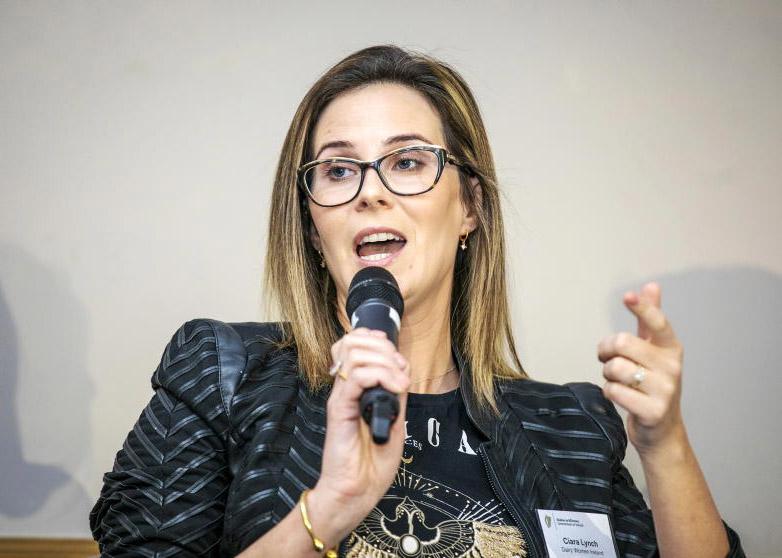
Also speaking at the conference is husband and wife duo Ciara Lynch (pictured) and Peter Farrell. The Meath-based couple are now running three dairy farms across Meath and Louth, milking 950 mainly Jersey crossbred cows.

Some of the attendance at Positive Farmers Conference last year
Peter says that he initially had no interest in becoming a dairy farmer and instead studied structural engineering in university. As the start of his career coincided with the financial crash and a lack of demand for newly qualified engineers, Peter found himself back helping out on the home farm in 2009.
“While 2009 was a very poor margin year, 2008 had been a great year and it was while pulling the 2008 accounts together that I realised there was actually money to be made dairy farming and I began to think of it as a career,” he says.
At the time, the home farm was in liquid milk production carrying 120 cows on a 32ha milking platform. Peter says he attended open days and farm walks to brush up on best practice and then started implementing these new skills on the farm.
He took on opportunities to expand the home farm and by the time quotas went in 2015 Peter says they were “sitting pretty”, milking 180 cows on a 48ha milking block growing over 15t DM/ha.
Doing a Nuffield Scholarship in 2016 and a subsequent trip to New Zealand in 2018 opened his eyes to opportunities and his Nuffield report was on tools to deal with milk price volatility.
“The key finding to my report was that, despite numerous tools and supports available to dairy farmers to help deal with volatility, a low cost of production is the cheapest, most-effective tool, something that is becoming ever more important,” he says.
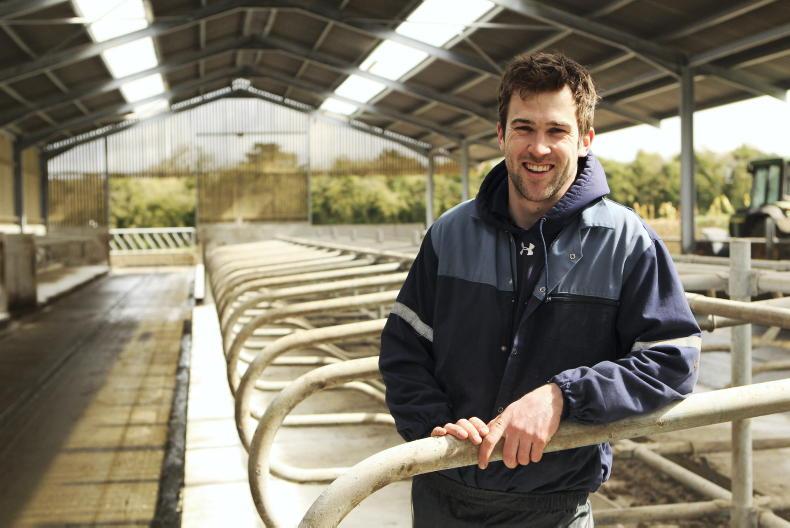
Peter Farrell, Kilmessan, Co. Meath
At the time, Ciara was working as a brand manager in a marketing agency, commuting daily from Meath to Dublin. By 2018, the couple were looking at expanding the farm so that Ciara could join the farm business. This was achieved in 2019 when the pair took on their first leased dairy farm in Co Louth.
Ciara says that the transition from marketing to farming was a whirlwind of hard work and having to learn new skills quickly, but she says she found what she was meant to do.
“Farming and marketing have a lot in common – problems that need to be solved and a ‘just get on with it’ attitude,” she says.
With two smalls boys and now a third dairy farm on the go, the Farrells are busy people. Both Ciara and Peter will share how they manage farm, family and personal time. Peter will share his approach to cost control and what criteria he uses when assessing an opportunity.
Galway farmer Mella Briscoe will be joined by CEO of NCBC Doreen Corridan on the topic of reducing herd wastage.
The session will look at how silent costs such as lameness, SCC and infertility are increasing wastage in herds and preventing herds from fulfilling their full potential.

Michael Murphy, speaking at a previous Positive Farmers Conference\ Donal O' Leary
Mella is farming near Portumna in Galway with her husband and two sons, milking 360 cows across two milking platforms. Mella will outline her approach to the dry period, spring and breeding season to avoid losses.
Performance is excellent with Mella and the team consistently achieving a six-week calving rate of 89% and a sub-10% empty rate after 10.5 weeks of breeding with no collars.
The conference is taking place on Wednesday, 14 January and tickets are available at www.positivefarmers.ie
The Positive Farmers Conference returns for another year this January, but rather than the usual two-day conference, the 2026 event is a one-day affair.
Taking place in the Radisson Blu Hotel in Little Island, Cork, the event is billed as an opportunity for farmers to recharge the batteries and get geared up for the year ahead.
On that topic, conference organiser Michael Murphy sounds a cautious word around the duration of the current downturn in milk prices, saying many commentators are underestimating how long milk prices will remain low.
Michael says that a rebound in milk prices towards the second half of 2026 is highly unlikely, given the increased milk supplies globally, but especially
in the US.
“Traditionally, US farmers responded to high or low milk prices by producing more or less milk. When prices were good they kept more cows and fed them better to produce more milk and when prices were low they culled harder and reduced feed costs.
“What we are seeing now is totally different as there is another dynamic that’s not really connected to milk prices at all; that’s calf prices.
“There is strong evidence that US farmers are holding on to cows for longer in order to get a calf on the ground and that calf is worth something around $1,400.
“So, even if US farmers are making a loss on milk sales, they are not incentivised to reduce cow numbers because of the high price they will get for calves.
“This indicates to me that the US as a whole will continue to pump out milk for as long as beef prices are good,” he says.
While that may not sound positive, Michael says it’s better to be prepared and that the conference will deal with how farmers can prepare themselves and their farm businesses to reduce costs.
Teagasc’s Brendan Horan will outline the importance of having good systems to repeatedly generate high profitability and a good work/life balance.
Brendan will outline the trends in costs and profit on dairy farms over the last decade and outline areas for farmers to focus on to reduce costs in 2026.
Table 1 highlights some of the key trends in costs and profit over the last five years.
The data shows that total costs on dairy farms, excluding own labour, tax and principle repayments increased by €1.36/kg MS between 2020 and 2025 with the expected cost of production in 2025 to be the same as 2024 at
€4.49/kg MS.
Based on a current milk price of around €5/kg MS including VAT, if this price remains for all of 2026 then margins will be severely tight unless
costs reduce.
Cork Dairy farmer Denis Finnegan will go through his costs of production for 2025 and do a sample budget for a farm in 2026, with a much lower milk price factored in. Denis’s home farm is in Coachford, Co Cork, but he is leasing a number of dairy farms in partnership with Billy Curtin.
This session will go into detail on how Denis approaches financial budgets, what tools he uses, where he finds the information and what are the key drivers of good financial performance on dairy farms.
As ever, the Positive Farmers Conference will have inspirational stories of farmer success. Kilkenny-based farmer Cathal McAleer, who is originally from Tyrone will be speaking about his journey to cow ownership and share milking.
Also speaking at the conference is husband and wife duo Ciara Lynch (pictured) and Peter Farrell. The Meath-based couple are now running three dairy farms across Meath and Louth, milking 950 mainly Jersey crossbred cows.
Some of the attendance at Positive Farmers Conference last year
Peter says that he initially had no interest in becoming a dairy farmer and instead studied structural engineering in university. As the start of his career coincided with the financial crash and a lack of demand for newly qualified engineers, Peter found himself back helping out on the home farm in 2009.
“While 2009 was a very poor margin year, 2008 had been a great year and it was while pulling the 2008 accounts together that I realised there was actually money to be made dairy farming and I began to think of it as a career,” he says.
At the time, the home farm was in liquid milk production carrying 120 cows on a 32ha milking platform. Peter says he attended open days and farm walks to brush up on best practice and then started implementing these new skills on the farm.
He took on opportunities to expand the home farm and by the time quotas went in 2015 Peter says they were “sitting pretty”, milking 180 cows on a 48ha milking block growing over 15t DM/ha.
Doing a Nuffield Scholarship in 2016 and a subsequent trip to New Zealand in 2018 opened his eyes to opportunities and his Nuffield report was on tools to deal with milk price volatility.
“The key finding to my report was that, despite numerous tools and supports available to dairy farmers to help deal with volatility, a low cost of production is the cheapest, most-effective tool, something that is becoming ever more important,” he says.
Peter Farrell, Kilmessan, Co. Meath
At the time, Ciara was working as a brand manager in a marketing agency, commuting daily from Meath to Dublin. By 2018, the couple were looking at expanding the farm so that Ciara could join the farm business. This was achieved in 2019 when the pair took on their first leased dairy farm in Co Louth.
Ciara says that the transition from marketing to farming was a whirlwind of hard work and having to learn new skills quickly, but she says she found what she was meant to do.
“Farming and marketing have a lot in common – problems that need to be solved and a ‘just get on with it’ attitude,” she says.
With two smalls boys and now a third dairy farm on the go, the Farrells are busy people. Both Ciara and Peter will share how they manage farm, family and personal time. Peter will share his approach to cost control and what criteria he uses when assessing an opportunity.
Galway farmer Mella Briscoe will be joined by CEO of NCBC Doreen Corridan on the topic of reducing herd wastage.
The session will look at how silent costs such as lameness, SCC and infertility are increasing wastage in herds and preventing herds from fulfilling their full potential.
Michael Murphy, speaking at a previous Positive Farmers Conference\ Donal O' Leary
Mella is farming near Portumna in Galway with her husband and two sons, milking 360 cows across two milking platforms. Mella will outline her approach to the dry period, spring and breeding season to avoid losses.
Performance is excellent with Mella and the team consistently achieving a six-week calving rate of 89% and a sub-10% empty rate after 10.5 weeks of breeding with no collars.
The conference is taking place on Wednesday, 14 January and tickets are available at www.positivefarmers.ie







SHARING OPTIONS