Technology is improving year-on-year and slowly but surely farms are starting to invest more money in it. Without doubt, automated heat detection is one feature of technology that’s seen a lot of investment from farms in the last five years.
Both as a means of accurately identifying heats and as a labour-saving tool, technology like collars and boluses offer somewhat of a ready-made solution.
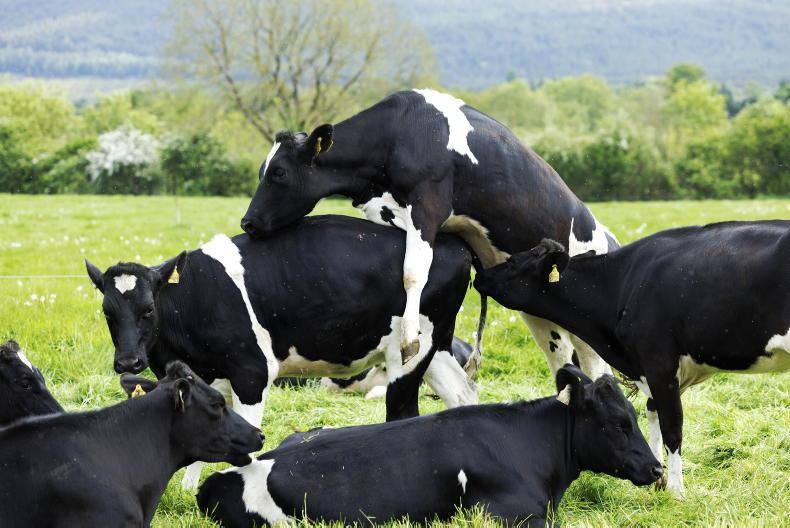
As useful as such products may be, studies and on-farm evidence would show that farmers who are good at heat detection and place a big emphasis on observing cows, will still detect heats and achieve conception rates at a similar level to any heat detection device.
Where the automated heat detection offers an improvement, is on those farms where the operator is poor at identifying the signs of heat or fails to observe the cows often enough.
Another added advantage of the technology is when it comes to its compatibility with sexed semen.
Sexed semen
Another technology gaining pace, sexed semen, has also seen a boom in the last five years.
Back in 2019, only 2% of the dairy serves in the country were done using a sexed straw. In 2025, this figure was up to 29% and is expected to rise again in 2026.
But what has this got to do with automated heat detection?
Well, as has been widely publicised, sexed semen can be a tricky product to get right.
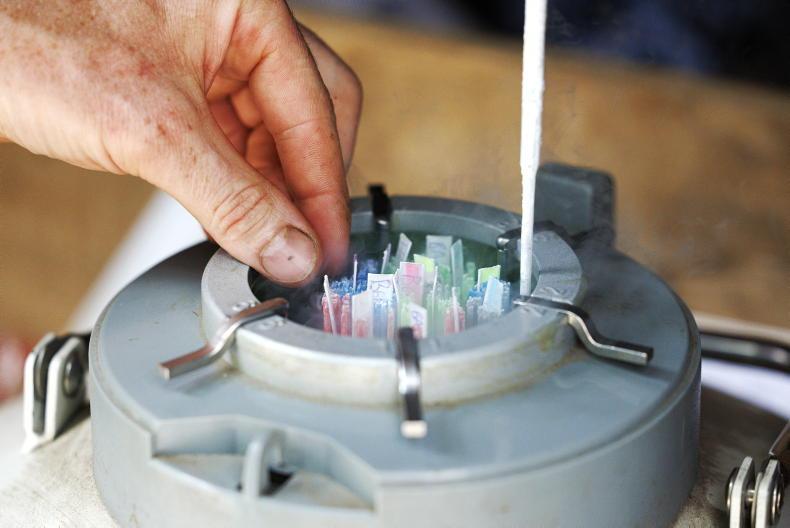
The reason being, there is less sperm in a sexed straw than there is in a conventional straw, and the sorting process for sexed semen reduces the lifespan of the sperm that is left.
For this reason, there is less wriggle room when it comes to using the straw. The right insemination time occurs during a smaller window of opportunity than a conventional straw.
In the case of sexed semen, inseminating the cow between 14 and 20 hours after the onset of standing heat offers the best chance of conception.
That’s where automatic heat detection comes in.
The technology is able to more accurately identify the exact time a cow’s onset of standing heat took place.
This gives the farmer a better chance of deciding the ideal window to inseminate the cow.
How does the technology work?
Collars work by assessing a number of key metrics, mainly activity and rumination.
Boluses also have the added capacity to assess internal body temperature, rumen pH and drinking activity.
Essentially, the devices are monitoring changes to the normal activity and rumination patterns. For that reason, it’s unfair to class them as heat-detection aids only.
These devices will also inform the operator of health or calving alerts. For example, when a cow suddenly shows a spike in activity levels or rumination rate slows down, the device will recognise this and make a judgement based on the information gathered.
Cows’ normal behaviour can change for a number of reasons and therefore, it’s important to remember these devices are an aid and not the sole answer.
The device will give out certain alerts based on its programming, the cow’s historical data and the group’s data; however, the operator will still need to be able to recognise the differences between cows in heat versus a cow with a health issue, for example. It is important to note, every animal is slightly different. Some cows will display significant pattern changes, becoming highly active when in heat, while others may be much lazier and show fewer physical signs.
With this in mind, the device won’t identify every single cow that comes into heat every time. There will be heats missed now and again, or an occasional alert where the cow is not actually in heat at all.
This is no different to the farmer who will miss the occasional heat with tail painting or scratch cards and five-times-a-day observation. By and large, the alerts are accurate and once the operator is capable of making a judgement call, the devices can be a powerful tool.
Costings
With different options on the market, the Irish Farmer’s Journal has carried out a cost comparison between three brands.
All three options, SenseHub, Censortec and SmaxTec have different cost structures; therefore, the cost analysis is done over a seven-year and 10-year annual average to give a fair reflection of the investment cost.
The three options compared on a 100-cow farm
SenseHub
The SenseHub brand, owned and operated by MSD, has two different options when it comes to its collars. There is an up-front payment or a monthly subscription option.
The up-front cost including VAT is €3,444 for the base station, with a cost of €168.50/collar. In the 100-cow herd that’s a total of €20,294 including VAT @23% for the base station and collars. The collars have a warranty for five years, but the company says they will typically last for seven years.
If the collars last for seven years that’s an annual cost of 2,899.
Should the collars last for ten years the annual cost reduces to 2,029.
The SenseHub subscription model is slightly different and works on a monthly cost per cow basis. At €3.20/cow/month incl VAT @23% the herd gets set up with a base station and collars. In a 100-cow herd that’s a cost of €3,840 per year and a cost of €26,880 over seven years. Looking at the subscription model over 10 years, the cost is €38,400.
Censortec
Censortec collars are sold on an up-front basis only. The cost of the base station is €5,675 including VAT @13.5% while the cost per collar is €147.50, also including VAT @13.5%. This gives a total setup cost for a 100-cow herd of €20,425.
Like with SenseHub, the warranty of the collars is five years, but Censortec are claiming their collars will last longer than seven years.
If the collars last for seven years, the total cost of €20,425 divided by seven gives an annual cost of €2,918. Should the collars last for 10 years the cost per year will be €2,042.
The Censortec base station is more expensive, as it works off a central processing unit. This differs to the cloud-based system used by the other brands. Censortec claims, the central processing unit means the system can operate without an internet connection, whereas the cloud-based systems cannot. The VAT rate of 13.5% is correct and differs to the 23% charged by other brands.
SmaXtec
The third of the three options is the SmaXtec bolus system. Unlike the other two options, SmaXtec’s system does not operate using collars. The bolus sits in the rumen of the cow and is said to last for the lifetime of that animal.
The system is a blend of an up-front cost for base station equipment and bolus and a monthly subscription cost for the service.
The total cost for the main base station and the sub-station is €6,182 including VAT @23%. The initial cost of the bolus is €43/cow giving a total initial investment of €10,482 for a 100-cow herd.
Each bolus has a further subscription cost of €3.08/cow/month including VAT @23%, giving an annual charge of €3,696.
As the bolus cannot be transferred from one cow to another, extra boluses must be purchased annually for the replacements. At a herd replacement rate of 20%, the 20 extra boluses will cost €860 (20 x €43) annually.
Over seven years, that’s an investment of €42,374, or €6,053/year.
Over 10 years the investment is €56,042 or a cost of €5,604/year.
Other brands
Other brands of heat detection aids are available but for the sake of this article, these three options were chosen for comparison.
Heat-detection aids are an option for reducing workload at breeding.They work by monitoring key metrics like activity patterns, rumination rates and body temperatures to signal health, calving or heat alerts.The accuracy of heat detection aids can help to improve the conception rates to sexed semen as the window of opportunity for insemination is shorter.
Technology is improving year-on-year and slowly but surely farms are starting to invest more money in it. Without doubt, automated heat detection is one feature of technology that’s seen a lot of investment from farms in the last five years.
Both as a means of accurately identifying heats and as a labour-saving tool, technology like collars and boluses offer somewhat of a ready-made solution.
As useful as such products may be, studies and on-farm evidence would show that farmers who are good at heat detection and place a big emphasis on observing cows, will still detect heats and achieve conception rates at a similar level to any heat detection device.
Where the automated heat detection offers an improvement, is on those farms where the operator is poor at identifying the signs of heat or fails to observe the cows often enough.
Another added advantage of the technology is when it comes to its compatibility with sexed semen.
Sexed semen
Another technology gaining pace, sexed semen, has also seen a boom in the last five years.
Back in 2019, only 2% of the dairy serves in the country were done using a sexed straw. In 2025, this figure was up to 29% and is expected to rise again in 2026.
But what has this got to do with automated heat detection?
Well, as has been widely publicised, sexed semen can be a tricky product to get right.
The reason being, there is less sperm in a sexed straw than there is in a conventional straw, and the sorting process for sexed semen reduces the lifespan of the sperm that is left.
For this reason, there is less wriggle room when it comes to using the straw. The right insemination time occurs during a smaller window of opportunity than a conventional straw.
In the case of sexed semen, inseminating the cow between 14 and 20 hours after the onset of standing heat offers the best chance of conception.
That’s where automatic heat detection comes in.
The technology is able to more accurately identify the exact time a cow’s onset of standing heat took place.
This gives the farmer a better chance of deciding the ideal window to inseminate the cow.
How does the technology work?
Collars work by assessing a number of key metrics, mainly activity and rumination.
Boluses also have the added capacity to assess internal body temperature, rumen pH and drinking activity.
Essentially, the devices are monitoring changes to the normal activity and rumination patterns. For that reason, it’s unfair to class them as heat-detection aids only.
These devices will also inform the operator of health or calving alerts. For example, when a cow suddenly shows a spike in activity levels or rumination rate slows down, the device will recognise this and make a judgement based on the information gathered.
Cows’ normal behaviour can change for a number of reasons and therefore, it’s important to remember these devices are an aid and not the sole answer.
The device will give out certain alerts based on its programming, the cow’s historical data and the group’s data; however, the operator will still need to be able to recognise the differences between cows in heat versus a cow with a health issue, for example. It is important to note, every animal is slightly different. Some cows will display significant pattern changes, becoming highly active when in heat, while others may be much lazier and show fewer physical signs.
With this in mind, the device won’t identify every single cow that comes into heat every time. There will be heats missed now and again, or an occasional alert where the cow is not actually in heat at all.
This is no different to the farmer who will miss the occasional heat with tail painting or scratch cards and five-times-a-day observation. By and large, the alerts are accurate and once the operator is capable of making a judgement call, the devices can be a powerful tool.
Costings
With different options on the market, the Irish Farmer’s Journal has carried out a cost comparison between three brands.
All three options, SenseHub, Censortec and SmaxTec have different cost structures; therefore, the cost analysis is done over a seven-year and 10-year annual average to give a fair reflection of the investment cost.
The three options compared on a 100-cow farm
SenseHub
The SenseHub brand, owned and operated by MSD, has two different options when it comes to its collars. There is an up-front payment or a monthly subscription option.
The up-front cost including VAT is €3,444 for the base station, with a cost of €168.50/collar. In the 100-cow herd that’s a total of €20,294 including VAT @23% for the base station and collars. The collars have a warranty for five years, but the company says they will typically last for seven years.
If the collars last for seven years that’s an annual cost of 2,899.
Should the collars last for ten years the annual cost reduces to 2,029.
The SenseHub subscription model is slightly different and works on a monthly cost per cow basis. At €3.20/cow/month incl VAT @23% the herd gets set up with a base station and collars. In a 100-cow herd that’s a cost of €3,840 per year and a cost of €26,880 over seven years. Looking at the subscription model over 10 years, the cost is €38,400.
Censortec
Censortec collars are sold on an up-front basis only. The cost of the base station is €5,675 including VAT @13.5% while the cost per collar is €147.50, also including VAT @13.5%. This gives a total setup cost for a 100-cow herd of €20,425.
Like with SenseHub, the warranty of the collars is five years, but Censortec are claiming their collars will last longer than seven years.
If the collars last for seven years, the total cost of €20,425 divided by seven gives an annual cost of €2,918. Should the collars last for 10 years the cost per year will be €2,042.
The Censortec base station is more expensive, as it works off a central processing unit. This differs to the cloud-based system used by the other brands. Censortec claims, the central processing unit means the system can operate without an internet connection, whereas the cloud-based systems cannot. The VAT rate of 13.5% is correct and differs to the 23% charged by other brands.
SmaXtec
The third of the three options is the SmaXtec bolus system. Unlike the other two options, SmaXtec’s system does not operate using collars. The bolus sits in the rumen of the cow and is said to last for the lifetime of that animal.
The system is a blend of an up-front cost for base station equipment and bolus and a monthly subscription cost for the service.
The total cost for the main base station and the sub-station is €6,182 including VAT @23%. The initial cost of the bolus is €43/cow giving a total initial investment of €10,482 for a 100-cow herd.
Each bolus has a further subscription cost of €3.08/cow/month including VAT @23%, giving an annual charge of €3,696.
As the bolus cannot be transferred from one cow to another, extra boluses must be purchased annually for the replacements. At a herd replacement rate of 20%, the 20 extra boluses will cost €860 (20 x €43) annually.
Over seven years, that’s an investment of €42,374, or €6,053/year.
Over 10 years the investment is €56,042 or a cost of €5,604/year.
Other brands
Other brands of heat detection aids are available but for the sake of this article, these three options were chosen for comparison.
Heat-detection aids are an option for reducing workload at breeding.They work by monitoring key metrics like activity patterns, rumination rates and body temperatures to signal health, calving or heat alerts.The accuracy of heat detection aids can help to improve the conception rates to sexed semen as the window of opportunity for insemination is shorter. 






SHARING OPTIONS