


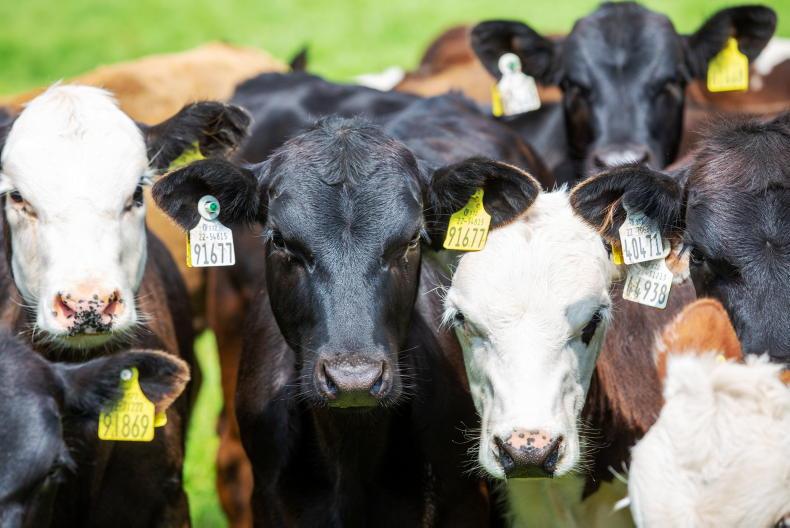
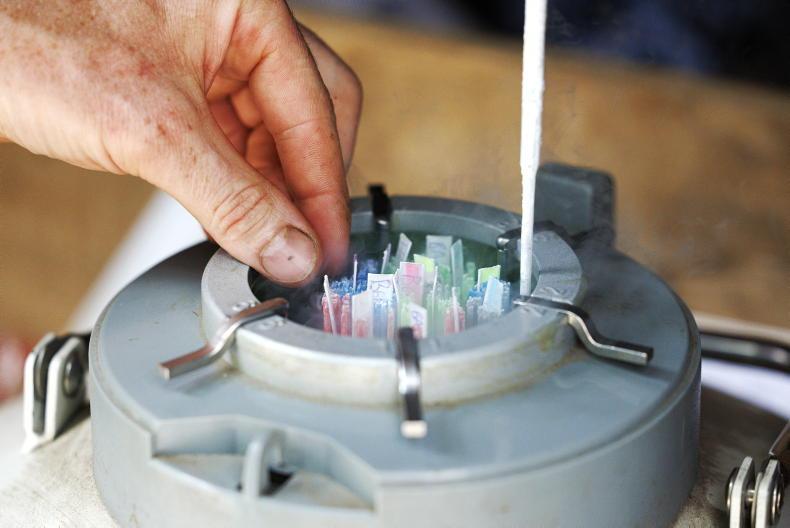
Heterospermic semen (also known as mixed or triple-mix semen) is a product which contains semen from two or more bulls in the same semen straw, as opposed to homospermic semen which contains the semen from only one bull.
According to the National Association of Animal Breeders in North America, in 2025 heterospermic semen was the second most popular type of beef semen, after Angus, with two million doses sold, highlighting the increased popularity of the technology.
This is being driven by increased usage of sex-sorted dairy semen and an increase in the number of dairy cows being inseminated with conventional (non sex-sorted) beef semen.
There is anecdotal evidence that heterospermic semen leads to higher calving rates
The majority of the heterospermic semen being used is beef-on-dairy.
There is anecdotal evidence that heterospermic semen leads to higher calving rates due the presence of more diverse sperm subpopulations, exhibiting a longer lifespan in the cow’s reproductive tract.
Field study
In April 2024, we conducted a field trial to assess the effect of heterospermic bull semen on calving rates in Irish lactating dairy cows.
The semen from 15 fertile bulls (12 Angus and three Hereford) was collected and split into five packs, each with three bulls of the same breed.
After passing stringent quality control checks, semen was split into a homospermic treatment (control), with straws containing semen from a single bull, and a heterospermic treatment containing a mixture of semen from three bulls.
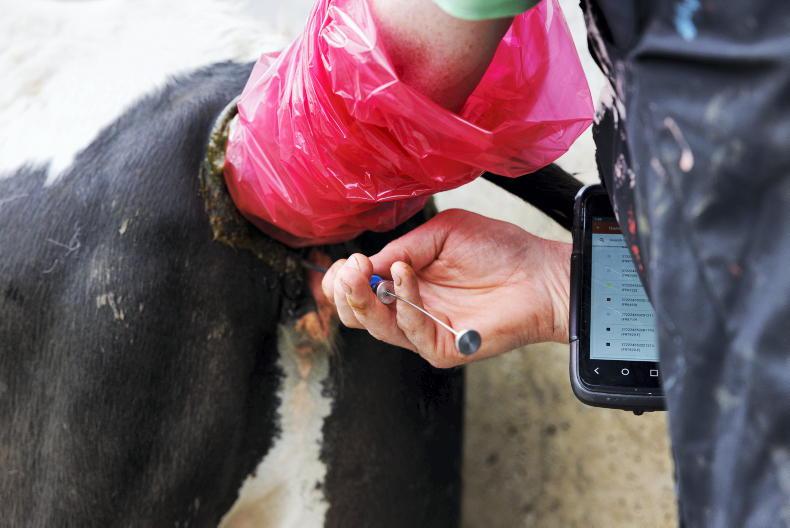
Semen was then commercially distributed to dairy farms, who had to use both semen treatments and be part of the National Genotyping Programme (NGP). A total of 54 herds were included in the final study, with a total of 4,456 recorded inseminations, equally distributed among semen treatments.
Calving data were captured and validated through the ICBF.
Results
Despite no detectable difference in semen quality, heterospermic bull semen resulted in a significantly higher calving rate overall (+3.8%).
When herds were divided based on their trial homospermic calving rate there was no difference in fertility between treatments in the medium and top third of herds.
However, heterospermic semen resulted in a significantly higher calving rate (+12.6%) in the bottom third of herds.
Across all packs, the calving rate of heterospermic bull semen tracked that of the highest performing bull in the mix.
Despite all bulls having excellent semen quality and normal fertility when used as homospermic semen, one bull dominated in the heterospermic treatment, siring 41 to 68% of the calves in all packs, compared to the expected 33% of calves from each bull.
Overall, this study shows a beneficial effect of heterospermic bull semen on calving rates, particularly in lower fertility herds, which may be due to sperm at different stages of maturity and thus an increased ability to compensate for poorer timing of AI relative to oestrus onset.
Additionally, the fact heterospermic semen had a similar calving rate to that of the highest-performing bull in the mix, across all packs, illustrates its potential as an “insurance policy” against fluctuations in fertility.
This work was conducted using funding from the Department of Agriculture, Food and the Marine as part of the HeteroBull project. This is a collaboration between University of Limerick, University College Dublin, Teagasc, the ICBF, the NCBC, Munster Bovine, Progressive Genetics and Dovea Genetics. Professor Seán Fair and Rúben Santos (PhD researcher) are based in the University of Limerick. They would like to thank all the farmers and AI technicians who participated in the trial.




SHARING OPTIONS