


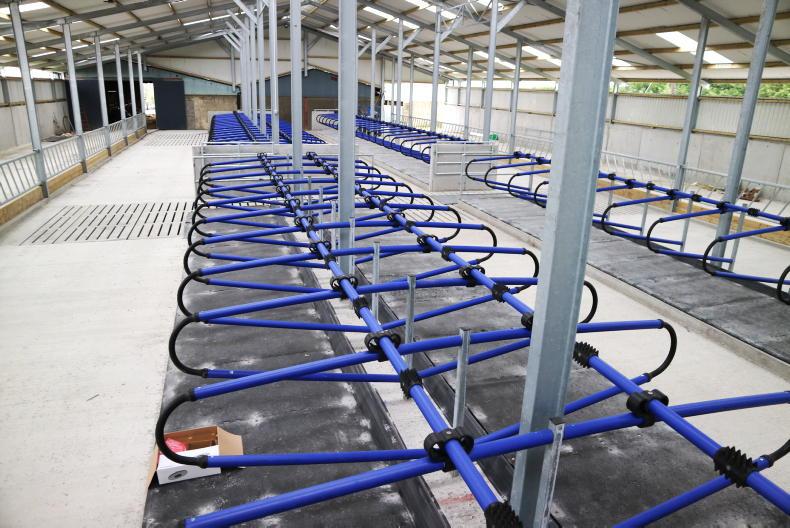
At one of our Tullamore show discussion on the Irish Farmers Journal stand, editor Jack Kennedy asked me if I was to give a farmer advice on whether to go for TAMS aid or not for a farm project, which would I do.
I think it is always critical to grasp whatever grant is available with both hands in normal circumstances, but my answer on the day was I would most likely tell them go on their own bat.
There are several reasons for this. Firstly, and it’s something I have highlighted in the farm buildings pages since the launch of TAMS III, reference costs are off the mark for a lot of investments, especially those concrete heavy ones.
Secondly, waiting times are atrocious. There are close to 1,600 farmers this week who applied for tranche 6 back in January and February who are still awaiting permission to commence their build.
These farmers haven’t a hope of building accommodation in time for winter 2025 now.
Probably my biggest gripe with TAMS III is the negligence with spending and the impact that is now going to have.
Back in June, the Minister for Agriculture Martin Heydon announced that €70.5 million had been paid out to over 8,000 applications in the first few tranches.
Our analysis showed that the €370 million funding for TAMS III would therefore be spent in paying the 42,000 odd applicants that applied in the first eight tranches, going by the average payment, meaning that there would possibly be no remaining funding for the remaining two years of the scheme.
This is not the farmer’s fault. Over zealous acceptance of applications (we should have 20,000 approved applications instead of 42,000) has put the scheme in jeopardy.
Introducing a separate ceiling and increased grant rate for slurry storage back in January is of little use if there is insufficient funding there.
The Department needs to get back to the drawing board and fix these issues, and the only way they can do so is through sourcing additional funding. It’s not good enough that their over zealous approach to approving applications in the early stages will penalise farmers who were awaiting a seperate slurry storage grant or the planning permission exemption.



SHARING OPTIONS