


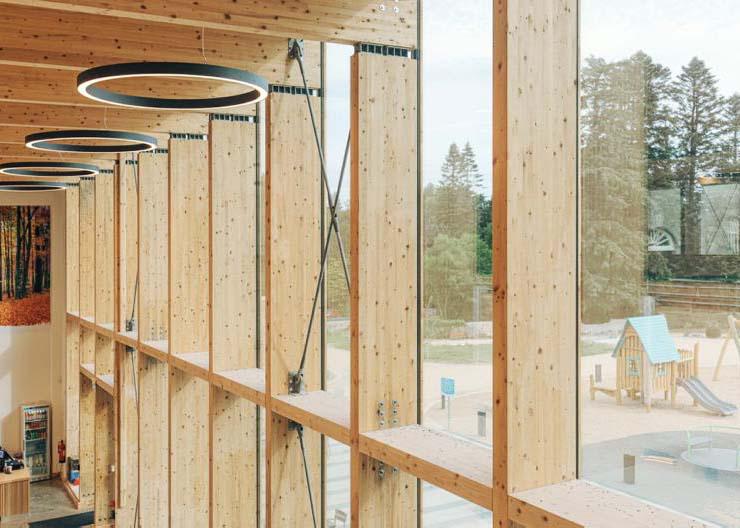
The interdepartmental and industry Timber in Construction Steering Group (TICSG) was established by the Department of Agriculture Food and the Marine (DAFM) in 2024. Chaired by Professor J Owen Lewis, its main objective is to enhance the use of timber in construction projects across Ireland, in particular, Sitka spruce.
The Irish Farmers Journal interviewed Des O’Toole, head of timber marketing amd promotion, Coillte Forest last week to discuss the TICSG and the future of home-grown timber, especially Sitka spruce. O’Toole is well positioned to discuss these issues as he also manages a number of TICSG projects in his role as marketing and communications director at Forest Industries Ireland (FII).
Sitka spruce is Ireland’s major softwood. Where do you see the future of this species in Ireland?
In Ireland, significant steps are being taken to reduce our carbon footprint, and one key element in this effort is increasing the use of sustainably grown Irish wood and wood products in construction. Not only does building with wood help to reduce carbon emissions, but it also supports local jobs and the local economy.
To produce forests for wood in Ireland, we need Sitka spruce. It thrives in our Irish climate and by producing a home-grown supply of wood and always replanting our forests, we’re not just meeting the needs of today, we are also ensuring that future generations can benefit.
We’re fortunate that in Ireland conifer trees mature in just 35 years compared to twice that time in other parts of Europe.
This makes the wood they produce an excellent renewable resource.
The future opportunity is to move the timber produced from Sitka spruce higher up the value chain. This can be achieved through leveraging ever-evolving processing and design practices, such as engineered building materials and modern construction systems.
Irish wood, particularly Sitka spruce, is versatile and is used for a range of purposes, including fencing, decking, furniture, and constructing lower-carbon homes.
Timber construction is also more efficient, reducing waste, saving time, and cutting costs. This not only supports sustainability but also strengthens the Irish forest industry, creating thousands of jobs and benefiting local businesses around the country.
You mentioned engineered wood products earlier – why are these so important?
Ireland is already a leader in engineered wood innovation. MEDITE SMARTPLY has been pioneering advanced wood-based panels for years. Products such as MediteTricoya, a durable, externally rated panel made from Sitka spruce, show what is possible when we apply technology and ambition to our timber resource.
Beyond panel products, mass timber systems such as Cross-Laminated Timber (CLT) and Glue-Laminated Timber (Glulam) are transforming construction. These materials allow us to build faster, cleaner and with lower embodied carbon than traditional building materials.
But surely technical expertise and building height constraints militate against wood use in construction
The challenge is not technical capability, as the products exist, the expertise exists, and building with wood helps to decarbonise the built environment. Yes, the challenge is removing the barriers that currently exist and this is where decisive action is required.
What is being done to remove these barriers?
The TICSG was established to enhance the use of timber in construction projects across Ireland.
It brings together representatives from Government departments, key industry bodies, and academia to identify and remove the barriers limiting timber use in Ireland’s built environment.
Those barriers range from regulation and fire guidance to education, skills, research, demonstration projects and public procurement policy.
A clear roadmap of recommendations for change is being developed by this group to allow timber in construction to move forward at pace.
When implemented, these recommendations will provide regulatory clarity and procurement policies that actively support increased use of low-carbon materials, such as Irish wood, in construction.






SHARING OPTIONS