Often when Teagasc forestry advisers engage with landowners, very relevant questions are raised about the potential returns from a forest enterprise.
For any proposed forest enterprise, returns will vary according to many factors including tree species, productivity (referred to as Yield Class), the time to reach maturity (rotation), available annual premium payments and future costs, and potential future timber market or other revenues.
Questions such as ‘how can forestry costs and returns, that will be incurred or achieved in the future, be expressed in today’s value?’ are also very relevant.
This question can be addressed by bringing all projected future forestry costs and returns back to today’s values, using an assumed discount rate (termed Discounted Cash Flow analysis).
The Teagasc Forest Investment Valuation Estimator (FIVE) is a useful tool providing indicative forestry returns in consultation with landowners.
It firstly calculates future cost and revenue streams for specific forestry scenarios selected.
It then discounts these costs and returns to present-day values. This calculates an indicative net return (over the forest rotation)in today’s values (termed the Net Present Value, NPV ).
To allow a relative comparison with per hectare returns from other farm enterprises, FIVE also expresses this net return (NPV) as a series of hypothetical, equal annual cash flows over the forest cycle (called the Annual Equivalent Value, AEV). This AEV provides a basis for comparing forestry options with annualised agricultural returns at an indicative level.
Figures 1 and 2 present indicative returns and cash flow trends for one hectare of two forest types (FTs) available under the Forestry Programme 2023-2027. Analysis assumes that the future forest is both stable and productive.
FT 12: comprising mixed high forest (mainly Sitka spruce with a 20 percent inclusion of broadleaf tree species)FT 7: other broadleaf forest, comprising fast growing broadleaf tree species such as sycamoreAssumptions: Forest Type 12, mixed high forest with mainly spruce (Yield Class 24), 20% broadleaf species, 15% of area retained for biodiversity enhancement, initial spacing of 2m, forest cycle of 35 years, discount rate of 4.5% reforestation costs of €3,700/ha, 10 year average timber prices.
Assumptions: Forest Type 7, 85% sycamore (Yield Class 8), 15% retained area for biodiversity enhancement), initial spacing 1.5m, forest cycle of 70 years, reforestation cost of €5,000/ha, discount rate 4.5%, 10-year average timber prices used.
If all costs and revenues associated with forestry land use are compared with all costs and revenues associated with agricultural land use (after adjusting to present values and the one-year cycle per annum basis) then the per hectare Forestry AEV and Family Farm Income (FFI) can be considered conceptually equivalent.
FFI is the return from farming for farm labour, land and capital. It is a function of gross farm output, plus subsidies less total net expenses.
A summary of the comparative financial outputs from FIVE analysis for these two afforestation categories is presented in Table 1.
The respective indicative AEVs are €710/ha/year for FT12 and €560/ha/year for FT7, which compares very favourably with cattle, sheep and tillage systems.
With AEVs of up to €710/ha/year, and larger for higher Yield Classes, it is evident that forestry returns based on proposed new premia levels in the Forestry Programme 2023-2027, can be very competitive when compared to other agricultural enterprises such as in the drystock side.
Table 2 presents the Family Farm Income for varying agricultural enterprises between 2021 and 2024.
This analysis can be one of a number of important components in the decision support process for land use change options.
The analysis involving FIVE does not take into account the current capacity for eligible forestry parcels to draw down Direct Payment supports in addition to the attractive annual forestry premia.
For qualifying applicants meeting scheme criteria, these can include additional supports currently available under the Basic Income Support for Sustainability (BISS) Scheme, the Complementary Redistributive Support for Sustainability Scheme (CRISS) and Eco-Scheme.
The FIVE tool also does not factor in the relative efficiencies in terms of labour inputs when compared to other enterprises or the potential income-tax free returns from future timber sales.
FIVE can also not account for uncertainties such as potential subsidies that agricultural and forestry land will attract in the future or what new values may emerge for the services produced by agricultural and forestry land uses. Five does not capture other risks to forest growth such as those from storms, fire or disease.
Tom Houlihan is Acting Head of Teagasc Forestry Development Department
Often when Teagasc forestry advisers engage with landowners, very relevant questions are raised about the potential returns from a forest enterprise.
For any proposed forest enterprise, returns will vary according to many factors including tree species, productivity (referred to as Yield Class), the time to reach maturity (rotation), available annual premium payments and future costs, and potential future timber market or other revenues.
Questions such as ‘how can forestry costs and returns, that will be incurred or achieved in the future, be expressed in today’s value?’ are also very relevant.
This question can be addressed by bringing all projected future forestry costs and returns back to today’s values, using an assumed discount rate (termed Discounted Cash Flow analysis).
The Teagasc Forest Investment Valuation Estimator (FIVE) is a useful tool providing indicative forestry returns in consultation with landowners.
It firstly calculates future cost and revenue streams for specific forestry scenarios selected.
It then discounts these costs and returns to present-day values. This calculates an indicative net return (over the forest rotation)in today’s values (termed the Net Present Value, NPV ).
To allow a relative comparison with per hectare returns from other farm enterprises, FIVE also expresses this net return (NPV) as a series of hypothetical, equal annual cash flows over the forest cycle (called the Annual Equivalent Value, AEV). This AEV provides a basis for comparing forestry options with annualised agricultural returns at an indicative level.
Figures 1 and 2 present indicative returns and cash flow trends for one hectare of two forest types (FTs) available under the Forestry Programme 2023-2027. Analysis assumes that the future forest is both stable and productive.
FT 12: comprising mixed high forest (mainly Sitka spruce with a 20 percent inclusion of broadleaf tree species)FT 7: other broadleaf forest, comprising fast growing broadleaf tree species such as sycamoreAssumptions: Forest Type 12, mixed high forest with mainly spruce (Yield Class 24), 20% broadleaf species, 15% of area retained for biodiversity enhancement, initial spacing of 2m, forest cycle of 35 years, discount rate of 4.5% reforestation costs of €3,700/ha, 10 year average timber prices.
Assumptions: Forest Type 7, 85% sycamore (Yield Class 8), 15% retained area for biodiversity enhancement), initial spacing 1.5m, forest cycle of 70 years, reforestation cost of €5,000/ha, discount rate 4.5%, 10-year average timber prices used.
If all costs and revenues associated with forestry land use are compared with all costs and revenues associated with agricultural land use (after adjusting to present values and the one-year cycle per annum basis) then the per hectare Forestry AEV and Family Farm Income (FFI) can be considered conceptually equivalent.
FFI is the return from farming for farm labour, land and capital. It is a function of gross farm output, plus subsidies less total net expenses.
A summary of the comparative financial outputs from FIVE analysis for these two afforestation categories is presented in Table 1.
The respective indicative AEVs are €710/ha/year for FT12 and €560/ha/year for FT7, which compares very favourably with cattle, sheep and tillage systems.
With AEVs of up to €710/ha/year, and larger for higher Yield Classes, it is evident that forestry returns based on proposed new premia levels in the Forestry Programme 2023-2027, can be very competitive when compared to other agricultural enterprises such as in the drystock side.
Table 2 presents the Family Farm Income for varying agricultural enterprises between 2021 and 2024.
This analysis can be one of a number of important components in the decision support process for land use change options.
The analysis involving FIVE does not take into account the current capacity for eligible forestry parcels to draw down Direct Payment supports in addition to the attractive annual forestry premia.
For qualifying applicants meeting scheme criteria, these can include additional supports currently available under the Basic Income Support for Sustainability (BISS) Scheme, the Complementary Redistributive Support for Sustainability Scheme (CRISS) and Eco-Scheme.
The FIVE tool also does not factor in the relative efficiencies in terms of labour inputs when compared to other enterprises or the potential income-tax free returns from future timber sales.
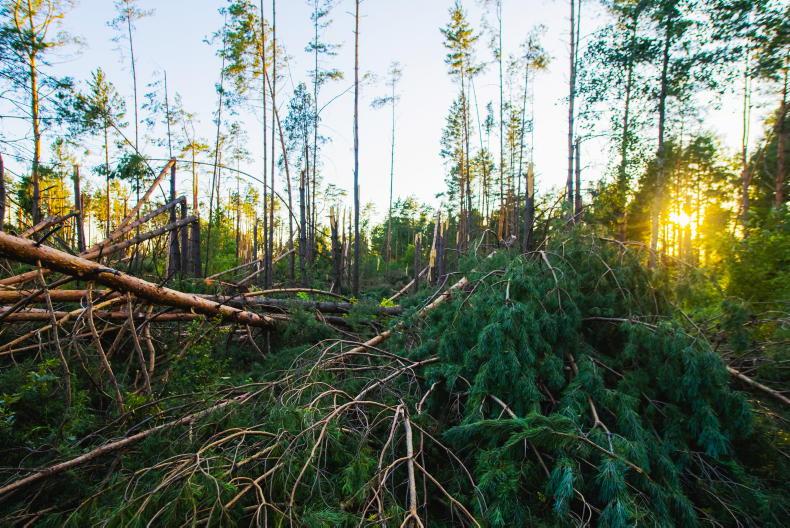
FIVE can also not account for uncertainties such as potential subsidies that agricultural and forestry land will attract in the future or what new values may emerge for the services produced by agricultural and forestry land uses. Five does not capture other risks to forest growth such as those from storms, fire or disease.
Tom Houlihan is Acting Head of Teagasc Forestry Development Department







SHARING OPTIONS