Concentrate supplementation rates should take in to account forage quality and litter size.
ADVERTISEMENT
A major aim of late pregnancy management is to ensure that ewes do not lose excessive body condition. Nutritional demands jump sharply in early lactation and having body condition available that can be utilised to fill a nutritional deficit will be far more valuable at this stage.
As such, late-pregnancy feeding programmes should be formulated to meet the demands of a rapidly growing foetus(es) and a sheep’s own maintenance requirements. Table 1 details the typical concentrate supplementation rates based on varying forage quality, as advised by Teagasc.
This is based on a twin-bearing ewe weighing 75kg to 80kg. This table will also form the basis of feeding programmes for triplet- and- single-bearing ewes. Where ewes are in poor condition, then meal feeding should be introduced two weeks earlier and built up accordingly. Likewise, this should be completed for triplet-bearing ewes, with feeding levels increased by 0.2kg.
ADVERTISEMENT
For single-bearing ewes start feeding two weeks later and at 0.2kg lower level. There are plenty of heavier ewes on farms and on average the supplementation rate can be increased by 0.1kg for each additional 10kg liveweight shift.
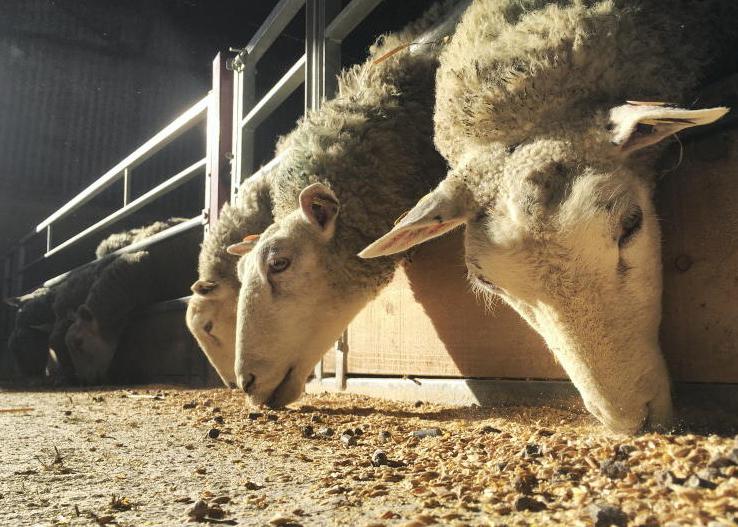
For farms with very poor-quality forage or inadequate supplies feeding an all-concentrate diet may be required. In such circumstances, the typical daily feeding rate is 1.2kg in week six to five pre-lambing, 1.4kg in week’s four to three and 1.6kg in the final two weeks. A source of roughage will still be required.
Register for free to read this story and our free stories.
This content is available to digital subscribers and loyalty code users only. Sign in to your account, use the code or subscribe to get unlimited access.
The reader loyalty code gives you full access to the site from when you enter it until the following Wednesday at 9pm. Find your unique code on the back page of Irish Country Living every week.
CODE ACCEPTED
You have full access to the site until next Wednesday at 9pm.
CODE NOT VALID
Please try again or contact support.
A major aim of late pregnancy management is to ensure that ewes do not lose excessive body condition. Nutritional demands jump sharply in early lactation and having body condition available that can be utilised to fill a nutritional deficit will be far more valuable at this stage.
As such, late-pregnancy feeding programmes should be formulated to meet the demands of a rapidly growing foetus(es) and a sheep’s own maintenance requirements. Table 1 details the typical concentrate supplementation rates based on varying forage quality, as advised by Teagasc.
This is based on a twin-bearing ewe weighing 75kg to 80kg. This table will also form the basis of feeding programmes for triplet- and- single-bearing ewes. Where ewes are in poor condition, then meal feeding should be introduced two weeks earlier and built up accordingly. Likewise, this should be completed for triplet-bearing ewes, with feeding levels increased by 0.2kg.
For single-bearing ewes start feeding two weeks later and at 0.2kg lower level. There are plenty of heavier ewes on farms and on average the supplementation rate can be increased by 0.1kg for each additional 10kg liveweight shift.
For farms with very poor-quality forage or inadequate supplies feeding an all-concentrate diet may be required. In such circumstances, the typical daily feeding rate is 1.2kg in week six to five pre-lambing, 1.4kg in week’s four to three and 1.6kg in the final two weeks. A source of roughage will still be required.
If you would like to speak to a member of our team, please call us on 01-4199525.
Link sent to your email address
We have sent an email to your address. Please click on the link in this email to reset your password. If you can't find it in your inbox, please check your spam folder. If you can't find the email, please call us on 01-4199525.
ENTER YOUR LOYALTY CODE:
The reader loyalty code gives you full access to the site from when you enter it until the following Wednesday at 9pm. Find your unique code on the back page of Irish Country Living every week.







SHARING OPTIONS