Soil sample validity: there has been a few follow on questions following last week’s notes on soil sampling querying when the four-year validity for nitrates runs from. Results remain valid for four years from 15 September prior to the sampling.
Any sample taken from 15/09/2022 is valid for 2026. Samples taken before this date are not valid for 2026. In such a scenario, the area in question needs to be either resampled or revert to default nutrient allocations based on the stocking rate in the previous year.
That is farms with a grassland stocking rate of greater than 130kg organic nitrogen per hectare must assume index 4 for phosphorus (P) leaving them with no P allocation, while farms with a stocking rate of less than 130kg N/ha must assume index 3 for P.
There have also been questions on whether it is mandatory to apply lime if a soil sample demonstrates a recommendation to apply it. This rule applies to farmers availing of a nitrates derogation, and as such is not applicable to many sheep farmers.
For derogation farmers it is compulsory since 1 January 2020 for a full-scale farm-liming program to be accounted for in a nutrient management plan and carried out on all lands except those farmed on a yearly conacre basis, with a minimum of 25% of the recommendation applied annually. Lime applications must also now be recorded on annual fertiliser records required for derogation farmers.
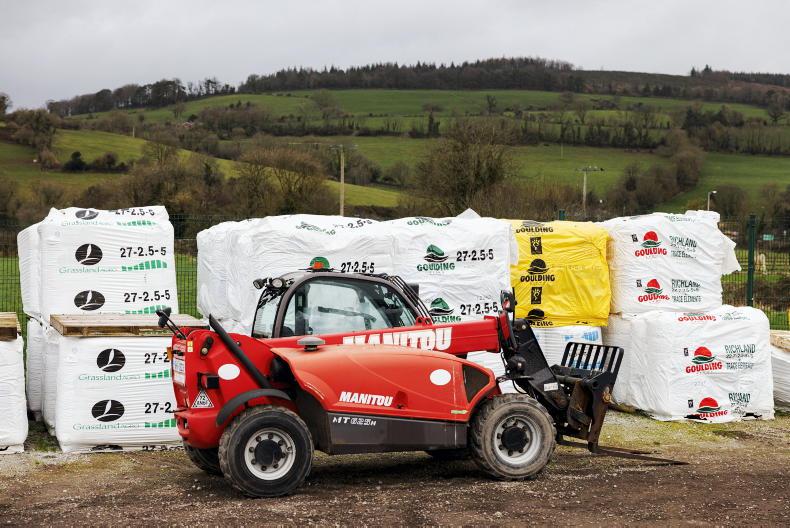
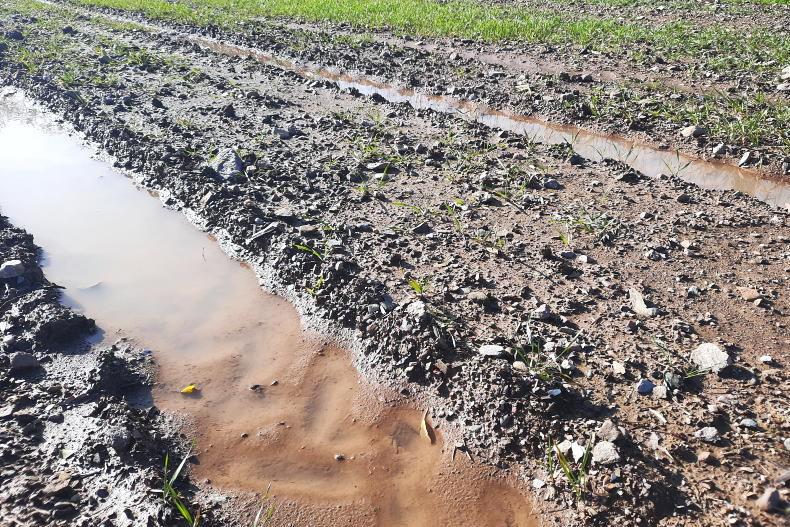
Grass management: at this stage it looks as though a significant percentage of sheep farmers may have commenced lambing before they can get fertiliser applied given the longer term forecast. With growth slow to increase due to waterlogged soils and utilisation poor, it is important that grazing plans are adjusted to try and conserve grass supplies.
The only option available to many producers farming on heavier soils and already lambing will be to supplement ewes with concentrates at grass.
An option which may limit labour is to batch aged ewes and ewes in poorer body condition for concentrate supplementation, leaving younger ewes in good body condition with access to grass supplies capable of meeting nutritional demands.
Where utilisation is poor and grass dry matter is low, there will be merit in supplementing short term to increase the dry matter intake of the diet. Volumes fed do not need to be big – a rate of 0.5kg will give a significant nutritional boost where ewes have access to sufficient grass. Where grass supplies are low, then the supplementation rate will need to be increased to 1kg plus concentrates based on ewe condition.
TAMS tranche 11 deadline: the current tranche of the Targeted Agricultural Modernisation Scheme (TAMS III), tranche 11, closes for applications on 6 March. The Department have confirmed the percentage of applications which will be accepted under tranche 9 which saw the introduction of ranking and selection.
Under the farm safety capital investment scheme, 100% of eligible applications will be accepted, while 80% of applications under the animal welfare and nutrient storage scheme will be accepted. If farmers have a target of potentially receiving approval for an investment in 2026, then the aim should be to have it submitted in the current tranche.
See page 40 for more.
Soil sample validity: there has been a few follow on questions following last week’s notes on soil sampling querying when the four-year validity for nitrates runs from. Results remain valid for four years from 15 September prior to the sampling.
Any sample taken from 15/09/2022 is valid for 2026. Samples taken before this date are not valid for 2026. In such a scenario, the area in question needs to be either resampled or revert to default nutrient allocations based on the stocking rate in the previous year.
That is farms with a grassland stocking rate of greater than 130kg organic nitrogen per hectare must assume index 4 for phosphorus (P) leaving them with no P allocation, while farms with a stocking rate of less than 130kg N/ha must assume index 3 for P.
There have also been questions on whether it is mandatory to apply lime if a soil sample demonstrates a recommendation to apply it. This rule applies to farmers availing of a nitrates derogation, and as such is not applicable to many sheep farmers.
For derogation farmers it is compulsory since 1 January 2020 for a full-scale farm-liming program to be accounted for in a nutrient management plan and carried out on all lands except those farmed on a yearly conacre basis, with a minimum of 25% of the recommendation applied annually. Lime applications must also now be recorded on annual fertiliser records required for derogation farmers.
Grass management: at this stage it looks as though a significant percentage of sheep farmers may have commenced lambing before they can get fertiliser applied given the longer term forecast. With growth slow to increase due to waterlogged soils and utilisation poor, it is important that grazing plans are adjusted to try and conserve grass supplies.
The only option available to many producers farming on heavier soils and already lambing will be to supplement ewes with concentrates at grass.
An option which may limit labour is to batch aged ewes and ewes in poorer body condition for concentrate supplementation, leaving younger ewes in good body condition with access to grass supplies capable of meeting nutritional demands.
Where utilisation is poor and grass dry matter is low, there will be merit in supplementing short term to increase the dry matter intake of the diet. Volumes fed do not need to be big – a rate of 0.5kg will give a significant nutritional boost where ewes have access to sufficient grass. Where grass supplies are low, then the supplementation rate will need to be increased to 1kg plus concentrates based on ewe condition.
TAMS tranche 11 deadline: the current tranche of the Targeted Agricultural Modernisation Scheme (TAMS III), tranche 11, closes for applications on 6 March. The Department have confirmed the percentage of applications which will be accepted under tranche 9 which saw the introduction of ranking and selection.
Under the farm safety capital investment scheme, 100% of eligible applications will be accepted, while 80% of applications under the animal welfare and nutrient storage scheme will be accepted. If farmers have a target of potentially receiving approval for an investment in 2026, then the aim should be to have it submitted in the current tranche.
See page 40 for more.






SHARING OPTIONS