For breeders and commercial sheep farmers, lambing season is the single most important period in the breeding year. It ultimately sets the direction for the farm, dictates management workload, and sets the foundation for next year’s flock performance.
One figure lies at the heart of both farm records and Sheep Ireland’s genetic evaluations: Number of Lambs Born (NLB).
The NLB index simply measures how many lambs each ewe produces at lambing, including lambs born alive, dead, or aborted. But behind this simple measure is a powerful tool that helps identify productive ewes, highlight fertility issues, and drive stronger maternal genetics across Irish flocks.
NLB for commercial farms
NLB is a major component of the Replacement Index. For commercial farmers, this has direct practical implications:
More lambs reared per ewe means more output from the same flock size.Better maternal genetics leads to improved fertility, easier lambings and stronger lamb survival.Accurate NLB records boosts the evaluation’s accuracy and helps to identify the ewes worth keeping – and the ones worth culling.High-accuracy NLB records mean better breeding decisions and better breeding decisions result more profit.How NLB is validated and why it matters
Sheep Ireland validates NLB using several data checks to make sure the information feeding into €uro-Stars is correct and useful.
These checks also ensure breeders’ best-performing animals get the credit they deserve and allows commercial farmers to use these animals to improve the prolificacy of their ewes.
1. Matching scanning results to lambing data
Lambing outcomes are compared to pregnancy scan results. This helps identify missing lambs, incorrect records or unrealistically high litter sizes.
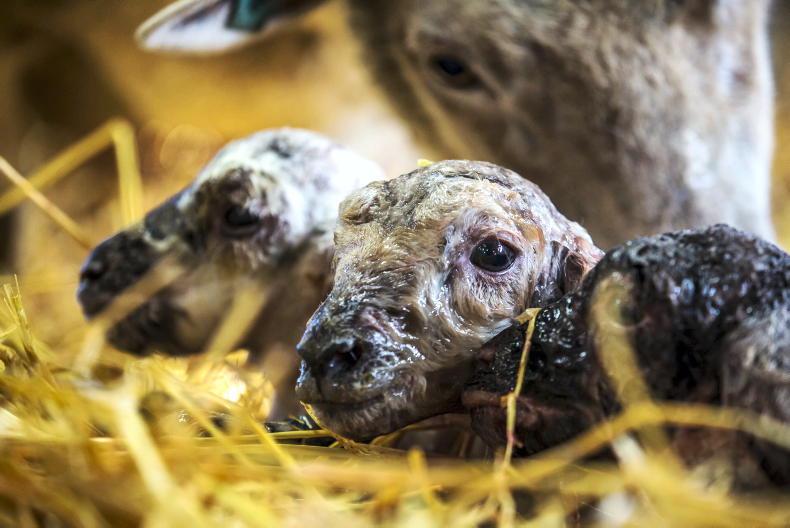
NLB is a major component of the replacement index. \ Philip Doyle
2. Recording all lambs, alive or dead
To validate true prolificacy, breeders must record:
Lambs born dead.Lambs that die within 48 hours.Lamb mortality up to 100 days.This reflects the reality that lamb survival is heavily influenced by ewe genetics. Dead-at-birth and early deaths must be recorded with sex and birth weight.
3. Cross-checking with lambing traits
NLB is validated against:
Lambing difficulty.Lamb vigour.Birth weights.These traits strongly influence lamb survival and are essential for understanding whether a ewe consistently produces viable lambs.
4. Linkage requirements
To maintain genetic linkage, a flock must have at least five live, weighed lambs from a linkage sire.
NLB records form the first step in establishing this linkage and ensuring accurate across-flock evaluations.
Using the LambPlus app
The LambPlus app reduces errors and syncs data directly with Sheep Ireland. Avoiding paper-based delays ensures flocks’ accurate records.
Impact for commercial farmers
For commercial systems, productivity is simple: lambs sold = income.
Data across Sheep Ireland programmes consistently show that:
High-NLB ewes (with good survival) generate more saleable lambs.Progeny from high replacement Index ewes achieve better weaning weights and lower barren rates.Using high-star rams and ewes increases lamb survival and shortens finishing times.CPT (Central Progeny Testing) validation figures show the difference between using a 5 star ram for each index (Replacement or Terminal):
What CPT farmers and Sheep Ireland have seen from the CPT ewes, is that consistently using 5 star Replacement Index rams produced:
0.21 more lambs born.3.4% less lamb mortality.4% better mothering ability. In the same way, consistently using 5 star Terminal Index rams produced:
6% less lambing difficulty.2.1kg heavier lambs at weaning.17 days quicker to slaughter.OviFlock project
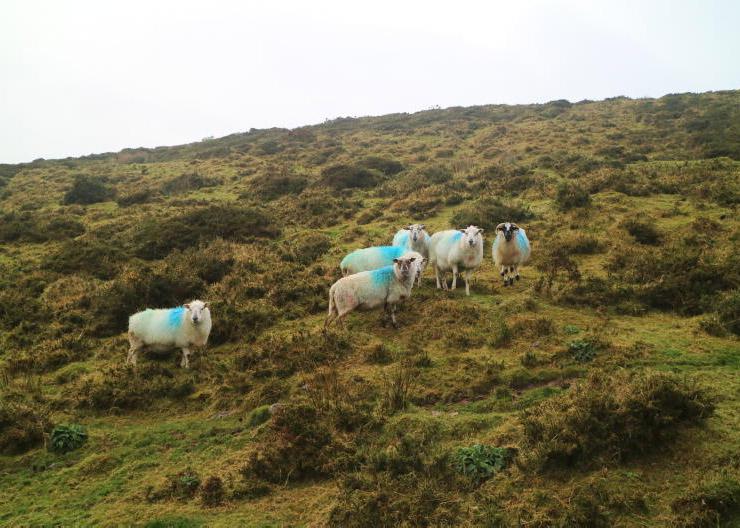
Hill breeders are already proving what is possible through the OviFlock initiative, with flock visits well underway and thousands of ewes being assessed, recorded, and DNA sampled across active ram breeding groups.
This early momentum shows just how quickly meaningful progress can be made when hill flocks commit to structured performance recording. Since the launch of the project in the summer of 2025, Sheep Ireland technicians gathered high quality data (ewe age, weight, body condition, teeth/mouth quality, lameness, and mastitis history) beginning to create the most comprehensive hill sheep performance database ever built in Ireland. Flock visits were paused after the ram had been let out to the ewes as to avoid handling ewes during pregnancy. Technicians will hit the road once again after lambing has finished.
With the OviFlock project off to a great start and creating real momentum on the ground, hill groups and breeders have a chance of setting a new standard for hill breeding, by building stronger ancestry records, improving genetic selection, and speeding up genetic progress on hill flocks.
If you are a hill ram breeder and a member of a hill breeding group and you want to get involved, apply for OviFlock on the Sheep Ireland website www.sheep.ie, complete an application form and we will be in touch or call the Sheep Ireland office on 023 882 0451.
For breeders and commercial sheep farmers, lambing season is the single most important period in the breeding year. It ultimately sets the direction for the farm, dictates management workload, and sets the foundation for next year’s flock performance.
One figure lies at the heart of both farm records and Sheep Ireland’s genetic evaluations: Number of Lambs Born (NLB).
The NLB index simply measures how many lambs each ewe produces at lambing, including lambs born alive, dead, or aborted. But behind this simple measure is a powerful tool that helps identify productive ewes, highlight fertility issues, and drive stronger maternal genetics across Irish flocks.
NLB for commercial farms
NLB is a major component of the Replacement Index. For commercial farmers, this has direct practical implications:
More lambs reared per ewe means more output from the same flock size.Better maternal genetics leads to improved fertility, easier lambings and stronger lamb survival.Accurate NLB records boosts the evaluation’s accuracy and helps to identify the ewes worth keeping – and the ones worth culling.High-accuracy NLB records mean better breeding decisions and better breeding decisions result more profit.How NLB is validated and why it matters
Sheep Ireland validates NLB using several data checks to make sure the information feeding into €uro-Stars is correct and useful.
These checks also ensure breeders’ best-performing animals get the credit they deserve and allows commercial farmers to use these animals to improve the prolificacy of their ewes.
1. Matching scanning results to lambing data
Lambing outcomes are compared to pregnancy scan results. This helps identify missing lambs, incorrect records or unrealistically high litter sizes.
NLB is a major component of the replacement index. \ Philip Doyle
2. Recording all lambs, alive or dead
To validate true prolificacy, breeders must record:
Lambs born dead.Lambs that die within 48 hours.Lamb mortality up to 100 days.This reflects the reality that lamb survival is heavily influenced by ewe genetics. Dead-at-birth and early deaths must be recorded with sex and birth weight.
3. Cross-checking with lambing traits
NLB is validated against:
Lambing difficulty.Lamb vigour.Birth weights.These traits strongly influence lamb survival and are essential for understanding whether a ewe consistently produces viable lambs.
4. Linkage requirements
To maintain genetic linkage, a flock must have at least five live, weighed lambs from a linkage sire.
NLB records form the first step in establishing this linkage and ensuring accurate across-flock evaluations.
Using the LambPlus app
The LambPlus app reduces errors and syncs data directly with Sheep Ireland. Avoiding paper-based delays ensures flocks’ accurate records.
Impact for commercial farmers
For commercial systems, productivity is simple: lambs sold = income.
Data across Sheep Ireland programmes consistently show that:
High-NLB ewes (with good survival) generate more saleable lambs.Progeny from high replacement Index ewes achieve better weaning weights and lower barren rates.Using high-star rams and ewes increases lamb survival and shortens finishing times.CPT (Central Progeny Testing) validation figures show the difference between using a 5 star ram for each index (Replacement or Terminal):
What CPT farmers and Sheep Ireland have seen from the CPT ewes, is that consistently using 5 star Replacement Index rams produced:
0.21 more lambs born.3.4% less lamb mortality.4% better mothering ability. In the same way, consistently using 5 star Terminal Index rams produced:
6% less lambing difficulty.2.1kg heavier lambs at weaning.17 days quicker to slaughter.OviFlock project
Hill breeders are already proving what is possible through the OviFlock initiative, with flock visits well underway and thousands of ewes being assessed, recorded, and DNA sampled across active ram breeding groups.
This early momentum shows just how quickly meaningful progress can be made when hill flocks commit to structured performance recording. Since the launch of the project in the summer of 2025, Sheep Ireland technicians gathered high quality data (ewe age, weight, body condition, teeth/mouth quality, lameness, and mastitis history) beginning to create the most comprehensive hill sheep performance database ever built in Ireland. Flock visits were paused after the ram had been let out to the ewes as to avoid handling ewes during pregnancy. Technicians will hit the road once again after lambing has finished.
With the OviFlock project off to a great start and creating real momentum on the ground, hill groups and breeders have a chance of setting a new standard for hill breeding, by building stronger ancestry records, improving genetic selection, and speeding up genetic progress on hill flocks.
If you are a hill ram breeder and a member of a hill breeding group and you want to get involved, apply for OviFlock on the Sheep Ireland website www.sheep.ie, complete an application form and we will be in touch or call the Sheep Ireland office on 023 882 0451.







SHARING OPTIONS