The Irish poultry industry plays an essential role in the wider agri food sector, supporting thousands of jobs and contributing significantly to rural economies throughout the country.
The backbone of Irish poultry production is made up of just under 450 commercial poultry producers and rearers, the majority of whom are based in the traditional strongholds of Monaghan and Cavan.
However, the sector’s reach extends beyond these counties, with several farms and processors further south and across the west of Ireland.
Integration
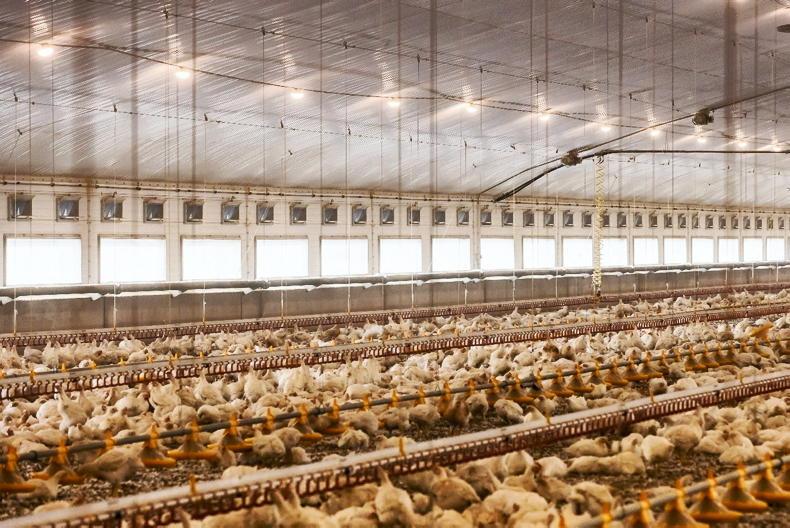
Poultry supply chains in Ireland are generally structured as vertically integrated systems, encompassing every stage from breeding and hatching to feed supply, growing, processing, and distribution.
This integration allows for greater control over quality, traceability, and efficiency, ensuring that Irish poultry consistently meets high standards.
In recent years, the industry has proactively adapted to evolving consumer preferences and changing market dynamics.
Processors have embraced innovation in product offerings such as new cuts and convenience formats and also in production practices, including the adoption of new technologies and increased investment in sustainability.
Poultry throughput in Ireland this year up to the week commencing 24 November reached a record 110 million birds, representing a 7% increase over the previous year (2024). The vast majority of this throughput is made up of broilers and hens, together accounting for approximately 96% of total production.
Ducks and turkeys, while smaller contributors, make up 3% and 1% respectively, reflecting a diverse but primarily chicken-focused sector.
This robust output underpins a substantial retail market, with poultry sales in Ireland now exceeding €435 million annually, highlighting the growing significance of poultry as a staple in Irish diets.

Chicken is the most popular meat with Irish consumers.
Added value
The sector’s socio-economic contribution is further underscored by employment figures, with over 5,000 jobs directly supported across production, processing, and related services (IBEC, 2023).
Despite the challenges posed by rising input costs, particularly for energy and labour, the industry has demonstrated remarkable resilience. This is largely due to strong and consistent domestic demand, as chicken has become Ireland’s most consumed meat protein.
The Bord Bia Quality Mark is highly visible across poultry products on Irish retail shelves, serving as a trusted assurance of quality, welfare, and provenance.
This mark, along with sustained promotional investment from Bord Bia and industry stakeholders, has been key to reinforcing consumer confidence and differentiating Irish poultry from imported alternatives. While imports continue to dominate food-service channels, the commitment to quality enables Irish poultry producers to capture more value in both domestic and export markets.
Most popular meat
Chicken is firmly established as Ireland’s most consumed meat protein, accounting for 47% of total meat consumption (CSO, 2025). Per capita consumption has surged to around 41 kg annually, reflecting its affordability, versatility, and strong health associations for Irish consumers.
This trend further accelerated in 2025 as high beef prices prompted price sensitive consumers to switch to alternative proteins like pork and chicken, with chicken seeing the biggest uplift and driving a 4% increase in retail volumes.
As the cost gap between beef and other proteins widened, households increasingly opted for poultry due to its affordability, versatility, and health benefits.
The strong performance of chicken in the retail market has helped maintain its position as the most popular meat in Ireland, supporting sustained growth in the sector.
Home market
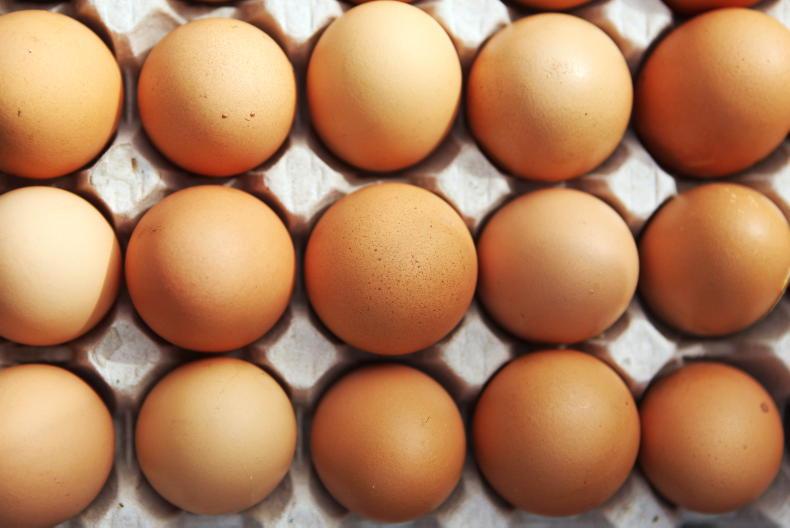
The home market is critical for the Irish chicken and egg sectors; penetration levels are exceptional, with 95% of Irish households purchasing poultry.
This widespread popularity is largely attributed to poultry’s adaptability to various cuisines and meal occasions, appealing to both traditional and modern consumer tastes.
Promotional campaigns have amplified engagement and bolstered consumer confidence, keeping poultry at the forefront of household shopping lists. Bord Bia’s Quality Assured Chicken and Egg initiatives played an important role in maintaining poultry’s prominence.
These multi-channel campaigns leveraged digital audio, social media, and radio to highlight the versatility and ease of preparation of chicken and egg dishes.
Innovation
Product innovation has continued to shape the chicken category, enabling the industry to respond rapidly to evolving consumer preferences. Cuts such as thighs and wings have grown in popularity.
This shift in consumer behaviour has had a positive impact on carcase balance, supporting more efficient use of each bird and reducing reliance on exports of less popular cuts.
Enhanced product development, including marinated and ready-to-cook formats, has further diversified offerings, supporting sustained growth at retail level.
Comment: more consumed than produced
Despite robust retail performance, the Irish poultry sector faces ongoing challenges in the foodservice arena, where imports continue to dominate, particularly for breast meat.
Gap
Ireland is currently only approximately 50% self-sufficient in this category, highlighting a structural gap in domestic production. This reliance on imports is driven by the high-volume requirements and specific specifications of the foodservice sector, which the Irish supply chain has yet to fully meet.
This gap underscores the need for ongoing investment in production capacity. By addressing this and capitalising on strong consumer demand, the sector is well positioned to drive continued growth and deliver lasting benefits.
Trade
Irish poultry exports up until September 2025 totalled €117 million, a 20% increase on 2024. Fresh/chilled meat product dominates, making up €48 million, followed by frozen at €36 million and eggs following that at €32 million.
The UK remains the dominant destination, accounting for 64% of total exports with Northern Ireland playing a pivotal role growing by 14% so far this year, while shipments to Britain grew by 71%.
Irish poultry exports to international markets such as South Africa and the Middle East play a strategic role in optimising the value derived from each bird processed. While Irish consumers tend to prefer certain cuts like breast meat and whole birds and increasingly thighs and wings other parts of the chicken, such as feet, or offal, are not as popular domestically.
By exporting these less in-demand cuts to markets where they are more highly valued, Irish producers can ensure that the whole carcase is utilised efficiently, reducing waste and increasing overall profitability.
Recent successes in gaining access to new markets including the approval of poultry exports to Malaysia, with notable demand for Irish duck, highlight the strong appetite for these products abroad.
Value-added products are a growing focus, with January to September 2025 exports of value-added poultry exports valued at €169 million, driven by convenience formats. Irish poultry’s selling points on the world stage include its high welfare standards, traceability, and alignment with sustainability goals, all underpinned by Bord Bia’s Origin Green programme.
Imports of poultry into Ireland remain high with over €285 million imported in 2024, primarily for foodservice highlighting competitive pressures from lower-cost producers.
Looking ahead, the Irish poultry industry must continue to innovate and invest in order to remain resilient and competitive.
Strengthening domestic production capacity, is essential to reduce reliance on imports and meet growing demand.
Irish poultry producers are well positioned to leverage evolving consumer preferences for convenient, healthy, and versatile protein options. Wider global factors such as feed price volatility, ongoing avian influenza risks at home and abroad, and geopolitical uncertainty continue to shape trade dynamics.
Nevertheless, Ireland’s reputation for quality and its integrated supply chain position the sector well to capture premium opportunities.

Shauna Jager, Pig meat and Poultry Executive Bord Bia.
The Irish poultry industry plays an essential role in the wider agri food sector, supporting thousands of jobs and contributing significantly to rural economies throughout the country.
The backbone of Irish poultry production is made up of just under 450 commercial poultry producers and rearers, the majority of whom are based in the traditional strongholds of Monaghan and Cavan.
However, the sector’s reach extends beyond these counties, with several farms and processors further south and across the west of Ireland.
Integration
Poultry supply chains in Ireland are generally structured as vertically integrated systems, encompassing every stage from breeding and hatching to feed supply, growing, processing, and distribution.
This integration allows for greater control over quality, traceability, and efficiency, ensuring that Irish poultry consistently meets high standards.
In recent years, the industry has proactively adapted to evolving consumer preferences and changing market dynamics.
Processors have embraced innovation in product offerings such as new cuts and convenience formats and also in production practices, including the adoption of new technologies and increased investment in sustainability.
Poultry throughput in Ireland this year up to the week commencing 24 November reached a record 110 million birds, representing a 7% increase over the previous year (2024). The vast majority of this throughput is made up of broilers and hens, together accounting for approximately 96% of total production.
Ducks and turkeys, while smaller contributors, make up 3% and 1% respectively, reflecting a diverse but primarily chicken-focused sector.
This robust output underpins a substantial retail market, with poultry sales in Ireland now exceeding €435 million annually, highlighting the growing significance of poultry as a staple in Irish diets.
Chicken is the most popular meat with Irish consumers.
Added value
The sector’s socio-economic contribution is further underscored by employment figures, with over 5,000 jobs directly supported across production, processing, and related services (IBEC, 2023).
Despite the challenges posed by rising input costs, particularly for energy and labour, the industry has demonstrated remarkable resilience. This is largely due to strong and consistent domestic demand, as chicken has become Ireland’s most consumed meat protein.
The Bord Bia Quality Mark is highly visible across poultry products on Irish retail shelves, serving as a trusted assurance of quality, welfare, and provenance.
This mark, along with sustained promotional investment from Bord Bia and industry stakeholders, has been key to reinforcing consumer confidence and differentiating Irish poultry from imported alternatives. While imports continue to dominate food-service channels, the commitment to quality enables Irish poultry producers to capture more value in both domestic and export markets.
Most popular meat
Chicken is firmly established as Ireland’s most consumed meat protein, accounting for 47% of total meat consumption (CSO, 2025). Per capita consumption has surged to around 41 kg annually, reflecting its affordability, versatility, and strong health associations for Irish consumers.
This trend further accelerated in 2025 as high beef prices prompted price sensitive consumers to switch to alternative proteins like pork and chicken, with chicken seeing the biggest uplift and driving a 4% increase in retail volumes.
As the cost gap between beef and other proteins widened, households increasingly opted for poultry due to its affordability, versatility, and health benefits.
The strong performance of chicken in the retail market has helped maintain its position as the most popular meat in Ireland, supporting sustained growth in the sector.
Home market
The home market is critical for the Irish chicken and egg sectors; penetration levels are exceptional, with 95% of Irish households purchasing poultry.
This widespread popularity is largely attributed to poultry’s adaptability to various cuisines and meal occasions, appealing to both traditional and modern consumer tastes.
Promotional campaigns have amplified engagement and bolstered consumer confidence, keeping poultry at the forefront of household shopping lists. Bord Bia’s Quality Assured Chicken and Egg initiatives played an important role in maintaining poultry’s prominence.
These multi-channel campaigns leveraged digital audio, social media, and radio to highlight the versatility and ease of preparation of chicken and egg dishes.
Innovation
Product innovation has continued to shape the chicken category, enabling the industry to respond rapidly to evolving consumer preferences. Cuts such as thighs and wings have grown in popularity.
This shift in consumer behaviour has had a positive impact on carcase balance, supporting more efficient use of each bird and reducing reliance on exports of less popular cuts.
Enhanced product development, including marinated and ready-to-cook formats, has further diversified offerings, supporting sustained growth at retail level.
Comment: more consumed than produced
Despite robust retail performance, the Irish poultry sector faces ongoing challenges in the foodservice arena, where imports continue to dominate, particularly for breast meat.
Gap
Ireland is currently only approximately 50% self-sufficient in this category, highlighting a structural gap in domestic production. This reliance on imports is driven by the high-volume requirements and specific specifications of the foodservice sector, which the Irish supply chain has yet to fully meet.
This gap underscores the need for ongoing investment in production capacity. By addressing this and capitalising on strong consumer demand, the sector is well positioned to drive continued growth and deliver lasting benefits.
Trade
Irish poultry exports up until September 2025 totalled €117 million, a 20% increase on 2024. Fresh/chilled meat product dominates, making up €48 million, followed by frozen at €36 million and eggs following that at €32 million.
The UK remains the dominant destination, accounting for 64% of total exports with Northern Ireland playing a pivotal role growing by 14% so far this year, while shipments to Britain grew by 71%.
Irish poultry exports to international markets such as South Africa and the Middle East play a strategic role in optimising the value derived from each bird processed. While Irish consumers tend to prefer certain cuts like breast meat and whole birds and increasingly thighs and wings other parts of the chicken, such as feet, or offal, are not as popular domestically.
By exporting these less in-demand cuts to markets where they are more highly valued, Irish producers can ensure that the whole carcase is utilised efficiently, reducing waste and increasing overall profitability.
Recent successes in gaining access to new markets including the approval of poultry exports to Malaysia, with notable demand for Irish duck, highlight the strong appetite for these products abroad.
Value-added products are a growing focus, with January to September 2025 exports of value-added poultry exports valued at €169 million, driven by convenience formats. Irish poultry’s selling points on the world stage include its high welfare standards, traceability, and alignment with sustainability goals, all underpinned by Bord Bia’s Origin Green programme.
Imports of poultry into Ireland remain high with over €285 million imported in 2024, primarily for foodservice highlighting competitive pressures from lower-cost producers.
Looking ahead, the Irish poultry industry must continue to innovate and invest in order to remain resilient and competitive.
Strengthening domestic production capacity, is essential to reduce reliance on imports and meet growing demand.
Irish poultry producers are well positioned to leverage evolving consumer preferences for convenient, healthy, and versatile protein options. Wider global factors such as feed price volatility, ongoing avian influenza risks at home and abroad, and geopolitical uncertainty continue to shape trade dynamics.
Nevertheless, Ireland’s reputation for quality and its integrated supply chain position the sector well to capture premium opportunities.
Shauna Jager, Pig meat and Poultry Executive Bord Bia.






SHARING OPTIONS