With many farmers leasing land to developers for solar farms, or already hosting operational solar installations on their farms, they may be considering how their Basic Income Support for Sustainability (BISS) scheme will be affected.
The Department of Agriculture has a clear answer on this. A spokesperson from the Department gave a rundown of how solar farms impact your BISS.
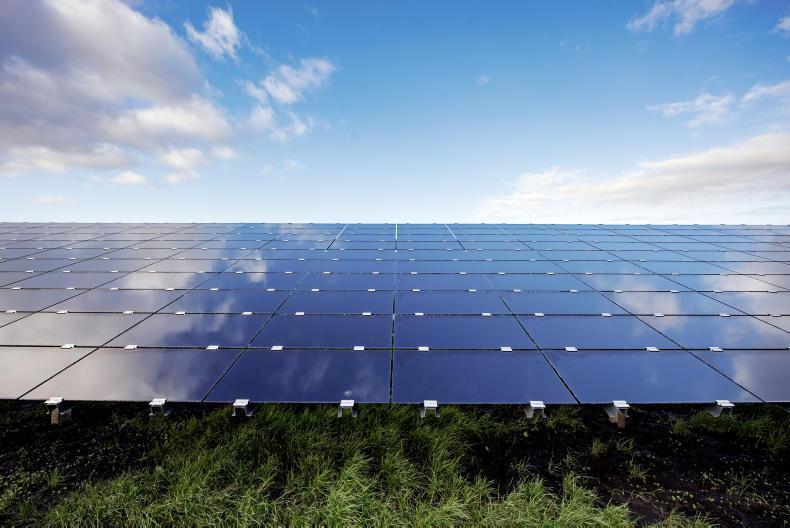
In a statement, it said that in general, solar panels are considered ineligible features under the BISS and other area-based payments.
Deductions must be made to the claimed area of a parcel to take account of areas not available for an agricultural activity, such as the area under panel supports, roads, buildings, and other structures. The biggest deduction will depend on the availability of the area around and under the solar panels, ie whether it is possible to graze both around and under the solar panels.
If the effect of the solar panels, including the supporting structures, is to reduce the eligible area to less than 70% of the parcel area, then the parcel is deemed ineligible.
However, if the solar panels are erected in a manner that allows for unrestricted access to grazing animals, such as the applicant’s sheep, then the area around and under the panels is eligible under BISS and CRISS once there is an agricultural activity in the parcel, ie the applicant’s sheep grazing.
In recognition of the different levels of access an applicant has to a parcel with solar panels, parcels will be examined on an individual basis, as eligibility depends on the area of a parcel taken up with solar panels and associated structures, and the agricultural activity taking place in the parcel.
Scenarios
The Department outlines the following scenarios on the different levels of access an applicant has to the solar panel areas and what reductions should apply.
No access/no agricultural activity: the applicant is denied access to the area around the solar panels, or no agricultural activity is taking place. A boundary fence may or may not be present. All the area around the solar panels and supporting structures is ineligible.Limited access: the applicant has access to the green areas between rows of panels and the surrounding area not containing the panels or supporting structures. These green areas are eligible once an agricultural activity is taking place, for example grazing. The area under the panels, supporting structures, or inaccessible areas is not eligible and must be excluded. If a boundary fence is present around the site, the applicant must have access to the site.Unlimited access: the solar panels are erected in a manner that allows for unrestricted access to grazing animals, such as the applicant’s sheep. The area around and under the panels is eligible, once there is an agricultural activity, but deductions must be made for the area under supporting structures and the area lost to the panel supports/pylons. If a boundary fence is present around the site, the applicant must have access to the site.In all three scenarios above, if the area in a parcel is reduced by more than 70%, or if there is no agricultural activity in the parcel, or if the applicant does not own, lease, or rent the land, then the parcel will be considered ineligible. If the land is leased or rented out to a third party, the applicant must have a written agreement to access the area throughout the calendar year.
Land lease
When asked how eligibility is affected where land is leased to a solar company, it said that if the applicant is not the owner and controller of the solar panels, then the applicant must have a written agreement to access the area throughout the calendar year and to graze or cut the area.
This also applies to applicants who own the land but have leased it out to a third party.
Applicants should retain a copy of the agreement to provide to DAFM.
How are deductions calculated?
The Department said that, as part of an applicant’s BISS application, parcels that have or are in the process of having solar panels installed should be flagged in the parcel notes section.
The parcel area claimed by the applicant needs to consider the changes made to the parcel, ie ineligible areas added and the agricultural activity that will take place (grazing by sheep or cutting/topping).
Applicants with parcels containing solar panels will be contacted by DAFM to provide evidence of the agricultural activity taking place in each of the parcels claimed.
The applicant will be asked to provide evidence such as geotagged photos to demonstrate the agricultural activity taking place. The applicant may also be asked for evidence of sheep ownership.
The area of ineligible features, such as roads, structures and buildings, will be deducted. The green area around the panels is eligible for payment if the applicant provides evidence of cutting or topping of the grass.
The area under the panels is eligible if the panels are constructed in a manner that allows free access for the applicant’s sheep and the applicant provides geotagged photos of their sheep grazing around and under the panels in each parcel claimed. A small reduction is applied to the area not available due to the panel pylons.
With many farmers leasing land to developers for solar farms, or already hosting operational solar installations on their farms, they may be considering how their Basic Income Support for Sustainability (BISS) scheme will be affected.
The Department of Agriculture has a clear answer on this. A spokesperson from the Department gave a rundown of how solar farms impact your BISS.
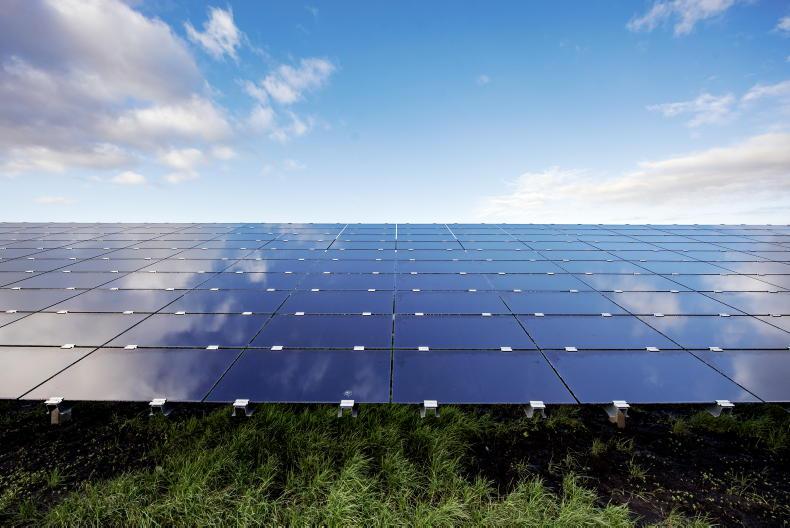
In a statement, it said that in general, solar panels are considered ineligible features under the BISS and other area-based payments.
Deductions must be made to the claimed area of a parcel to take account of areas not available for an agricultural activity, such as the area under panel supports, roads, buildings, and other structures. The biggest deduction will depend on the availability of the area around and under the solar panels, ie whether it is possible to graze both around and under the solar panels.
If the effect of the solar panels, including the supporting structures, is to reduce the eligible area to less than 70% of the parcel area, then the parcel is deemed ineligible.
However, if the solar panels are erected in a manner that allows for unrestricted access to grazing animals, such as the applicant’s sheep, then the area around and under the panels is eligible under BISS and CRISS once there is an agricultural activity in the parcel, ie the applicant’s sheep grazing.
In recognition of the different levels of access an applicant has to a parcel with solar panels, parcels will be examined on an individual basis, as eligibility depends on the area of a parcel taken up with solar panels and associated structures, and the agricultural activity taking place in the parcel.
Scenarios
The Department outlines the following scenarios on the different levels of access an applicant has to the solar panel areas and what reductions should apply.
No access/no agricultural activity: the applicant is denied access to the area around the solar panels, or no agricultural activity is taking place. A boundary fence may or may not be present. All the area around the solar panels and supporting structures is ineligible.Limited access: the applicant has access to the green areas between rows of panels and the surrounding area not containing the panels or supporting structures. These green areas are eligible once an agricultural activity is taking place, for example grazing. The area under the panels, supporting structures, or inaccessible areas is not eligible and must be excluded. If a boundary fence is present around the site, the applicant must have access to the site.Unlimited access: the solar panels are erected in a manner that allows for unrestricted access to grazing animals, such as the applicant’s sheep. The area around and under the panels is eligible, once there is an agricultural activity, but deductions must be made for the area under supporting structures and the area lost to the panel supports/pylons. If a boundary fence is present around the site, the applicant must have access to the site.In all three scenarios above, if the area in a parcel is reduced by more than 70%, or if there is no agricultural activity in the parcel, or if the applicant does not own, lease, or rent the land, then the parcel will be considered ineligible. If the land is leased or rented out to a third party, the applicant must have a written agreement to access the area throughout the calendar year.
Land lease
When asked how eligibility is affected where land is leased to a solar company, it said that if the applicant is not the owner and controller of the solar panels, then the applicant must have a written agreement to access the area throughout the calendar year and to graze or cut the area.
This also applies to applicants who own the land but have leased it out to a third party.
Applicants should retain a copy of the agreement to provide to DAFM.
How are deductions calculated?
The Department said that, as part of an applicant’s BISS application, parcels that have or are in the process of having solar panels installed should be flagged in the parcel notes section.
The parcel area claimed by the applicant needs to consider the changes made to the parcel, ie ineligible areas added and the agricultural activity that will take place (grazing by sheep or cutting/topping).
Applicants with parcels containing solar panels will be contacted by DAFM to provide evidence of the agricultural activity taking place in each of the parcels claimed.
The applicant will be asked to provide evidence such as geotagged photos to demonstrate the agricultural activity taking place. The applicant may also be asked for evidence of sheep ownership.
The area of ineligible features, such as roads, structures and buildings, will be deducted. The green area around the panels is eligible for payment if the applicant provides evidence of cutting or topping of the grass.
The area under the panels is eligible if the panels are constructed in a manner that allows free access for the applicant’s sheep and the applicant provides geotagged photos of their sheep grazing around and under the panels in each parcel claimed. A small reduction is applied to the area not available due to the panel pylons.






SHARING OPTIONS