Farmers who have availed of solar PV grants and installed solar systems are less exposed to rising electricity costs, which are expected to continue to increase.
As a result, farmers are looking to renewable energy to reduce costs and enhance sustainability. We recently visited a number of farms with solar PV systems installed by Local Power to see how they are performing in real farm conditions.
Nigel Flynn
Poultry farmer – Monaghan
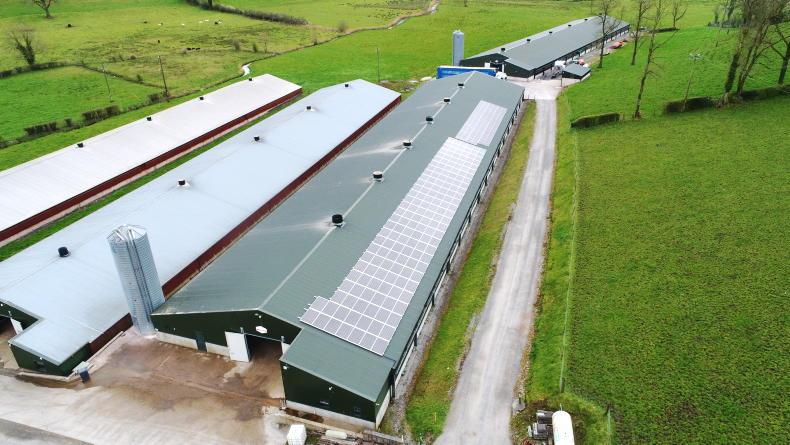
Nigel Flynn farms just outside Clones in Co Monaghan. He farms 145,000 broiler birds across four bird houses. He takes delivery of day-old chicks and rears them to 40 days, supplying Manor Farm. His biggest energy use is LPG for heating, as well as electricity for ventilation, lighting, feeders and water pumps. Because maintaining stable environmental conditions is vital for bird health, energy is required 24 hours a day.
Energy is a big cost on his farm. Before solar, his farm was spending €33,000 in electricity annually.
Nigel began exploring solar in 2018 due to rising energy costs. The decision was mainly economic, focused on reducing the cost of running the business.
In 2019, he installed a 50kW solar PV system with support from the Better Energy Communities (BEC) Grant, which covered about 30% of the cost. This cost around €45,000, and he paid it off in three years.
He expanded the system in 2024 using the TAMS Solar Capital Investment Grant, bringing capacity to 74kW. The panels were installed south-facing. He also installed 16.6kWh of battery storage.
The system cost around €30,000, with an estimated payback of two and a half years.
He explained that the batteries are charged by the panels when they are generating more than needed. He also charges the batteries at night on the cheaper rate.
Since installing solar panels, his bills have dropped by around 30%, as this is now supplied by free solar power. The system generates around 60,000kWh of electricity each year.
Nigel said he would increase the number of panels but is restricted by the ESB grid connection.
He has had to clean his panels twice since installation. Solar has worked well for him, and thinks it makes sense, but he questions if the project would have gone ahead without the grant aid available.
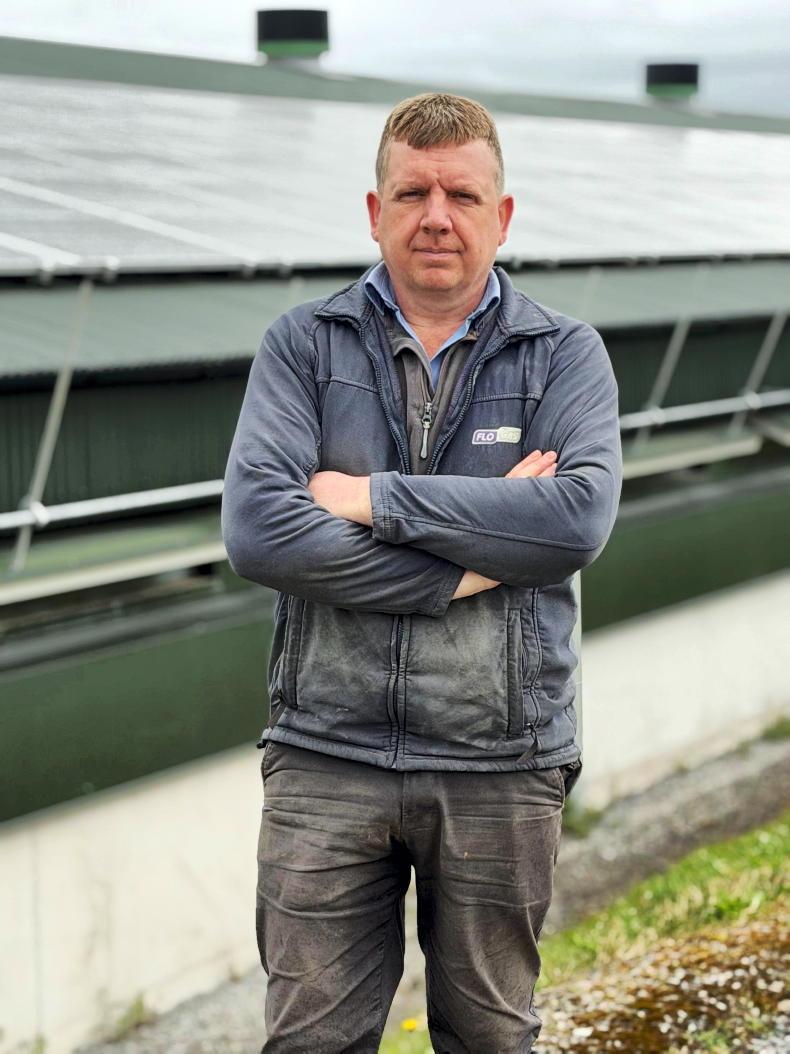
Monaghan poultry farmer Nigel Flynn.
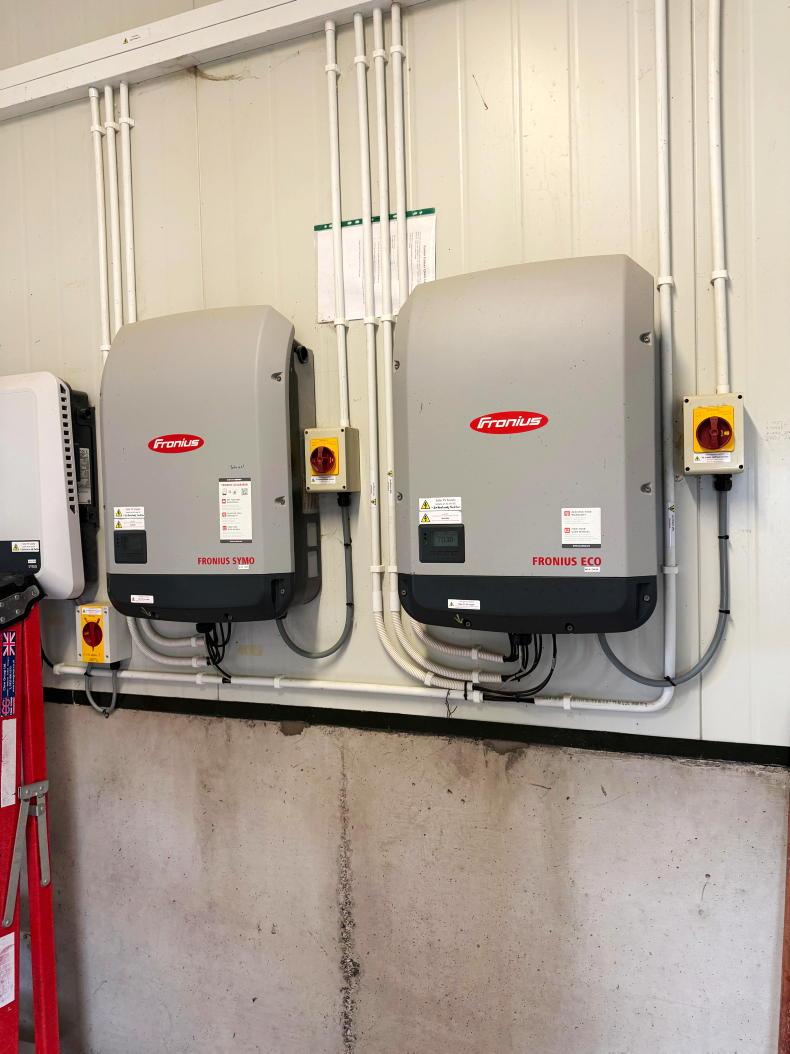
The inventors on Nigel's farm.
Shane Hegarty
Dairy farmer - Meath
Dairy farmer Shane Hegarty farms alongside his father and mother, Anthony and Bridie, near Kilcock, Co Meath. He milks 50 Friesian cows and operates a calf-to-beef system, finishing around 30 cattle per year. Shane is a third-generation farmer working full-time on the farm, where milking is carried out in a six-unit herringbone parlour.
The farmhouse and parlour are on the same electrical meter, with energy demand typical of a dairy farm. Electricity use peaks around milking times, particularly for running the parlour and cooling milk. Heating water is also a significant contributor to overall electricity use.
Shane first considered solar energy around 2023. As part of Tirlán’s sustainability programme, farmers are encouraged to adopt a range of environmental measures, with solar energy being one of several options.
By participating in the programme, Shane receives an additional 0.5c per litre of milk supplied.
After deciding to invest, he installed a 13.76kW Solarwatt glass-glass solar PV system in January 2024, along with an 11kWh BYD battery. He opted to install half of the panels facing east and half facing west. This suited the layout of his sheds and also better matched energy generation with farm demand, as he milks at 7.30am and again at 4pm. Some ash trees had to be removed to improve sunlight access, with the work carried out by local contractor John McCabe.
The system cost €28,000, and he secured a TAMS grant worth €13,000.
The system generates around 11,000kWh of electricity per year. Shane explained that it reduces his energy bills by approximately 74%, with a payback period of less than three years.
He described solar PV as a “no-brainer” for farmers, as it captures free energy, reducing costs. He uses an eddi diverter device, which ensures that when excess solar power is generated, it is first used to charge the batteries, then to cool milk or heat water, with any remaining energy exported to the grid, where he receives around 20c/kWh. He also charges the batteries at night using cheaper electricity rates, further reducing his overall energy costs.
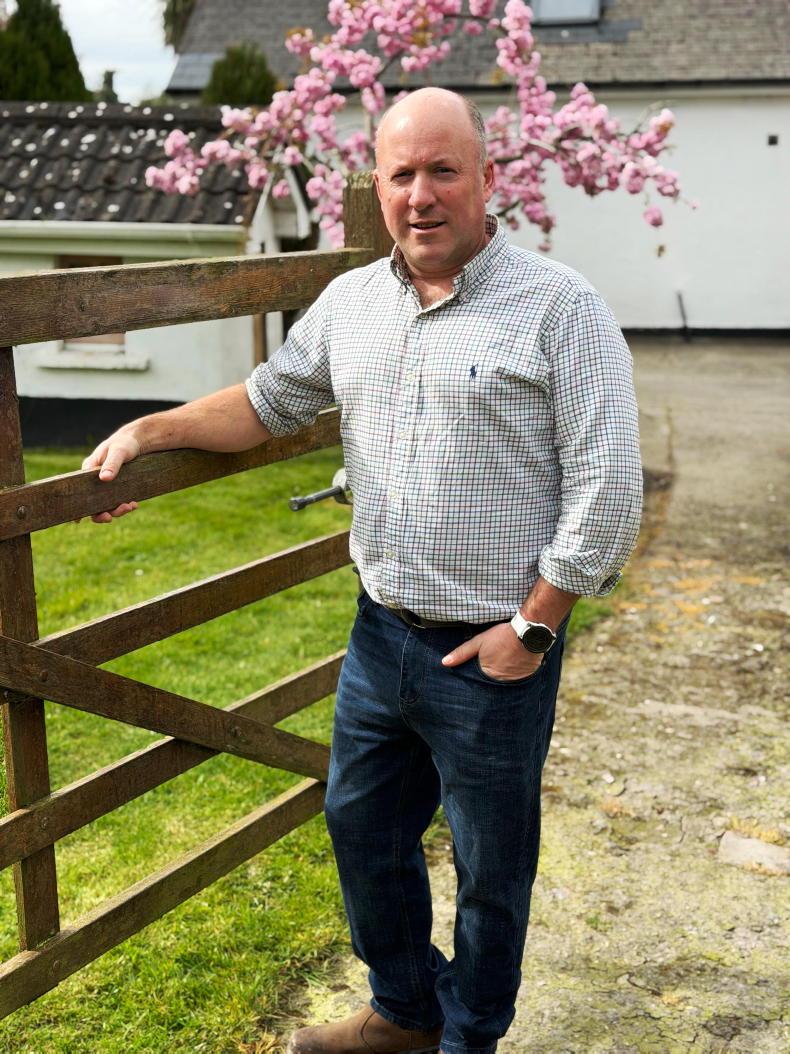
Shane Hegarty - Meath.
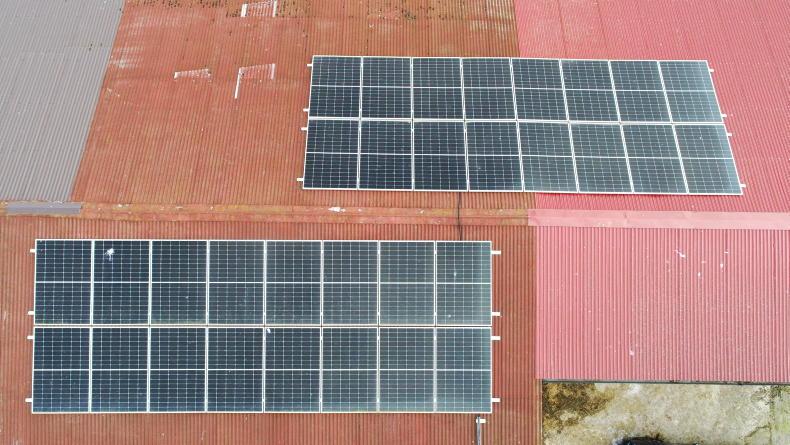
Shane's solar panels.
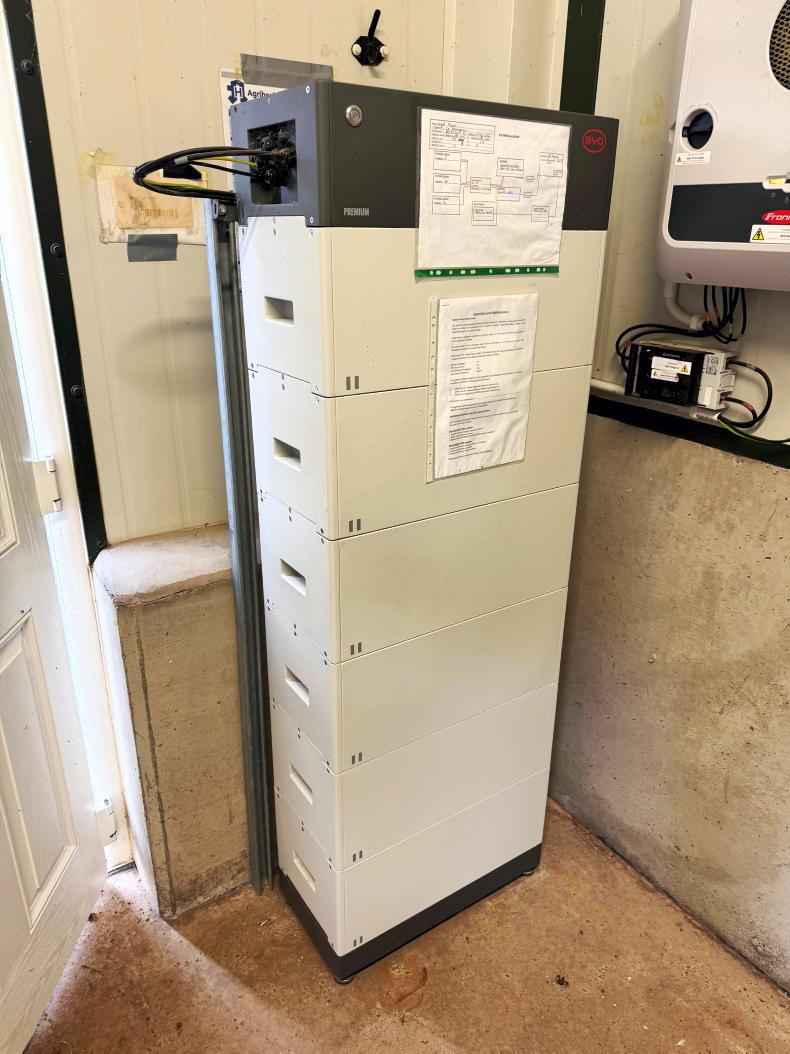
Shane’s 11kWh battery storage.
Hickey’s Farm
Potatoes – Louth
Hickey’s Home Farm is located on the outskirts of Ardee, Co Louth. Gerard is a third-generation farmer, farming alongside his dad Martin and uncle Patrick. They grow and supply potatoes and carrots to the Irish market, and also produce grain and cattle. Talking to Gerard and Patrick, they explained that the yard is a significant user of electricity, having six 600-tonne cold stores on site, a grading and packing line, and a farm shop.
Gerard explains that he has an ambition to make the potatoes he grows zero carbon, and part of this strategy is to decarbonise the yard’s energy use. When exploring options, he looked into wind turbines, anaerobic digestion plants and solar.
After consultation with neighbours, he opted to install their first solar PV system in 2022. He secured a LEADER grant for 50% for the cost of the solar panels, and after a lengthy process to increase the substation capacity on the farm from 200kVA to 400kVA, including building a substation on site, he was able to proceed with the installation of a 380kW solar PV system, located on the store roofs.
The Solarwatt glass-glass solar PV system cost €380,000. LEADER supplied a grant worth €190,000. The system generates around 315,000kWh per year. Of that, the yard uses 231,000kWh, with the remainder exported to the grid. The total energy usage on the yard was 813,000kWh for in 2025, with 582,000kWh imported from the grid.
As energy use is high, he didn’t opt for batteries and questioned the maintenance and replacement costs for a large-scale system which would be required on his farm.
With accelerated capital allowances, an increase in energy prices, and the LEADER grant, Gerard said the system paid for itself in three years. Since then, they have installed another 200kW of solar, with plans for more in a bid to make the yard self-sufficient. He said solar is a no-brainer on farms.
He said roofs around Ireland should be used to install solar panels and help make the country more energy self-sufficient.
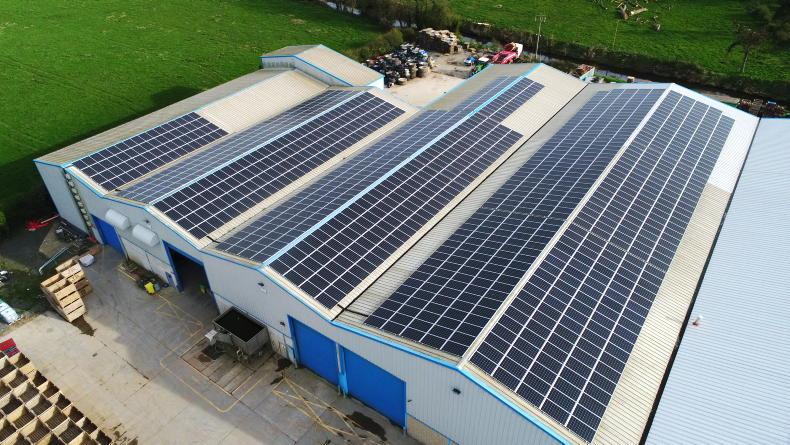
The 380kWh solar PV system installed on Hickey's farm.
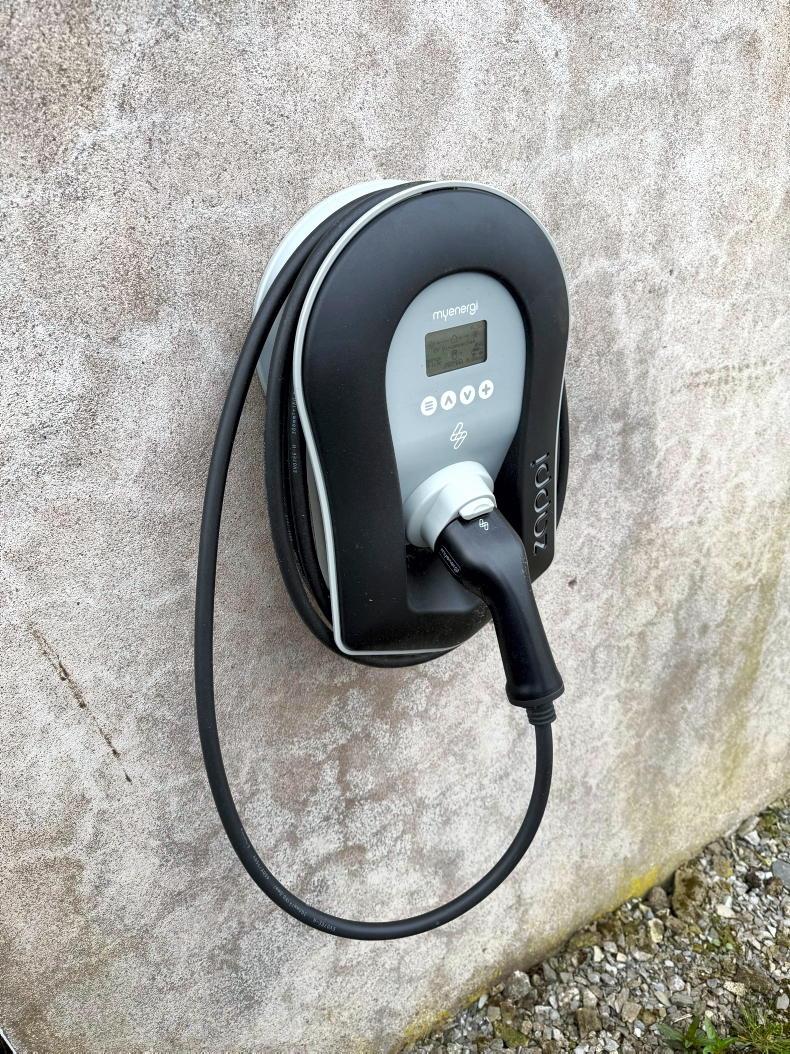
Gerard also installed an EV car charger on the farm, supplied by Local Power.
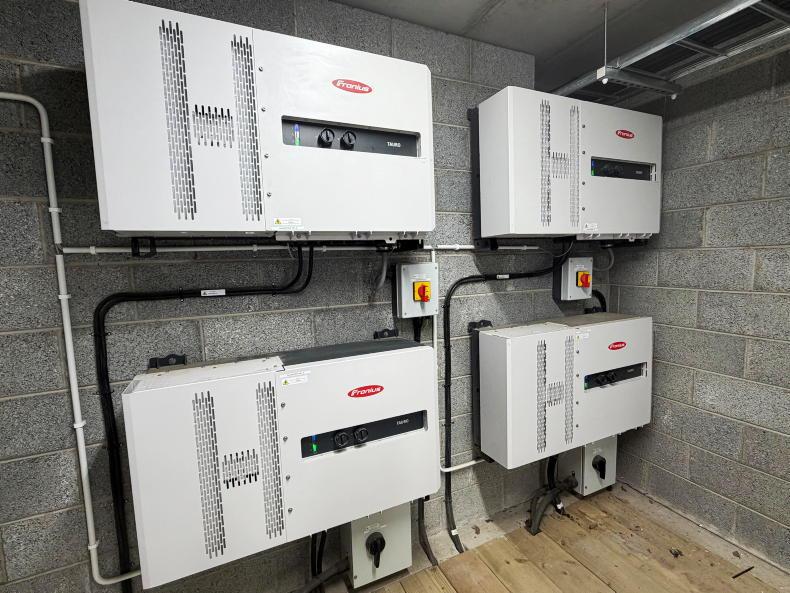
The invertors installed on Hickey’s home farm in Co Louth.
Farmers who have availed of solar PV grants and installed solar systems are less exposed to rising electricity costs, which are expected to continue to increase.
As a result, farmers are looking to renewable energy to reduce costs and enhance sustainability. We recently visited a number of farms with solar PV systems installed by Local Power to see how they are performing in real farm conditions.
Nigel Flynn
Poultry farmer – Monaghan
Nigel Flynn farms just outside Clones in Co Monaghan. He farms 145,000 broiler birds across four bird houses. He takes delivery of day-old chicks and rears them to 40 days, supplying Manor Farm. His biggest energy use is LPG for heating, as well as electricity for ventilation, lighting, feeders and water pumps. Because maintaining stable environmental conditions is vital for bird health, energy is required 24 hours a day.
Energy is a big cost on his farm. Before solar, his farm was spending €33,000 in electricity annually.
Nigel began exploring solar in 2018 due to rising energy costs. The decision was mainly economic, focused on reducing the cost of running the business.
In 2019, he installed a 50kW solar PV system with support from the Better Energy Communities (BEC) Grant, which covered about 30% of the cost. This cost around €45,000, and he paid it off in three years.
He expanded the system in 2024 using the TAMS Solar Capital Investment Grant, bringing capacity to 74kW. The panels were installed south-facing. He also installed 16.6kWh of battery storage.
The system cost around €30,000, with an estimated payback of two and a half years.
He explained that the batteries are charged by the panels when they are generating more than needed. He also charges the batteries at night on the cheaper rate.
Since installing solar panels, his bills have dropped by around 30%, as this is now supplied by free solar power. The system generates around 60,000kWh of electricity each year.
Nigel said he would increase the number of panels but is restricted by the ESB grid connection.
He has had to clean his panels twice since installation. Solar has worked well for him, and thinks it makes sense, but he questions if the project would have gone ahead without the grant aid available.
Monaghan poultry farmer Nigel Flynn.
The inventors on Nigel's farm.
Shane Hegarty
Dairy farmer - Meath
Dairy farmer Shane Hegarty farms alongside his father and mother, Anthony and Bridie, near Kilcock, Co Meath. He milks 50 Friesian cows and operates a calf-to-beef system, finishing around 30 cattle per year. Shane is a third-generation farmer working full-time on the farm, where milking is carried out in a six-unit herringbone parlour.
The farmhouse and parlour are on the same electrical meter, with energy demand typical of a dairy farm. Electricity use peaks around milking times, particularly for running the parlour and cooling milk. Heating water is also a significant contributor to overall electricity use.
Shane first considered solar energy around 2023. As part of Tirlán’s sustainability programme, farmers are encouraged to adopt a range of environmental measures, with solar energy being one of several options.
By participating in the programme, Shane receives an additional 0.5c per litre of milk supplied.
After deciding to invest, he installed a 13.76kW Solarwatt glass-glass solar PV system in January 2024, along with an 11kWh BYD battery. He opted to install half of the panels facing east and half facing west. This suited the layout of his sheds and also better matched energy generation with farm demand, as he milks at 7.30am and again at 4pm. Some ash trees had to be removed to improve sunlight access, with the work carried out by local contractor John McCabe.
The system cost €28,000, and he secured a TAMS grant worth €13,000.
The system generates around 11,000kWh of electricity per year. Shane explained that it reduces his energy bills by approximately 74%, with a payback period of less than three years.
He described solar PV as a “no-brainer” for farmers, as it captures free energy, reducing costs. He uses an eddi diverter device, which ensures that when excess solar power is generated, it is first used to charge the batteries, then to cool milk or heat water, with any remaining energy exported to the grid, where he receives around 20c/kWh. He also charges the batteries at night using cheaper electricity rates, further reducing his overall energy costs.
Shane Hegarty - Meath.
Shane's solar panels.
Shane’s 11kWh battery storage.
Hickey’s Farm
Potatoes – Louth
Hickey’s Home Farm is located on the outskirts of Ardee, Co Louth. Gerard is a third-generation farmer, farming alongside his dad Martin and uncle Patrick. They grow and supply potatoes and carrots to the Irish market, and also produce grain and cattle. Talking to Gerard and Patrick, they explained that the yard is a significant user of electricity, having six 600-tonne cold stores on site, a grading and packing line, and a farm shop.
Gerard explains that he has an ambition to make the potatoes he grows zero carbon, and part of this strategy is to decarbonise the yard’s energy use. When exploring options, he looked into wind turbines, anaerobic digestion plants and solar.
After consultation with neighbours, he opted to install their first solar PV system in 2022. He secured a LEADER grant for 50% for the cost of the solar panels, and after a lengthy process to increase the substation capacity on the farm from 200kVA to 400kVA, including building a substation on site, he was able to proceed with the installation of a 380kW solar PV system, located on the store roofs.
The Solarwatt glass-glass solar PV system cost €380,000. LEADER supplied a grant worth €190,000. The system generates around 315,000kWh per year. Of that, the yard uses 231,000kWh, with the remainder exported to the grid. The total energy usage on the yard was 813,000kWh for in 2025, with 582,000kWh imported from the grid.
As energy use is high, he didn’t opt for batteries and questioned the maintenance and replacement costs for a large-scale system which would be required on his farm.
With accelerated capital allowances, an increase in energy prices, and the LEADER grant, Gerard said the system paid for itself in three years. Since then, they have installed another 200kW of solar, with plans for more in a bid to make the yard self-sufficient. He said solar is a no-brainer on farms.
He said roofs around Ireland should be used to install solar panels and help make the country more energy self-sufficient.
The 380kWh solar PV system installed on Hickey's farm.
Gerard also installed an EV car charger on the farm, supplied by Local Power.
The invertors installed on Hickey’s home farm in Co Louth.






SHARING OPTIONS