Overall winner Teagasc FBD environmentally sustainable farmer of the year 2025 and category winner for improving water quality
Don Somers,
tillage farmer, Wexford
Wexford tillage farmer Don Somers has been named the overall winner of the Teagasc FBD Environmental Sustainability Award 2025. He also won the improving water quality category.
Farming in partnership with his uncle Jim in Oylgate, Co Wexford, Don manages 183ha of winter and spring cereals. His practical, science-based approach is improving his land, while helping to keep local rivers clean — something that benefits everyone who values safe drinking water, healthy wildlife and enjoying Ireland’s rivers, lakes, and beaches.
Don knows that what happens on his farm can affect the River Slaney and the sow catchment that most of his farm is in. Don said: “For me, there are economic benefits to protecting water, along with environmental benefits. Nutrients that leave the farm end up somewhere, and if that is in water courses these have to be replaced, and that’s a cost to my farm.”
Don regularly checks soil structure and looks for signs of life, such as earthworms. Over half of his straw is returned to the soil, increasing organic content, bringing life back to the soil and reducing the need for extra fertiliser. Healthy soil acts like a natural filter, alleviating waterlogging, preventing leaching and keeping nutrients where they belong.
He also plants cover crops on fields destined for spring crops. For cover crops, he uses mainly phacelia, clover, linseed and vetch. These cover crops also capture carbon and store it in the soil. These protect the soil over winter and prevent nutrients from being washed away.
The fertiliser plan is based on crop requirements, but offtake from the crop and yield potential are also considered. Yield maps and N-Sensor mean nutrients are applied according to yield potential, not blanket application.
Don no longer uses dairy sludge, due to its smell, lack of organic matter and inconsistent nutrient levels.
Each year, he designs a fertiliser plan based on what crops need and what nutrients are already in the soil. Regular soil testing ensures fertiliser is applied only where required, reducing waste and preventing nutrients from ending up in rivers. The fertiliser plan is based on crop requirements along with expected offtake from the crop and yield potential.
Alongside chemical fertilisers, Don uses organic manures such as poultry litter and farmyard manure. These add valuable organic matter to the soil, helping it retain nutrients and water more effectively. Each batch is tested for nutrient content, and with his own precision spreader and weigh cells, Don applies it accurately and at the right time. This builds soil health and eliminates the risk of run-off.
Modern technology helps Don. GPS mapping and crop sensors guide his fertiliser use, ensuring nutrients go exactly where they’re needed and nowhere else. This targeted approach has cut his chemical nitrogen use by around 20%, reducing costs, lowering GHG emissions, and protecting nearby waterways from nutrient run-off. An N-Sensor means nutrients are applied according to requirements and yield potential and not in a blanket application. A yield monitor on the combine at harvest collects precision yield data maps, which help with decisions on nutrient application in the next year’s crop.
Don has created riparian buffer zones — strips of vegetation along watercourses that trap sediment and nutrients before they reach the river. These areas also provide important habitats for birds, insects and pollinators, supporting wildlife as well as water quality.
Clean water supports drinking supplies, recreation and tourism, and healthy ecosystems. By combining careful planning, technology and a respect for nature, Don is proving that productive farming and clean water can actively go hand in hand.
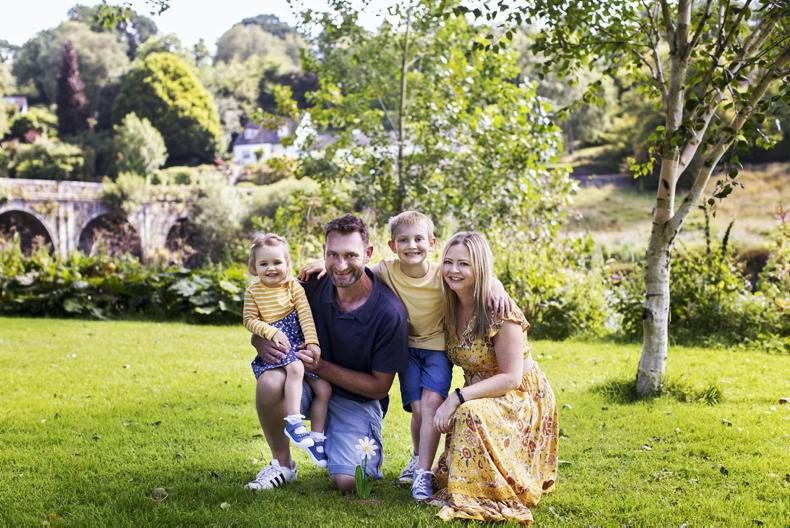
Don Somers with his family
Winner of the reducing greenhouse gas emissions category
Patrick and Margaret Dollard, dairy beef farmers,
Co Kilkenny
The Dollards have reduced their greenhouse gas emissions on the farm by making a number of changes.
There is an emphasis on soil fertility on the Dollard farm. Over 90% of soils are optimum for phosphorus (P) and 100% of soils have optimum pH levels. They have potassium (K) fixing soils, which makes it difficult to build fertility – so they have gone with a little and often approach and replace what they take off.
This, combined with over 60% of the farm in clover, has allowed chemical N use to be reduced by 20% in the last few years (stocking rate = 190 kg / ha).
In total, 80% of the N applied on the farm is applied as NBPT protected urea.
There is an emphasis on grassland management and silage quality on this farm. Over 80% of the silage is made from surplus bales, keeping grass quality good and making very good-quality silage.
This combined with good genetics and a good health plan has allowed the Dollards to finish steers at on average 21.5 months, with two-thirds of the 185 animals finished every year going to the factory before the second winter, at a carcase weight of 325kg.
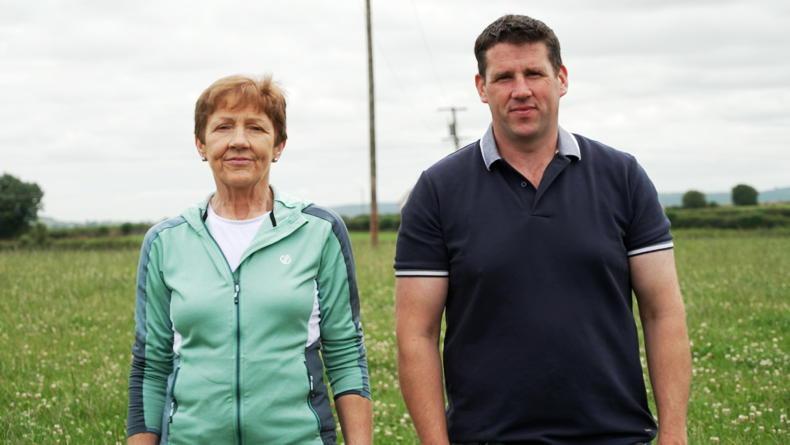
Patrick and Margaret Dollard
Winner of the enhancing biodiversity category
Tom Tierney, tillage farmer,
Co Kildare
Tom has made changes on his farm to enhance biodiversity. He has been involved in many nature-based projects over the years, helping to inform his actions.
Hedgerows are well managed, with great examples of treeline hedges on the farm. Topped hedges are managed to exceed 2m in height, allowing for flowering and fruiting.
Tom has 10ha of trees. This forestry will be managed under a continuous cropping forestry type arrangement, allowing the farm to diversify and create a firewood business.
The adoption of continuous cover forestry on the farm is not only benefitting biodiversity, but is also maintaining commercial viability.
There is clear evidence of working with nature on the farm, including the use of Integrated Pest Management (IPM) and an emphasis on encouraging natural predators, reducing reliance on chemical inputs and supporting ecological balance.
He is using compost to help improve soil fertility and below ground biodiversity of his soils. Organic compost (100t) is applied in the spring time, and rotational break crops include beans, oilseed rape and oats.
The thing he is most proud of on the farm is the forestry, adding: “To wake up in the morning and hear the bird song; there’s now a dawn chorus where there previously wasn’t one.”
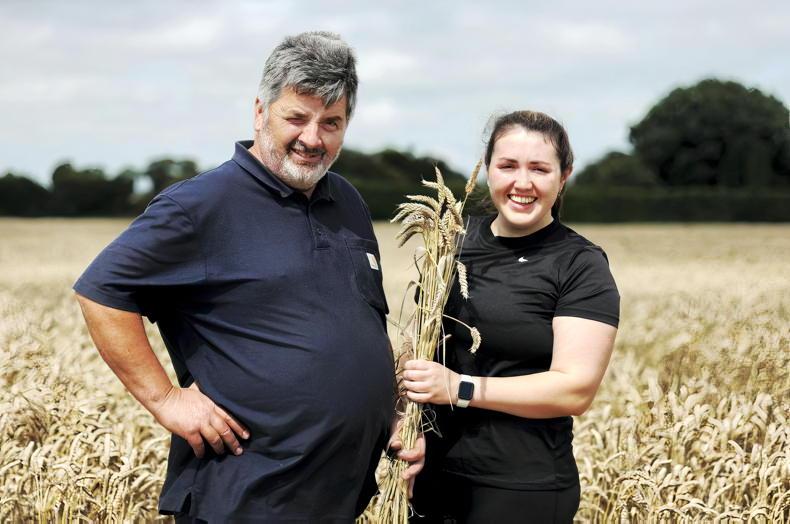
Tom Tierney
Winner of the organic
production category
Kay O’Sullivan, organic beef and sheep farmer, Co Cork
Kay is operating a very efficient organic farm. It is a completely closed system, with all feed grown on the farm. Animals are grazed on the best multispecies swards (ideally reseeds from the previous year) and finished outdoors on red start and red clover silage, with steers finished without concentrates at 19.2 months of age.
All new reseeds on this farm are multispecies swards as well as 15ac of red clover silage. The farm is growing 11.4t DM/ha.
Kay is very proud of the hedges on the farm. She has excellent management of hedgerows and field margins, using alternative methods to synthetic sprays, fertilisers and rodenticide. Hedges are only lightly trimmed every three to four years.
She demonstrates a commendable conscientiousness towards wildlife through willingness to carefully consider next steps in relation to her forestry, which will be due for thinning in the next short while.
Kay is considering minimising the interruption to wildlife in the plantation through selective thinning. Kay also has a lot of bee scrapes for the bees on the farm.
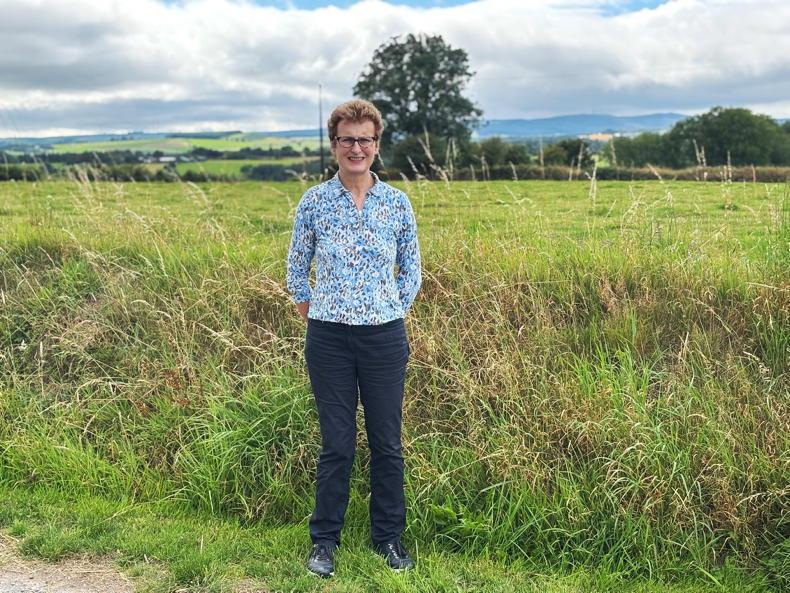
Kay O'Sullivan
Winner of the diversification category
Emer O’Keeffe, organic beef and sheep farmer, Co Cork
Emer O’Keeffe has diversified her farming system to make it more sustainable and also to make a contribution to the local community. The O’Keeffes have achieved this by completing a number of actions.
The farm was converted to organic production three years ago. There has been an emphasis on building infrastructure on the farm (fencing, roadways and housing), as well as a reseeding programme based on incorporating multispecies and clover.
The O’Keeffes have switched some of their land from livestock production to hazelnut production. They have invested in a hazelnut plantation with 250 commercial varieties of hazelnut, which they plan to process and sell locally.
They are direct selling lamb and beef produced on the farm and it is an area that they hope to develop further in the future.
The farm features very well-maintained hedges, demonstrates a great interest and appreciation in and knowledge of on-farm biodiversity, with a proactive attitude toward enhancing habitats. They avoid the use of synthetic sprays, fertilisers, and rodenticides, using alternative, biodiversity-friendly methods.
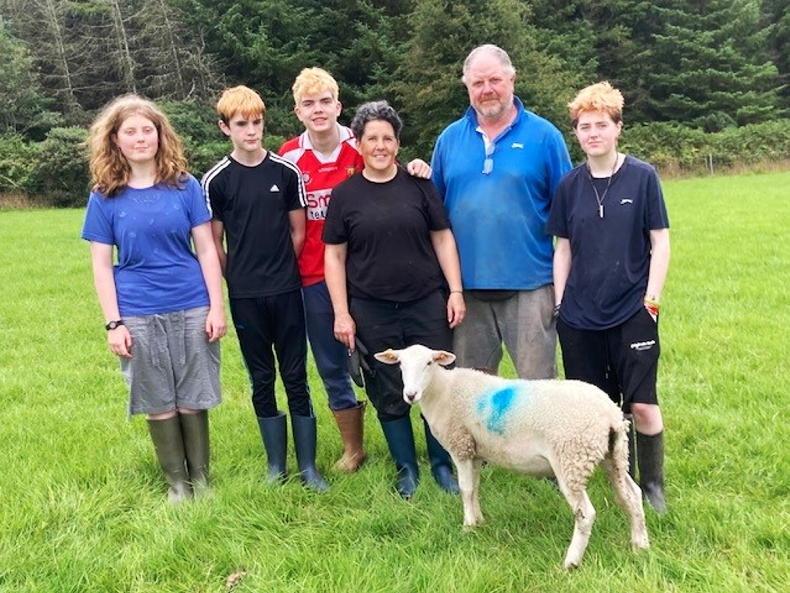
Emer O'Keefe with her family.
Winner of the soil health category
Conor O’Brien, dairy farmer, Co Galway
There has been an emphasis on soil health on this farm for many years. Soil tests show that 34% of this farm has good overall soil fertility = a soil pH of 6.2+, P Index 3+ and K Index 3+. Over 90% of the farm is optimum for soil pH, 56% is Index 3 and 4 for P and 34% is Index 3 and 4 for K.
What actions are taken to
improve soil health?
Conor is very conscious of soil structure and minimising compaction on the farm. He avoids heavy machinery and livestock on the land in difficult conditions.
Conor’s farm includes three contrasting types of grassland: conventionally managed grassland, a low-input grassland and an extensively grazed pasture, with diverse bacteria and fungi in the soil.
This microbial diversity is important for healthy nutrient cycling, soil structure and overall resilience of the farming system.
Conor was involved in a soil health project with Johnstown Castle recently and the evidence from this project is that each of Conor’s fields showed above-average bacterial and fungal abundance.
High microbial abundance indicates an active, living soil system that works with the farmer to grow grass efficiently and sustainably.
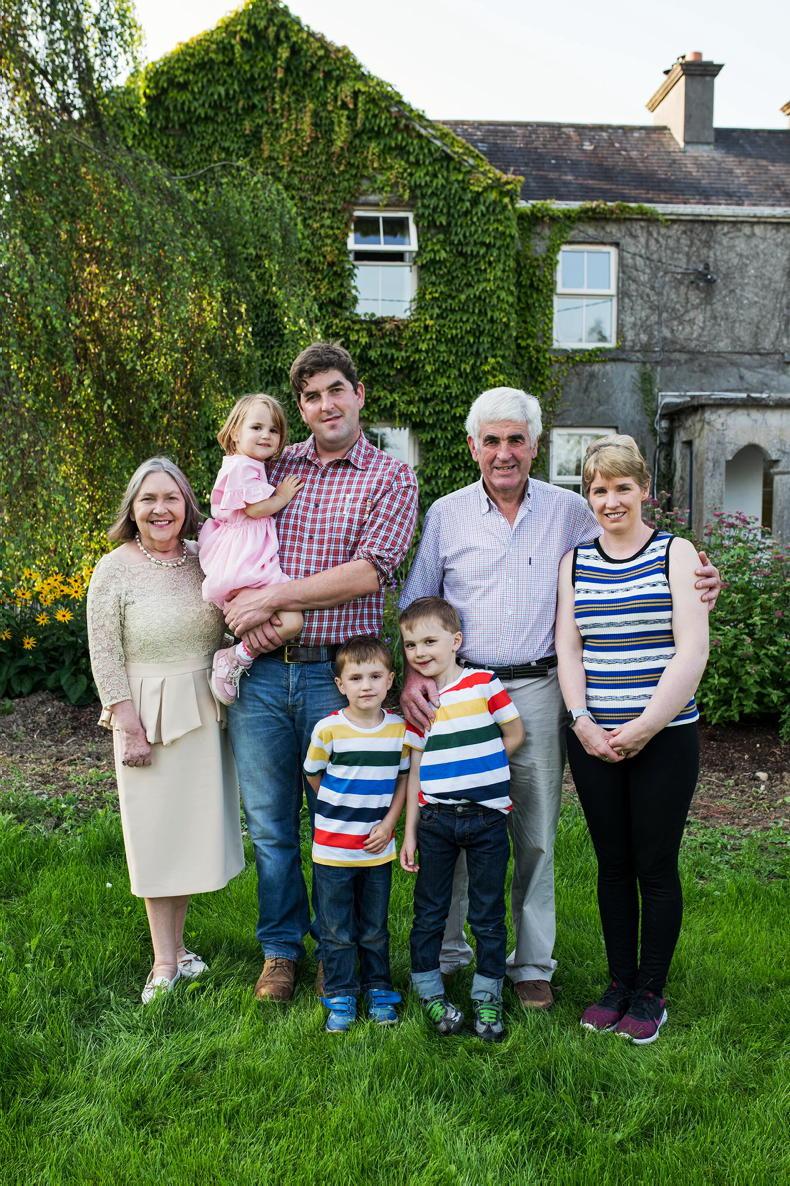
Conor and Vincent O'Brien
Conor and Vincent O'Brien
Overall winner Teagasc FBD environmentally sustainable farmer of the year 2025 and category winner for improving water quality
Don Somers,
tillage farmer, Wexford
Wexford tillage farmer Don Somers has been named the overall winner of the Teagasc FBD Environmental Sustainability Award 2025. He also won the improving water quality category.
Farming in partnership with his uncle Jim in Oylgate, Co Wexford, Don manages 183ha of winter and spring cereals. His practical, science-based approach is improving his land, while helping to keep local rivers clean — something that benefits everyone who values safe drinking water, healthy wildlife and enjoying Ireland’s rivers, lakes, and beaches.
Don knows that what happens on his farm can affect the River Slaney and the sow catchment that most of his farm is in. Don said: “For me, there are economic benefits to protecting water, along with environmental benefits. Nutrients that leave the farm end up somewhere, and if that is in water courses these have to be replaced, and that’s a cost to my farm.”
Don regularly checks soil structure and looks for signs of life, such as earthworms. Over half of his straw is returned to the soil, increasing organic content, bringing life back to the soil and reducing the need for extra fertiliser. Healthy soil acts like a natural filter, alleviating waterlogging, preventing leaching and keeping nutrients where they belong.
He also plants cover crops on fields destined for spring crops. For cover crops, he uses mainly phacelia, clover, linseed and vetch. These cover crops also capture carbon and store it in the soil. These protect the soil over winter and prevent nutrients from being washed away.
The fertiliser plan is based on crop requirements, but offtake from the crop and yield potential are also considered. Yield maps and N-Sensor mean nutrients are applied according to yield potential, not blanket application.
Don no longer uses dairy sludge, due to its smell, lack of organic matter and inconsistent nutrient levels.
Each year, he designs a fertiliser plan based on what crops need and what nutrients are already in the soil. Regular soil testing ensures fertiliser is applied only where required, reducing waste and preventing nutrients from ending up in rivers. The fertiliser plan is based on crop requirements along with expected offtake from the crop and yield potential.
Alongside chemical fertilisers, Don uses organic manures such as poultry litter and farmyard manure. These add valuable organic matter to the soil, helping it retain nutrients and water more effectively. Each batch is tested for nutrient content, and with his own precision spreader and weigh cells, Don applies it accurately and at the right time. This builds soil health and eliminates the risk of run-off.
Modern technology helps Don. GPS mapping and crop sensors guide his fertiliser use, ensuring nutrients go exactly where they’re needed and nowhere else. This targeted approach has cut his chemical nitrogen use by around 20%, reducing costs, lowering GHG emissions, and protecting nearby waterways from nutrient run-off. An N-Sensor means nutrients are applied according to requirements and yield potential and not in a blanket application. A yield monitor on the combine at harvest collects precision yield data maps, which help with decisions on nutrient application in the next year’s crop.
Don has created riparian buffer zones — strips of vegetation along watercourses that trap sediment and nutrients before they reach the river. These areas also provide important habitats for birds, insects and pollinators, supporting wildlife as well as water quality.
Clean water supports drinking supplies, recreation and tourism, and healthy ecosystems. By combining careful planning, technology and a respect for nature, Don is proving that productive farming and clean water can actively go hand in hand.
Don Somers with his family
Winner of the reducing greenhouse gas emissions category
Patrick and Margaret Dollard, dairy beef farmers,
Co Kilkenny
The Dollards have reduced their greenhouse gas emissions on the farm by making a number of changes.
There is an emphasis on soil fertility on the Dollard farm. Over 90% of soils are optimum for phosphorus (P) and 100% of soils have optimum pH levels. They have potassium (K) fixing soils, which makes it difficult to build fertility – so they have gone with a little and often approach and replace what they take off.
This, combined with over 60% of the farm in clover, has allowed chemical N use to be reduced by 20% in the last few years (stocking rate = 190 kg / ha).
In total, 80% of the N applied on the farm is applied as NBPT protected urea.
There is an emphasis on grassland management and silage quality on this farm. Over 80% of the silage is made from surplus bales, keeping grass quality good and making very good-quality silage.
This combined with good genetics and a good health plan has allowed the Dollards to finish steers at on average 21.5 months, with two-thirds of the 185 animals finished every year going to the factory before the second winter, at a carcase weight of 325kg.
Patrick and Margaret Dollard
Winner of the enhancing biodiversity category
Tom Tierney, tillage farmer,
Co Kildare
Tom has made changes on his farm to enhance biodiversity. He has been involved in many nature-based projects over the years, helping to inform his actions.
Hedgerows are well managed, with great examples of treeline hedges on the farm. Topped hedges are managed to exceed 2m in height, allowing for flowering and fruiting.
Tom has 10ha of trees. This forestry will be managed under a continuous cropping forestry type arrangement, allowing the farm to diversify and create a firewood business.
The adoption of continuous cover forestry on the farm is not only benefitting biodiversity, but is also maintaining commercial viability.
There is clear evidence of working with nature on the farm, including the use of Integrated Pest Management (IPM) and an emphasis on encouraging natural predators, reducing reliance on chemical inputs and supporting ecological balance.
He is using compost to help improve soil fertility and below ground biodiversity of his soils. Organic compost (100t) is applied in the spring time, and rotational break crops include beans, oilseed rape and oats.
The thing he is most proud of on the farm is the forestry, adding: “To wake up in the morning and hear the bird song; there’s now a dawn chorus where there previously wasn’t one.”
Tom Tierney
Winner of the organic
production category
Kay O’Sullivan, organic beef and sheep farmer, Co Cork
Kay is operating a very efficient organic farm. It is a completely closed system, with all feed grown on the farm. Animals are grazed on the best multispecies swards (ideally reseeds from the previous year) and finished outdoors on red start and red clover silage, with steers finished without concentrates at 19.2 months of age.
All new reseeds on this farm are multispecies swards as well as 15ac of red clover silage. The farm is growing 11.4t DM/ha.
Kay is very proud of the hedges on the farm. She has excellent management of hedgerows and field margins, using alternative methods to synthetic sprays, fertilisers and rodenticide. Hedges are only lightly trimmed every three to four years.
She demonstrates a commendable conscientiousness towards wildlife through willingness to carefully consider next steps in relation to her forestry, which will be due for thinning in the next short while.
Kay is considering minimising the interruption to wildlife in the plantation through selective thinning. Kay also has a lot of bee scrapes for the bees on the farm.
Kay O'Sullivan
Winner of the diversification category
Emer O’Keeffe, organic beef and sheep farmer, Co Cork
Emer O’Keeffe has diversified her farming system to make it more sustainable and also to make a contribution to the local community. The O’Keeffes have achieved this by completing a number of actions.
The farm was converted to organic production three years ago. There has been an emphasis on building infrastructure on the farm (fencing, roadways and housing), as well as a reseeding programme based on incorporating multispecies and clover.
The O’Keeffes have switched some of their land from livestock production to hazelnut production. They have invested in a hazelnut plantation with 250 commercial varieties of hazelnut, which they plan to process and sell locally.
They are direct selling lamb and beef produced on the farm and it is an area that they hope to develop further in the future.
The farm features very well-maintained hedges, demonstrates a great interest and appreciation in and knowledge of on-farm biodiversity, with a proactive attitude toward enhancing habitats. They avoid the use of synthetic sprays, fertilisers, and rodenticides, using alternative, biodiversity-friendly methods.
Emer O'Keefe with her family.
Winner of the soil health category
Conor O’Brien, dairy farmer, Co Galway
There has been an emphasis on soil health on this farm for many years. Soil tests show that 34% of this farm has good overall soil fertility = a soil pH of 6.2+, P Index 3+ and K Index 3+. Over 90% of the farm is optimum for soil pH, 56% is Index 3 and 4 for P and 34% is Index 3 and 4 for K.
What actions are taken to
improve soil health?
Conor is very conscious of soil structure and minimising compaction on the farm. He avoids heavy machinery and livestock on the land in difficult conditions.
Conor’s farm includes three contrasting types of grassland: conventionally managed grassland, a low-input grassland and an extensively grazed pasture, with diverse bacteria and fungi in the soil.
This microbial diversity is important for healthy nutrient cycling, soil structure and overall resilience of the farming system.
Conor was involved in a soil health project with Johnstown Castle recently and the evidence from this project is that each of Conor’s fields showed above-average bacterial and fungal abundance.
High microbial abundance indicates an active, living soil system that works with the farmer to grow grass efficiently and sustainably.
Conor and Vincent O'Brien
Conor and Vincent O'Brien





SHARING OPTIONS