


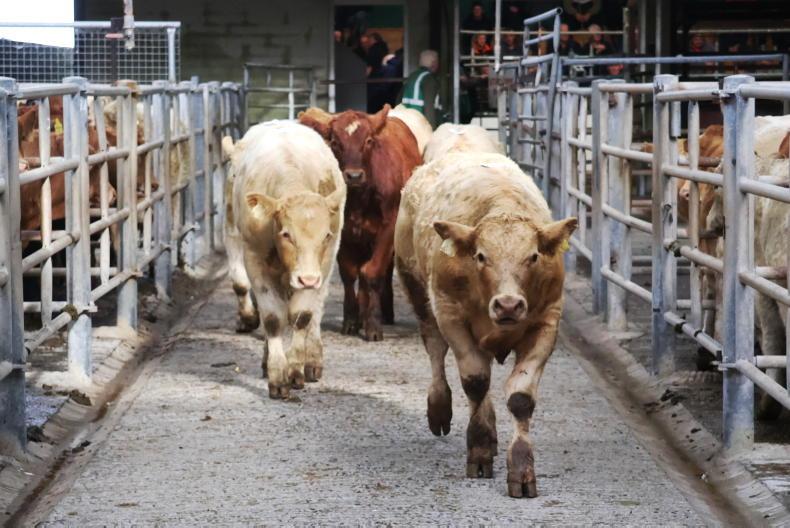
There are more queries being raised in recent weeks from farmers with calves born in the second half of 2025 regarding what they need to do to safeguard payment for the 2026 National Beef Welfare Scheme.
Under the scheme, calves born from 1 July in the previous year to 30 June in the year that the scheme operates are eligible for payment.
For the 2026 scheme year it means calves born from 1 July 2025 to 30 June 2026 are likely to be eligible for payment.
The scheme is unlikely to open again before August with the later opening date for applications timed to facilitate more straightforward administration for the Department, advisers and farmers.
At this stage the maximum number of progeny eligible for payment will be known and farmers can select what numbers they wish to complete actions upon.
While the scheme did not open until August 2025, Minister for Agriculture Martin Heydon announced the actions that were included in the scheme on 22 April 2025.
A similar move is expected in 2026 but in the meantime farmers under time constraints to sell eligible calves can make assumptions on likely actions to be in the best position to maximise the number of calves eligible for payment.
Likely actions
Meal feeding pre- and- post-weaning has been the core action of beef welfare schemes since they were introduced and there is nothing to suggest this will now change.
This has been a mandatory action requiring farmers to supplement calves for a period of at least four weeks pre-weaning and at least two weeks post-weaning.
This is unlikely to be an issue for any farmer at this stage of the year with winter housing diets incorporating meal feeding for calves.
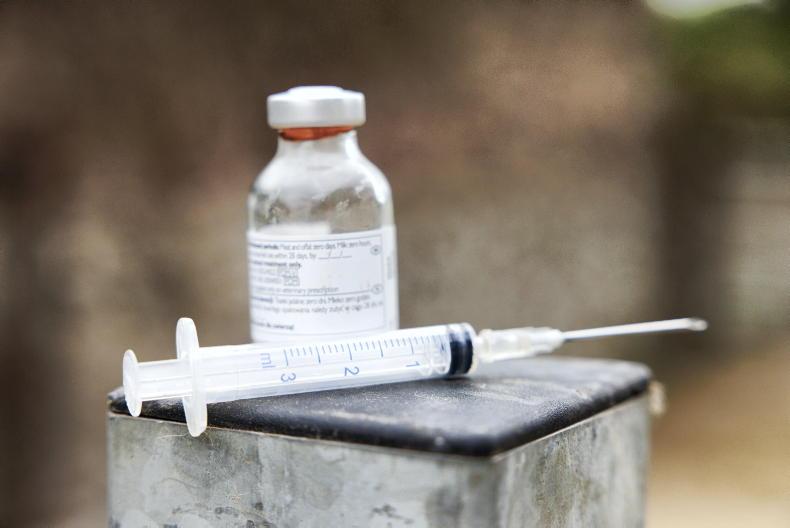
The second component of the scheme in recent years has been optional vaccination strategies with two options available – vaccination to protect against clostridial disease and pneumonia. Scheme terms and conditions have majored on farmers abiding by product guidelines and veterinary advice in terms of the method of administration.
Again, it is not known if vaccination options will change in 2026 but reports indicate both diseases are still being considered. The Irish Natura and Hill Farmers Association (INHFA) are seeking the inclusion of a vaccination option for the bluetongue virus to be included in both the National Beef Welfare Scheme and the National Sheep Welfare Scheme for 2026.
John Joe Fitzgerald, INHFA vice president said: “In relation to covering the cost [of vaccination] the INHFA is calling on the minister and his department to include bluetongue virus (BTV) vaccination as an additional eligible measure under both the SWS and BWS. These schemes have a vaccination option so amending the schemes to include a BTV vaccination is very achievable.”
Third action
The third optional actions included in the scheme in 2025 was faecal egg testing or forage testing.
There is more scope with this action in terms of time constraints as if farmers have not carried out faecal egg testing then the option was still available to complete forage analysis.
It should again be highlighted that there has been no confirmation on these actions being included in the scheme in 2026 but there is more leeway for farmers to wait another few weeks to see what is included.
Payment rates
The payment rate for completing actions in 2026 was reduced according to the Department due to the scheme being oversubscribed. The payment of €35 per head up to 45 calves was unchanged for meal feeding.
The original payment of €15 for vaccination was subsequently reduced from €15 to €12 per eligible calf while the payment of €25/calf for faecal egg testing or forage analysis was reduced from €25 to €20.
This reduced the potential payment from €75 to €67/calf.
The exact budget allocated to the scheme for 2026 has not been stated. In his post-budget address Heydon commented that similar funding had been secured for livestock schemes including the BWS. This suggests that similar funding of €28m has been allocated.
In the absence of further information, it is up to farmers to make up their own minds on the completion of actions. There is a value in completing the actions in terms of reducing the risk of disease and marketing of stock with live exporters seeking weanlings that have been vaccinated for pneumonia.


SHARING OPTIONS