On a quiet lane outside Mullingar, where a couple of horses graze and the wind carries that familiar midlands drizzle, Melanie Downes is quietly building something a little bit different.
There’s no big yard sign, no shiny arena yet. Just a handful of horses, some healthy fields, and a woman who has spent more than two decades figuring out how people work – and how horses can help.
Her business is called Horse Knowing, and at its heart is a simple question: what if spending some time with a horse could help you feel more like yourself again?
For as long as she can remember, horses have been the steady thread running through Melanie Downes’s life. Raised on her family’s National Hunt stud farm in Co Westmeath, she grew up in the rhythm of foaling seasons, mares arriving and leaving, and the kind of childhood where mucking out before school was simply part of the day.
Although Melanie now works full-time with horses and people, she didn’t follow the usual straight line into the equestrian world.
“I actually went to art college,” she says with a smile. “I studied craft design at NCAD. I loved the creative side, but I missed the horses so much, I’d go home every weekend just to get back into the yard.”
At 12, Melanie was sent to boarding school. The daily ease of slipping into a stable or wandering among the mares was suddenly gone. “I didn’t have that refuge anymore,” she reflects. “Horses had been my quiet space. A place where nothing was demanded of me. Losing that felt bigger than I realised at the time.”
A few years later, her family faced the profound loss of her younger brother in an accident while backing a young horse. Melanie doesn’t linger on the details, but she acknowledges the lasting impact. “It shaped me deeply. It changed my relationship with life, but it didn’t break my relationship with horses; if anything, it made me more sure that horses mattered.”
After graduating, she spent over 20 years working as an art director in the film industry. It was fast-paced, creative work: multi-disciplinary teams, long days, high expectations.
“It’s a magical job in lots of ways,” she says. “You’re always somewhere different, building something from nothing, working with all sorts of personalities. But over time, it can be really hard on your system. There’s a lot of ego, a lot of pressure. I started to feel like I needed to do something that felt more useful in the world.
“I chased purpose everywhere – landscape architecture, photojournalism, Chinese medicine, but I never stopped long enough to ask what I needed.”

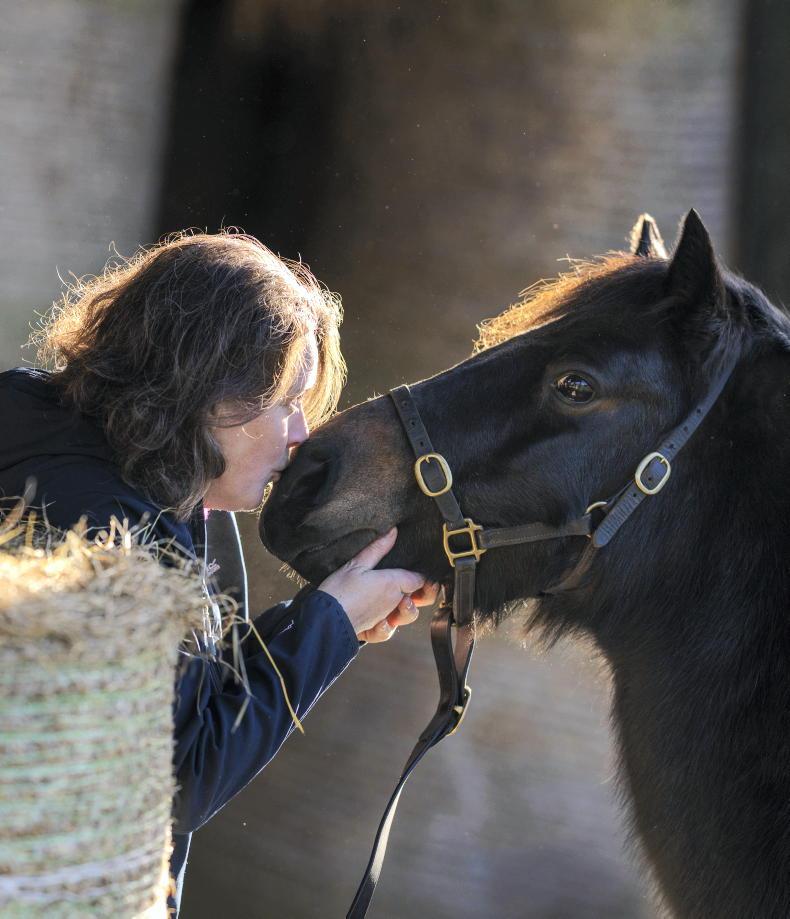
Like many in rural Ireland trying to create something new, the early days of Horse Knowing were a mix of courage, spreadsheets and sheer stubbornness \ Barry Cronin
Autoimmune condition
Her body eventually forced the question. A severe flare-up of an autoimmune condition left her limping upstairs, knees swelling without warning.
Amid all of this, a quiet, persistent feeling began to surface: she needed to come home, not necessarily geographically, but to horses.
“At the time, it felt like I was zig-zagging,” she admits. “Now I can see I was gathering all these pieces I’d eventually bring back to the horses. I’d always had this sense of the healing power of being around them,” she says. “I’d read about equine-assisted work, especially with young people and veterans in the [United] States, and something just clicked.”
She discovered Co Wicklow’s Festina Lente QQI qualification in equine-assisted learning and equine-guided coaching, led by practitioner Jill Carey, and started the application more than once.
“Three years in a row I opened the form,” she smiles. “Two years I didn’t send it. The third year, I finally hit ‘submit’.
“I remember our first practical class with Jill and the horses. Other people were confused or overwhelmed by its emotional depth, but I felt a surge of excitement. I thought: yes. This is exactly what I hoped it would be. I’m finally in the right place.”
She founded Horse Knowing, working initially from Better Together Therapeutic Riding Centre with the support of owner Natalie Carey, who offered both facilities and encouragement.
“Without Natalie’s place, it would have been much harder,” Melanie says. “Having access to a safe, settled environment meant I could start gently – practising with friends, then taking on clients as I qualified. It was a real leg-up.”
Another key figure was Finola Colgan, then with Mental Health Ireland, who spotted Melanie’s potential and slid an application across the table for a Department of Agriculture safety, health and wellbeing project.
“She just said: ‘you need to apply for this,’” Melanie recalls. “She’s been my cheerleader ever since. I genuinely wouldn’t be doing equine assisted learning work with the farming community without her.”
Like many in rural Ireland trying to create something new, the early days of Horse Knowing were a mix of courage, spreadsheets and sheer stubbornness.
“You come out of a great training and then it’s a bit of ‘sink or swim’,” Melanie says. “You’re not just building a practice; you’re building a business at the same time. That’s a lot.”
Melanie describes equine-assisted learning as experiential, somatic and relational, learning by sensing, doing and being.
“Horses model something we’ve forgotten: living fully in the moment. They’re not worrying about yesterday or tomorrow. Their presence helps people settle.
“People might arrive with their heads buzzing – deadlines, family, the farm, everything. But if you’re noticing, is the horse standing on three legs or four? Is his breathing slow or fast? What’s he looking at? You can’t also be in tomorrow’s worries. You’re here. Now.”
Over time, Melanie sees people begin to recognise their own patterns.
“Horses are brilliant at reflecting how we show up,” she explains. “If someone struggles with boundaries, you’ll often see it in how they let a horse crowd them – or how hard it is to ask for space. When they finally find a clear, grounded ‘no’, the horse usually responds instantly. That experience lands in the body in a way a conversation alone can’t.

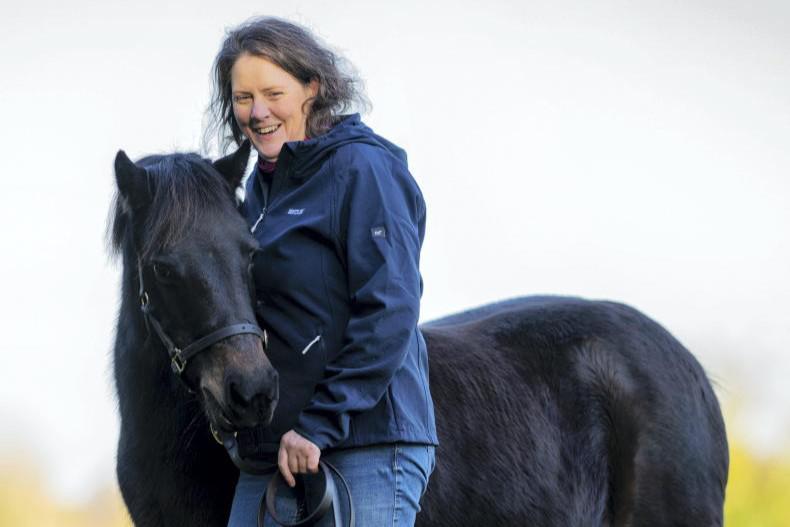
Melanie Downes of Horse Knowing photographed with Jessie at the yard. \ Barry Cronin
“I assumed I’d be tiptoeing along for a while,” she says. “Instead, the people who turned up were dealing with real, serious stuff – anxiety, overwhelm, grief, burnout. And they were willing to try something different.”
Some clients simply sat quietly with a horse for 20 minutes before speaking. She tells the story of a teenage participant receiving support through mental health services.
“Some days, she didn’t have the capacity for much. I’d invite her to sit with a horse, wrapped in a blanket. One day, a horse made a beeline and simply stood with her. Moments like that can be life-changing.”
One woman with long-standing anxiety transformed over eight weeks.
“She started getting out of bed early, joined a local dancing group, enrolled in a computer class… She told me she finally had the confidence to be around people again.”
A parent of a neurodiverse child discovered that the “busy household” energy at home mirrored her own internal pressure.
“By watching how horses regulate themselves, she realised she needed more quiet space, and when she regulated herself, her kids followed.”
Melanie’s recent groundbreaking Department of Agriculture-funded Equine Guided Mental Wellbeing Coaching Programme worked with farmers, farm families, and those supporting the agri sector. Participants ranged from age 13 to 73.
“I’m often asked what’s unique about farmers’ mental health – but honestly, their challenges are the same as everyone else’s: loneliness, overwhelm, boundaries, confidence, relationships. They just carry it in a different environment.”
Still, the fact that the work is outdoors, practical and with animals opens doors that office-based coaching or therapy cannot. Melanie measured statistically significant improvements. Participant wellbeing increased across all areas, including a 74% increase in participants’ feeling calm and relaxed and 79% reporting a decrease or substantial decrease in anxiety.
See horseknowing.com.
On a quiet lane outside Mullingar, where a couple of horses graze and the wind carries that familiar midlands drizzle, Melanie Downes is quietly building something a little bit different.
There’s no big yard sign, no shiny arena yet. Just a handful of horses, some healthy fields, and a woman who has spent more than two decades figuring out how people work – and how horses can help.
Her business is called Horse Knowing, and at its heart is a simple question: what if spending some time with a horse could help you feel more like yourself again?
For as long as she can remember, horses have been the steady thread running through Melanie Downes’s life. Raised on her family’s National Hunt stud farm in Co Westmeath, she grew up in the rhythm of foaling seasons, mares arriving and leaving, and the kind of childhood where mucking out before school was simply part of the day.
Although Melanie now works full-time with horses and people, she didn’t follow the usual straight line into the equestrian world.
“I actually went to art college,” she says with a smile. “I studied craft design at NCAD. I loved the creative side, but I missed the horses so much, I’d go home every weekend just to get back into the yard.”
At 12, Melanie was sent to boarding school. The daily ease of slipping into a stable or wandering among the mares was suddenly gone. “I didn’t have that refuge anymore,” she reflects. “Horses had been my quiet space. A place where nothing was demanded of me. Losing that felt bigger than I realised at the time.”
A few years later, her family faced the profound loss of her younger brother in an accident while backing a young horse. Melanie doesn’t linger on the details, but she acknowledges the lasting impact. “It shaped me deeply. It changed my relationship with life, but it didn’t break my relationship with horses; if anything, it made me more sure that horses mattered.”
After graduating, she spent over 20 years working as an art director in the film industry. It was fast-paced, creative work: multi-disciplinary teams, long days, high expectations.
“It’s a magical job in lots of ways,” she says. “You’re always somewhere different, building something from nothing, working with all sorts of personalities. But over time, it can be really hard on your system. There’s a lot of ego, a lot of pressure. I started to feel like I needed to do something that felt more useful in the world.
“I chased purpose everywhere – landscape architecture, photojournalism, Chinese medicine, but I never stopped long enough to ask what I needed.”
Like many in rural Ireland trying to create something new, the early days of Horse Knowing were a mix of courage, spreadsheets and sheer stubbornness \ Barry Cronin
Autoimmune condition
Her body eventually forced the question. A severe flare-up of an autoimmune condition left her limping upstairs, knees swelling without warning.
Amid all of this, a quiet, persistent feeling began to surface: she needed to come home, not necessarily geographically, but to horses.
“At the time, it felt like I was zig-zagging,” she admits. “Now I can see I was gathering all these pieces I’d eventually bring back to the horses. I’d always had this sense of the healing power of being around them,” she says. “I’d read about equine-assisted work, especially with young people and veterans in the [United] States, and something just clicked.”
She discovered Co Wicklow’s Festina Lente QQI qualification in equine-assisted learning and equine-guided coaching, led by practitioner Jill Carey, and started the application more than once.
“Three years in a row I opened the form,” she smiles. “Two years I didn’t send it. The third year, I finally hit ‘submit’.
“I remember our first practical class with Jill and the horses. Other people were confused or overwhelmed by its emotional depth, but I felt a surge of excitement. I thought: yes. This is exactly what I hoped it would be. I’m finally in the right place.”
She founded Horse Knowing, working initially from Better Together Therapeutic Riding Centre with the support of owner Natalie Carey, who offered both facilities and encouragement.
“Without Natalie’s place, it would have been much harder,” Melanie says. “Having access to a safe, settled environment meant I could start gently – practising with friends, then taking on clients as I qualified. It was a real leg-up.”
Another key figure was Finola Colgan, then with Mental Health Ireland, who spotted Melanie’s potential and slid an application across the table for a Department of Agriculture safety, health and wellbeing project.
“She just said: ‘you need to apply for this,’” Melanie recalls. “She’s been my cheerleader ever since. I genuinely wouldn’t be doing equine assisted learning work with the farming community without her.”
Like many in rural Ireland trying to create something new, the early days of Horse Knowing were a mix of courage, spreadsheets and sheer stubbornness.
“You come out of a great training and then it’s a bit of ‘sink or swim’,” Melanie says. “You’re not just building a practice; you’re building a business at the same time. That’s a lot.”
Melanie describes equine-assisted learning as experiential, somatic and relational, learning by sensing, doing and being.
“Horses model something we’ve forgotten: living fully in the moment. They’re not worrying about yesterday or tomorrow. Their presence helps people settle.
“People might arrive with their heads buzzing – deadlines, family, the farm, everything. But if you’re noticing, is the horse standing on three legs or four? Is his breathing slow or fast? What’s he looking at? You can’t also be in tomorrow’s worries. You’re here. Now.”
Over time, Melanie sees people begin to recognise their own patterns.
“Horses are brilliant at reflecting how we show up,” she explains. “If someone struggles with boundaries, you’ll often see it in how they let a horse crowd them – or how hard it is to ask for space. When they finally find a clear, grounded ‘no’, the horse usually responds instantly. That experience lands in the body in a way a conversation alone can’t.
Melanie Downes of Horse Knowing photographed with Jessie at the yard. \ Barry Cronin
“I assumed I’d be tiptoeing along for a while,” she says. “Instead, the people who turned up were dealing with real, serious stuff – anxiety, overwhelm, grief, burnout. And they were willing to try something different.”
Some clients simply sat quietly with a horse for 20 minutes before speaking. She tells the story of a teenage participant receiving support through mental health services.
“Some days, she didn’t have the capacity for much. I’d invite her to sit with a horse, wrapped in a blanket. One day, a horse made a beeline and simply stood with her. Moments like that can be life-changing.”
One woman with long-standing anxiety transformed over eight weeks.
“She started getting out of bed early, joined a local dancing group, enrolled in a computer class… She told me she finally had the confidence to be around people again.”
A parent of a neurodiverse child discovered that the “busy household” energy at home mirrored her own internal pressure.
“By watching how horses regulate themselves, she realised she needed more quiet space, and when she regulated herself, her kids followed.”
Melanie’s recent groundbreaking Department of Agriculture-funded Equine Guided Mental Wellbeing Coaching Programme worked with farmers, farm families, and those supporting the agri sector. Participants ranged from age 13 to 73.
“I’m often asked what’s unique about farmers’ mental health – but honestly, their challenges are the same as everyone else’s: loneliness, overwhelm, boundaries, confidence, relationships. They just carry it in a different environment.”
Still, the fact that the work is outdoors, practical and with animals opens doors that office-based coaching or therapy cannot. Melanie measured statistically significant improvements. Participant wellbeing increased across all areas, including a 74% increase in participants’ feeling calm and relaxed and 79% reporting a decrease or substantial decrease in anxiety.
See horseknowing.com.





SHARING OPTIONS