As the fields turn heavy underfoot and the days seem to shrink by the minute, it’s time for the animals to come in from the fields. For anyone working with horses, the rhythm of life changes with the season and for many breeders, producers and riders alike, the workload gets heavier as the days shorten.
Before you find yourself knee-deep in mud and running on fumes, it’s worth thinking about how to look after both your body and mind this winter. Working on a yard or farm is hard graft all year round, but the cold months bring a new kind of strain. You’re lifting heavy hay nets with cold-stiffened fingers, pushing barrows through mud, and riding in layers that weigh as much as a small pony. It’s no wonder so many of us end up with aching backs and pulled shoulders by February.
The trick is to treat yourself like one of your horses. You wouldn’t bring a horse in from the field and expect it to go straight into a flatwork session without a warm-up, would you? The same goes for you.
Roll your shoulders, twist your torso, and stretch your legs: even a little movement loosens the joints and wakes up the muscles. It might feel silly at first, but your body will thank you when you’re not hobbling after a long day.
Keeping warm is another form of self-care. Layering is key, but so is the right layering. Breathable base layers that wick sweat away make all the difference when you’re alternating between freezing air and steaming stables.
Invest in thermal socks, decent gloves, and waterproofs that actually repel rain rather than absorb it. Think of it as tack for your body – functional, durable, and well-fitted. You can’t beat a pair of pure wool socks and good-quality leather boots to stop the old rubber welly frozen feet.
Nutrition matters too. Yard life often runs on tea, biscuits, and whatever you can grab between mucking out and turning out. But just as your horses need the right feed balance, so do you. Protein and complex carbohydrates keep you going far better than sugar highs and caffeine crashes. Get the porridge into you in the morning.
Batch-cook if you can, even buy yourself a slow-cooker – soups and stews are your winter allies and can be waiting for you warm and ready when you come in. And hydrate. Even in the cold. You might not feel thirsty, but dehydration sneaks up easily when you’re outside all day.
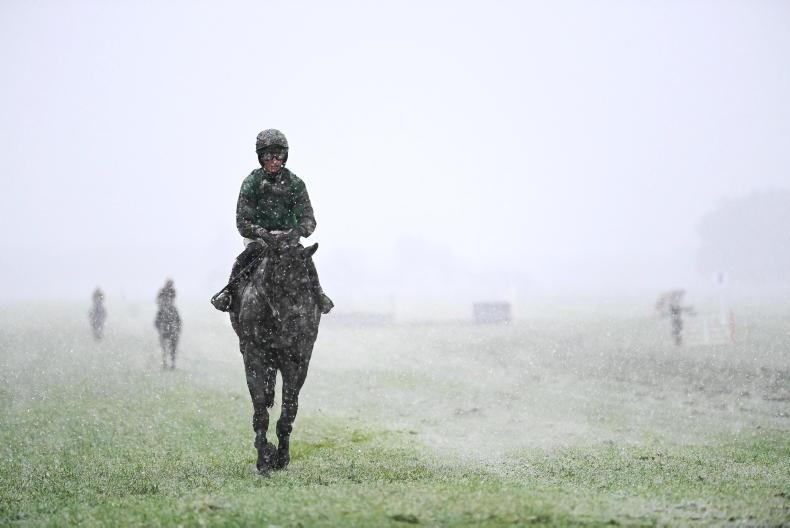
Breathable base layers that wick sweat away make all the difference when you’re alternating between freezing air and steaming stables. \ Healy Racing
Pressure to keep going
Physical fatigue is one thing, but winter also tests the mind. The long nights, endless grey, and constant damp can wear anyone down, especially when your job rarely allows for a day indoors. Many equine workers are self-employed, and the pressure to keep going, to not let anyone or any horse down, can feel relentless.
The first thing to remember is that tiredness is not weakness. Burnout in the equine world is a quiet epidemic.
It doesn’t arrive with fanfare, it creeps in slowly, disguised as irritability, loss of motivation, or that numb sense of just getting through the motions. If you start to feel this way, it’s not a failure; it’s a signal. Make sure and listen to that signal. Why not give yourself 10 minutes in the car with a coffee and no phone before the afternoon round? Small moments like these can protect and restore your energy.
Connection helps too. It’s easy to feel isolated in rural work, especially when you arrive and leave the yard in the dark and perhaps go home to more silence. Make a point of chatting to others in the industry, whether it’s a friendly text exchange with another groom or catching up at a feed delivery. Real conversation keeps perspective alive.
If you’re lucky enough to have colleagues, notice when someone seems quieter than usual. Check in. A simple “How are you doing?” can go a long way.And don’t underestimate rest. Horses are given days off, humans should take them too. Even if you can’t spare a full weekend, carve out a few hours where you are not on call, not scrolling through horse ads, and not washing numnahs. The yard will still be there when you return and you’ll handle it better for the pause.
Interestingly, winter can also offer moments of deep peace if you let it. Most of us recognise those early mornings when the world is quiet and the horses’ breath curls into the air. It’s easy to rush through, ticking off jobs, but try to notice these moments.
It can be argued that working with horses is, in itself, a form of mindfulness. Horses don’t care about the weather forecast or the electricity bill; they respond to how present we are. When you slow down enough to match their rhythm, it can ease anxiety in ways few therapies can. If the darker months bring real mental strain; anxiety, depression, or exhaustion, don’t face it alone. Organisations like Mental Health Ireland (mentalhealthireland.ie), SpunOut (spunout.ie) for18-25s and AwareNI (aware-ni.org) are all there to help and advise if you’re struggling.
Speaking up doesn’t make you less resilient; it really is the ultimate act of self-respect.
Winter on a horse yard is a test, yes, but it’s also a teacher. It reminds us to be resourceful, to look after our bodies as well as our horses, and to find beauty in the small, steady rituals of care. When the spring light finally lengthens the days again, you’ll feel stronger for having tended to yourself as carefully as you do to your horses.
As the fields turn heavy underfoot and the days seem to shrink by the minute, it’s time for the animals to come in from the fields. For anyone working with horses, the rhythm of life changes with the season and for many breeders, producers and riders alike, the workload gets heavier as the days shorten.
Before you find yourself knee-deep in mud and running on fumes, it’s worth thinking about how to look after both your body and mind this winter. Working on a yard or farm is hard graft all year round, but the cold months bring a new kind of strain. You’re lifting heavy hay nets with cold-stiffened fingers, pushing barrows through mud, and riding in layers that weigh as much as a small pony. It’s no wonder so many of us end up with aching backs and pulled shoulders by February.
The trick is to treat yourself like one of your horses. You wouldn’t bring a horse in from the field and expect it to go straight into a flatwork session without a warm-up, would you? The same goes for you.
Roll your shoulders, twist your torso, and stretch your legs: even a little movement loosens the joints and wakes up the muscles. It might feel silly at first, but your body will thank you when you’re not hobbling after a long day.
Keeping warm is another form of self-care. Layering is key, but so is the right layering. Breathable base layers that wick sweat away make all the difference when you’re alternating between freezing air and steaming stables.
Invest in thermal socks, decent gloves, and waterproofs that actually repel rain rather than absorb it. Think of it as tack for your body – functional, durable, and well-fitted. You can’t beat a pair of pure wool socks and good-quality leather boots to stop the old rubber welly frozen feet.
Nutrition matters too. Yard life often runs on tea, biscuits, and whatever you can grab between mucking out and turning out. But just as your horses need the right feed balance, so do you. Protein and complex carbohydrates keep you going far better than sugar highs and caffeine crashes. Get the porridge into you in the morning.
Batch-cook if you can, even buy yourself a slow-cooker – soups and stews are your winter allies and can be waiting for you warm and ready when you come in. And hydrate. Even in the cold. You might not feel thirsty, but dehydration sneaks up easily when you’re outside all day.
Breathable base layers that wick sweat away make all the difference when you’re alternating between freezing air and steaming stables. \ Healy Racing
Pressure to keep going
Physical fatigue is one thing, but winter also tests the mind. The long nights, endless grey, and constant damp can wear anyone down, especially when your job rarely allows for a day indoors. Many equine workers are self-employed, and the pressure to keep going, to not let anyone or any horse down, can feel relentless.
The first thing to remember is that tiredness is not weakness. Burnout in the equine world is a quiet epidemic.
It doesn’t arrive with fanfare, it creeps in slowly, disguised as irritability, loss of motivation, or that numb sense of just getting through the motions. If you start to feel this way, it’s not a failure; it’s a signal. Make sure and listen to that signal. Why not give yourself 10 minutes in the car with a coffee and no phone before the afternoon round? Small moments like these can protect and restore your energy.
Connection helps too. It’s easy to feel isolated in rural work, especially when you arrive and leave the yard in the dark and perhaps go home to more silence. Make a point of chatting to others in the industry, whether it’s a friendly text exchange with another groom or catching up at a feed delivery. Real conversation keeps perspective alive.
If you’re lucky enough to have colleagues, notice when someone seems quieter than usual. Check in. A simple “How are you doing?” can go a long way.And don’t underestimate rest. Horses are given days off, humans should take them too. Even if you can’t spare a full weekend, carve out a few hours where you are not on call, not scrolling through horse ads, and not washing numnahs. The yard will still be there when you return and you’ll handle it better for the pause.
Interestingly, winter can also offer moments of deep peace if you let it. Most of us recognise those early mornings when the world is quiet and the horses’ breath curls into the air. It’s easy to rush through, ticking off jobs, but try to notice these moments.
It can be argued that working with horses is, in itself, a form of mindfulness. Horses don’t care about the weather forecast or the electricity bill; they respond to how present we are. When you slow down enough to match their rhythm, it can ease anxiety in ways few therapies can. If the darker months bring real mental strain; anxiety, depression, or exhaustion, don’t face it alone. Organisations like Mental Health Ireland (mentalhealthireland.ie), SpunOut (spunout.ie) for18-25s and AwareNI (aware-ni.org) are all there to help and advise if you’re struggling.
Speaking up doesn’t make you less resilient; it really is the ultimate act of self-respect.
Winter on a horse yard is a test, yes, but it’s also a teacher. It reminds us to be resourceful, to look after our bodies as well as our horses, and to find beauty in the small, steady rituals of care. When the spring light finally lengthens the days again, you’ll feel stronger for having tended to yourself as carefully as you do to your horses.





SHARING OPTIONS