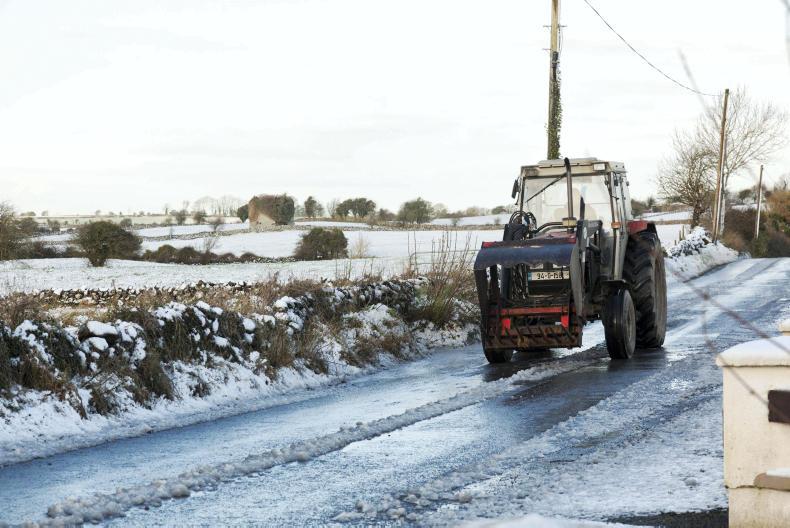
With severe frosts forecast this evening and temperatures to drop below freezing, to lows of -6°C, have you taken precautions to ensure your milking machine and shed drinkers won't freeze?
For winter/liquid herds or those one not yet dried off, it is crucial that the milking machine is firing. Here are some top tips to ensure that the herd can be milked:
Make sure that all doors into the parlour are kept closed.
Install a thermostatically controlled heater or red lamp in the plant room which should cut in when the temperature falls to 0°C.
Let the machine run a little bit longer to ensure that all excess water is removed from the plant after the final rinse. Open the machine at the low points, particularly at the fitter sock. Some machines may also have a drain at the base of the receiver jar.
Remove the jetters from the claw pieces and let them hang down.
ADVERTISEMENT
Circulate a saline solution through the milking machine, having first made sure that all the detergent has been rinsed out of the plant. The saline (salt) solution is made by mixing 0.5kg of salt in five gallons of water. Salt will drop the freezing point of water. Rinse before milking to remove salt traces. If the rinse is inclined to freeze, start milking without rinsing and let the first few gallons go to waste or feed to calves.
Diaphragm milk pumps can also cause problems. Open the locking nuts to allow any excess water to escape or alternatively place an infra-red light over it.
Most parlours have no back door but in cold weather some will install a temporary cover that can be pulled down at night time.
Some farmers will have blow heaters in parlours on timed clocks but safety must be the priority.
Yards should be salted in advance and in the morning and many farms will cut down the space in the yard available for walking so cows are not walking over the full yard as per normal.
Many farmers will create channels that can be properly salted with strip wires from sheds to parlour to create a boundary.
The machine should be designed in such a way that it drains easily.
Frozen pipes
Where there is an on-farm supply from a deep well, the deep submersible pump should not freeze but pipes and fittings from the pump to the pressure vessel (tank) and from there to the sheds need to be kept free of ice.
Have a thermostatically controlled fan heater or red lamp in the pump-house.
Any exposed pipes should be insulated.
In very low temperatures, pipes may freeze at the entrance to the shed and inside the shed in the supply to the troughs. In such situations, even when thawed out they are likely to freeze again. The supply pipe to the troughs could be extended on further out of the house to a tap. This tap can be left to run at a low rate to keep water flowing where there is an on-farm supply source. This option cannot be used if the water is supplied by the local authority or group scheme.
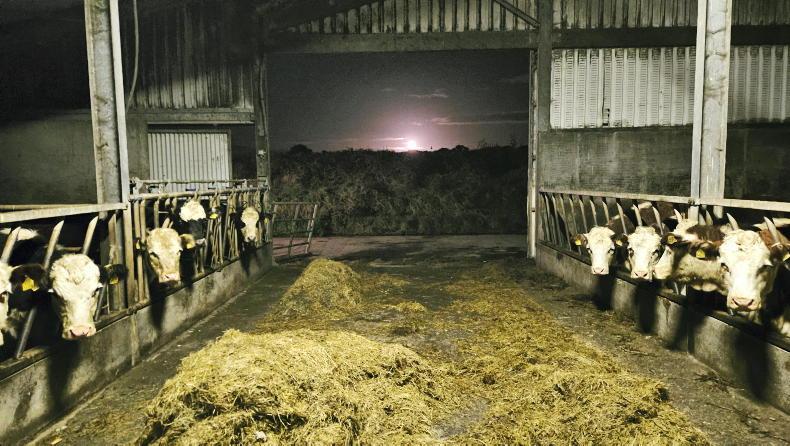
Milking cows must have access to drinking water at all times. A cow producing 20 litres of milk and being fed a silage-based diet requires 75 to 90 litres of water per day.
Finishing animals on high levels of dry feed, such as high concentrate diets, have a big demand for water. These animals should always have free access to water. An animal consuming 10kg dry matter of dry feed will need 60 litres of water daily.
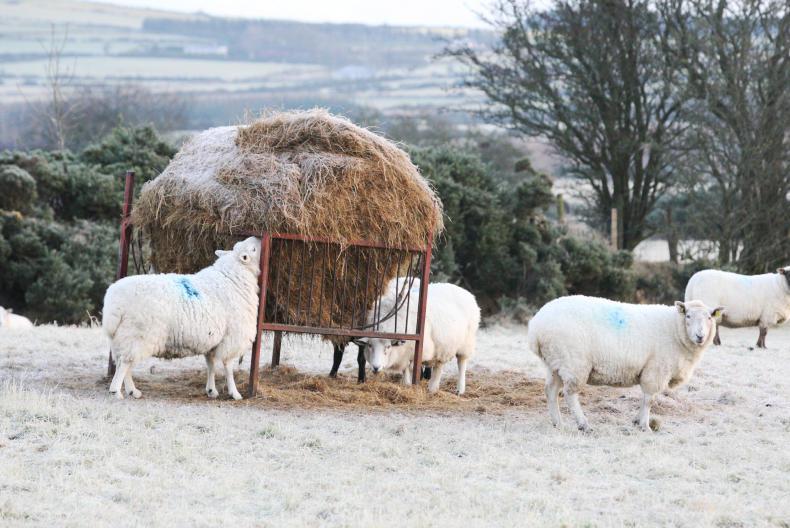
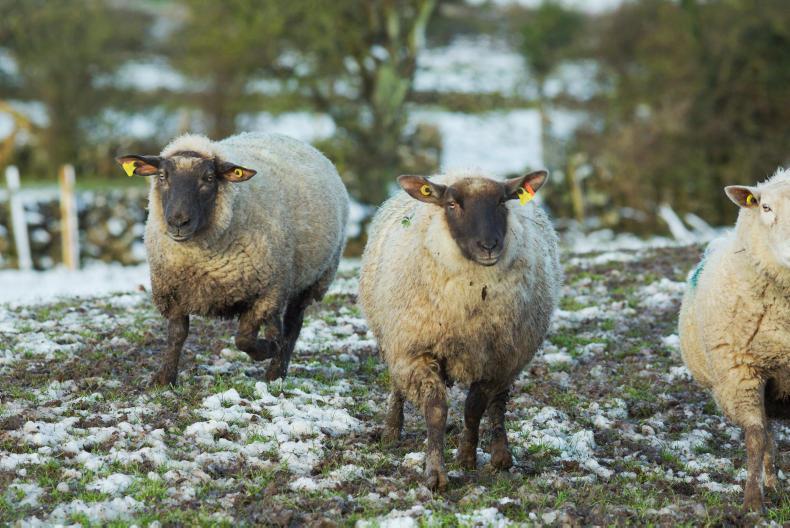
Sheep
Ewes in early and late pregnancy have higher energy requirements than those in mid-pregnancy.
Ewes in early and late pregnancy should get a supply of hay or silage and about 0.5 kg meal/day where there is a blanket of snow and no grass available.
Ewes in mid-pregnancy will get adequate energy from hay or silage, fed to appetite.
Sheep need access to water where dry feeds (hay/meal) are fed. Introduce meal gradually to avoid acidosis.
Tips courtesy of www.winterready.ie and the Irish Farmers Journal specialist team
This content is available to digital subscribers and loyalty code users only. Sign in to your account, use the code or subscribe to get unlimited access.
However, if you would like to share the information in this article, you may use the headline, summary and link below:
Title: Is your farm ready for severe frost?
With severe frosts forecast this evening and temperatures to drop below freezing, to lows of -6°C, have you taken precautions to ensure your milking machine and shed drinkers won't freeze?
The reader loyalty code gives you full access to the site from when you enter it until the following Wednesday at 9pm. Find your unique code on the back page of Irish Country Living every week.
CODE ACCEPTED
You have full access to the site until next Wednesday at 9pm.
CODE NOT VALID
Please try again or contact support.
Milking herds
For winter/liquid herds or those one not yet dried off, it is crucial that the milking machine is firing. Here are some top tips to ensure that the herd can be milked:
Make sure that all doors into the parlour are kept closed.
Install a thermostatically controlled heater or red lamp in the plant room which should cut in when the temperature falls to 0°C.
Let the machine run a little bit longer to ensure that all excess water is removed from the plant after the final rinse. Open the machine at the low points, particularly at the fitter sock. Some machines may also have a drain at the base of the receiver jar.
Remove the jetters from the claw pieces and let them hang down.
Circulate a saline solution through the milking machine, having first made sure that all the detergent has been rinsed out of the plant. The saline (salt) solution is made by mixing 0.5kg of salt in five gallons of water. Salt will drop the freezing point of water. Rinse before milking to remove salt traces. If the rinse is inclined to freeze, start milking without rinsing and let the first few gallons go to waste or feed to calves.
Diaphragm milk pumps can also cause problems. Open the locking nuts to allow any excess water to escape or alternatively place an infra-red light over it.
Most parlours have no back door but in cold weather some will install a temporary cover that can be pulled down at night time.
Some farmers will have blow heaters in parlours on timed clocks but safety must be the priority.
Yards should be salted in advance and in the morning and many farms will cut down the space in the yard available for walking so cows are not walking over the full yard as per normal.
Many farmers will create channels that can be properly salted with strip wires from sheds to parlour to create a boundary.
The machine should be designed in such a way that it drains easily.
Frozen pipes
Where there is an on-farm supply from a deep well, the deep submersible pump should not freeze but pipes and fittings from the pump to the pressure vessel (tank) and from there to the sheds need to be kept free of ice.
Have a thermostatically controlled fan heater or red lamp in the pump-house.
Any exposed pipes should be insulated.
In very low temperatures, pipes may freeze at the entrance to the shed and inside the shed in the supply to the troughs. In such situations, even when thawed out they are likely to freeze again. The supply pipe to the troughs could be extended on further out of the house to a tap. This tap can be left to run at a low rate to keep water flowing where there is an on-farm supply source. This option cannot be used if the water is supplied by the local authority or group scheme.
Milking cows must have access to drinking water at all times. A cow producing 20 litres of milk and being fed a silage-based diet requires 75 to 90 litres of water per day.
Finishing animals on high levels of dry feed, such as high concentrate diets, have a big demand for water. These animals should always have free access to water. An animal consuming 10kg dry matter of dry feed will need 60 litres of water daily.
Sheep
Ewes in early and late pregnancy have higher energy requirements than those in mid-pregnancy.
Ewes in early and late pregnancy should get a supply of hay or silage and about 0.5 kg meal/day where there is a blanket of snow and no grass available.
Ewes in mid-pregnancy will get adequate energy from hay or silage, fed to appetite.
Sheep need access to water where dry feeds (hay/meal) are fed. Introduce meal gradually to avoid acidosis.
Tips courtesy of www.winterready.ie and the Irish Farmers Journal specialist team
If you would like to speak to a member of our team, please call us on 01-4199525.
Link sent to your email address
We have sent an email to your address. Please click on the link in this email to reset your password. If you can't find it in your inbox, please check your spam folder. If you can't find the email, please call us on 01-4199525.
ENTER YOUR LOYALTY CODE:
The reader loyalty code gives you full access to the site from when you enter it until the following Wednesday at 9pm. Find your unique code on the back page of Irish Country Living every week.








SHARING OPTIONS