The land market had a steady 2025, and the supply of land for sale was broadly similar to the year before. Average prices paid for farmland rose by 3% to €12,876/ac. That was pretty much the outcome that was expected by auctioneers and others involved in the business.
At the start of the year dairy farmers were coming off a period of high milk prices and high incomes. With uncertainty about the future of the nitrates derogation, dairy farmers had the appetite and the means to purchase more land when it came up for sale. Confidence was high.
Dairy farmers went on to be key buyers of land in 2025. This was especially the case, but not limited to Munster. Wherever there was milk being produced, there were dairy farmers keen to buy land to future proof their business.
The year started off relatively quiet. The number of farms put up for sale was low, similar to the previous year. As the year moved on, beef and cattle prices got higher and higher, giving a welcome boost to incomes of suckler farmers. This new-found confidence could impact the land market in 2026.
An entirely different group of farmers were key buyers of land in 2025. These were the part-timers who have a good income from off the farm. They are benefitting from the strength of the general Irish economy and the availability of jobs.
Milk prices then weakened significantly in the latter months of the year. There is concern now among a lot of auctioneers about whether dairy farmers will be in a position to compete for land to the same extent in 2026.
The many options open to farmers’ sons and daughters are creating a problem of succession. Young people who have learned a trade or are graduating from college can often earn much more from this career direction than from going home to farm.
Business people and non-farmers have been active buyers of farmland in recent years. However, the non-farmer buyer, which would include investors and business owners, had suffered a setback. The rules on taxation of income from long-term leasing changed. As the year went on, it became clear that the rule change was discouraging business-type buyers from competing for land. “They were pushed out of the market,” one auctioneer commented.
Another group is farmers who sold land for development at the edge of towns or for roads. They continued to be active buyers in 2025.
There was also economic uncertainty. Much of this originated from the USA where, after he took office in January 2025, it quickly became clear that US President Donald Trump was determined to tear up the rule book.
The supply of farms for sale picked up from mid-summer. Good properties sold well, but it was noticeable that few new price records were being set. The big prices were generally similar to those of the last two years. A number of auctioneers commented to us that while farms got sold and good prices were agreed, it was more of a struggle in 2025. The money was there among buyers, but there was less urgency to buy – or perhaps less confidence.
The most talked about farm of the year was the 813ac Rockwell Farm, a working dairy farm in Co Tipperary. A sale was agreed by year end, but not officially confirmed. The buyers are business people as against full-time farmers.
The average price by year end was €12,867/ac. This was an increase of 3%, or €361/ac, on the average in 2024. It’s useful to look back at the trend of the past decade. Land prices were stable in the five years to 2020, hovering around €9,000/ac. The average price rose in 2020 and again in 2021. Since then, it has remained quite stable since, around €12,500/ac. In Northern Ireland, prices have been growing more steadily.
Around the average price, we have seen the spread of prices from highest to lowest widen. Good farmland in sought after locations can now make €18,000/ac to €20,000/ac in many counties. Plain land not suited or eligible for forestry planting can sell between €2,000/ac and €3,000/ac.
As usual, there were price movements between counties in 2025. Average prices rose in Kilkenny, Cork, Carlow, Louth, Monaghan, Roscommon and Wicklow. Prices fell in Waterford, Westmeath, Limerick and Laois.
These movements can reflect the run of properties that are put up for sale on any given year – a few prime farms fetching high prices can move the county average. Often if prices spike aggresively upwards in a county one year, it can drop back a bit the following year.
In 2025, the dearest land was in Co Dublin, at €26,129/ac. That’s more than double the national average. You would have to admire the farmers in the north and south of the county who buy land at such prices to grow crops and keep livestock. That’s if they can get ahead of the business person.
Next dearest was Louth and Meath, at over €18,000/ac. Pushing up prices in both counties is intensive, commercial farming and their location – close to Dublin and with large, expanding towns. Next are two counties with an average price of approximately €16,500/ac – Kildare and Carlow. Proximity to Dublin and equestrian interests are key factors in Kildare while Carlow has intensive farming and a lot of good land.
Three counties sit on approximately €15,000/ac – Tipperary, Cork and Laois. Milk money, equestrian money and generations of commercial farming are among the factors pushing up prices.
Those counties are always around the top of the list for land prices. It’s the same situation with the counties with the cheapest average land price. They include Leitrim, Donegal, Mayo and Sligo. Land prices have gone up in these counties over the past decade, but they’re not closing the gap on the most expensive counties.
Among the factors they have in common are distance from a city, distance from motorways and also constraints on farming because of climate and soil types.
Interestingly, for any young person who wanted to start farming by buying a farm, land at €8,000/ac or €10,000/ac or €12,000/ac would look more likely to make a profit than land priced at €15,000/ac or €18,000/ac.
As in recent years, farms over 40ac made better prices than small farms. They averaged €13,329/ac versus €12,662/ac for farms under 40ac.
Approximately two thirds (545) of farms that sold were under 40ac and one third (256) were bigger.

One of the yards on Rockwell Farm in Co Tipperary. At year end, a group of businessmen were concluding a deal to buy the 813ac dairy farm.
The number of farms and holdings put up for sale in 2025 struggled to match that of the previous year. In terms of supply, the land market was quiet in the first half, but then stepped up a gear from mid-summer.
A number of factors limit the amount of land offered for sale each year. EU direct payments that are linked to acres play a role. They are important for many older farmers in particular, providing a base income as the farmer reduces their farming activity.
In July 2025, the European Commission floated an idea for the next CAP that farmers would no longer be eligible for such payments once they qualify for national pension.
Any such change could see a pick up in farmland put up for sale. Tens of thousands of Irish farmers are receiving the State pension and continuing to farm and claim EU direct payments.
Agricultural Relief from Capital Acquisitions Tax is vital to allow young farmers take over a farm. But it also encourages holding on to land.
The tax relief under long-term leasing helps commercial farmers expand without having to buy land.
Land that might otherwise be left idle is actively farmed. But it encourages landowners to hold on to land.
In general, land is seen as a safe investment. For many, it’s preferred to cash in the bank or rental houses and apartments. Finally, most farmers are very attached to their farms – and want to go out with their boots on.
For this analysis, we examined approximately 2,500 farms that were offered for sale in 2025 sitting on approximately 110,000ac. These figures are similar to recent years. We then did our calculations on 801 farms that had sold by year end and that met our criteria.
The farms that sold accounted for 31,490ac.

The general expectation in the sector is for the land market to continue “as is” in 2026, with prices more or less steady. But there are a number of issues to watch.
There has been a sharp drop in milk prices, while dairy farmer costs have remained high. However, the sector has had a number of profitable years, so for many, bank balances are still healthy. The outlook for dairying remains positive, so we can expect dairy farmers to continue to be key buyers.
The nitrates derogation lives on, for now anyway. So some farmers who would otherwise have been under pressure on stocking rate will continue as they are. Nonetheless, most dairy farmers see the pressure on stocking rate continuing.
Some suckler and cattle rearing farms made once-in-a-lifetime margins on their stock in 2025. Most really did have to wait all their lives for this break. But the good prices will encourage some of these farmers to buy land.
The economy continues to perform well. This means that young, part-time farmers can continue to have good earnings from off-farm work. And, of course, there is little sign of the growth in house prices stopping.
The factors most likely to push down farmland prices would be a drop in house prices, or a severe shock to the general economy.
Auctioneers would love if more land was put up for sale – it’s their bread and butter. But there is no sign of any increase in farmland going on the market in 2026. If anything, supply could tighten further.
Long-term leases are a very attractive alternative to selling up. Lease rents are holding up well and leasing can give a better net return than money on deposit in the bank.
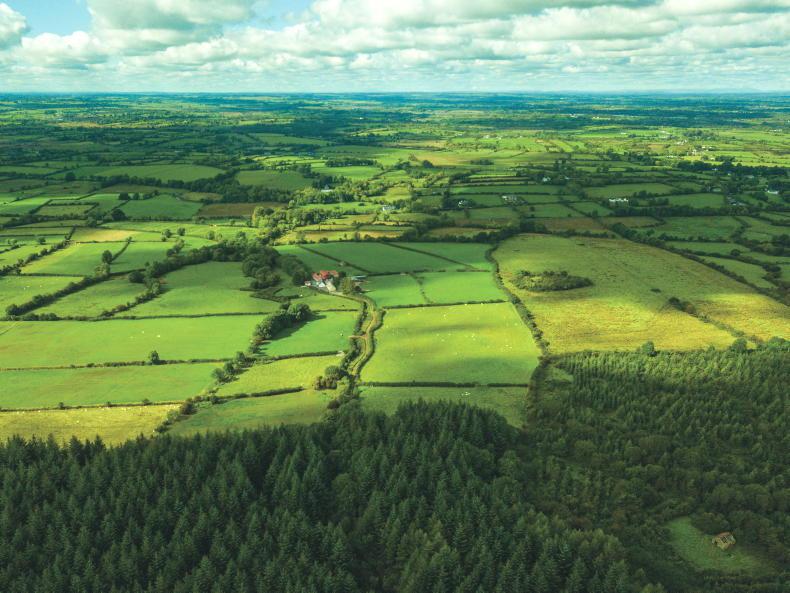
There are counties and areas where buyer demand is consistently high – for various reasons – and prices have trended upwards. Demand has been high in counties with dairy farmer buyers. Examples are Kilkenny, Waterford and Cork. Demand from Northern Ireland buyers has boosted prices in Monaghan and north Louth. It’s very visible that business-type buyers have driven demand in south Meath, north Kildare and, of course, in Dublin.
The need for new housing is boosting prices near towns and villages, right across the country. The grant aid for rebuilding vacant houses has put a floor of €50,000 to €84,000 under derelict houses across much of the country.
Many small investors see land as a preferred alternative to buying a house in the local town.
The land market had a steady 2025, and the supply of land for sale was broadly similar to the year before. Average prices paid for farmland rose by 3% to €12,876/ac. That was pretty much the outcome that was expected by auctioneers and others involved in the business.
At the start of the year dairy farmers were coming off a period of high milk prices and high incomes. With uncertainty about the future of the nitrates derogation, dairy farmers had the appetite and the means to purchase more land when it came up for sale. Confidence was high.
Dairy farmers went on to be key buyers of land in 2025. This was especially the case, but not limited to Munster. Wherever there was milk being produced, there were dairy farmers keen to buy land to future proof their business.
The year started off relatively quiet. The number of farms put up for sale was low, similar to the previous year. As the year moved on, beef and cattle prices got higher and higher, giving a welcome boost to incomes of suckler farmers. This new-found confidence could impact the land market in 2026.
An entirely different group of farmers were key buyers of land in 2025. These were the part-timers who have a good income from off the farm. They are benefitting from the strength of the general Irish economy and the availability of jobs.
Milk prices then weakened significantly in the latter months of the year. There is concern now among a lot of auctioneers about whether dairy farmers will be in a position to compete for land to the same extent in 2026.
The many options open to farmers’ sons and daughters are creating a problem of succession. Young people who have learned a trade or are graduating from college can often earn much more from this career direction than from going home to farm.
Business people and non-farmers have been active buyers of farmland in recent years. However, the non-farmer buyer, which would include investors and business owners, had suffered a setback. The rules on taxation of income from long-term leasing changed. As the year went on, it became clear that the rule change was discouraging business-type buyers from competing for land. “They were pushed out of the market,” one auctioneer commented.
Another group is farmers who sold land for development at the edge of towns or for roads. They continued to be active buyers in 2025.
There was also economic uncertainty. Much of this originated from the USA where, after he took office in January 2025, it quickly became clear that US President Donald Trump was determined to tear up the rule book.
The supply of farms for sale picked up from mid-summer. Good properties sold well, but it was noticeable that few new price records were being set. The big prices were generally similar to those of the last two years. A number of auctioneers commented to us that while farms got sold and good prices were agreed, it was more of a struggle in 2025. The money was there among buyers, but there was less urgency to buy – or perhaps less confidence.
The most talked about farm of the year was the 813ac Rockwell Farm, a working dairy farm in Co Tipperary. A sale was agreed by year end, but not officially confirmed. The buyers are business people as against full-time farmers.
The average price by year end was €12,867/ac. This was an increase of 3%, or €361/ac, on the average in 2024. It’s useful to look back at the trend of the past decade. Land prices were stable in the five years to 2020, hovering around €9,000/ac. The average price rose in 2020 and again in 2021. Since then, it has remained quite stable since, around €12,500/ac. In Northern Ireland, prices have been growing more steadily.
Around the average price, we have seen the spread of prices from highest to lowest widen. Good farmland in sought after locations can now make €18,000/ac to €20,000/ac in many counties. Plain land not suited or eligible for forestry planting can sell between €2,000/ac and €3,000/ac.
As usual, there were price movements between counties in 2025. Average prices rose in Kilkenny, Cork, Carlow, Louth, Monaghan, Roscommon and Wicklow. Prices fell in Waterford, Westmeath, Limerick and Laois.
These movements can reflect the run of properties that are put up for sale on any given year – a few prime farms fetching high prices can move the county average. Often if prices spike aggresively upwards in a county one year, it can drop back a bit the following year.
In 2025, the dearest land was in Co Dublin, at €26,129/ac. That’s more than double the national average. You would have to admire the farmers in the north and south of the county who buy land at such prices to grow crops and keep livestock. That’s if they can get ahead of the business person.
Next dearest was Louth and Meath, at over €18,000/ac. Pushing up prices in both counties is intensive, commercial farming and their location – close to Dublin and with large, expanding towns. Next are two counties with an average price of approximately €16,500/ac – Kildare and Carlow. Proximity to Dublin and equestrian interests are key factors in Kildare while Carlow has intensive farming and a lot of good land.
Three counties sit on approximately €15,000/ac – Tipperary, Cork and Laois. Milk money, equestrian money and generations of commercial farming are among the factors pushing up prices.
Those counties are always around the top of the list for land prices. It’s the same situation with the counties with the cheapest average land price. They include Leitrim, Donegal, Mayo and Sligo. Land prices have gone up in these counties over the past decade, but they’re not closing the gap on the most expensive counties.
Among the factors they have in common are distance from a city, distance from motorways and also constraints on farming because of climate and soil types.
Interestingly, for any young person who wanted to start farming by buying a farm, land at €8,000/ac or €10,000/ac or €12,000/ac would look more likely to make a profit than land priced at €15,000/ac or €18,000/ac.
As in recent years, farms over 40ac made better prices than small farms. They averaged €13,329/ac versus €12,662/ac for farms under 40ac.
Approximately two thirds (545) of farms that sold were under 40ac and one third (256) were bigger.
One of the yards on Rockwell Farm in Co Tipperary. At year end, a group of businessmen were concluding a deal to buy the 813ac dairy farm.
The number of farms and holdings put up for sale in 2025 struggled to match that of the previous year. In terms of supply, the land market was quiet in the first half, but then stepped up a gear from mid-summer.
A number of factors limit the amount of land offered for sale each year. EU direct payments that are linked to acres play a role. They are important for many older farmers in particular, providing a base income as the farmer reduces their farming activity.
In July 2025, the European Commission floated an idea for the next CAP that farmers would no longer be eligible for such payments once they qualify for national pension.
Any such change could see a pick up in farmland put up for sale. Tens of thousands of Irish farmers are receiving the State pension and continuing to farm and claim EU direct payments.
Agricultural Relief from Capital Acquisitions Tax is vital to allow young farmers take over a farm. But it also encourages holding on to land.
The tax relief under long-term leasing helps commercial farmers expand without having to buy land.
Land that might otherwise be left idle is actively farmed. But it encourages landowners to hold on to land.
In general, land is seen as a safe investment. For many, it’s preferred to cash in the bank or rental houses and apartments. Finally, most farmers are very attached to their farms – and want to go out with their boots on.
For this analysis, we examined approximately 2,500 farms that were offered for sale in 2025 sitting on approximately 110,000ac. These figures are similar to recent years. We then did our calculations on 801 farms that had sold by year end and that met our criteria.
The farms that sold accounted for 31,490ac.
The general expectation in the sector is for the land market to continue “as is” in 2026, with prices more or less steady. But there are a number of issues to watch.
There has been a sharp drop in milk prices, while dairy farmer costs have remained high. However, the sector has had a number of profitable years, so for many, bank balances are still healthy. The outlook for dairying remains positive, so we can expect dairy farmers to continue to be key buyers.
The nitrates derogation lives on, for now anyway. So some farmers who would otherwise have been under pressure on stocking rate will continue as they are. Nonetheless, most dairy farmers see the pressure on stocking rate continuing.
Some suckler and cattle rearing farms made once-in-a-lifetime margins on their stock in 2025. Most really did have to wait all their lives for this break. But the good prices will encourage some of these farmers to buy land.
The economy continues to perform well. This means that young, part-time farmers can continue to have good earnings from off-farm work. And, of course, there is little sign of the growth in house prices stopping.
The factors most likely to push down farmland prices would be a drop in house prices, or a severe shock to the general economy.
Auctioneers would love if more land was put up for sale – it’s their bread and butter. But there is no sign of any increase in farmland going on the market in 2026. If anything, supply could tighten further.
Long-term leases are a very attractive alternative to selling up. Lease rents are holding up well and leasing can give a better net return than money on deposit in the bank.
There are counties and areas where buyer demand is consistently high – for various reasons – and prices have trended upwards. Demand has been high in counties with dairy farmer buyers. Examples are Kilkenny, Waterford and Cork. Demand from Northern Ireland buyers has boosted prices in Monaghan and north Louth. It’s very visible that business-type buyers have driven demand in south Meath, north Kildare and, of course, in Dublin.
The need for new housing is boosting prices near towns and villages, right across the country. The grant aid for rebuilding vacant houses has put a floor of €50,000 to €84,000 under derelict houses across much of the country.
Many small investors see land as a preferred alternative to buying a house in the local town.






SHARING OPTIONS