Land prices in Northern Ireland (NI) have pushed on to reach another record high, our annual survey has found.
The average price paid for land in NI during 2025 was £15,202/ac. It equates to an increase of 3% or £466/ac when compared to the year previous and is the highest average price that we have recorded for land sales in NI since our report was launched.
Land prices reached record highs in four of the six counties in NI last year, namely Armagh (£22,833/ac), Tyrone (£17,578/ac), Antrim (£15,009/ac) and Fermanagh (£10,380/ac). The two remaining counties, Down and Derry, noted their second-highest average land prices on record, at £19,109/ac and £12,623/ac respectively.
Our land price survey for 2025 was based on 157 transactions spanning over 6,200 acres in NI. The results show that price rises have been much more significant at the top end of the market. When ranked according to price per acre, the top 25% of land prices in our NI survey averaged £27,232/ac last year. This represents a huge increase of £4,450/ac when compared to the year previous.
At the other end of the market, the bottom 25% of land sales in NI last year averaged £9,008/ac, which is just £382/ac higher than 2024. It shows that while all types of land are becoming more expensive in NI, prices are rising fastest for the best-quality land on offer.
Our survey results show that smaller parcels of land tend to make more in terms of price per acre. Properties in NI that were under 30ac in size averaged £18,045/ac last year, whereas lots that were greater than 30ac averaged £15,139/ac. Smaller properties have lower overall selling prices, so more potential buyers can afford them and are therefore willing to bid.
The latest figures also indicate that the land market in NI remains well ahead of the Republic of Ireland (ROI). When converted to euro at the average exchange rate for 2025 (€1=£0.86), the difference between the NI and ROI average for bare land stands at €4,850/ac.
This is almost identical to the 2024 north-south price differential of €4,856/ac, which shows that the land market in both NI and ROI pushed on at a similar rate last year. As outlined in pages 64-70, when average prices for each county across Ireland are ranked, northern counties push towards the top of the league table. Counties from NI take up four of the top seven places in the all-island rankings, with Armagh now coming out on top ahead of Dublin. Even Fermanagh, which has the lowest land prices in NI, is still well above its neighbouring counties in ROI.
Market dynamics
A key factor underpinning the NI land market is the extremely tight supply of land that becomes available for sale. Records compiled by the Irish Farmers Journal show 12,994ac of land was publicly advertised for sale in NI last year, which is down by 5%, or 717ac, when compared to 2024.
Overall, there were 469 agricultural properties on the market during 2025, which means the average lot equated to 28ac in size.
Across the total agricultural area in NI, the acreage publicly offered up for sale equates to just 0.62% of the overall grassland and arable area. At that rate of turnover, a given area of land will only be advertised for sale once every 161 years.
On the demand side, local auctioneers indicate that farmers remain active in the land market. Reports indicate that dairy farmers were keen to buy land last year and farmers with poultry enterprises were also active.
People from farming backgrounds who have successful non-farming businesses are another key cohort of land buyers in certain areas. Suckler, beef and sheep farmers tended to be quieter, although many are still willing to make noise when smaller parcels of neighbouring land become available.
Auctioneers indicate that many other long running factors still impact agricultural property sales. For example, land that is located up shared laneways tends to make less and land that has road frontage usually goes for more.
There is also an occasional anomaly sale where a piece of land makes much more than expected. This can be the case where the eventual buyer and underbidder have had a dispute and a bidding war ensues.
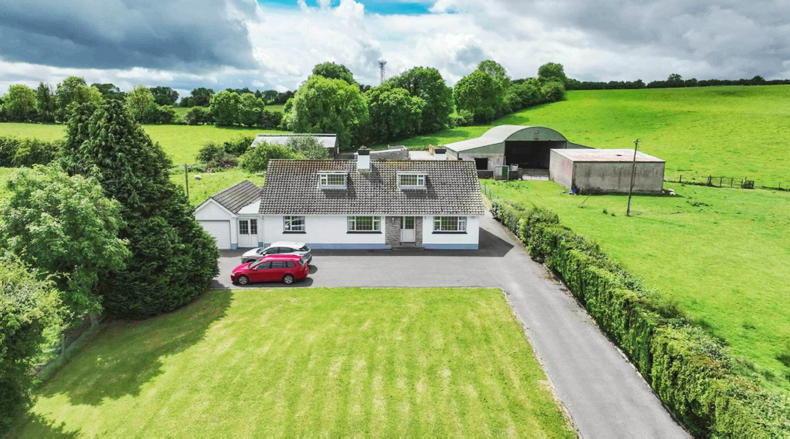
Another emerging factor in the land market is the value of farmyards. Tighter rules around planning permission for sheds, as well as rising costs for building materials, saw an increase in demand for farmyards. In particular, farms with disused poultry sheds or cattle sheds with good slurry storage are in demand. There have been several cases of relatively small farms making significant prices mainly because of the accompanying farmyards.
Inheritance tax
A huge level of uncertainty hung over farmers across the UK, including in NI, for most of 2025 due to the upcoming reform of inheritance tax. Until late December 2025, the plan was that a new £1m limit on Agricultural Property Relief (APR) and Business Property Relief (BPR) would apply from April 2026. In effect, a 20% tax rate would apply to the value of agricultural property above this limit. The change would have had major implications for succession planning on NI farms and would leave hefty tax bills in many cases.
However, at the very end of the year, the UK Government did a partial U-turn by raising the new APR/BPR limit to £2.5m for individuals and £5m for married couples. The change was as welcome as the flowers in May and should lift the vast majority of NI farms out of the scope of inheritance tax. For larger landowners who could still be impacted, the U-turn has reduced any potential tax bills.
However, the fact that this massive piece of uncertainty hung over NI farmers for almost all of last year and land prices still increased is a testament to the long-term thinking that applies when purchasing land. The most recent policy announcement from a politician in London has little weighting in a farmer’s decision-making process if a piece of neighbouring land comes up for sale. After all, our figures suggest that it could be 161 years before that bit of land is advertised for sale again.
Average price of hill land rises by 36%
Only land that could be described as arable, suitable for silage, or good-quality grazing was included in our main land supply records and subsequent land price survey.A separate set of records for hill ground and rough grazing shows that 3,601ac were advertised for sale in NI during 2025. The figure represents a 46% jump on the year previous and is mainly down to larger blocks of land being offered up for sale. Our figures show there were 33 separate lots of hill land publicly available to buy last year, which makes the average property 109ac in size. It compares to 31 parcels of hill land, averaging 80ac in size during 2024.Our separate survey of selling prices for hill land and rough grazing found an average price of £3,574/ac last year. This figure represents a rise of 36%, or £945/ac, when compared to our 2024 survey.A major factor behind the price jump is more better-quality hill land was available for sale last year. Prices in our survey peaked at £5,200/ac for a small block of dry hill land in Derry. The lowest price in our survey was £1,875/ac for a parcel of bog land, which was also located in Derry.
Land prices in Northern Ireland (NI) have pushed on to reach another record high, our annual survey has found.
The average price paid for land in NI during 2025 was £15,202/ac. It equates to an increase of 3% or £466/ac when compared to the year previous and is the highest average price that we have recorded for land sales in NI since our report was launched.
Land prices reached record highs in four of the six counties in NI last year, namely Armagh (£22,833/ac), Tyrone (£17,578/ac), Antrim (£15,009/ac) and Fermanagh (£10,380/ac). The two remaining counties, Down and Derry, noted their second-highest average land prices on record, at £19,109/ac and £12,623/ac respectively.
Our land price survey for 2025 was based on 157 transactions spanning over 6,200 acres in NI. The results show that price rises have been much more significant at the top end of the market. When ranked according to price per acre, the top 25% of land prices in our NI survey averaged £27,232/ac last year. This represents a huge increase of £4,450/ac when compared to the year previous.
At the other end of the market, the bottom 25% of land sales in NI last year averaged £9,008/ac, which is just £382/ac higher than 2024. It shows that while all types of land are becoming more expensive in NI, prices are rising fastest for the best-quality land on offer.
Our survey results show that smaller parcels of land tend to make more in terms of price per acre. Properties in NI that were under 30ac in size averaged £18,045/ac last year, whereas lots that were greater than 30ac averaged £15,139/ac. Smaller properties have lower overall selling prices, so more potential buyers can afford them and are therefore willing to bid.
The latest figures also indicate that the land market in NI remains well ahead of the Republic of Ireland (ROI). When converted to euro at the average exchange rate for 2025 (€1=£0.86), the difference between the NI and ROI average for bare land stands at €4,850/ac.
This is almost identical to the 2024 north-south price differential of €4,856/ac, which shows that the land market in both NI and ROI pushed on at a similar rate last year. As outlined in pages 64-70, when average prices for each county across Ireland are ranked, northern counties push towards the top of the league table. Counties from NI take up four of the top seven places in the all-island rankings, with Armagh now coming out on top ahead of Dublin. Even Fermanagh, which has the lowest land prices in NI, is still well above its neighbouring counties in ROI.
Market dynamics
A key factor underpinning the NI land market is the extremely tight supply of land that becomes available for sale. Records compiled by the Irish Farmers Journal show 12,994ac of land was publicly advertised for sale in NI last year, which is down by 5%, or 717ac, when compared to 2024.
Overall, there were 469 agricultural properties on the market during 2025, which means the average lot equated to 28ac in size.
Across the total agricultural area in NI, the acreage publicly offered up for sale equates to just 0.62% of the overall grassland and arable area. At that rate of turnover, a given area of land will only be advertised for sale once every 161 years.
On the demand side, local auctioneers indicate that farmers remain active in the land market. Reports indicate that dairy farmers were keen to buy land last year and farmers with poultry enterprises were also active.
People from farming backgrounds who have successful non-farming businesses are another key cohort of land buyers in certain areas. Suckler, beef and sheep farmers tended to be quieter, although many are still willing to make noise when smaller parcels of neighbouring land become available.
Auctioneers indicate that many other long running factors still impact agricultural property sales. For example, land that is located up shared laneways tends to make less and land that has road frontage usually goes for more.
There is also an occasional anomaly sale where a piece of land makes much more than expected. This can be the case where the eventual buyer and underbidder have had a dispute and a bidding war ensues.
Another emerging factor in the land market is the value of farmyards. Tighter rules around planning permission for sheds, as well as rising costs for building materials, saw an increase in demand for farmyards. In particular, farms with disused poultry sheds or cattle sheds with good slurry storage are in demand. There have been several cases of relatively small farms making significant prices mainly because of the accompanying farmyards.
Inheritance tax
A huge level of uncertainty hung over farmers across the UK, including in NI, for most of 2025 due to the upcoming reform of inheritance tax. Until late December 2025, the plan was that a new £1m limit on Agricultural Property Relief (APR) and Business Property Relief (BPR) would apply from April 2026. In effect, a 20% tax rate would apply to the value of agricultural property above this limit. The change would have had major implications for succession planning on NI farms and would leave hefty tax bills in many cases.
However, at the very end of the year, the UK Government did a partial U-turn by raising the new APR/BPR limit to £2.5m for individuals and £5m for married couples. The change was as welcome as the flowers in May and should lift the vast majority of NI farms out of the scope of inheritance tax. For larger landowners who could still be impacted, the U-turn has reduced any potential tax bills.
However, the fact that this massive piece of uncertainty hung over NI farmers for almost all of last year and land prices still increased is a testament to the long-term thinking that applies when purchasing land. The most recent policy announcement from a politician in London has little weighting in a farmer’s decision-making process if a piece of neighbouring land comes up for sale. After all, our figures suggest that it could be 161 years before that bit of land is advertised for sale again.
Average price of hill land rises by 36%
Only land that could be described as arable, suitable for silage, or good-quality grazing was included in our main land supply records and subsequent land price survey.A separate set of records for hill ground and rough grazing shows that 3,601ac were advertised for sale in NI during 2025. The figure represents a 46% jump on the year previous and is mainly down to larger blocks of land being offered up for sale. Our figures show there were 33 separate lots of hill land publicly available to buy last year, which makes the average property 109ac in size. It compares to 31 parcels of hill land, averaging 80ac in size during 2024.Our separate survey of selling prices for hill land and rough grazing found an average price of £3,574/ac last year. This figure represents a rise of 36%, or £945/ac, when compared to our 2024 survey.A major factor behind the price jump is more better-quality hill land was available for sale last year. Prices in our survey peaked at £5,200/ac for a small block of dry hill land in Derry. The lowest price in our survey was £1,875/ac for a parcel of bog land, which was also located in Derry.






SHARING OPTIONS