When Sinéad Brady aka @thecareerpsychologist talks about home, she starts with the land – and her parents. “I grew up in a small rural pocket of Cavan,” she says. “My dad was a plumber and my mum was a stay-at-home-parent to myself and my brother Sean. She also ran the administrative side of the business, and like so many women in rural Ireland, carried the ‘invisible work’ that kept everything running.
“We always had a little farm ticking away in the background, but because Dad was working in Dublin, it was impossible for him to actively farm it.”
Now, as her parents step back from the construction trade, the land has come full circle – alive with the sounds of bees and sheep, and the presence of a polytunnel. “It’s beautiful to see it come to life,” says Sinéad.
It’s no surprise then, that her rural grounding never left her. After studying in Dublin and travelling, she always knew she’d return. “Cavan was always home,” she says. “I married a Cavan man, Alan, and now we’re raising our four children here, surrounded by both sides of the family. That kind of support network is invaluable, particularly when you get to the season of life when you’re juggling a career, parenthood and everything else that comes with it.”
Her children grew up knowing their great-grandparents and a large extended network of cousins which, Sinéad says, brings a very strong connection within the local community.
“When my granny was alive, she lived on a small farm. She died two years ago, but my children got to know their Nana May really well. My granddad, who lived just up the road from us, passed away a few years earlier, but my older two children knew him too. They know my aunts and uncles, they know my husband’s aunts and uncles, and they’re actually friends with some of our second cousins. You can’t put a price on that inter-generational connection.”
That sense of belonging and identity feeds into her practice today as a work and organisational psychologist. Her business involves supporting individuals and working with corporate clients in career transitions.
Her Courageous Career Programme has become a lifeline for people who know they want change but don’t know where to begin.
“People are reassessing everything,” she explains. “Where they want to live, how they want to work, what truly matters to them. And that’s happening across all ages and industries.
“Some are moving closer to family again. Others are leaving city life for smaller communities – whether for affordability, schools, support networks, or simply lifestyle.
“Don’t get me wrong, there are challenges to living in rural communities – there’s no doubt about that. It could be limited access to broadband or, for some, a longer commute. But ultimately, people want flexibility to work in ways that support their lives,” she says.
Sinéad’s own career path is far from traditional. Initially a barrister, she later shifted into education and trained as a guidance counsellor in second-level schools. Alongside this, she completed her psychology training, spending seven years in college to become a fully accredited psychologist.
When she decided to launch her own business in 2013 it meant pushing far beyond her comfort zone.
“I had absolutely no connections. None. People say, ‘You must have known someone.’ I knew nobody.
“I didn’t have confidence. What I had was courage. And a very strong belief that I wanted to keep my career identity while mothering my children.”
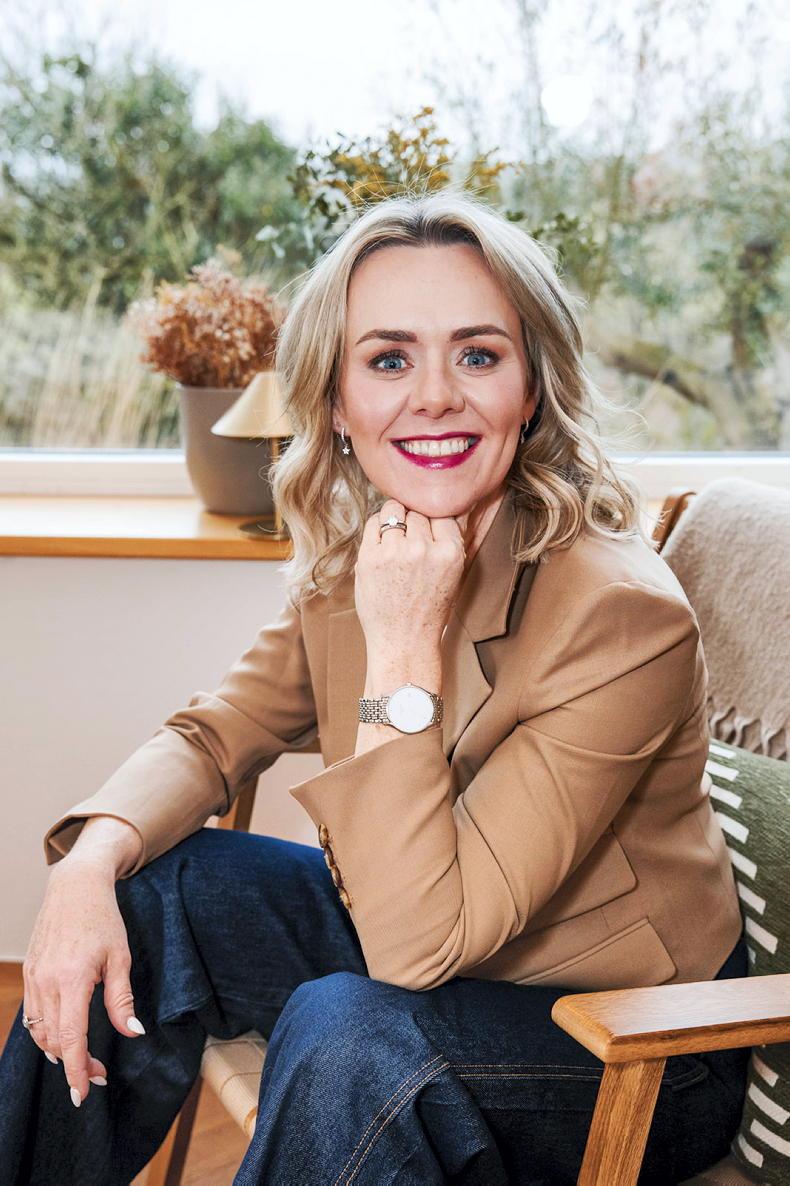
Career psychologist Sinéad Brady on rural roots, family life in Cavan and why 2026 is the year of courageous career choices. \ Sonja Smith
Supports for women
One of the most significant supports for Sinéad has been ACORNS, a rural community development programme for women in business run by the Department of Agriculture, Food and the Marine.
“One of the biggest myths in modern work is that you’re meant to figure things out on your own,” she says.
“We celebrate independence, but we rarely talk honestly about the systems of support that actually make careers sustainable.”
“I’ve been part of ACORNS for nine years now. Because it’s designed specifically for female-led businesses operating in rural areas, it recognises the very real challenges we face. Without that community, I honestly don’t think I’d still be in business.
“These are the kinds of supports that people don’t see on social media. It might look like everyone is doing it all on their own, but they’re not. None of us are. And there is nothing wrong with needing help – having different people to turn to in any business is not a weakness; it’s essential.”
I’ve been part of ACORNS for nine years now. Because it’s designed specifically for female-led businesses operating in rural areas, it recognises the very real challenges we face. Without that community, I honestly don’t think I’d still be in business.
What goes around comes around – Sinéad has now spent 13 years fully immersed in supporting people. Many of her clients come to her after what she calls a career or life shock. This could be redundancy, burnout or a major life transition. These moments often force people to pause and assess.
“Sometimes people look around and realise they’ve outgrown their role – or their role has outgrown them,” she says. “They can feel stuck. They’ve built experience and credibility, but they’re unsure what comes next.”
But the message is clear, there is no wrong time to change direction.
“When you’re busy doing the job, it’s easy to stop listening to yourself,” Sinéad says. “But if your non-negotiables – sleep, health, time with people you love – are consistently slipping, something isn’t working, and it might be time to think of an exit strategy.
“It doesn’t have to be dramatic. It might mean shifting roles within your organisation, or adjusting responsibilities,” she says.
“When the job is shaping you in ways you don’t want, you can change it. Your skills are your superpower and once you understand that, you can build a career that genuinely supports the life you want – no matter where you choose to live it.”
As a busy woman managing a business and sharing family life with a self-employed husband, does Sinéad practise what she preaches?
“Yes, I do. One of my biggest non-negotiables is getting to the gym three times a week. It’s a local rural gym called BC Fitness, it’s about 90% women – and we’re all lifting weights. Don’t get me wrong, some weeks are harder than others. If I only get down once a week – or not at all – I don’t beat myself up. I reset and get back the next week.
“The other thing is... I have four small kids. My job operates alongside my identity as a working parent and my husband and I are both self-employed in a rural community. So we have support circles and for us, that’s really important.”
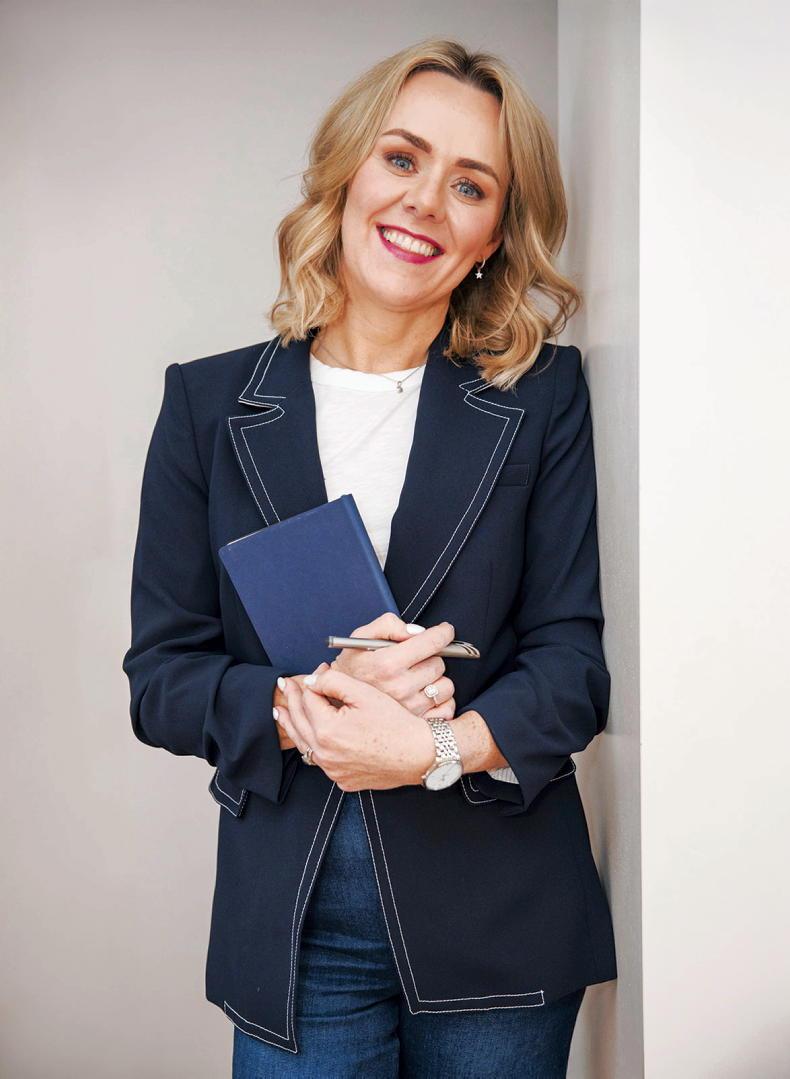
Career psychologist Sinéad Brady. \ Sonja Smith
Farming careers
Re-assessing life and careers can be especially relevant to farming families. When people return home to help on the farm as parents age, or when farmers start thinking about how to make the future more sustainable – whether through diversification or off-farm work – it can be hard to know where to begin.
For many, it’s not about leaving farming behind, but about finding ways to support it and that’s where Sinéad steps in.
“Farmers sometimes look for off-farm jobs to sit alongside the farm,” she says. “Others want to re-imagine what the farm can be – exploring new income streams or modernising operations while staying connected to their roots.
“Farmers are some of the most resourceful, hard-working people you’ll ever meet, but they don’t always realise just how valuable their skills are.”
She points out that the abilities developed on the land translate far beyond the farmgate. “Farmers problem-solve under pressure, manage time and budgets, lead people, negotiate, and adapt constantly – all those skills are highly valued.”
Ultimately, she says, it’s important to find a way of working that supports your life, rather than being overwhelmed by constant pressure.
No matter how advanced technology like artificial intelligence becomes, progress still depends on people, community, collaboration and care. That’s something farming and rural communities understand deeply. Asking for help isn’t seen as failure – it’s community coming together. It’s a lesson worth carrying with us into 2026
The Big Shift for 2026
Looking towards 2026 and beyond, Sinéad believes we are moving into a world of work where job titles matter far less than people expect.
“People don’t need to be told to lean in,” she says. “They need evidence-based strategies that recognise the career ladder doesn’t work for the majority of us anymore. We’re shifting towards a skills-based reality, where organisations care less about the role you once held and more about what you can actually do.
“For decades, organisations rewarded linear progression and visible availability. That model doesn’t reflect how people really live or work – particularly those with caring responsibilities. A skills-based approach creates more room for contribution, but only if organisations are willing to rethink how they define and value capability,” she says.
As we head into a new year, Sinéad says people should remember that success has never been an individual endeavour.
“No matter how advanced technology like artificial intelligence becomes, progress still depends on people, community, collaboration and care. That’s something farming and rural communities understand deeply. Asking for help isn’t seen as failure – it’s community coming together. It’s a lesson worth carrying with us into 2026.”
To learn more about the next Courageous Career Programme starting on 3 February 2026, visit @thecareerpsychologist on
Instagram. Total Reset by Sinéad Brady, €13.99 at easons.com
Transferable career skills
Skills aren’t tied to one job – they travel with you across roles and can include:Communication: clearly sharing ideas, listening actively, and influencing others.Problem-solving: thinking critically, making decisions, and finding solutions.Adaptability: thriving in change, learning quickly, and bouncing back.Leadership and teamwork: inspiring others, collaborating effectively, and managing projects.Time management and organisation: prioritising tasks and meeting deadlines.
When Sinéad Brady aka @thecareerpsychologist talks about home, she starts with the land – and her parents. “I grew up in a small rural pocket of Cavan,” she says. “My dad was a plumber and my mum was a stay-at-home-parent to myself and my brother Sean. She also ran the administrative side of the business, and like so many women in rural Ireland, carried the ‘invisible work’ that kept everything running.
“We always had a little farm ticking away in the background, but because Dad was working in Dublin, it was impossible for him to actively farm it.”
Now, as her parents step back from the construction trade, the land has come full circle – alive with the sounds of bees and sheep, and the presence of a polytunnel. “It’s beautiful to see it come to life,” says Sinéad.
It’s no surprise then, that her rural grounding never left her. After studying in Dublin and travelling, she always knew she’d return. “Cavan was always home,” she says. “I married a Cavan man, Alan, and now we’re raising our four children here, surrounded by both sides of the family. That kind of support network is invaluable, particularly when you get to the season of life when you’re juggling a career, parenthood and everything else that comes with it.”
Her children grew up knowing their great-grandparents and a large extended network of cousins which, Sinéad says, brings a very strong connection within the local community.
“When my granny was alive, she lived on a small farm. She died two years ago, but my children got to know their Nana May really well. My granddad, who lived just up the road from us, passed away a few years earlier, but my older two children knew him too. They know my aunts and uncles, they know my husband’s aunts and uncles, and they’re actually friends with some of our second cousins. You can’t put a price on that inter-generational connection.”
That sense of belonging and identity feeds into her practice today as a work and organisational psychologist. Her business involves supporting individuals and working with corporate clients in career transitions.
Her Courageous Career Programme has become a lifeline for people who know they want change but don’t know where to begin.
“People are reassessing everything,” she explains. “Where they want to live, how they want to work, what truly matters to them. And that’s happening across all ages and industries.
“Some are moving closer to family again. Others are leaving city life for smaller communities – whether for affordability, schools, support networks, or simply lifestyle.
“Don’t get me wrong, there are challenges to living in rural communities – there’s no doubt about that. It could be limited access to broadband or, for some, a longer commute. But ultimately, people want flexibility to work in ways that support their lives,” she says.
Sinéad’s own career path is far from traditional. Initially a barrister, she later shifted into education and trained as a guidance counsellor in second-level schools. Alongside this, she completed her psychology training, spending seven years in college to become a fully accredited psychologist.
When she decided to launch her own business in 2013 it meant pushing far beyond her comfort zone.
“I had absolutely no connections. None. People say, ‘You must have known someone.’ I knew nobody.
“I didn’t have confidence. What I had was courage. And a very strong belief that I wanted to keep my career identity while mothering my children.”
Career psychologist Sinéad Brady on rural roots, family life in Cavan and why 2026 is the year of courageous career choices. \ Sonja Smith
Supports for women
One of the most significant supports for Sinéad has been ACORNS, a rural community development programme for women in business run by the Department of Agriculture, Food and the Marine.
“One of the biggest myths in modern work is that you’re meant to figure things out on your own,” she says.
“We celebrate independence, but we rarely talk honestly about the systems of support that actually make careers sustainable.”
“I’ve been part of ACORNS for nine years now. Because it’s designed specifically for female-led businesses operating in rural areas, it recognises the very real challenges we face. Without that community, I honestly don’t think I’d still be in business.
“These are the kinds of supports that people don’t see on social media. It might look like everyone is doing it all on their own, but they’re not. None of us are. And there is nothing wrong with needing help – having different people to turn to in any business is not a weakness; it’s essential.”
I’ve been part of ACORNS for nine years now. Because it’s designed specifically for female-led businesses operating in rural areas, it recognises the very real challenges we face. Without that community, I honestly don’t think I’d still be in business.
What goes around comes around – Sinéad has now spent 13 years fully immersed in supporting people. Many of her clients come to her after what she calls a career or life shock. This could be redundancy, burnout or a major life transition. These moments often force people to pause and assess.
“Sometimes people look around and realise they’ve outgrown their role – or their role has outgrown them,” she says. “They can feel stuck. They’ve built experience and credibility, but they’re unsure what comes next.”
But the message is clear, there is no wrong time to change direction.
“When you’re busy doing the job, it’s easy to stop listening to yourself,” Sinéad says. “But if your non-negotiables – sleep, health, time with people you love – are consistently slipping, something isn’t working, and it might be time to think of an exit strategy.
“It doesn’t have to be dramatic. It might mean shifting roles within your organisation, or adjusting responsibilities,” she says.
“When the job is shaping you in ways you don’t want, you can change it. Your skills are your superpower and once you understand that, you can build a career that genuinely supports the life you want – no matter where you choose to live it.”
As a busy woman managing a business and sharing family life with a self-employed husband, does Sinéad practise what she preaches?
“Yes, I do. One of my biggest non-negotiables is getting to the gym three times a week. It’s a local rural gym called BC Fitness, it’s about 90% women – and we’re all lifting weights. Don’t get me wrong, some weeks are harder than others. If I only get down once a week – or not at all – I don’t beat myself up. I reset and get back the next week.
“The other thing is... I have four small kids. My job operates alongside my identity as a working parent and my husband and I are both self-employed in a rural community. So we have support circles and for us, that’s really important.”
Career psychologist Sinéad Brady. \ Sonja Smith
Farming careers
Re-assessing life and careers can be especially relevant to farming families. When people return home to help on the farm as parents age, or when farmers start thinking about how to make the future more sustainable – whether through diversification or off-farm work – it can be hard to know where to begin.
For many, it’s not about leaving farming behind, but about finding ways to support it and that’s where Sinéad steps in.
“Farmers sometimes look for off-farm jobs to sit alongside the farm,” she says. “Others want to re-imagine what the farm can be – exploring new income streams or modernising operations while staying connected to their roots.
“Farmers are some of the most resourceful, hard-working people you’ll ever meet, but they don’t always realise just how valuable their skills are.”
She points out that the abilities developed on the land translate far beyond the farmgate. “Farmers problem-solve under pressure, manage time and budgets, lead people, negotiate, and adapt constantly – all those skills are highly valued.”
Ultimately, she says, it’s important to find a way of working that supports your life, rather than being overwhelmed by constant pressure.
No matter how advanced technology like artificial intelligence becomes, progress still depends on people, community, collaboration and care. That’s something farming and rural communities understand deeply. Asking for help isn’t seen as failure – it’s community coming together. It’s a lesson worth carrying with us into 2026
The Big Shift for 2026
Looking towards 2026 and beyond, Sinéad believes we are moving into a world of work where job titles matter far less than people expect.
“People don’t need to be told to lean in,” she says. “They need evidence-based strategies that recognise the career ladder doesn’t work for the majority of us anymore. We’re shifting towards a skills-based reality, where organisations care less about the role you once held and more about what you can actually do.
“For decades, organisations rewarded linear progression and visible availability. That model doesn’t reflect how people really live or work – particularly those with caring responsibilities. A skills-based approach creates more room for contribution, but only if organisations are willing to rethink how they define and value capability,” she says.
As we head into a new year, Sinéad says people should remember that success has never been an individual endeavour.
“No matter how advanced technology like artificial intelligence becomes, progress still depends on people, community, collaboration and care. That’s something farming and rural communities understand deeply. Asking for help isn’t seen as failure – it’s community coming together. It’s a lesson worth carrying with us into 2026.”
To learn more about the next Courageous Career Programme starting on 3 February 2026, visit @thecareerpsychologist on
Instagram. Total Reset by Sinéad Brady, €13.99 at easons.com
Transferable career skills
Skills aren’t tied to one job – they travel with you across roles and can include:Communication: clearly sharing ideas, listening actively, and influencing others.Problem-solving: thinking critically, making decisions, and finding solutions.Adaptability: thriving in change, learning quickly, and bouncing back.Leadership and teamwork: inspiring others, collaborating effectively, and managing projects.Time management and organisation: prioritising tasks and meeting deadlines. 




SHARING OPTIONS