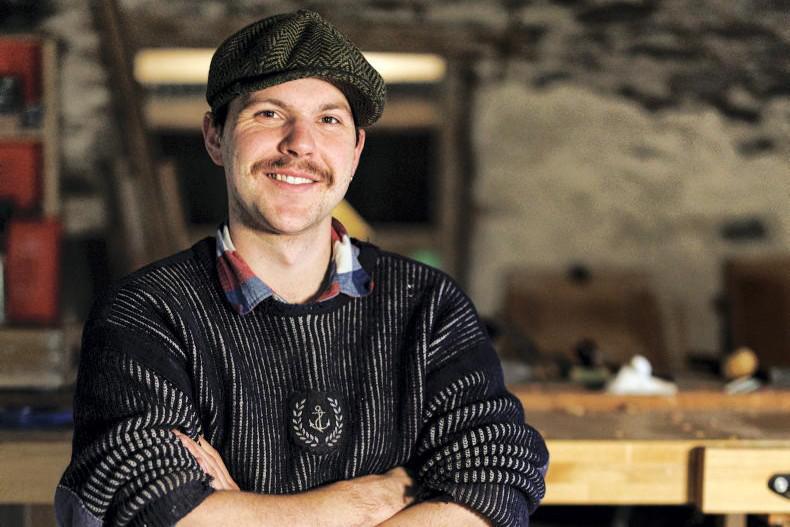
‘It’s wonderful to know how to fix things,” says woodworker Eoin Reardon, who, at just 24, has carved out his own career restoring woodwork while bringing a fresh digital focus to showcase the craft.
With more than 635,000 followers on Instagram, 3.5 million on TikTok, and 1.77 million on YouTube, the Cork native has built a dedicated audience around restoration, handcrafting, and the promotion of traditional woodworking techniques online.
His interest in the craft began during his time in Scouts, where he spent hours carving and whittling with a penknife.
“I never did woodwork in school, which I regret, but it all worked out in the end,” he says.
After inheriting a workbench from one set of grandparents and a vicegrip from the other, Eoin combined the two and set up a small workshop in a corner of his parents’ garage, where he honed his skills and deepened his appreciation for the craft.
“It was coming into COVID-19 times, and I remember every single evening just heading out to the garage and tinkering with wood,” recalls Eoin.
Building a following online
As a teenager, Eoin was part of the generation that dreamed of becoming a YouTuber, and by the time he was 15, he had already started his own channel. Looking back, he laughs at those first attempts, describing them as “scour”. When he turned the camera on his tool restorations though, everything changed.
“I used to buy a lot of old, rusty tools as well, clean them up and use them. One day, I decided to film one of these restorations and upload it online,” says Eoin.
The video blew up and got over 6 million views on TikTok.
“I was just shocked. I guess people kind of thought it was a satisfying thing to watch,” says Eoin.
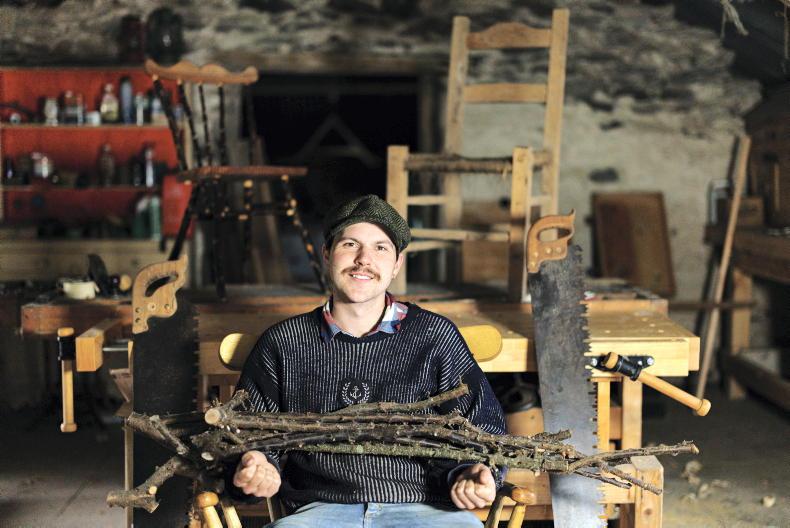
Eoin Reardon at work making his walking sticks in his workshop in Crossbarry, Co Cork. \Donal O’ Leary
At the time, Eoin was studying commerce in University College Cork, which he disliked. He went to college because he got the points.
“I find it very hard to excel at anything I have no interest in. And that was the case with college; I was performing poorly.”
Without realising it, Eoin had built an escape route. He was halfway through his third year when he decided to defer and pursue opportunities with woodworking and build his social media channels.
“The plan was to go back and do third year the next year, but that never happened,” he says.
Eoin wishes there were more options presented to him in secondary school because no one came in to promote trades or explain the other skills you can have that lead to rewarding careers. It was all speakers talking about college courses.
Eoin is now promoting these opportunities with his hand tool woodwork workshops in schools.
“I show up, and I’ll get the woodworking students using some of the more traditional tools, and at the end of the day, they all collaborate to put together a chair. I try to spread awareness about using your hands to make a living. I normally have two or three of them booked every month in different schools all around the country,” says Eoin.
That is now one of his favourite parts of his job, travelling around the country doing workshops and demonstrations.
“I had a residency in Bunratty Castle in the summer of 2024, and that was great fun; it was the best job I ever had.
“A blacksmith was also set up and we were alongside each other in front of the castle. We were collaborating, building tools and engaging with the public,” says Eoin.
Another big project he enjoyed was building a currach, which is a traditional Irish boat that he wouldn’t have been able to build if he had a regular job.
“The great thing is, being able to plan your own projects, pick your own time, and work around your life.
“Having that flexibility can also result in your work-life balance becoming blurry though, as I think nothing of working on a Sunday if I have nothing better to be doing, because I love it,” Eoin explains.
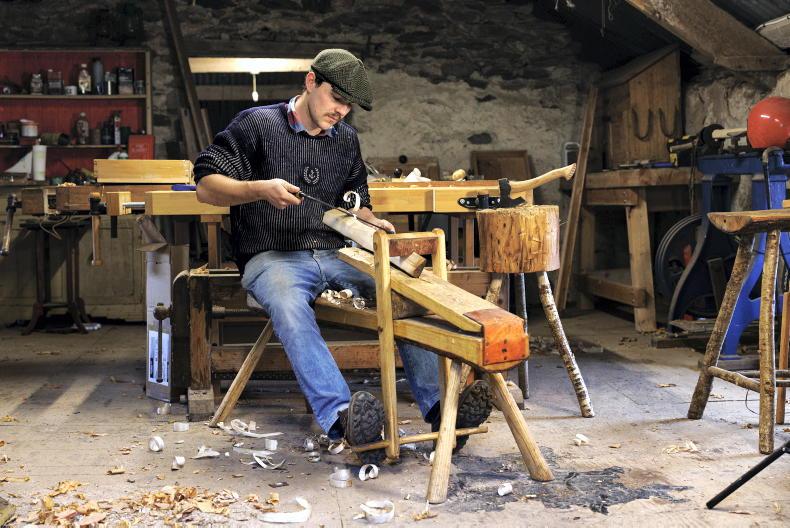
Eoin Reardon at work in his workshop in Crossbarry, Co Cork. / Donal O' Leary
Sourcing materials
Initially, Eoin found it difficult to source local wood as he didn’t know where to go. He ended up ordering it from a group that gets it from America, which he now thinks is “ludicrous, because there are trees that grow everywhere in this country”.
“Since then, I befriended a local sawmill owner, and I bought a lot of stuff off him. That was great, because he was getting timber that had come down in storms here, in Cork, cutting it himself, drying it and then selling. It is a perfect local circular economy. It doesn’t make sense to be shipping wood halfway across the world when we have it growing in our back garden here”.
Eoin and his friend recently bought a sawmill together. When an ash tree comes down in a storm, he gets a call or a message, and they go and collect it, often for free. Eoin then cuts it into boards and planks and lets it dry.
“I have had the sawmill for two years now. The first batch of wood is now ready to work. It’s great, I’m getting my material for free now, and its mostly ash that I use,” says Eoin.
The importance of woodwork and passing down the handcrafted skills for Eoin is to keep the tradition alive.
“It only takes one generation not to pass it on and it’s gone forever. An endless lineage going back hundreds, if not thousands of years, of skill passed down through the generations gone, just like that, which I think is a tragedy,” says Eoin.
Eoin is best known now for his crafting and passion for unique walking sticks.
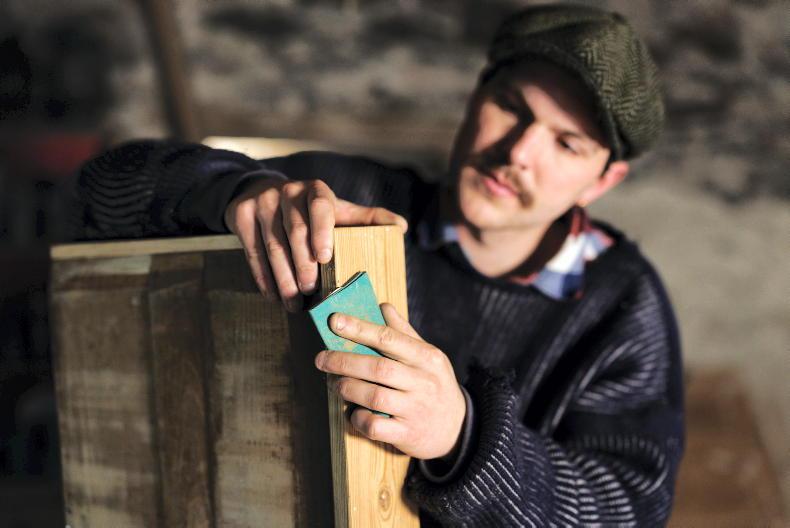
Eoin Reardon at work in his workshop in Crossbarry, Co Cork. / Donal O' Leary
“I was always fascinated by Shillelaghs, the old kind of fighting/walking sticks that were made out of blackthorn. As soon as I befriended a farmer with a blackthorn bush on his land, I was in there with my little saw and lobbers, and I cut myself a blackthorn stick. I only caught one, unfortunately, at the time, I waited two years for it to dry, and I posted a video on YouTube talking about the Shillelagh while filming the making process,” says Eoin.
That video went viral on YouTube; it got over a million views, which would be unusual for a video that’s longer than 10 minutes.
“I got inundated with messages from people looking to purchase Shillelaghs. I didn’t have any to sell, but I had one. I actually got a local Shillelagh maker in Killorglin, Co Kerry, who messaged me saying he had sold €5,000 worth of Shillelaghs over the weekend because of that video,” says Eoin.
Eoin immediately went back out and harvested more blackthorn that he is now starting to turn into different walking sticks.
“I’ve experimented with other sorts of walking sticks as well. There seems to be something about a stick that is very appealing to lots of people. I think it’s nostalgic as well. Everyone can remember finding a stick as a child and playing with it,” he says.
“What fascinates me most is how accessible it is – and how we’ve kind of lost those traditions. Folk furniture is just everyday pieces like stools, tables, chairs, and dressers, made by farmers in their spare time.
“It wasn’t complicated or out of reach. These people were skilled, sure, but they weren’t trained cabinet makers. They were handy and built what they needed to make life easier.
“The amazing thing is, a lot of it is still around hundreds of years later,” he says.
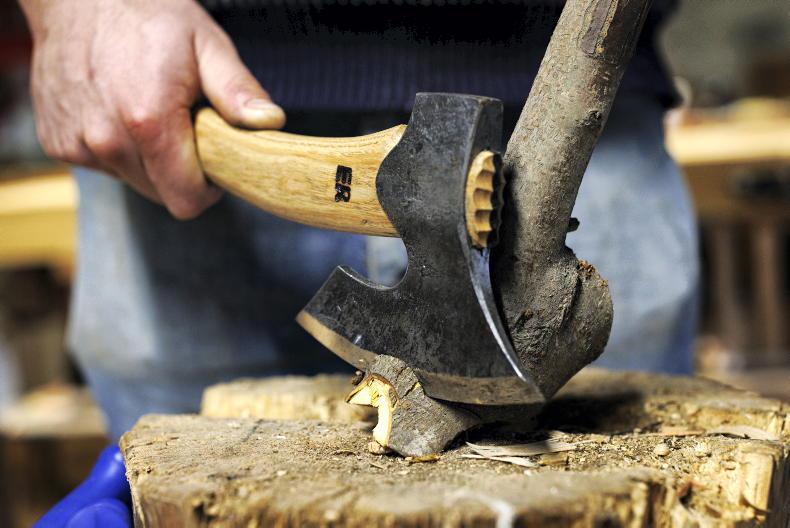
Eoin Reardon at work in his workshop in Crossbarry, Co Cork. / Donal O' Leary
Start basic
Eoin is currently in the process of purchasing a building he can turn into a workshop.
Over the next couple of years, he wants to create a space where people can come together to make things – helping to keep woodworking skills alive and grow an appreciation for handcrafted pieces, both in Ireland and beyond.
For anyone interested in developing woodwork skills or getting practical experience, Eoin’s advice is to find an old rusty tool or buy a cheap axe and fix it up.
“If that means making a handle for it, there are a lot of skills you learn there, like shaping the wood, sanding it, oiling and waxing it, that’s a good gateway.
“And then once you’re done, you’ve got an axe, you can use that as a tool to work on different pieces. Then maybe you should try and make yourself a stool, a hammer or a mallet.
“I always start basic. Just start tinkering around with small pieces, and eventually you will branch out into more complicated things,” says Eoin.
See eoinreardon for Instagram_,@pintofplane for TikTok and @EoinReardon on YouTube.
‘It’s wonderful to know how to fix things,” says woodworker Eoin Reardon, who, at just 24, has carved out his own career restoring woodwork while bringing a fresh digital focus to showcase the craft.
With more than 635,000 followers on Instagram, 3.5 million on TikTok, and 1.77 million on YouTube, the Cork native has built a dedicated audience around restoration, handcrafting, and the promotion of traditional woodworking techniques online.
His interest in the craft began during his time in Scouts, where he spent hours carving and whittling with a penknife.
“I never did woodwork in school, which I regret, but it all worked out in the end,” he says.
After inheriting a workbench from one set of grandparents and a vicegrip from the other, Eoin combined the two and set up a small workshop in a corner of his parents’ garage, where he honed his skills and deepened his appreciation for the craft.
“It was coming into COVID-19 times, and I remember every single evening just heading out to the garage and tinkering with wood,” recalls Eoin.
Building a following online
As a teenager, Eoin was part of the generation that dreamed of becoming a YouTuber, and by the time he was 15, he had already started his own channel. Looking back, he laughs at those first attempts, describing them as “scour”. When he turned the camera on his tool restorations though, everything changed.
“I used to buy a lot of old, rusty tools as well, clean them up and use them. One day, I decided to film one of these restorations and upload it online,” says Eoin.
The video blew up and got over 6 million views on TikTok.
“I was just shocked. I guess people kind of thought it was a satisfying thing to watch,” says Eoin.
Eoin Reardon at work making his walking sticks in his workshop in Crossbarry, Co Cork. \Donal O’ Leary
At the time, Eoin was studying commerce in University College Cork, which he disliked. He went to college because he got the points.
“I find it very hard to excel at anything I have no interest in. And that was the case with college; I was performing poorly.”
Without realising it, Eoin had built an escape route. He was halfway through his third year when he decided to defer and pursue opportunities with woodworking and build his social media channels.
“The plan was to go back and do third year the next year, but that never happened,” he says.
Eoin wishes there were more options presented to him in secondary school because no one came in to promote trades or explain the other skills you can have that lead to rewarding careers. It was all speakers talking about college courses.
Eoin is now promoting these opportunities with his hand tool woodwork workshops in schools.
“I show up, and I’ll get the woodworking students using some of the more traditional tools, and at the end of the day, they all collaborate to put together a chair. I try to spread awareness about using your hands to make a living. I normally have two or three of them booked every month in different schools all around the country,” says Eoin.
That is now one of his favourite parts of his job, travelling around the country doing workshops and demonstrations.
“I had a residency in Bunratty Castle in the summer of 2024, and that was great fun; it was the best job I ever had.
“A blacksmith was also set up and we were alongside each other in front of the castle. We were collaborating, building tools and engaging with the public,” says Eoin.
Another big project he enjoyed was building a currach, which is a traditional Irish boat that he wouldn’t have been able to build if he had a regular job.
“The great thing is, being able to plan your own projects, pick your own time, and work around your life.
“Having that flexibility can also result in your work-life balance becoming blurry though, as I think nothing of working on a Sunday if I have nothing better to be doing, because I love it,” Eoin explains.
Eoin Reardon at work in his workshop in Crossbarry, Co Cork. / Donal O' Leary
Sourcing materials
Initially, Eoin found it difficult to source local wood as he didn’t know where to go. He ended up ordering it from a group that gets it from America, which he now thinks is “ludicrous, because there are trees that grow everywhere in this country”.
“Since then, I befriended a local sawmill owner, and I bought a lot of stuff off him. That was great, because he was getting timber that had come down in storms here, in Cork, cutting it himself, drying it and then selling. It is a perfect local circular economy. It doesn’t make sense to be shipping wood halfway across the world when we have it growing in our back garden here”.
Eoin and his friend recently bought a sawmill together. When an ash tree comes down in a storm, he gets a call or a message, and they go and collect it, often for free. Eoin then cuts it into boards and planks and lets it dry.
“I have had the sawmill for two years now. The first batch of wood is now ready to work. It’s great, I’m getting my material for free now, and its mostly ash that I use,” says Eoin.
The importance of woodwork and passing down the handcrafted skills for Eoin is to keep the tradition alive.
“It only takes one generation not to pass it on and it’s gone forever. An endless lineage going back hundreds, if not thousands of years, of skill passed down through the generations gone, just like that, which I think is a tragedy,” says Eoin.
Eoin is best known now for his crafting and passion for unique walking sticks.
Eoin Reardon at work in his workshop in Crossbarry, Co Cork. / Donal O' Leary
“I was always fascinated by Shillelaghs, the old kind of fighting/walking sticks that were made out of blackthorn. As soon as I befriended a farmer with a blackthorn bush on his land, I was in there with my little saw and lobbers, and I cut myself a blackthorn stick. I only caught one, unfortunately, at the time, I waited two years for it to dry, and I posted a video on YouTube talking about the Shillelagh while filming the making process,” says Eoin.
That video went viral on YouTube; it got over a million views, which would be unusual for a video that’s longer than 10 minutes.
“I got inundated with messages from people looking to purchase Shillelaghs. I didn’t have any to sell, but I had one. I actually got a local Shillelagh maker in Killorglin, Co Kerry, who messaged me saying he had sold €5,000 worth of Shillelaghs over the weekend because of that video,” says Eoin.
Eoin immediately went back out and harvested more blackthorn that he is now starting to turn into different walking sticks.
“I’ve experimented with other sorts of walking sticks as well. There seems to be something about a stick that is very appealing to lots of people. I think it’s nostalgic as well. Everyone can remember finding a stick as a child and playing with it,” he says.
“What fascinates me most is how accessible it is – and how we’ve kind of lost those traditions. Folk furniture is just everyday pieces like stools, tables, chairs, and dressers, made by farmers in their spare time.
“It wasn’t complicated or out of reach. These people were skilled, sure, but they weren’t trained cabinet makers. They were handy and built what they needed to make life easier.
“The amazing thing is, a lot of it is still around hundreds of years later,” he says.
Eoin Reardon at work in his workshop in Crossbarry, Co Cork. / Donal O' Leary
Start basic
Eoin is currently in the process of purchasing a building he can turn into a workshop.
Over the next couple of years, he wants to create a space where people can come together to make things – helping to keep woodworking skills alive and grow an appreciation for handcrafted pieces, both in Ireland and beyond.
For anyone interested in developing woodwork skills or getting practical experience, Eoin’s advice is to find an old rusty tool or buy a cheap axe and fix it up.
“If that means making a handle for it, there are a lot of skills you learn there, like shaping the wood, sanding it, oiling and waxing it, that’s a good gateway.
“And then once you’re done, you’ve got an axe, you can use that as a tool to work on different pieces. Then maybe you should try and make yourself a stool, a hammer or a mallet.
“I always start basic. Just start tinkering around with small pieces, and eventually you will branch out into more complicated things,” says Eoin.
See eoinreardon for Instagram_,@pintofplane for TikTok and @EoinReardon on YouTube.







SHARING OPTIONS