With every clink of the hammer and sweep of the bristle brush, Charlie King, at just 20, uses precision and sheer strength to manually shape a horseshoe every time she enters a yard. In doing so she ensures each horse leaves more comfortable than when she arrived.
While helping to maintain the critical craftsmanship essential to the equine sector, Charlie is also passionate about promoting women in the industry. She is one of four female apprentices currently training to become a qualified farrier.
“There aren’t that many female farriers in the country, I think there are only five or six. A lot of people expect a man to come in [to the yard].”
She says she has gotten a few smart remarks about being a woman – especially as her name is Charlie, “but I just smile and stay going. It used to affect me a bit; that people were doubting my abilities, but it doesn’t bother me now,” she says.
The physically demanding and skilled nature involved in farrier work means less people are going into the industry. In total, there are 152 farriers on the official Farriery Ireland register and a total of 350 believed to be operating in Ireland.
The increase in horse ownership and the high demand for qualified people has resulted in a shortage of farriers. Farriery Ireland runs the Irish School of Farriery, with eight training places under the SOLAS apprenticeship scheme every year.
Joe Osborne, chairperson of Farriery Ireland, emphasises that without qualified master farriers, there would be no horses.
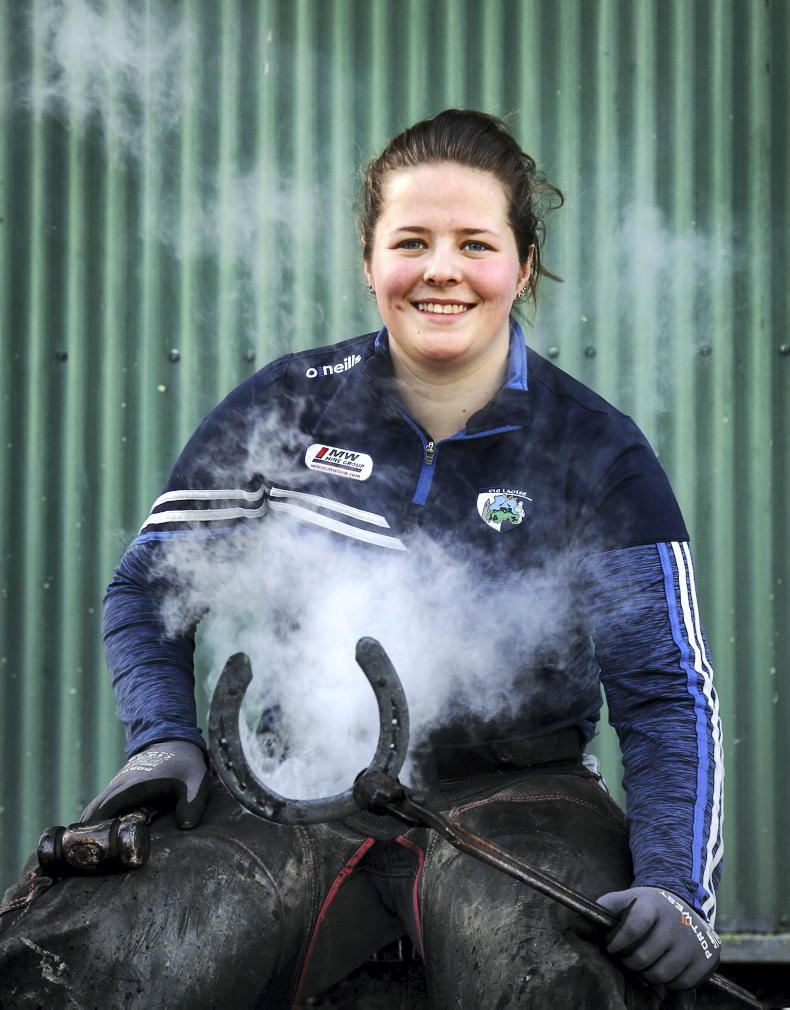
Charlie King is one of four female farrier apprentices in Ireland, preserving a skilled trade. \ Lorraine O’Sullivan
“Skilled farriers play a crucial role in the Irish equine sector and help the country maintain its status as a source of quality horses. Thoroughbreds, sport horses and pleasure horses all need dependable and regular foot care. It takes training and experience to achieve high standards of farriery, and the mastery is in strong demand for those services across the length and breadth of the country,” says Joe.
Born in Manchester, Charlie moved to Rathdowney, Co Laois, at the age of 12. While helping her neighbour, Dave Murphy in his yard, she developed a love for horses and started breeding and selling a few herself.
“When I was 16, I said, I had no interest in staying in school. I was never any good at it, and I was always drawn towards practical subjects like woodwork, art and metalwork. I decided to do something different,” she explains.
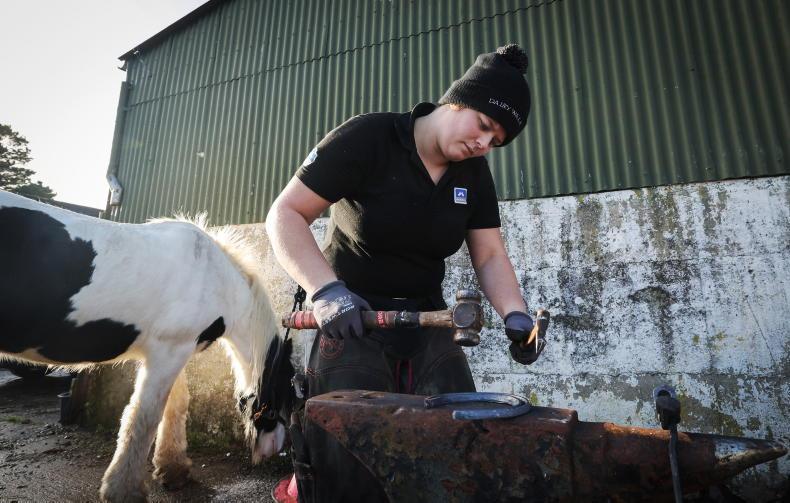
Charlie preparing the shoe. \ Lorraine O’Sullivan
Apprenticeship training
Spending more time outside during COVID lockdowns allowed Charlie’s grá for horses to grow. Charlie’s farrier at home suggested she should try shoeing horses, although her mum encouraged her to finish school.
“I was happy, but I was scared that it wasn’t going to work out, and I was going to have to go back. It was a big jump from being in school surrounded by my friends to being out in the big, bad world, not really having a whole lot of friends at the time or a driving licence to get myself where I needed to go,” she explains.
At the time, Dan Maher, who was a farrier 15 minutes down the road, was looking for an apprentice.
“A couple of weeks ended up being two and a half years working with Dan, where I was taught everything I know,” she says.
Once Charlie started shoeing horses herself, she soon realised the amount of skill and diversity in the trade.
“Every horse is on a separate journey, and every shoe is different,” she says.
“I enjoy the whole thing, getting up in the morning, even when it is lashing rain or snowing and having to go outside and work in the cold weather. For some reason, I actually enjoy that because you’re outside doing something, talking to people from across the country,” she says.
Charlie worked with Dan as his apprentice, completing part of her on-the-job phase, where she was required to learn from shadowing a master farrier.
The curriculum also consists of three phases of off-the-job training, which takes place in the School of Farriery Ireland located in the Curragh. The overall duration of the apprenticeship is a minimum of four years, with seven phases in total.
“The repetitiveness in the workshop really helped because you learn more and more every time you make a shoe. Then you have the written and theory side, which I struggled with. I was very lucky; the teacher would answer the same question a million times in a different way so I would eventually understand,” she explains.
It’s very important to preserve the skill of farriery. People think you walk in and pick up a horse’s foot, take the shoes off, trim them down and put on a new shoe. But when you’re under the horse, you have to think about everything
Charlie decided to work with other farriers to gain more experience in different areas of the craft, which included veterinary care and thoroughbred racehorses.
“Now I am working in Kilkenny alongside Paul Byrne, and I’m doing a lot of show jumping horses. I have seen a bit of everything, which has been a great experience, especially during the apprenticeship training,” says Charlie.
With an increase in the number of female farrier apprentices in recent years, Charlie emphasises the importance of attracting young people into the craft.
“It’s very important to preserve the skill of farriery. People think you walk in and pick up a horse’s foot, take the shoes off, trim them down and put on a new shoe. But when you’re under the horse, you have to think about everything.
“Before you even shoe the horse, you have to look at the horse and see how it’s put together, and what way your shoe is going to affect the animal when you put it on,” Charlie explains.
“If the horse needs extra help, you might want to change or adapt the shoe in some way. Or even put on a special shoe. You have to think about a lot of things while you’re working,” says Charlie.
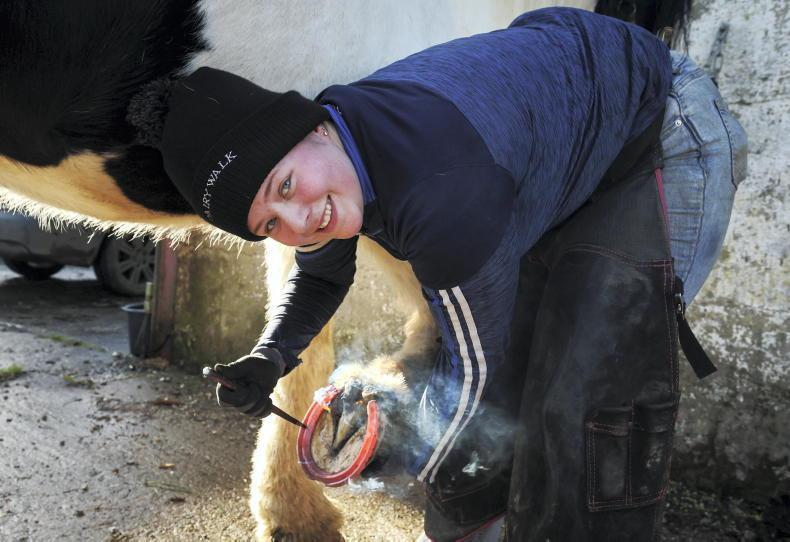
Charlie King at work shoeing a horse\ Lorraine O’Sullivan
Labour-intensive work
Farriers have to be able to do anything that’s needed at the time of shoeing and think on their feet to find a solution, as they are normally working on their own.
“It is a very lonely job in one sense, as you’re driving around the whole time in the car by yourself. It’s a job where a lot of older people are shoeing horses, there’s very few young people getting into it.
“It’s tough like – not only is it tough on your body, and tough on everything else, it’s very tough on your head, especially listening to people’s problems,” she says honestly.
Having hurt her back recently, Charlie admits the labour-intensive nature can be a lot. Which is why during phase two of the apprenticeship, a physiotherapist speaks to the students about taking care of their bodies during their career.
“It’s weird to think that the job you do for a living is actually hurting you. Being bent over 24/7, your body isn’t made for that. Some farriers do get hurt, and some avoid it. I think it is just pot luck.
“My advice would be; if you’re thinking of starting up, make sure you learn from somebody who will show you everything that they can and who will be a good teacher,” she says.
Looking back, does Charlie ever regret her decision to leave school at 16?
“I wish I sat the Leaving Certificate. That way I would always have something to fall back on, but I love this job; it is probably one of the best jobs in the world. It gets me up in the morning, I get to talk to people, and I get to do my favourite thing, which is be around horses and shoe horses. It’s great, I wouldn’t change it.”
See farrieryireland.ie.
Watch Charlie King in action. Scan the QR code below.

With every clink of the hammer and sweep of the bristle brush, Charlie King, at just 20, uses precision and sheer strength to manually shape a horseshoe every time she enters a yard. In doing so she ensures each horse leaves more comfortable than when she arrived.
While helping to maintain the critical craftsmanship essential to the equine sector, Charlie is also passionate about promoting women in the industry. She is one of four female apprentices currently training to become a qualified farrier.
“There aren’t that many female farriers in the country, I think there are only five or six. A lot of people expect a man to come in [to the yard].”
She says she has gotten a few smart remarks about being a woman – especially as her name is Charlie, “but I just smile and stay going. It used to affect me a bit; that people were doubting my abilities, but it doesn’t bother me now,” she says.
The physically demanding and skilled nature involved in farrier work means less people are going into the industry. In total, there are 152 farriers on the official Farriery Ireland register and a total of 350 believed to be operating in Ireland.
The increase in horse ownership and the high demand for qualified people has resulted in a shortage of farriers. Farriery Ireland runs the Irish School of Farriery, with eight training places under the SOLAS apprenticeship scheme every year.
Joe Osborne, chairperson of Farriery Ireland, emphasises that without qualified master farriers, there would be no horses.
Charlie King is one of four female farrier apprentices in Ireland, preserving a skilled trade. \ Lorraine O’Sullivan
“Skilled farriers play a crucial role in the Irish equine sector and help the country maintain its status as a source of quality horses. Thoroughbreds, sport horses and pleasure horses all need dependable and regular foot care. It takes training and experience to achieve high standards of farriery, and the mastery is in strong demand for those services across the length and breadth of the country,” says Joe.
Born in Manchester, Charlie moved to Rathdowney, Co Laois, at the age of 12. While helping her neighbour, Dave Murphy in his yard, she developed a love for horses and started breeding and selling a few herself.
“When I was 16, I said, I had no interest in staying in school. I was never any good at it, and I was always drawn towards practical subjects like woodwork, art and metalwork. I decided to do something different,” she explains.
Charlie preparing the shoe. \ Lorraine O’Sullivan
Apprenticeship training
Spending more time outside during COVID lockdowns allowed Charlie’s grá for horses to grow. Charlie’s farrier at home suggested she should try shoeing horses, although her mum encouraged her to finish school.
“I was happy, but I was scared that it wasn’t going to work out, and I was going to have to go back. It was a big jump from being in school surrounded by my friends to being out in the big, bad world, not really having a whole lot of friends at the time or a driving licence to get myself where I needed to go,” she explains.
At the time, Dan Maher, who was a farrier 15 minutes down the road, was looking for an apprentice.
“A couple of weeks ended up being two and a half years working with Dan, where I was taught everything I know,” she says.
Once Charlie started shoeing horses herself, she soon realised the amount of skill and diversity in the trade.
“Every horse is on a separate journey, and every shoe is different,” she says.
“I enjoy the whole thing, getting up in the morning, even when it is lashing rain or snowing and having to go outside and work in the cold weather. For some reason, I actually enjoy that because you’re outside doing something, talking to people from across the country,” she says.
Charlie worked with Dan as his apprentice, completing part of her on-the-job phase, where she was required to learn from shadowing a master farrier.
The curriculum also consists of three phases of off-the-job training, which takes place in the School of Farriery Ireland located in the Curragh. The overall duration of the apprenticeship is a minimum of four years, with seven phases in total.
“The repetitiveness in the workshop really helped because you learn more and more every time you make a shoe. Then you have the written and theory side, which I struggled with. I was very lucky; the teacher would answer the same question a million times in a different way so I would eventually understand,” she explains.
It’s very important to preserve the skill of farriery. People think you walk in and pick up a horse’s foot, take the shoes off, trim them down and put on a new shoe. But when you’re under the horse, you have to think about everything
Charlie decided to work with other farriers to gain more experience in different areas of the craft, which included veterinary care and thoroughbred racehorses.
“Now I am working in Kilkenny alongside Paul Byrne, and I’m doing a lot of show jumping horses. I have seen a bit of everything, which has been a great experience, especially during the apprenticeship training,” says Charlie.
With an increase in the number of female farrier apprentices in recent years, Charlie emphasises the importance of attracting young people into the craft.
“It’s very important to preserve the skill of farriery. People think you walk in and pick up a horse’s foot, take the shoes off, trim them down and put on a new shoe. But when you’re under the horse, you have to think about everything.
“Before you even shoe the horse, you have to look at the horse and see how it’s put together, and what way your shoe is going to affect the animal when you put it on,” Charlie explains.
“If the horse needs extra help, you might want to change or adapt the shoe in some way. Or even put on a special shoe. You have to think about a lot of things while you’re working,” says Charlie.
Charlie King at work shoeing a horse\ Lorraine O’Sullivan
Labour-intensive work
Farriers have to be able to do anything that’s needed at the time of shoeing and think on their feet to find a solution, as they are normally working on their own.
“It is a very lonely job in one sense, as you’re driving around the whole time in the car by yourself. It’s a job where a lot of older people are shoeing horses, there’s very few young people getting into it.
“It’s tough like – not only is it tough on your body, and tough on everything else, it’s very tough on your head, especially listening to people’s problems,” she says honestly.
Having hurt her back recently, Charlie admits the labour-intensive nature can be a lot. Which is why during phase two of the apprenticeship, a physiotherapist speaks to the students about taking care of their bodies during their career.
“It’s weird to think that the job you do for a living is actually hurting you. Being bent over 24/7, your body isn’t made for that. Some farriers do get hurt, and some avoid it. I think it is just pot luck.
“My advice would be; if you’re thinking of starting up, make sure you learn from somebody who will show you everything that they can and who will be a good teacher,” she says.
Looking back, does Charlie ever regret her decision to leave school at 16?
“I wish I sat the Leaving Certificate. That way I would always have something to fall back on, but I love this job; it is probably one of the best jobs in the world. It gets me up in the morning, I get to talk to people, and I get to do my favourite thing, which is be around horses and shoe horses. It’s great, I wouldn’t change it.”
See farrieryireland.ie.
Watch Charlie King in action. Scan the QR code below.





SHARING OPTIONS