A new year inspires many of us to adopt healthier habits but one that could actually save our lives is a pledge to become a safer driver.
Fatalities on Irish roads in 2025 reached 190, an increase of 15 on the previous 12 months. Despite hard-hitting media campaigns and regular pleas from An Garda Síochana and families of victims for all road users to exercise caution, the message of road safety still isn’t hitting home.
Legislation was proposed in April last year to streamline information on road collisions and make efficiencies in the way motor tax certificates are issued.
However, a delay in progressing the Bill through the Oireachtas has allowed Minister of State at the Department of Transport, Sean Canney TD, to introduce further measures to tackle motoring offences. These include tougher implementation of penalty point offenses and the ability for a motorist to be charged with careless driving if acquitted of the more serious dangerous driving charge.

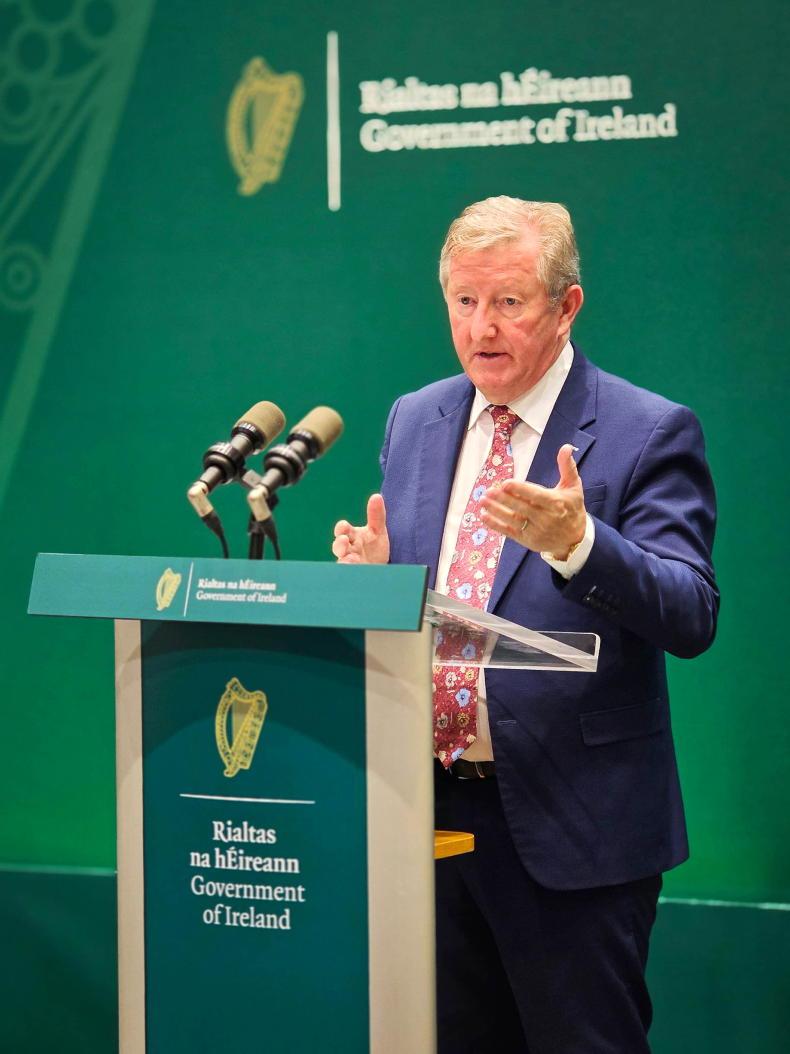
Minister of State at the Department of Transport Sean Canney.
Speaking to Irish Country Living, Minister Canney said he was committed to delivering the Bill in the first half of 2026 as part of ongoing efforts by Government to reduce road deaths.
“The General Scheme for the National Vehicle and Driver File Bill 2025 has five main provisions, but I am proposing a further six, the first of which would allow a defendant who is acquitted of a charge of dangerous driving, to be charged with the lesser charge of careless driving which is currently not the case,” he explains.
“Another amendment relates to the rules and procedures by which penalty points will be applied where a driver can receive more than one set of penalty points in a single incident.
“At present, a driver caught committing multiple penalty point offenses receives points only for the offence carrying the highest number of points. Going forward, those caught committing multiple offenses will receive at least two sets of penalty points, and potentially more in the event of an unsuccessful court challenge. Additional clarity is required in the legislation before this can happen so the amendment I am bringing to the bill is looking to provide this clarity.”
Those campaigning for safer roads have been calling for a toughening up of the penalty point system for many years, arguing that the current scheme does not provide enough of a deterrent to motorists who continue to break the law.
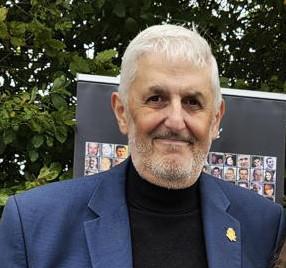
Irish Road Victims Association vice president and spokesperson Leo Lieghio.
Leo Lieghio is the vice president of the Irish Road Victims Association, based in Mullingar, Co Westmeath, which is the national charity for road crash victims in Ireland. He lost his 16-year-old daughter Marsia to a hit-and-run collision in Dublin 20 years ago and has been campaigning for road safety ever since.

Leo’s daughter Marsia died in October 2005 when she was run down while using a pedestrian crossing near her home in Clondalkin, Co Dublin. \Picture supplied
Speaking to Irish Country Living he says the Government are failing the Irish public by delaying initiatives that could reduce road deaths.
“There are no deterrents for those caught speeding for instance, as they have four chances before they are put off the road,” he says.
“Penalty points for speeding should be doubled with bigger fines if people are to learn. The Government are too busy banning roadside memorials, which are just a reminder of their failures. These changes are just papering over the cracks.
“Motoring offences are not being treated as the serious crimes they are. If I went out and killed someone with a gun I’d be tried for homicide, yet if I sit into my car drunk and knock down and kill someone, the charge is dangerous driving causing death.”
Leo also believes measures promised to reduce road deaths that still haven’t been introduced should be prioritised in the coming months.
“We have heard a lot of talk about the introduction of static speed cameras, yet there are still only 12 in the entire country. Scotland has over 400.
Likewise, we were told that those convicted of drink driving would be required to have an alcohol interlocking device installed in their vehicle before they could drive after their ban expires. This is a breathalyser device where you have to blow in to it before the engine will turn on. Two years on, this proposal is still at the testing stage, so it’s very frustrating.”
Slow progress
Minister Canney acknowledges that the slow progress of introducing new legislation in the area of road safety has been frustrating.
“This Bill was on the Government’s ‘priority for drafting’ list when it was approved last April but competing legislative drafting priorities have meant it was not sufficiently progressed in 2025,” he adds.
“Government approval is now being sought for these additional measures with the aim of speeding up progression of the Bill through the Houses of the Oireachtas. This will expedite its passage through the various stages with the aim of the legislation being enacted in early 2026.”
Any further postponements to enacting the legislation would delay the planned implementation of a new system to modernise how penalty points and disqualifications are recorded and managed.
The new database is due to be rolled out in July and will mark the first major upgrade to the IT system since the introduction of penalty points in 2002. The updated software will allow for multiple offence incidents to be recorded.

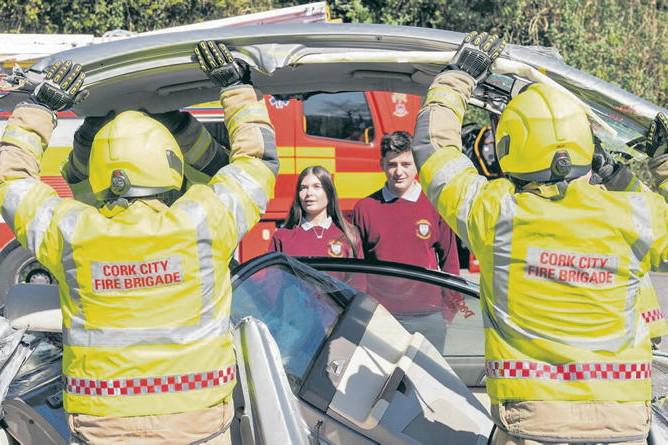
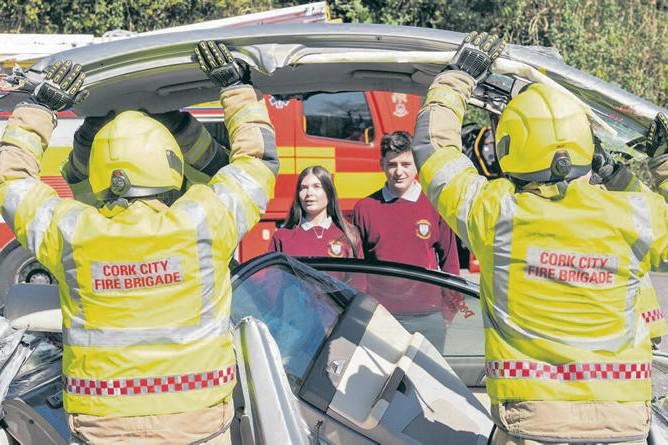
Road safety graphic.
Meanwhile, Leo has been travelling the country in recent years, sharing the IRVA’s campaign for road safety.
Teaming up with insurance company AXA, the IRVA is visiting Transition Year students to give information talks and demonstrations on the devastation brought to so many by road deaths.
“It is down to personal choice and responsibility. We all choose our actions when we sit behind the wheel,” adds Leo.
“The talks I give in secondary schools are aimed at young people before they become drivers. I share my experience of losing Marsia and the impact that continues to have on my family.
“I have had several students, mainly girls but also some lads, come up to me after the talk to offer their sympathies and say they will keep my message in mind, but the problem is it’s probably another two or three years before they are driving themselves, so the worry is they won’t remember.
“We will visit schools in Navan, Mullingar and Killarney in the first few months of 2026 and I’m hoping my message will connect with young people, that their safety and that of every other road user depends on the choices they make.
“If I can get through to even one young person, to convince them of the need to drive with care and respect for other road users, then I’ll have achieved my goal.”
’Youth pledge’
IRVA launched a social media campaign last summer to encourage young drivers to sign up to its ‘Youth Pledge Commitment’.
Leo says the campaign is about more than following rules, it’s about educating young people to have respect for their own lives, that of their friends and families and everyone who shares the roads.
“One poor decision can change everything, but one smart decision can protect the people you care about most,” he explains.
“In asking young people to commit to the youth pledge, we are also asking them to speak up if something doesn’t feel safe. If they drive, they need to take that privilege responsibly, whereas if they’re a passenger we want them to be the one to set the standard.
“We are also empowering them to spread the message as only they can on the vast array of social media platforms they are so savvy with. We could never reach the number of young people that teenagers interact with themselves, so as part of the Youth Pledge, we’re asking them to spread the message on their own socials and convince their peers of the merits of our campaign. Every pledge brings us closer to safer roads and saved lives.”
A new year inspires many of us to adopt healthier habits but one that could actually save our lives is a pledge to become a safer driver.
Fatalities on Irish roads in 2025 reached 190, an increase of 15 on the previous 12 months. Despite hard-hitting media campaigns and regular pleas from An Garda Síochana and families of victims for all road users to exercise caution, the message of road safety still isn’t hitting home.
Legislation was proposed in April last year to streamline information on road collisions and make efficiencies in the way motor tax certificates are issued.
However, a delay in progressing the Bill through the Oireachtas has allowed Minister of State at the Department of Transport, Sean Canney TD, to introduce further measures to tackle motoring offences. These include tougher implementation of penalty point offenses and the ability for a motorist to be charged with careless driving if acquitted of the more serious dangerous driving charge.
Minister of State at the Department of Transport Sean Canney.
Speaking to Irish Country Living, Minister Canney said he was committed to delivering the Bill in the first half of 2026 as part of ongoing efforts by Government to reduce road deaths.
“The General Scheme for the National Vehicle and Driver File Bill 2025 has five main provisions, but I am proposing a further six, the first of which would allow a defendant who is acquitted of a charge of dangerous driving, to be charged with the lesser charge of careless driving which is currently not the case,” he explains.
“Another amendment relates to the rules and procedures by which penalty points will be applied where a driver can receive more than one set of penalty points in a single incident.
“At present, a driver caught committing multiple penalty point offenses receives points only for the offence carrying the highest number of points. Going forward, those caught committing multiple offenses will receive at least two sets of penalty points, and potentially more in the event of an unsuccessful court challenge. Additional clarity is required in the legislation before this can happen so the amendment I am bringing to the bill is looking to provide this clarity.”
Those campaigning for safer roads have been calling for a toughening up of the penalty point system for many years, arguing that the current scheme does not provide enough of a deterrent to motorists who continue to break the law.
Irish Road Victims Association vice president and spokesperson Leo Lieghio.
Leo Lieghio is the vice president of the Irish Road Victims Association, based in Mullingar, Co Westmeath, which is the national charity for road crash victims in Ireland. He lost his 16-year-old daughter Marsia to a hit-and-run collision in Dublin 20 years ago and has been campaigning for road safety ever since.
Leo’s daughter Marsia died in October 2005 when she was run down while using a pedestrian crossing near her home in Clondalkin, Co Dublin. \Picture supplied
Speaking to Irish Country Living he says the Government are failing the Irish public by delaying initiatives that could reduce road deaths.
“There are no deterrents for those caught speeding for instance, as they have four chances before they are put off the road,” he says.
“Penalty points for speeding should be doubled with bigger fines if people are to learn. The Government are too busy banning roadside memorials, which are just a reminder of their failures. These changes are just papering over the cracks.
“Motoring offences are not being treated as the serious crimes they are. If I went out and killed someone with a gun I’d be tried for homicide, yet if I sit into my car drunk and knock down and kill someone, the charge is dangerous driving causing death.”
Leo also believes measures promised to reduce road deaths that still haven’t been introduced should be prioritised in the coming months.
“We have heard a lot of talk about the introduction of static speed cameras, yet there are still only 12 in the entire country. Scotland has over 400.
Likewise, we were told that those convicted of drink driving would be required to have an alcohol interlocking device installed in their vehicle before they could drive after their ban expires. This is a breathalyser device where you have to blow in to it before the engine will turn on. Two years on, this proposal is still at the testing stage, so it’s very frustrating.”
Slow progress
Minister Canney acknowledges that the slow progress of introducing new legislation in the area of road safety has been frustrating.
“This Bill was on the Government’s ‘priority for drafting’ list when it was approved last April but competing legislative drafting priorities have meant it was not sufficiently progressed in 2025,” he adds.
“Government approval is now being sought for these additional measures with the aim of speeding up progression of the Bill through the Houses of the Oireachtas. This will expedite its passage through the various stages with the aim of the legislation being enacted in early 2026.”
Any further postponements to enacting the legislation would delay the planned implementation of a new system to modernise how penalty points and disqualifications are recorded and managed.
The new database is due to be rolled out in July and will mark the first major upgrade to the IT system since the introduction of penalty points in 2002. The updated software will allow for multiple offence incidents to be recorded.
Road safety graphic.
Meanwhile, Leo has been travelling the country in recent years, sharing the IRVA’s campaign for road safety.
Teaming up with insurance company AXA, the IRVA is visiting Transition Year students to give information talks and demonstrations on the devastation brought to so many by road deaths.
“It is down to personal choice and responsibility. We all choose our actions when we sit behind the wheel,” adds Leo.
“The talks I give in secondary schools are aimed at young people before they become drivers. I share my experience of losing Marsia and the impact that continues to have on my family.
“I have had several students, mainly girls but also some lads, come up to me after the talk to offer their sympathies and say they will keep my message in mind, but the problem is it’s probably another two or three years before they are driving themselves, so the worry is they won’t remember.
“We will visit schools in Navan, Mullingar and Killarney in the first few months of 2026 and I’m hoping my message will connect with young people, that their safety and that of every other road user depends on the choices they make.
“If I can get through to even one young person, to convince them of the need to drive with care and respect for other road users, then I’ll have achieved my goal.”
’Youth pledge’
IRVA launched a social media campaign last summer to encourage young drivers to sign up to its ‘Youth Pledge Commitment’.
Leo says the campaign is about more than following rules, it’s about educating young people to have respect for their own lives, that of their friends and families and everyone who shares the roads.
“One poor decision can change everything, but one smart decision can protect the people you care about most,” he explains.
“In asking young people to commit to the youth pledge, we are also asking them to speak up if something doesn’t feel safe. If they drive, they need to take that privilege responsibly, whereas if they’re a passenger we want them to be the one to set the standard.
“We are also empowering them to spread the message as only they can on the vast array of social media platforms they are so savvy with. We could never reach the number of young people that teenagers interact with themselves, so as part of the Youth Pledge, we’re asking them to spread the message on their own socials and convince their peers of the merits of our campaign. Every pledge brings us closer to safer roads and saved lives.”





SHARING OPTIONS