At this time of the year, it’s tempting to retreat indoors, snuggle up by the fire and abandon the garden. But, by doing so, you will be missing much. A garden designed and planted with winter interest in mind can truly shine.
While the winter garden should not be expected to offer the mass spectacle so easily achieved in other seasons, its beauty is no less compelling. Winter encourages us to notice the detail and subtle beauty of flowers, leaves and berries.
There is increased awareness of the artistry of nature in the beautiful patterns and richly coloured stems of trees and shrubs and a greater appreciation of the sculptural forms and textures of plants laid bare.
A good starting point for improving your garden’s winter appeal is to consider the views from the windows of your most-used rooms. Aim to plant at least one winter showstopper in each vista. Look for plants with peeling bark, colourful branches, evergreen foliage, winter flowers, cones, decorative seed heads or bright berries. Layer planting to create interest at every level with an upper canopy of trees or large shrubs, a mid-storey of smaller shrubs and evergreen ground cover beneath. Contrast different plant forms for visual variety. For example, team upright, slender shrubs with mounding evergreen forms.
Structure is essential to winter garden style. Crisp hedging and topiary, such as box or yew, clipped and shaped into decorative balls, pyramids or other artful forms provide elegant lines and strong focal points throughout the colder months. Evergreen shrubs add substance and volume to borders.
Amongst my favourites are Choisya x dewitteana ‘Aztec Pearl’, Pittosporum tenuifolium which comes in purple and variegated leaved varieties, shade-loving skimmias, Viburnum davidii, holly-like Osmanthus heterophyllus ‘Goshiki’, and hollies. I particularly like Ilex x meserveae ‘Blue Prince’, a male holly valued for its lustrous, deep blue green, spiny leaves, eye-catching purple stems and dense growth habit. Thoughtfully placed conifers will also add reliable colour, texture and shapely silhouettes when other plants are dormant. They come in various sizes and colours from blue-green spruces like Picea pungens ‘Glauca Globosa’ to the golden hues of the dwarf pine Pinus mugo ‘Carsten’s Wintergold’. When planting evergreens, aim for a balance that provides a strong backbone of evergreen structure without making the garden feel overwhelming. Ideally one-quarter to one-third of shrubs should be evergreen.
Evergreens
But evergreens are only part of the winter picture. Plants with coloured bark and textured stems can be used to make a dramatic statement, especially when set against a solid backdrop, such as an evergreen hedge, or a fence or wall painted in a dark colour, such as navy blue, slate grey or even black.
On damp, heavy soil, the vivid, sealing-wax red stems of the coloured-stemmed dogwood Cornus alba ‘Sibirica’ really command attention and a group of them looks spectacular alongside two or three silver birches. It needs to be cut back, almost to the ground, by mid-March to produce fresh, vibrantly coloured stems. Other trees to consider with standout bark include the paperbark maple (Acer griseum), the Tibetan cherry (Prunus serrula), or snakebark maples like Acer davidii ‘Serpentine’.
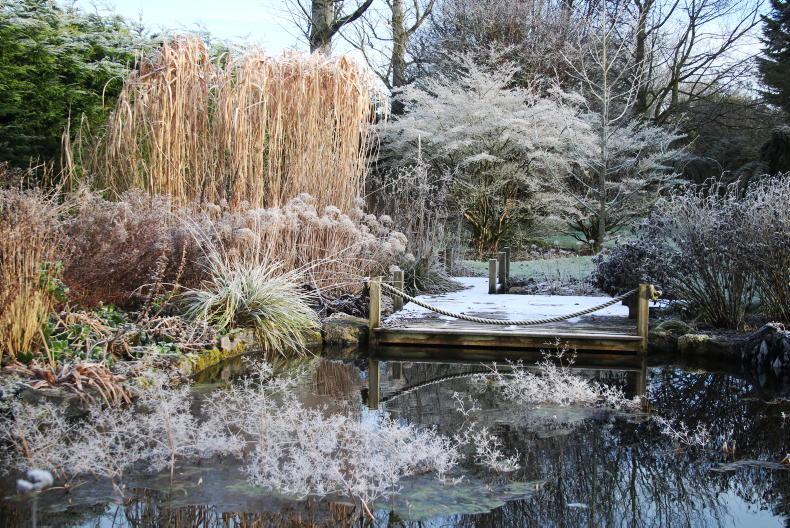
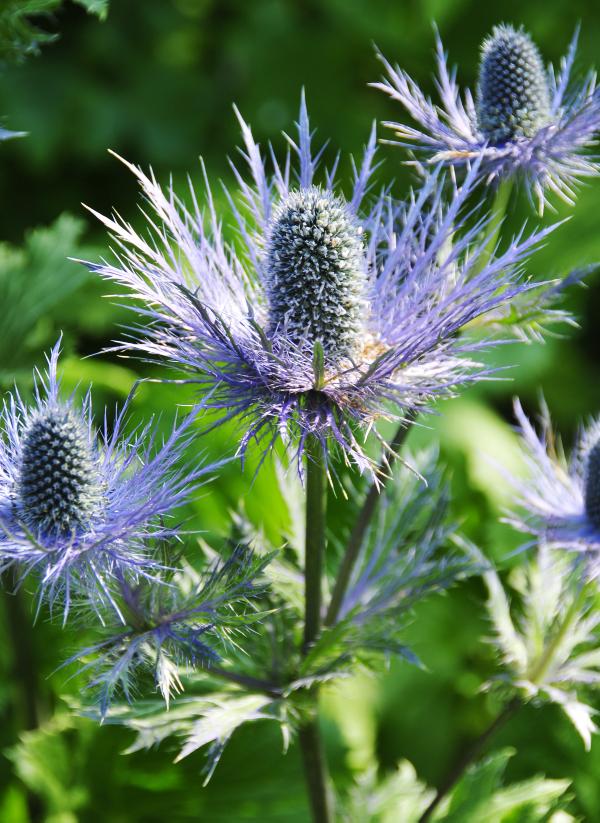
Winter gardens also embrace the faded elegance of summer perennials. Leave in place the attractive seed heads and skeletal remains of plants such as rudbeckia, teasels, echinops, candelabra primulas, astilbes and Phlomis russeliana so that their intricate details can be highlighted by sparkling frost.
It’s also worth leaving ornamental grasses standing intact over winter – they add movement, texture and warm beige tones, especially varieties of Miscanthus and Panicum, which look particularly beautiful when dusted with frost. We cut them down in March when their new growth begins to sprout.
When walking around the garden in winter, an unexpected pleasure is encountering fragrant plants such as Sarcococca hookeriana ‘Winter Gem’, a form of Christmas box with tiny yet powerfully scented flowers, or deliciously perfumed Daphne bholua ‘Jacqueline Postill’ which is blooming now all the way through to spring.
The witch hazel, Hamamelis x intermedia ‘Pallida’, also provides fragrance and luminous colour, as does Viburnum x bodnantense ‘Charles Lamont’ and the wintersweet, Chimonanthus praecox. Underplant these shrubs with bulbs and flowers including Cyclamen coum, hellebores, snowdrops, crocus, aconites and winter iris to enrich the display.
Q&A: My holly tree has no berries?
I have a holly tree about nine years old and it gets lots of flowers but never berries.
What is the reason? – Deirdre, Co Cavan
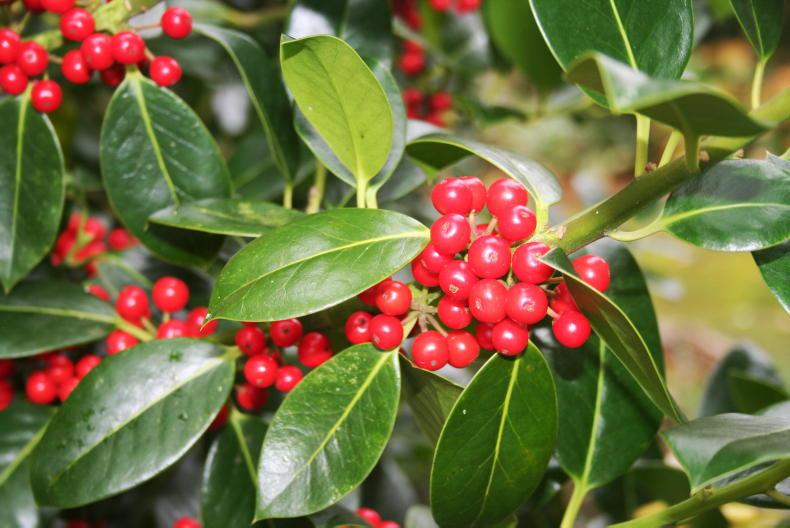
Only female holly bushes produce berries.
Not all holly bushes produce berries. While most plants produce flowers with both male and female parts, hollies have their male and female flower parts on separate plants. Consequently, both male and female plants need to be present in order to produce berries and only female holly bushes will have the red berries. This means that if your holly bush does not have berries, it may be male and simply cannot produce berries or it may be female but without any male holly bushes nearby to pollinate its flowers, it will not produce berries either. Sometimes a holly will have no berries if the plant has been over pruned or pruned too early.
Wrap: To safeguard vulnerable perennials, such as agapanthus, from frost damage, apply a thick layer of mulch (compost, bark, leaf mould or leaves) to insulate the roots and keep them from freezing. Wrap delicate shrubs with horticultural fleece to protect them from frost.
Plant: Plant up a few winter containers with evergreens and plants with colourful berries or flowers and position them near the house.
Prune: If you need to prune trees in the acer or birch families, do this as soon as possible.
Mary Keenan and Ross Doyle run Gash Gardens, Co Laois. See gashgardens.ie
Do you have a gardening question? Email
icl@farmersjournal.ie or post to Irish Country Living, Irish Farm Centre, Bluebell, Dublin 12.
At this time of the year, it’s tempting to retreat indoors, snuggle up by the fire and abandon the garden. But, by doing so, you will be missing much. A garden designed and planted with winter interest in mind can truly shine.
While the winter garden should not be expected to offer the mass spectacle so easily achieved in other seasons, its beauty is no less compelling. Winter encourages us to notice the detail and subtle beauty of flowers, leaves and berries.
There is increased awareness of the artistry of nature in the beautiful patterns and richly coloured stems of trees and shrubs and a greater appreciation of the sculptural forms and textures of plants laid bare.
A good starting point for improving your garden’s winter appeal is to consider the views from the windows of your most-used rooms. Aim to plant at least one winter showstopper in each vista. Look for plants with peeling bark, colourful branches, evergreen foliage, winter flowers, cones, decorative seed heads or bright berries. Layer planting to create interest at every level with an upper canopy of trees or large shrubs, a mid-storey of smaller shrubs and evergreen ground cover beneath. Contrast different plant forms for visual variety. For example, team upright, slender shrubs with mounding evergreen forms.
Structure is essential to winter garden style. Crisp hedging and topiary, such as box or yew, clipped and shaped into decorative balls, pyramids or other artful forms provide elegant lines and strong focal points throughout the colder months. Evergreen shrubs add substance and volume to borders.
Amongst my favourites are Choisya x dewitteana ‘Aztec Pearl’, Pittosporum tenuifolium which comes in purple and variegated leaved varieties, shade-loving skimmias, Viburnum davidii, holly-like Osmanthus heterophyllus ‘Goshiki’, and hollies. I particularly like Ilex x meserveae ‘Blue Prince’, a male holly valued for its lustrous, deep blue green, spiny leaves, eye-catching purple stems and dense growth habit. Thoughtfully placed conifers will also add reliable colour, texture and shapely silhouettes when other plants are dormant. They come in various sizes and colours from blue-green spruces like Picea pungens ‘Glauca Globosa’ to the golden hues of the dwarf pine Pinus mugo ‘Carsten’s Wintergold’. When planting evergreens, aim for a balance that provides a strong backbone of evergreen structure without making the garden feel overwhelming. Ideally one-quarter to one-third of shrubs should be evergreen.
Evergreens
But evergreens are only part of the winter picture. Plants with coloured bark and textured stems can be used to make a dramatic statement, especially when set against a solid backdrop, such as an evergreen hedge, or a fence or wall painted in a dark colour, such as navy blue, slate grey or even black.
On damp, heavy soil, the vivid, sealing-wax red stems of the coloured-stemmed dogwood Cornus alba ‘Sibirica’ really command attention and a group of them looks spectacular alongside two or three silver birches. It needs to be cut back, almost to the ground, by mid-March to produce fresh, vibrantly coloured stems. Other trees to consider with standout bark include the paperbark maple (Acer griseum), the Tibetan cherry (Prunus serrula), or snakebark maples like Acer davidii ‘Serpentine’.
Winter gardens also embrace the faded elegance of summer perennials. Leave in place the attractive seed heads and skeletal remains of plants such as rudbeckia, teasels, echinops, candelabra primulas, astilbes and Phlomis russeliana so that their intricate details can be highlighted by sparkling frost.
It’s also worth leaving ornamental grasses standing intact over winter – they add movement, texture and warm beige tones, especially varieties of Miscanthus and Panicum, which look particularly beautiful when dusted with frost. We cut them down in March when their new growth begins to sprout.
When walking around the garden in winter, an unexpected pleasure is encountering fragrant plants such as Sarcococca hookeriana ‘Winter Gem’, a form of Christmas box with tiny yet powerfully scented flowers, or deliciously perfumed Daphne bholua ‘Jacqueline Postill’ which is blooming now all the way through to spring.
The witch hazel, Hamamelis x intermedia ‘Pallida’, also provides fragrance and luminous colour, as does Viburnum x bodnantense ‘Charles Lamont’ and the wintersweet, Chimonanthus praecox. Underplant these shrubs with bulbs and flowers including Cyclamen coum, hellebores, snowdrops, crocus, aconites and winter iris to enrich the display.
Q&A: My holly tree has no berries?
I have a holly tree about nine years old and it gets lots of flowers but never berries.
What is the reason? – Deirdre, Co Cavan
Only female holly bushes produce berries.
Not all holly bushes produce berries. While most plants produce flowers with both male and female parts, hollies have their male and female flower parts on separate plants. Consequently, both male and female plants need to be present in order to produce berries and only female holly bushes will have the red berries. This means that if your holly bush does not have berries, it may be male and simply cannot produce berries or it may be female but without any male holly bushes nearby to pollinate its flowers, it will not produce berries either. Sometimes a holly will have no berries if the plant has been over pruned or pruned too early.
Wrap: To safeguard vulnerable perennials, such as agapanthus, from frost damage, apply a thick layer of mulch (compost, bark, leaf mould or leaves) to insulate the roots and keep them from freezing. Wrap delicate shrubs with horticultural fleece to protect them from frost.
Plant: Plant up a few winter containers with evergreens and plants with colourful berries or flowers and position them near the house.
Prune: If you need to prune trees in the acer or birch families, do this as soon as possible.
Mary Keenan and Ross Doyle run Gash Gardens, Co Laois. See gashgardens.ie
Do you have a gardening question? Email
icl@farmersjournal.ie or post to Irish Country Living, Irish Farm Centre, Bluebell, Dublin 12.







SHARING OPTIONS