A firm favourite in homes thistime of year, holly’s Christmas traditions span further than one might think.
Christmas time has many symbols and traditions, but holly is the one that comes foremost to my mind. Ilex aquifolium, the botanical name for holly, is steeped in mythological history as the tree of Christmas. In the Gaelic language it is known as cuileann. It is a native tree of Ireland and said to be a guardian of winter and a symbol of longevity and resilience.
In ancient times oak was said to rule the light months of the year and holly ruled the dark ones. Folklore states that its leaves symbolised Christ’s crown of thorns and the red berries drops of blood shed for humanity.
No doubt we are all familiar with the Christmas carol The holly and the ivy. ‘The holly and the ivy, when they are full grown, of all the trees that are in the wood, the holly bears the crown’.
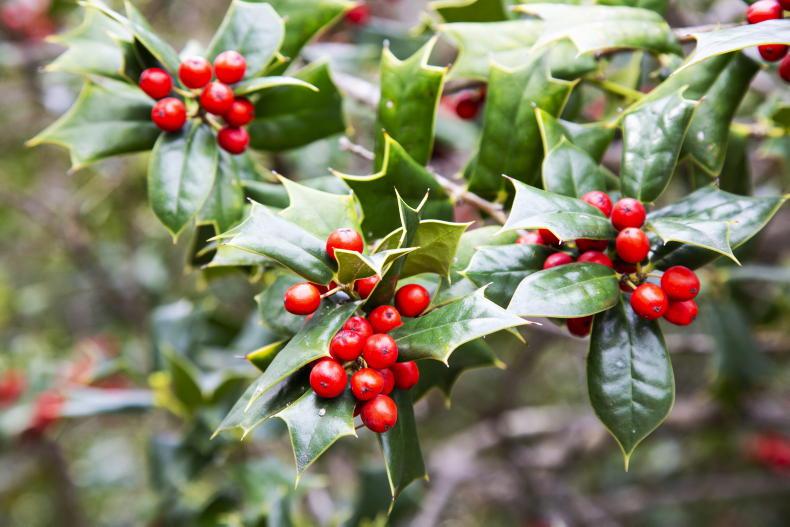
It is estimated that holly can live for well over one hundred years and can grow to a height of 20m. During the low light of winter, in deciduous hedgerow and woodland, holly stands out brightly, almost as is if it has decorated itself for the Christmas season. And it is in that bright, low winter light that its lustrous dark green leaves and blood red berries held aloft on its silver-grey trunk and branches catch the eye.
In many counties of Ireland holly is harvested for the Christmas market and sold in bundles. These are formed into swags and wreaths for decorating the front doors of our homes with hopes it brings protection, longevity and regeneration. In my home growing up, sprigs of holly were placed over pictures and family photographs on our walls for the celebration of Christmas.
The tradition expected the homeowner not to discard the holly sprigs but burn them on the fire before the twelfth night, I say this with a word of caution as it is highly combustible and perhaps burning a few leaves may well suffice.
It is well understood by harvesters that harming the tree either by cutting it down or cutting too much was unacceptable.
Leaving aside its decorative appeal, holly had other uses too – fresh young holly growth was used as fodder for cattle and sheep. Its timber is prized for fine carpentry and when stained black is used as a substitute for ebony.
Tradition
My mother was a very proud Corkonian and every Christmas a copy of the The Holly Bough was posted to her. First published in 1879, it still remains in circulation in many counties of Ireland. It contained local stories, poems, puzzles and recipes. It sat on our kitchen table well into January each year and we found something interesting in it each time we leafed through it.
We should all grow some holly in our gardens and though some might think it old fashioned or too large, there are many varieties that can be easily accommodated. It can form a focal point in gardens, both large or small.
Holly is dioecious, which means they are either male or female and if you wish to have berries you need to consider this and plant both sexes.
One sure way to provide for this is by planting Ilex aquifolium ‘J.C. van Tol’ as this is self-fertile and will pollinate other hollies. In itself it is a beautiful large shrub growing to a height of 4m.
The favourite here in our garden is I. x altaclerensis ‘Golden King’ with its green leaves with a golden edge and by a quirk of plant nomenclature, it is a female plant. It attained the name ‘King’ denoting its superiority as a plant as opposed to its sex.
Ilex x altaclerensis arose in the famous Highclere Gardens, the location for the filming of Downton Abbey. It is a hybrid of I. aquifolium and the
Madeiran holly I. perado. Smaller in height is Ilex x meservae, a hybrid of IIex aquifolium and Ilex rugosa, the Japanese holly. It was bred by an American plant breeder called Kathleen Meservae. Ilex x meservae ‘Blue Angel’ grows to a height of 2.5m.
However, it would need the company of Ilex x meservae ‘Blue Prince’ to produce berries.
To add to the wonder of it all, plant Ilex aquifolium ‘Bacciflava’ festooned with its bright creamy yellow berries on a large shrub eventually reaching 4m.
Q&A: Are potted conifers a good option as indoor Christmas trees?
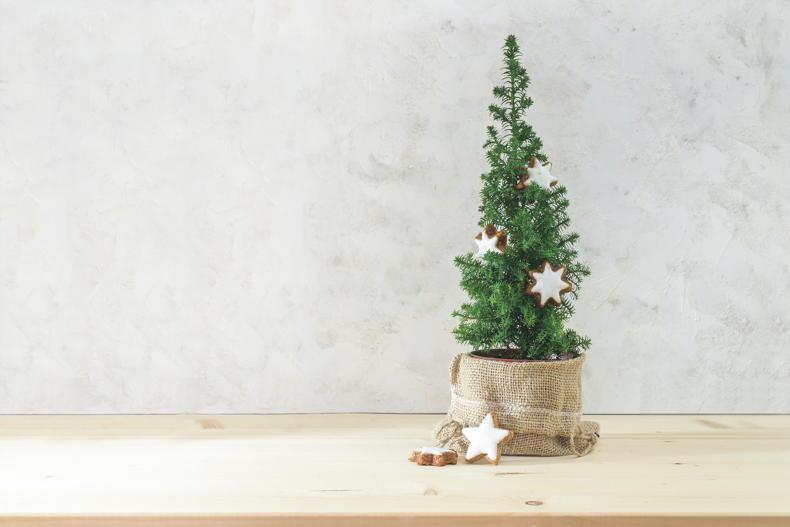
A potted Christmas tree. \iStock
Potted Picea Christmas trees are advertised as opposed to cut trees. Do they work well and are they capable of being planted outside afterwards? – Deirdre, Clonakilty.
I am aware that these are available for sale, and in principle it looks like a good idea. However, there are inherent problems with this approach. It may not be possible to determine how they have been produced. If they are glasshouse grown they may survive better. If not, they will experience a temperature change and this could cause stress to the plant. I would suggest a period of no longer than seven days as the extent of their stay. The root ball will have to be monitored and prevented from drying out. At the end of its stay indoors, it would need a gentle introduction to the outdoors, initially for day time only. After three or four days they can stay out.
Pots and planters: Pots and planters should be establishing well. Keep them protected until they are settled and beginning to flower. I always recommend keeping some fleece handy to throw over them in severe frosty nights.
Trees and shrubs: It is still a good time to plant or transplant trees and shrubs. The soil still has some warmth giving plants time to establish themselves.
Greenhouse: Monitor all plants brought indoors for the winter period.
Look out for mildew or leaf rot. Keep plants clean. Use fleece to cover plants when winter temperatures drop.
Wildlife: Keep bird feeders filled as birds are now scarce of food.
A firm favourite in homes thistime of year, holly’s Christmas traditions span further than one might think.
Christmas time has many symbols and traditions, but holly is the one that comes foremost to my mind. Ilex aquifolium, the botanical name for holly, is steeped in mythological history as the tree of Christmas. In the Gaelic language it is known as cuileann. It is a native tree of Ireland and said to be a guardian of winter and a symbol of longevity and resilience.
In ancient times oak was said to rule the light months of the year and holly ruled the dark ones. Folklore states that its leaves symbolised Christ’s crown of thorns and the red berries drops of blood shed for humanity.
No doubt we are all familiar with the Christmas carol The holly and the ivy. ‘The holly and the ivy, when they are full grown, of all the trees that are in the wood, the holly bears the crown’.
It is estimated that holly can live for well over one hundred years and can grow to a height of 20m. During the low light of winter, in deciduous hedgerow and woodland, holly stands out brightly, almost as is if it has decorated itself for the Christmas season. And it is in that bright, low winter light that its lustrous dark green leaves and blood red berries held aloft on its silver-grey trunk and branches catch the eye.
In many counties of Ireland holly is harvested for the Christmas market and sold in bundles. These are formed into swags and wreaths for decorating the front doors of our homes with hopes it brings protection, longevity and regeneration. In my home growing up, sprigs of holly were placed over pictures and family photographs on our walls for the celebration of Christmas.
The tradition expected the homeowner not to discard the holly sprigs but burn them on the fire before the twelfth night, I say this with a word of caution as it is highly combustible and perhaps burning a few leaves may well suffice.
It is well understood by harvesters that harming the tree either by cutting it down or cutting too much was unacceptable.
Leaving aside its decorative appeal, holly had other uses too – fresh young holly growth was used as fodder for cattle and sheep. Its timber is prized for fine carpentry and when stained black is used as a substitute for ebony.
Tradition
My mother was a very proud Corkonian and every Christmas a copy of the The Holly Bough was posted to her. First published in 1879, it still remains in circulation in many counties of Ireland. It contained local stories, poems, puzzles and recipes. It sat on our kitchen table well into January each year and we found something interesting in it each time we leafed through it.
We should all grow some holly in our gardens and though some might think it old fashioned or too large, there are many varieties that can be easily accommodated. It can form a focal point in gardens, both large or small.
Holly is dioecious, which means they are either male or female and if you wish to have berries you need to consider this and plant both sexes.
One sure way to provide for this is by planting Ilex aquifolium ‘J.C. van Tol’ as this is self-fertile and will pollinate other hollies. In itself it is a beautiful large shrub growing to a height of 4m.
The favourite here in our garden is I. x altaclerensis ‘Golden King’ with its green leaves with a golden edge and by a quirk of plant nomenclature, it is a female plant. It attained the name ‘King’ denoting its superiority as a plant as opposed to its sex.
Ilex x altaclerensis arose in the famous Highclere Gardens, the location for the filming of Downton Abbey. It is a hybrid of I. aquifolium and the
Madeiran holly I. perado. Smaller in height is Ilex x meservae, a hybrid of IIex aquifolium and Ilex rugosa, the Japanese holly. It was bred by an American plant breeder called Kathleen Meservae. Ilex x meservae ‘Blue Angel’ grows to a height of 2.5m.
However, it would need the company of Ilex x meservae ‘Blue Prince’ to produce berries.
To add to the wonder of it all, plant Ilex aquifolium ‘Bacciflava’ festooned with its bright creamy yellow berries on a large shrub eventually reaching 4m.
Q&A: Are potted conifers a good option as indoor Christmas trees?
A potted Christmas tree. \iStock
Potted Picea Christmas trees are advertised as opposed to cut trees. Do they work well and are they capable of being planted outside afterwards? – Deirdre, Clonakilty.
I am aware that these are available for sale, and in principle it looks like a good idea. However, there are inherent problems with this approach. It may not be possible to determine how they have been produced. If they are glasshouse grown they may survive better. If not, they will experience a temperature change and this could cause stress to the plant. I would suggest a period of no longer than seven days as the extent of their stay. The root ball will have to be monitored and prevented from drying out. At the end of its stay indoors, it would need a gentle introduction to the outdoors, initially for day time only. After three or four days they can stay out.
Pots and planters: Pots and planters should be establishing well. Keep them protected until they are settled and beginning to flower. I always recommend keeping some fleece handy to throw over them in severe frosty nights.
Trees and shrubs: It is still a good time to plant or transplant trees and shrubs. The soil still has some warmth giving plants time to establish themselves.
Greenhouse: Monitor all plants brought indoors for the winter period.
Look out for mildew or leaf rot. Keep plants clean. Use fleece to cover plants when winter temperatures drop.
Wildlife: Keep bird feeders filled as birds are now scarce of food.







SHARING OPTIONS