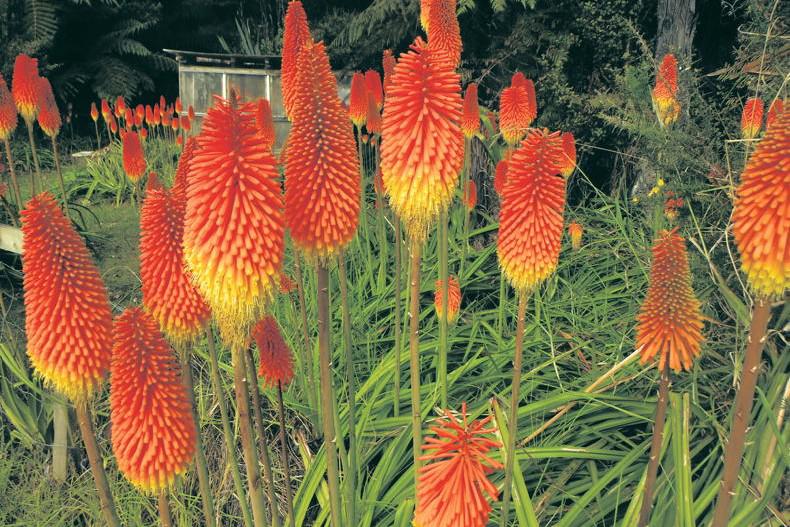
I recall hearing an old gardener describe Kniphofia – commonly known as red hot pokers – as a fireworks display. That adequately describes the dramatic display of soaring flower spikes in colours of red, orange and yellow that sets autumn borders alight.
While other herbaceous perennials flower and provide a pleasant colourful picture, Kniphofia bring colour and upward movement to our summer gardens. They are native to South Africa and bring the feeling of heat to the planting scheme. Kniphofia are herbaceous perennials that perform well in summer and are relatively easy to cultivate.
Modern plant breeding continues to bring gardeners improved colour which benefits our gardens. Kniphofia is just one species where exciting new varieties have been developed.
An American nursery has bred the Popsicle range with a variety of colours to suit all tastes. Kniphofia ‘Papaya Popsicle’ has rich red flowers fading to yellow at the base. Growing to 70cm it flowers from June to September.
K. ‘Lemon Popsicle’ is of a similar height but with bright lemon-yellow flowers that open with tinges of light green. It shines bright in the summer border. K. ‘Mango Popsicle’ produces orange coloured flowers that give you that warm feeling, again it is of similar height. Kniphofia ‘Little Maid’ is described by some as a gentle grower and it’s true. The flower is lemon-yellow turning to white at the base. Growing to 60cm it is ideal for the small garden or containers. It works well with dwarf ornamental grasses. K. ‘Bee’s Lemon’ is a deeper yellow colour, it grows taller reaching 1m in height. A stronger grower, it has more bulk to the flower spike. K. ‘Wrexham Buttercup’ is much taller, growing to over 1m with rich yellow flowers. It has impressive dark green narrow foliage which persists well after flowering has finished.
Kniphofia ‘Moonstone’ is taller again growing to 1.2m with paler yellow flowers. These start out with a reddish tint and progress to be even paler again to almost creamy white. K. ‘Toffee Nosed’ is, I think, an unfortunate name for a beautiful plant, but it describes it well. It grows to over 1.2m in height with spikes that open with an orange brown coloured tip, from here it produces creamy-white flowers for the length of the spike. Its cool colour is in stark contrast to the rest of the group as without doubt all thoughts of red-hot pokers are just that, red.
Eye-catching
Kniphofia ‘Royal Standard’ is eye-catching, attaining a height of 1.5m with brick red flowers graduating to yellow and narrow light green foliage, which when out of flower still gives interest in the garden. Equally good is K. ‘Alcazar’, slightly lower in height but impressive with its dark green stems holding spikes of flowers opening rosy red turning salmon pink a beautiful blend and stately in the border.
Kniphfofia caulescens is a plant I grew for many years as a gardener at the National Botanic Gardens Glasnevin. It was always a showstopper and featured in many photographs, a sure sign of a winner. It has wide grey foliage that is beautiful all year round. The coral-red and yellow flower spikes towered over that from mid-summer into autumn. K. caulescens ‘John May’ is an improved version of this with taller fuller flower spikes.
Kniphofia northiae is an exotic species and challenges to viewer as to whether it is a Red-Hot Poker or not. It is best suited to tropical style gardens as the foliage is broad curving downwards resembling a large bromeliad. The species name commemorates Marianne North, a botanical artist who travelled widely.
Cultivation: Kniphofias are perennial plants so for soil preparation, dig well and ensure all perennial weeds are removed.
If possible, this work should be undertaken in winter. Soak all plants in advance of planting and water once again after planting. An annual tidy-up is beneficial too, wait until spring to remove dying or decaying foliage as this gives protection over winter. Apply a layer of mulch before growth begins.
Kniphofia can be lifted and divided after five years or so. A good indicator of
the need for this work is that clumps are not flowering as well and need rejuvenation.
Q&A: Can we grow trees from acorns?
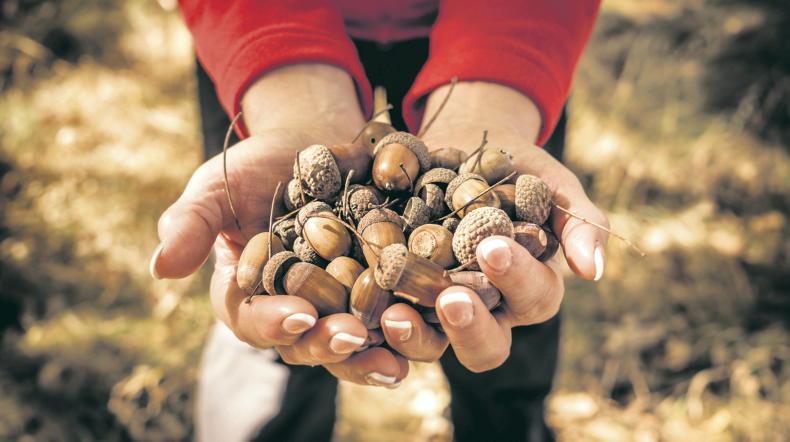
Acorns. /iStock
My children and I have collected several handfuls of acorns, how difficult is it to grow oak trees from them?
- Helen, Co Meath
That is a delightful question and you are setting the foundation for a love of trees in your children.
Firstly, remove the acorn from the cup that attaches it to the stem. It is worth testing their viability by floating them in water. If they sink, they are viable. If they float they are not, so discard these. Continue to soak the acorns for 24 hours.
Use a 10cm pot filled with a soil-based compost and place the acorn on its size an inch or so deep.
Place outdoors as frost will help germination. Cover with mesh and wait for the excitement to begin.
Planting: Now is a good time to plan for planting trees and shrubs. The soil is still warm and rain has returned.
Plan your purchases well to fit your space.
Bulbs: Purchase spring bulbs and prepare ground for planting.
Perennials: Remove old flower heads unless their form is decorative. Make careful notes of what needs to be moved or divided and mark the area clearly.
Lawns: Now is a good time to do lawn
repairs. Bare patches after the dry summer can now be lightly dug with a
hand fork and seed sown.
I recall hearing an old gardener describe Kniphofia – commonly known as red hot pokers – as a fireworks display. That adequately describes the dramatic display of soaring flower spikes in colours of red, orange and yellow that sets autumn borders alight.
While other herbaceous perennials flower and provide a pleasant colourful picture, Kniphofia bring colour and upward movement to our summer gardens. They are native to South Africa and bring the feeling of heat to the planting scheme. Kniphofia are herbaceous perennials that perform well in summer and are relatively easy to cultivate.
Modern plant breeding continues to bring gardeners improved colour which benefits our gardens. Kniphofia is just one species where exciting new varieties have been developed.
An American nursery has bred the Popsicle range with a variety of colours to suit all tastes. Kniphofia ‘Papaya Popsicle’ has rich red flowers fading to yellow at the base. Growing to 70cm it flowers from June to September.
K. ‘Lemon Popsicle’ is of a similar height but with bright lemon-yellow flowers that open with tinges of light green. It shines bright in the summer border. K. ‘Mango Popsicle’ produces orange coloured flowers that give you that warm feeling, again it is of similar height. Kniphofia ‘Little Maid’ is described by some as a gentle grower and it’s true. The flower is lemon-yellow turning to white at the base. Growing to 60cm it is ideal for the small garden or containers. It works well with dwarf ornamental grasses. K. ‘Bee’s Lemon’ is a deeper yellow colour, it grows taller reaching 1m in height. A stronger grower, it has more bulk to the flower spike. K. ‘Wrexham Buttercup’ is much taller, growing to over 1m with rich yellow flowers. It has impressive dark green narrow foliage which persists well after flowering has finished.
Kniphofia ‘Moonstone’ is taller again growing to 1.2m with paler yellow flowers. These start out with a reddish tint and progress to be even paler again to almost creamy white. K. ‘Toffee Nosed’ is, I think, an unfortunate name for a beautiful plant, but it describes it well. It grows to over 1.2m in height with spikes that open with an orange brown coloured tip, from here it produces creamy-white flowers for the length of the spike. Its cool colour is in stark contrast to the rest of the group as without doubt all thoughts of red-hot pokers are just that, red.
Eye-catching
Kniphofia ‘Royal Standard’ is eye-catching, attaining a height of 1.5m with brick red flowers graduating to yellow and narrow light green foliage, which when out of flower still gives interest in the garden. Equally good is K. ‘Alcazar’, slightly lower in height but impressive with its dark green stems holding spikes of flowers opening rosy red turning salmon pink a beautiful blend and stately in the border.
Kniphfofia caulescens is a plant I grew for many years as a gardener at the National Botanic Gardens Glasnevin. It was always a showstopper and featured in many photographs, a sure sign of a winner. It has wide grey foliage that is beautiful all year round. The coral-red and yellow flower spikes towered over that from mid-summer into autumn. K. caulescens ‘John May’ is an improved version of this with taller fuller flower spikes.
Kniphofia northiae is an exotic species and challenges to viewer as to whether it is a Red-Hot Poker or not. It is best suited to tropical style gardens as the foliage is broad curving downwards resembling a large bromeliad. The species name commemorates Marianne North, a botanical artist who travelled widely.
Cultivation: Kniphofias are perennial plants so for soil preparation, dig well and ensure all perennial weeds are removed.
If possible, this work should be undertaken in winter. Soak all plants in advance of planting and water once again after planting. An annual tidy-up is beneficial too, wait until spring to remove dying or decaying foliage as this gives protection over winter. Apply a layer of mulch before growth begins.
Kniphofia can be lifted and divided after five years or so. A good indicator of
the need for this work is that clumps are not flowering as well and need rejuvenation.
Q&A: Can we grow trees from acorns?
Acorns. /iStock
My children and I have collected several handfuls of acorns, how difficult is it to grow oak trees from them?
- Helen, Co Meath
That is a delightful question and you are setting the foundation for a love of trees in your children.
Firstly, remove the acorn from the cup that attaches it to the stem. It is worth testing their viability by floating them in water. If they sink, they are viable. If they float they are not, so discard these. Continue to soak the acorns for 24 hours.
Use a 10cm pot filled with a soil-based compost and place the acorn on its size an inch or so deep.
Place outdoors as frost will help germination. Cover with mesh and wait for the excitement to begin.
Planting: Now is a good time to plan for planting trees and shrubs. The soil is still warm and rain has returned.
Plan your purchases well to fit your space.
Bulbs: Purchase spring bulbs and prepare ground for planting.
Perennials: Remove old flower heads unless their form is decorative. Make careful notes of what needs to be moved or divided and mark the area clearly.
Lawns: Now is a good time to do lawn
repairs. Bare patches after the dry summer can now be lightly dug with a
hand fork and seed sown.






SHARING OPTIONS