You have a bad back or serious abdominal pain or a worrying lump and your doctor suggests that an MRI or ultrasound scan is needed to determine what’s wrong. If you have private medical insurance, a scan can be arranged within days. But if you don’t, you have the choice of either waiting on a public patient list or coming up with the cash to get the test done.
What would it cost though? €400 for an MRI? €600? €1,000? The perception may be that scans are very expensive and a peak at old online forums shows that in the year 2000 they were. Prices ran at about €1,000 per MRI but by 2010 the price was dropping to €600 or €700.
Our straw-poll survey of specialist scan providers in Ireland now shows that prices are fairly similar across the board and that MRI scans now average between €200 and €300 per area scanned. (See Table 1 for details)
CT scans cost between €195 and €270, depending on the part of the body scanned and the scan provider. X-rays generally cost between €65 and €120 and an ultrasound from €95 to €251. While Dexa scans are around €100 everywhere.
So what’s the reason for this change? “The perception in the past was that scans were dear,” says Tom Finn, CEO of Affidea (formerly Euromedic), which has standalone scanning centres in three provinces.
“That was the way it was. Six or seven years ago, MRIs were costing €1,000 but in the last few years the prices have come down. There are a lot of different factors that will determine price, but the reduction is generally down to demand and technology.”
Waiting lists in public system
But how do waiting list times for scans compare in this country for public patients and private patients? The most recent figures come from an Irish Cancer Society survey of GPs published this April. It shows a striking difference in access times to tests between the public system and the private system. (See Table 2 for details)
“Waiting times for MRI brain scans were estimated to be 20 times higher in the public system than the private, while the difference in average waiting times between public and private systems for abdominal and pelvic ultrasounds is 70 days,” Donal Buggy, head of services and advocacy at the ICS says. “The grim reality of our healthcare system is the difference between life and death can come down to your ability to pay for healthcare.”
In all, 88.5% of GPs surveyed said that ability to pay affected a patient’s access to referral services.
Medical card patients paying for tests
But what’s the situation on the ground – are public patients paying for tests privately in order to get answers, to ease stress on themselves and hopefully get quicker treatment if there is something wrong?
We asked Irish College of General Practitioners (ICGP) spokesperson Dr Brian Osborne if this was happening:
“If a patient wants access to private tests such as an MRI or ultrasound and has a medical card or doesn’t have private health insurance, they can pay for it themselves,” he says. “If that test comes back with a positive result that needs urgent attention, that otherwise may not have been known about, then yes they would be seen more urgently by a specialist.
“Usually in a circumstance like this the GP would phone the consultant or their team and also fax/post a letter with the result attached and this would lead to a quicker appointment being given. I do not have any figures as to how often this happens but personally I can say it is not infrequent.
“Another scenario is the GP may advise the patient that to pay for a scan might be necessary and expedite the process, but unfortunately there are so many who simply cannot afford this. Delays in access to diagnostics leads to delays in diagnoses and can lead to worse outcomes,” he says.
One scan centre's experience:
Affidea (formerly Euromedic) is a 15-country scan-providing company with centres in Dublin, Cork, Kilkenny, Sligo and Letterkenny. They are also providing scan services on a pilot basis to the HSE on the west coast of Ireland, where public patients are now having their scans within two weeks, CEO Tom Finn says.
In general, half of Affidea’s customers have private medical insurance and the other half are cash or “self-pay” customers, he states.
“Typically those who come in and pay themselves don’t want to wait. People who are waiting for diagnostics are waiting to see if something is wrong so a big percentage of people who come in and have an MRI don’t need any more follow-up.
“Now they have an answer and, in many cases, there is no further follow up needed other than going to a physio, for example, if they’ve had an MRI on their back, say. That’s the great thing about an MRI or ultrasound – they are very definitive. If there is something surgical needed then that recommendation is made but if it’s not, at least they know. That’s why lot of people decide to pay for scans – so they actually know,” says Tom.
In all, 80% of referrals to Affidea come from GPs. “And 80% of patients need never see a hospital unless they have a positive result. The other 20% need specialised services.” CL
What are scans?
MRI
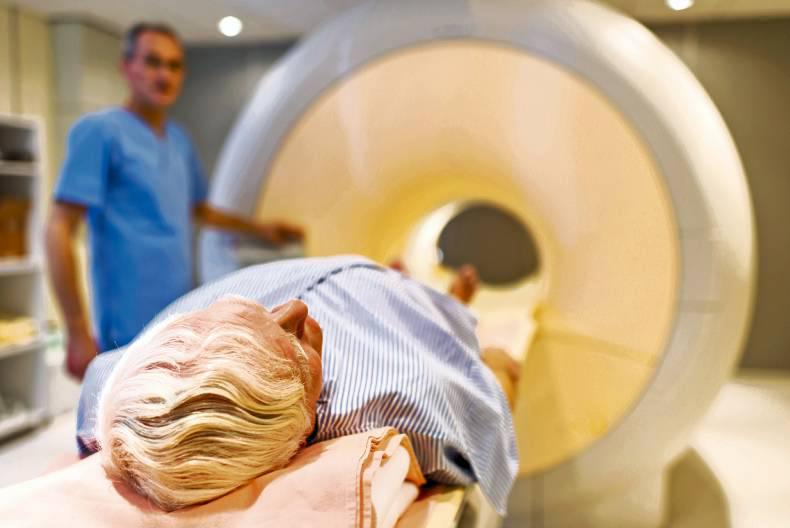
Magnetic resonance imaging is often used to diagnose health conditions that affect organs, tissue and bone. It uses strong magnetic fields and radio waves to produce a detailed image of the inside of the body. The patient lies inside a large tube – the MRI scanner – during the scan.
CT (or CAT) scan
Stands for computerised (axial) tomography scan. This scan uses X-rays and a computer to create detailed images of the inside of your body.
X-ray
An X-ray is an effective way of looking at bones and can be used to help detect a range of conditions. A type of radiation is passed through the body and as that happens the energy from the X-rays is absorbed at different rates by different parts of the body.
Sometimes contrast agents are used, like barium meal, to block the passeway of X-rays, so that problems with your abdomen or digestive system show up.
Ultrasound
This procedure uses high-frequency sound waves to create an image of part of the inside of the body. A sensor called a transducer is moved over the surface of the skin and generates sound waves. When the sound waves hit an object, such as a heart valve, they bounce back an echo. A computer then converts the reflected ultrasound echoes into an
image.
Useful websites
www.hse.ie www.cancer.iewww.affidea.iewww.alliancemedical.comwww.auteven.iewww.stjamesprivateradiology.iewww.whitfieldclinic.iewww.hia.ie Health Insurance Authority for
information updates on what is
happening in the private medical
insurance industry and to compare policy prices.Article notes:
Scan centres may charge medical insurance companies less than quoted above for scans because of global agreements related to business volume.Irish GPs working abroad have flagged accessibility to diagnostic scans in local centres as being the reason for a more efficient health service. Patients and their doctors don’t have to wait very long then to know whether or not they need a referral to a specialist, thereby easing stress on patients and pressure on hospital waiting lists.
You have a bad back or serious abdominal pain or a worrying lump and your doctor suggests that an MRI or ultrasound scan is needed to determine what’s wrong. If you have private medical insurance, a scan can be arranged within days. But if you don’t, you have the choice of either waiting on a public patient list or coming up with the cash to get the test done.
What would it cost though? €400 for an MRI? €600? €1,000? The perception may be that scans are very expensive and a peak at old online forums shows that in the year 2000 they were. Prices ran at about €1,000 per MRI but by 2010 the price was dropping to €600 or €700.
Our straw-poll survey of specialist scan providers in Ireland now shows that prices are fairly similar across the board and that MRI scans now average between €200 and €300 per area scanned. (See Table 1 for details)
CT scans cost between €195 and €270, depending on the part of the body scanned and the scan provider. X-rays generally cost between €65 and €120 and an ultrasound from €95 to €251. While Dexa scans are around €100 everywhere.
So what’s the reason for this change? “The perception in the past was that scans were dear,” says Tom Finn, CEO of Affidea (formerly Euromedic), which has standalone scanning centres in three provinces.
“That was the way it was. Six or seven years ago, MRIs were costing €1,000 but in the last few years the prices have come down. There are a lot of different factors that will determine price, but the reduction is generally down to demand and technology.”
Waiting lists in public system
But how do waiting list times for scans compare in this country for public patients and private patients? The most recent figures come from an Irish Cancer Society survey of GPs published this April. It shows a striking difference in access times to tests between the public system and the private system. (See Table 2 for details)
“Waiting times for MRI brain scans were estimated to be 20 times higher in the public system than the private, while the difference in average waiting times between public and private systems for abdominal and pelvic ultrasounds is 70 days,” Donal Buggy, head of services and advocacy at the ICS says. “The grim reality of our healthcare system is the difference between life and death can come down to your ability to pay for healthcare.”
In all, 88.5% of GPs surveyed said that ability to pay affected a patient’s access to referral services.
Medical card patients paying for tests
But what’s the situation on the ground – are public patients paying for tests privately in order to get answers, to ease stress on themselves and hopefully get quicker treatment if there is something wrong?
We asked Irish College of General Practitioners (ICGP) spokesperson Dr Brian Osborne if this was happening:
“If a patient wants access to private tests such as an MRI or ultrasound and has a medical card or doesn’t have private health insurance, they can pay for it themselves,” he says. “If that test comes back with a positive result that needs urgent attention, that otherwise may not have been known about, then yes they would be seen more urgently by a specialist.
“Usually in a circumstance like this the GP would phone the consultant or their team and also fax/post a letter with the result attached and this would lead to a quicker appointment being given. I do not have any figures as to how often this happens but personally I can say it is not infrequent.
“Another scenario is the GP may advise the patient that to pay for a scan might be necessary and expedite the process, but unfortunately there are so many who simply cannot afford this. Delays in access to diagnostics leads to delays in diagnoses and can lead to worse outcomes,” he says.
One scan centre's experience:
Affidea (formerly Euromedic) is a 15-country scan-providing company with centres in Dublin, Cork, Kilkenny, Sligo and Letterkenny. They are also providing scan services on a pilot basis to the HSE on the west coast of Ireland, where public patients are now having their scans within two weeks, CEO Tom Finn says.
In general, half of Affidea’s customers have private medical insurance and the other half are cash or “self-pay” customers, he states.
“Typically those who come in and pay themselves don’t want to wait. People who are waiting for diagnostics are waiting to see if something is wrong so a big percentage of people who come in and have an MRI don’t need any more follow-up.
“Now they have an answer and, in many cases, there is no further follow up needed other than going to a physio, for example, if they’ve had an MRI on their back, say. That’s the great thing about an MRI or ultrasound – they are very definitive. If there is something surgical needed then that recommendation is made but if it’s not, at least they know. That’s why lot of people decide to pay for scans – so they actually know,” says Tom.
In all, 80% of referrals to Affidea come from GPs. “And 80% of patients need never see a hospital unless they have a positive result. The other 20% need specialised services.” CL
What are scans?
MRI
Magnetic resonance imaging is often used to diagnose health conditions that affect organs, tissue and bone. It uses strong magnetic fields and radio waves to produce a detailed image of the inside of the body. The patient lies inside a large tube – the MRI scanner – during the scan.
CT (or CAT) scan
Stands for computerised (axial) tomography scan. This scan uses X-rays and a computer to create detailed images of the inside of your body.
X-ray
An X-ray is an effective way of looking at bones and can be used to help detect a range of conditions. A type of radiation is passed through the body and as that happens the energy from the X-rays is absorbed at different rates by different parts of the body.
Sometimes contrast agents are used, like barium meal, to block the passeway of X-rays, so that problems with your abdomen or digestive system show up.
Ultrasound
This procedure uses high-frequency sound waves to create an image of part of the inside of the body. A sensor called a transducer is moved over the surface of the skin and generates sound waves. When the sound waves hit an object, such as a heart valve, they bounce back an echo. A computer then converts the reflected ultrasound echoes into an
image.
Useful websites
www.hse.ie www.cancer.iewww.affidea.iewww.alliancemedical.comwww.auteven.iewww.stjamesprivateradiology.iewww.whitfieldclinic.iewww.hia.ie Health Insurance Authority for
information updates on what is
happening in the private medical
insurance industry and to compare policy prices.Article notes:
Scan centres may charge medical insurance companies less than quoted above for scans because of global agreements related to business volume.Irish GPs working abroad have flagged accessibility to diagnostic scans in local centres as being the reason for a more efficient health service. Patients and their doctors don’t have to wait very long then to know whether or not they need a referral to a specialist, thereby easing stress on patients and pressure on hospital waiting lists. 




SHARING OPTIONS